
REVIEW: Fall for Dance North’s 11th edition opened with a meditative solo, a tsunami of an ensemble piece, and a smoky Harlem-meets-Havana jam
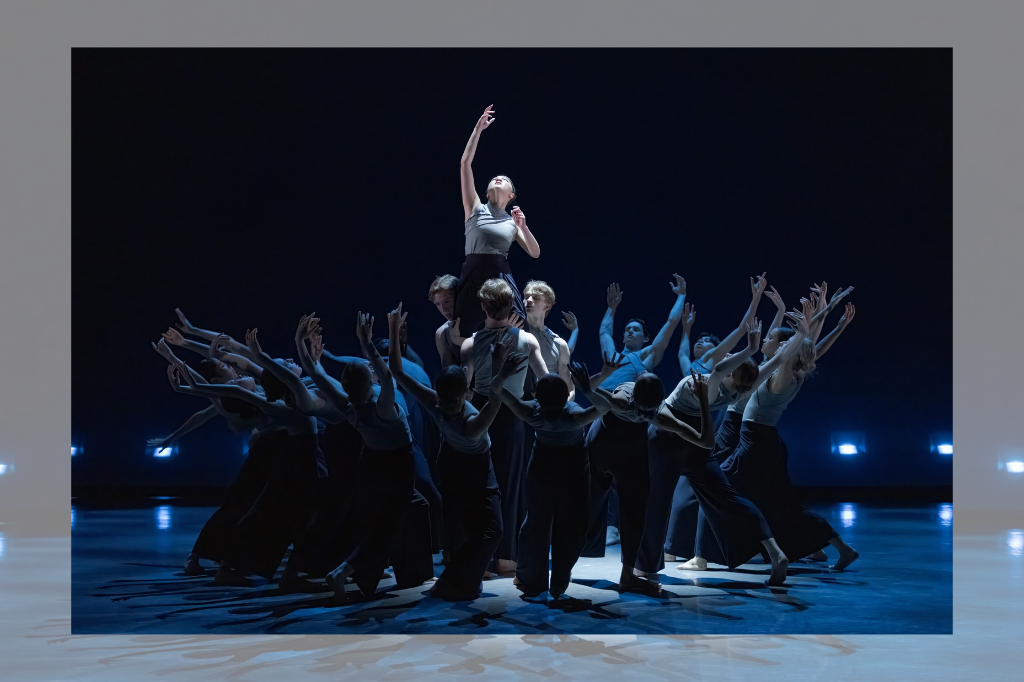 iPhoto caption: Fall for Dance North. Artist-in-residence Esie Mensah's world premiere of ESHI. Photo by Karolina Kuras.
Last Wednesday at the Bluma Appel Theatre, the 11th edition of Fall for Dance North descended on the city with renewed energy. This year’s two-week festival — known for bringing emerging and established dancers from around the world to Toronto with how-could-you-not priced tickets — marks the first under new co-CEOs Robert Binet and Lily Sutherland. Their programming feels fresh and ambitious.
In addition to the three signature mixed programs put on in collaboration with curatorial fellow Esie Mensah (who’s a big reason for this year’s rich range of styles), there’s performance art programming at The Citadel that offers front-row-only seats, a two-day closing party at OCAD’s Great Hall with six chances to see an assortment of approaches all in one room, and adjacent free workshops for all levels led by Rock Bottom Movement director Alyssa Martin and visiting artists.
The first program on opening night offered three Afrofusion works: Duende, a meditative solo by London-based Dickson Mbi; Mensah’s own ensemble piece ESHI with students of Canada’s National Ballet School; and New Yorker Sekou McMiller’s smoky, Havana-meets-Harlem jam Afro Latin Soul.
The evening began with an empty stage, blank as a canvas with one spotlight illuminating its centre. Mbi entered the circle of light at a glacial pace, foot first, articulating every bit of heel, arch and toe, while a subterranean synth throbbed. As the music picked up, he folded and tumbled through lunges and Graham-style floorwork, punctuated by brief bursts of athleticism that stopped after only a few counts — as if he’d startled himself out of his own reverie.
Given the title Duende is an impish spirit in European and Filipino folklore that also translates to “duelling” in Afrikaans, I expected a stronger sense of struggle or a cautionary tale. Instead, I felt that central tension was slightly underdeveloped, with relatively safe choreographic choices that could have been filled in with a deeper sense of turmoil or storytelling. That said, his control and musicality were mesmerizing, and saw their peak in moments when flicks of his fingers matched the strings while expansions of his chest echoed the drums.
After brief remarks from Binet and Sutherland, ESHI opened on an aquatic blue-lit stage to honeyed R&B tunes by Yohance Parsons and Joanna Majoko. Mensah appeared hunched and haunted, soon joined by a corps of 19 ballet students who appeared to be embodying grief’s many currents.
“Eshi” means “water” in the Ewe language of Ghana, and the dancers pooled into tidal stage pictures, with Mensah always at their centre, being carried or washed by them. These images of grief were moving but sometimes too literal. For me, the most arresting moments came when the dancers faced the crowd in strong poses — their arms or knees bent at sharp, 90-degree angles — and spring-loaded emotional energy that signalled the active fight for closure.
After intermission came Afro Latin Soul, a full-swing immersion into a 1940s New York City jazz club. A live band warmed the back of the stage as McMiller, in a cream suit and saddle shoes, and a lav mic that dangled from an unfortunately loose cord. As the band played softly behind him, he grooved and announced muffled phrases to the crowd as the mic bounced on his belly, catching broken snippets like, “Afro Latin” and “is for the people.”
The piece cycled through solos — a tapper’s witty duet with a drummer, a flirtatious jazz interlude — but found its power in mambo ensembles. Their snappy syncopation and lightning-fast footwork crackled electricity, thanks in part to Teresa Garcia, who had me trying to keep from blinking so I could catch her every hit. When the choreography loosened into improvised dance circles, the energy waned, but McMiller brought it back with an infectious communal finale, inviting the previous dancers back on stage and the crowd to stand up, clap, and sway.
In each piece, the choreographer was a central presence. For Mbi, self-performance was the point, but Mensah and McMiller, both mentors, shared the stage with younger troupes. In ESHI, I wondered why Mensah hadn’t given one of the young dancers the leading role; I wonder if this piece was a way to teach her students the shape of grief. When I mourned for the first time as a young adult, I had no reference point for the experience, and I suspect many of the students are likely too young to have experienced deep loss just yet. Perhaps having Mensah at the centre of ESHI was an act of guidance for the future — a model for how to endure bereavement for the dancers to look back on and a reminder of the somatic power they hold to move through emotional tides.
If opening night is any indication, this year’s Fall for Dance North will deliver on its reputation for range and vitality, reaffirming how inclusive, diverse, and uncontainable dance in Toronto can be. The second program, shown over this past weekend, included one of my favourite contemporary ballets, Reverence, by Ethan Colangelo with dancers from the National Ballet of Canada, and a world premiere of echos of the same tree by Ambrose Tjark & Kwasi Obeng Adjei.
The final program promises to end the festival with a bang, bringing eastern and western traditions together with a rare visit from the Royal Ballet, who will perform sections of Swan Lake and Winter Dreams, paired alongside another world premiere: Shanaasai, a romantic Kathak duet by Tanveer Alam.
The Fall for Dance North Festival runs at various venues across Toronto until October 26. More information is available here.
Intermission reviews are independent and unrelated to Intermission’s partnered content. Learn more about Intermission’s partnership model here.

Lindsey King
Lindsey King is a Toronto-based freelance writer and editor with bylines in Toronto Life, Maclean's, Canadian Business, Intermission, and The Creative Independent.
LEARN MORE iPhoto caption: Jane Spidell in 'Twelve Dinners.' Photo by Dahlia Katz.
REVIEW: Family tensions run high in TIFT’s intimate Twelve Dinners
In the now-closed Twelve Dinners, an autobiographical play written and directed by Steve Ross, audiences received intimate access to an unvarnished version of a younger Ross through 12 evening meals with his parents.
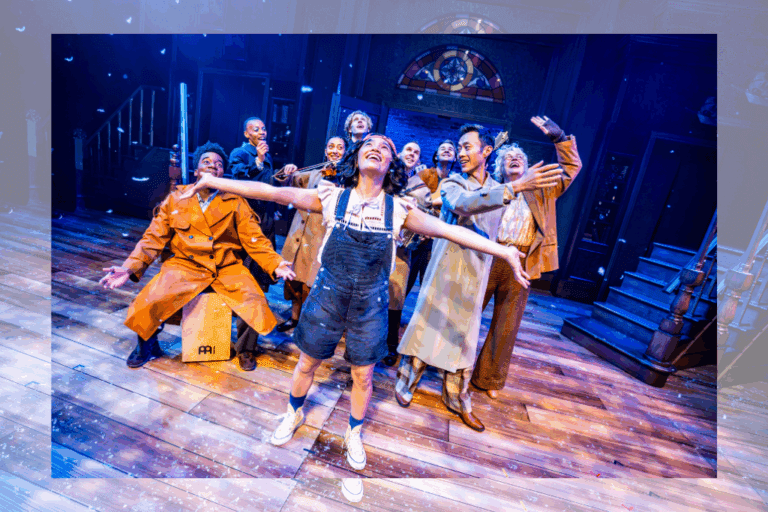 iPhoto caption: Members of the company of 'Narnia.' Photo by Dahlia Katz.
REVIEW: Bad Hats’ Narnia is a joyful, heartwarming escape
The spirit of openness and the joy of discovery rule over this Narnia. Open the wardrobe and see.
 iPhoto caption: Members of the company of 'Robin Hood.' Photo by Dahlia Katz.
REVIEW: Canadian Stage’s Robin Hood panto is anti-capitalist fun for the whole family
Following Ross Petty’s legacy of scene-stealing, Damien Atkins as the evil Prince John is easily the greatest delight of the show.
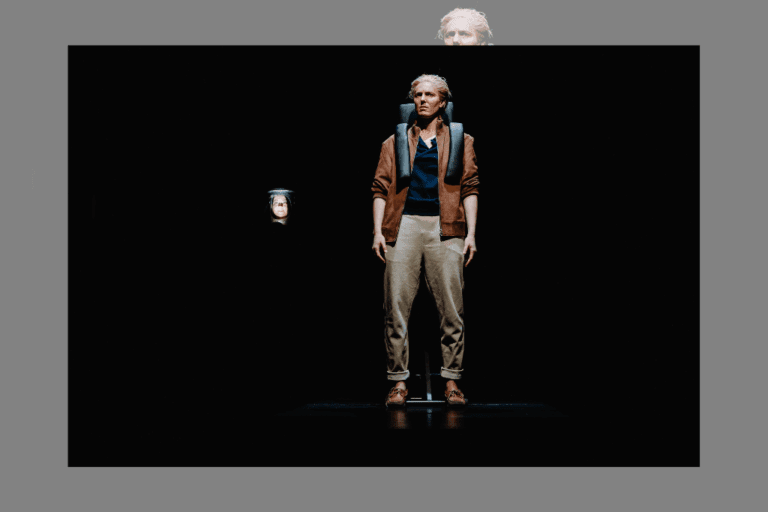 iPhoto caption: Lauren Gillis and Alaine Hutton in 'Public Consumption.' Photo by Eden Graham.
REVIEW: Lester Trips’ stylish Public Consumption captures the internet’s profound emptiness
Rather than directly representing online life, Public Consumption speculates — with virtuosity — about how the digital world affects our bodies. And the show's findings are by no means comfortable.
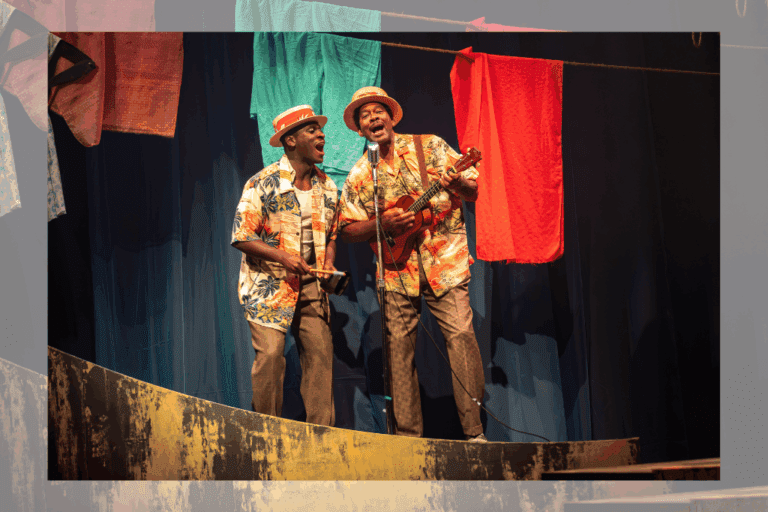 iPhoto caption: Tony Ofori and Daren A. Herbert in 'Moonlight Schooner.' Photo by Dahlia Katz.
Kanika Ambrose’s Moonlight Schooner is animated and visually stunning, but its individual pieces don’t come together as neatly as I would've expected.
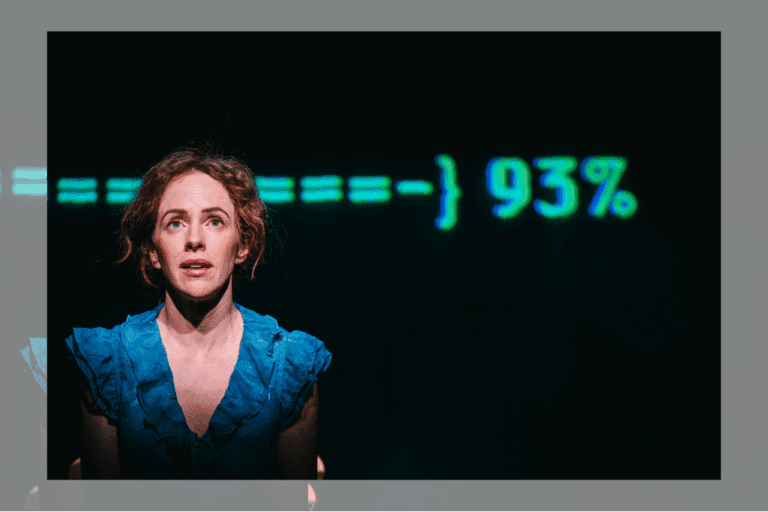 iPhoto caption: Fiona Mongillo in 'Reproduktion.' Photo by Ann Baggley.
REVIEW: Here For Now’s well-acted Reproduktion attempts to tackle too much
Amy Rutherford’s world premiere script is ambitious and the material it covers is complex — but the narrative feels disjointed.
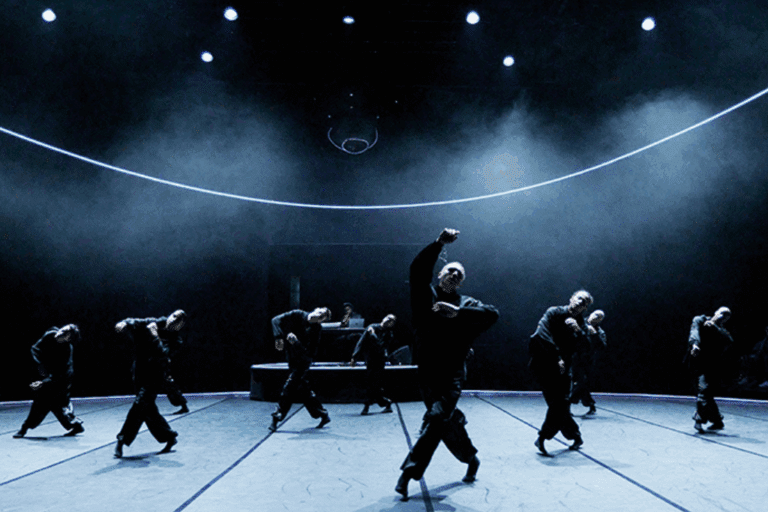 iPhoto caption: Photo by Fabian Hammerl.
In A a | a B : B E N D, choreographer Aszure Barton aims to rebuild dance from the inside out
“It’s so easy to over-intellectualize dance in general, but B E N D is about hearing and moving to cool-ass music together,” says Barton ahead of the show's run at the Bluma Appel Theatre.
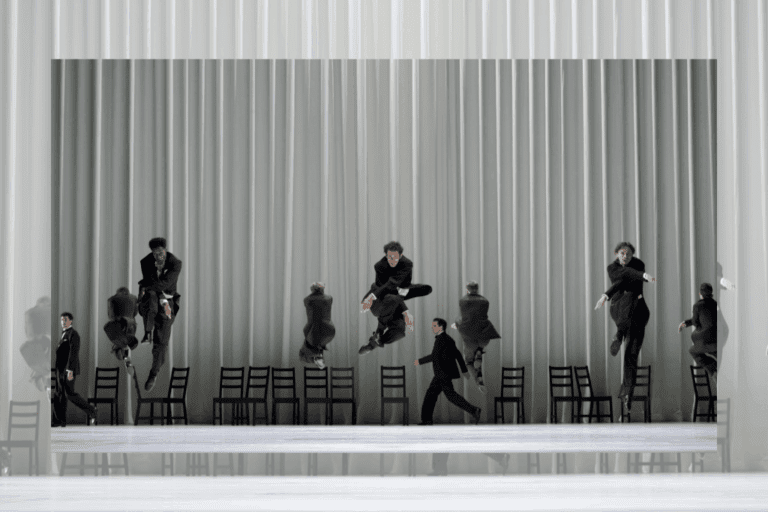 iPhoto caption: Shaakir Muhammad, Christopher Gerty, and Matthieu Pagès with artists of the National Ballet in 'Procession.' Photo by Karolina Kuras. Courtesy of the National Ballet of Canada.
REVIEW: National Ballet’s Procession tangles the lines of sorrow and sensuality
Procession, the National Ballet of Canada’s brooding and stylized world premiere ballet, rushes to the stage with startling vitality — and does so at a funeral.
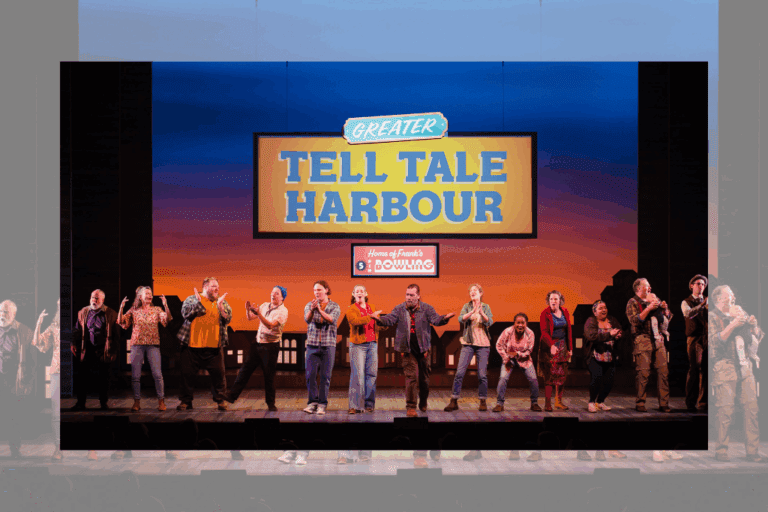 iPhoto caption: The company of 'Tell Tale Harbour.' Photo by Wade Muir.
REVIEW: Alan Doyle steers a joyful ship in Tell Tale Harbour at Mirvish
The musical makes good on spinning a yarn as warm as a mug-up with music as catchy as a fiddle reel. The asides are wry, the slapstick is generous, and the hearts are big.
 iPhoto caption: Photo by Robert Torres.
REVIEW: Two hybrid dance pieces close out this year’s SummerWorks Performance Festival
During the festival’s closing weekend, I saw two works that live side by side in my memory even as they differed in style and intention. Both Je ne vais pas inonder la mer (I Will Not Flood the Ocean) and Graveyards and Gardens explored memory, loss, and the body’s way of carrying history — one did so with devastating intimacy, the other with cerebral play.
 iPhoto caption: Photo by Hans Ravn.
The Bentway’s Sand Flight asks how we might navigate a world remade by climate collapse
“We’re not only conveying dystopia,” says co-creator Jonas Corell Petersen. “Yes, we die. Yes, we dry out. But that makes way for something new, and the dancers carry hopefulness in their movement.”
 iPhoto caption: Photo by Marie-Andrée Lemire.
REVIEW: Cirque du Soleil’s family-friendly OVO spreads springtime glee like pollen on the breeze
OVO might not linger in the heart for long, but it’s a hell of a romp for the eyes.
Comments