
Capital (and Toronto Theatre) in the 21st Century
 iPhoto caption: Viktor Lukawski and Adam Paolozza in Italian Mime Suicide // Three Red Days. Photo by John Gundy.
I’m tired of living in a city that is so expensive. It’s easy to feel powerless. There are so many forces—“progress,” “free market capitalism,” “development,” “the right,” “classism”—that are making life on the planet worse, not better. In our own small way, we wanted to make ethical choices in the way we make and share our work, which is why all tickets for Italian Mime Suicide // Three Red Days are Pay What You Want.
Many of the ideas in the show, a double bill about a mime jumping off a building and Shostakovich’s 1930s arrest, have political reverberations—at least for me. Making theatre that is political also means making theatre that explores how we can be more humane to each other, in form, content, and practice.
I’m not a philosopher, but I speak from the heart. I’m tired of feeling powerless because I happened to grow up in a socio-economic class that in reality—and not because I’m not good enough or smart enough or industrious enough—is nearly impossible to escape. If you read Piketty’s Capital In The 21st Century (which I’ve gotten about a quarter of the way through), it’s clear that the way wealth accumulates is faster and easier for those who already have a lot of it. Just as it’s easier for people coming from a place of privilege to be “intrepid entrepreneurs” and “risk-takers.”
Shit is not fair, we all know this. The great free market has really led to massive monopolies, mono-culture, and mega companies like Apple that don’t even pay their taxes properly.
It would all be somewhat more bearable if there was some kind of counter-culture to take refuge in. But even that has also been marketed, popped-up, cold-brewed, etc.

Photo by John Gundy
So, I try to make art that challenges this. I try to make a space for people to come together to practise being human, to tell stories that do not flow according to these capitalist paradigms. Stories that present visions of other worlds with other values and other means of exchange. Like laughter—that’s a great economy by the way. As far as I’ve heard it’s still free so long as you have a sense of humour.
But then you have to market your show and “sell” it to people and come up with “labels” and “brands” so that they’re understandable and attractive. This is not all bad but some part of me really believes that art shouldn’t always be understandable and it should never be easily defined. In fact, cultivating those qualities can create sites of resistance.
I’d love to ask for no money for tickets. I’d love to give art away for free. I’d love art to not just be another series of stars in some review that explains if it is or isn’t “worth” your time. Like Bartleby, “I would prefer not to” ask you for money, but at this point that’s impossible.
Exchanging money isn’t bad in and of itself. Our small (so small!) attempt to change things is a Pay What You Want scheme. You come and watch and afterwards you decide what the show is worth to you, based on what you can afford and how you choose to determine the value.
Giving the audience some agency with their ticket price is a way to urge people to start thinking about all of this. Although we’re seemingly stuck in a world where money is the common denominator, there are still some places where we can have some part of the decision on how they spend it. In a small way, their power to determine worth can be restored.
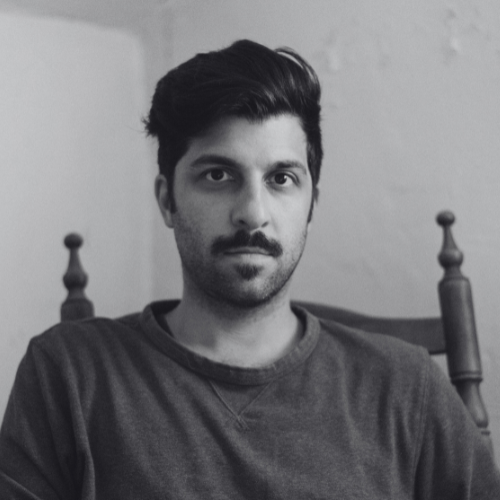
Adam Paolozza
Adam Paolozza is an award-winning performer, director, teacher, and producer. As artistic director of Bad New Days, Adam creates collaboratively devised, imagistic theatre, guided by the belief that the live experience has the potential to activate unique, empathetic ways of seeing the world. Adam is a graduate of École Jacques Lecoq, and has an MA in Performance Studies from York. He’s taught at U of T, Brock, Humber College, the Soulpepper Academy, and TMU.
LEARN MORE iPhoto caption: Photo of Jordan Laffrenier by Sandro Pehar.
Preparing to direct Slave Play: A travel guide to Richmond, Virginia
Since reading Slave Play, I’ve asked every romantic partner whether or not they experience a racial dynamic between us in the bedroom. No one has given the same answer. What is it that I am asking them to acknowledge in these scenarios? Who is it that I am asking them to hold? What does it mean to hold someone’s history?
 iPhoto caption: 'Delirious Night' at the Festival d'Avignon. Photo by Christophe Raynaud de Lage.
At the 2025 Festival d’Avignon, politics were never far off
I’d performed and directed for festivals in Canada and elsewhere, but it wasn’t at all the same as being on the bum-in-seat side. There I was, in Avignon, rubbing shoulders with the umpteen visitors hungry for a good show. I came away feeling that here, theatre mattered. A lot. In the stony fields of Toronto, that can be easy to forget.
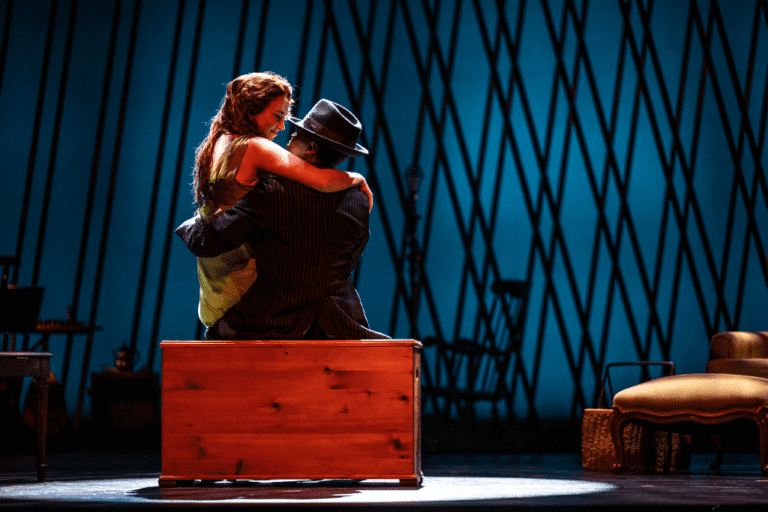 iPhoto caption: Set design by Camellia Koo,
Costume design by Judith Bowden,
Lighting design by Leigh Ann Vardy,
and photo by Dahlia Katz. Features Samantha Hill and Amaka Umeh.
iPhoto caption: Set design by Camellia Koo,
Costume design by Judith Bowden,
Lighting design by Leigh Ann Vardy,
and photo by Dahlia Katz. Features Samantha Hill and Amaka Umeh.
A story with no expiry date: Adapting Fall On Your Knees
At this critical political juncture, as so many forces in the world try to mute and silence women, our Canadian stories merit our advocacy and fervent attention.

Armchairs, tattoos, and an online theatre magazine
When I started at Intermission, my world was limited to the confines of an armchair. Arts journalism was a high it felt dangerously fruitless to chase. The life stretched ahead of me was amorphous and frightening, a chasm filled with hand sanitizer and immigration concerns. It was worth crying over a spilled kombucha and scrubbing at the stain.
 iPhoto caption: Production still from The Nutcracker courtesy of the National Ballet of Canada.
Why should you go to the ballet?
My childhood memories of learning to dance were front and centre for me when I attended opening night of The Nutcracker, performed by the National Ballet of Canada at the Four Seasons Centre for the Performing Arts.
 iPhoto caption: Photo by Grace Mysak.
Want to see a magic show about race? Wait, what?
You’d be forgiven for the double-take. It’s a fairly common reaction when I tell folks about my work as a magician.
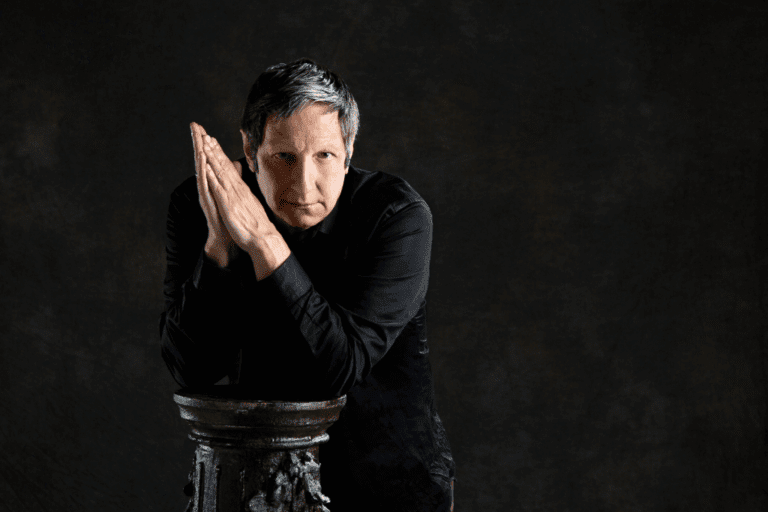 iPhoto caption: Photo by V. Tony Hauser.
“If theatre’s done well, it’s an event. And for the audience it’s very mobilizing,” says Lepage. “Whatever the subject matter is, the people go and they’re stimulated, interested, and they feel intelligent... The most beautiful spectacle is always the spectacle of intelligence.”
Comments