
REVIEW: X and da Spirit at Theatre Passe Muraille
 iPhoto caption: Photo by Brendan McMurtry-Howlett
How can performance be a form of meaningful protest? Or at least embody the spirit of protest? It’s a question which has fueled and foiled theatre for centuries (ahem, Brecht). When theatre compels us to take on the powers that be after the curtains close, it takes on a new power: the ability to effect change.
Such theatrical calls to action are all the more urgent for a post-2020 Black Lives Matter. As viral hashtags circulate with less frequency and protests become less populated, activists are not just fighting against white supremacy and police brutality. They are now fighting to keep a movement alive — to show people that the long-haul struggle for Black lives requires long-haul collective support as well.
X and da Spirit sits squarely in opposition to any threat towards BLM’s sustained advocacy. Originally premiering in 2022 at the Toronto Fringe Festival (where it won Patron’s Pick), Theatre Passe Muraille restaged the critics’ and audiences’ darling as a double bill with their premiere of Okay, you can stop now… Playing from February 4-11, playwright, performer, and producer Donovan Hayden reunited with performer Trinity Lloyd and director Rais Clarke-Mendes to once again invoke “da Spirit of the Struggle.”
And it’s an utterly captivating Spirit to witness. In the span of just 45 minutes, Hayden grants his audiences the ability to sustain his hope in a better future for Black Canadians. Conveying radical joys and doubtful solitudes with equal parts humour and humility, Hayden shatters the fourth wall with unmatched clarity and intention. Riveting, generous, and deeply important, X and da Spirit is theatre that invigorates new hope into this crucial struggle.
X and da Spirit is greatly inspired by the transgressive power of street art. It fittingly begins with a large mural by set designer Chris Leal, seemingly graffitied to the side of a concrete Toronto wall. Indeed, this stage piece is a replica of an actual Toronto mural that can be found in Nordheimer Ravine. Just as it does in the original underneath Spadina Bridge, bright oranges and yellows reads “ACAB” (All Cops Are Bastards), surrounded by the names of those now deceased at the hands of police brutality.
We open to Lloyd’s MC maintaining this makeshift memorial to both Toronto and international victims with Lauryn Hill’s “Lost Ones” playing in the background. Noticing the audience, she jumps up and asks if anyone is a cop (or intends to call them). But she doesn’t just pretend to hear the right answer; she actively coaxes audience members to give her an affirmative “no.” Only then does she let her guard down, and the play begins its expert employment of participatory action. MC also starts to introduce new mediums of expression; after telling us that she was “literally born on a TTC subway train,” Lloyd eases into an excellent spoken word poem that summarizes recent events pertaining to BLM, as well as the effort to continue the movement.
MC’s mural is not just a monumental art piece, though. Carrying this mural from real-life to stage acknowledges that within it lies “da Spirit of the Struggle,” an affective force which inspires those who come across it to carry on the fight for justice. And when Hayden’s X walks on stage and sees MC’s mural, he is in turn chosen by da Spirit (who Lloyd portrays simultaneously). These moments when da Spirit visits X are embodied by an energy that starts in Donovan’s hand, reaching toward the mural, and courses through his body with a simple spin. X is enchanted by the Spirit, a tingling in his body that stands somewhere between hope and nervousness. These short motifs make it clear that X has been changed in a way that words alone cannot. Clarke-Mendes’ direction shows that passionate desire for change is just as embodied as it is verbalized.
X is emboldened to take on the fight against police brutality, and at first da Spirit is able to support X by introducing him to ways that he can get involved with local protests and collective actions. Yet X soon realizes that da Spirit is fleeting, and while it can provide him with the desire to effect change, it can’t provide him with the tools to effect change. This is crucial to grounding the play’s spirited magic in difficult reality; Donovan shows that carrying on da Spirit is often emotionally and physically burdensome.
The notion of care sets the stage for the most compelling part of X and da Spirit, where X is preparing to attend a protest and asks the audience to help him get ready. This includes having an audience member write the number of Toronto’s legal aid hotline on his arm, mixing water with baking soda as an astringent against tear gas, and even trusting an audience member to hold his wallet for him. While in many contexts these actions could seem dire, Hayden’s invitation for audience participation instead creates an enthusiastic environment of support.
Overall, something feels radical about these soft moments. By allowing audiences to protest alongside it, X and da Spirit lets love and collective support lead the way toward breaking down stigmas and biases. This is a refreshing and exciting proposition for theatre; I’d say I felt da Spirit, too.

Martin Austin
Martin Austin is a PhD student at the University of Toronto’s Centre for Drama, Theatre & Performance Studies. Martin’s research explores the past and current state of ethics in Euro-American dance practice. He is research assistant for Category Is, a study of house ballroom communities in Toronto and Montréal, and lead administrative coordinator of the Institute for Dance Studies.
LEARN MORE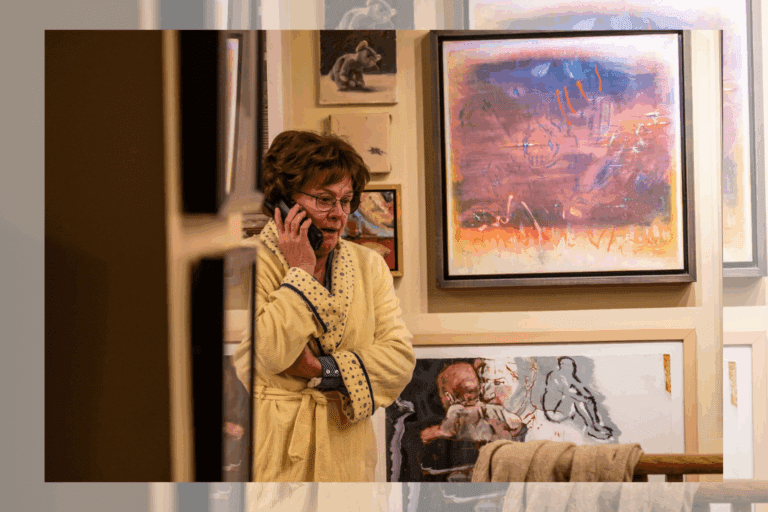 iPhoto caption: Jane Spidell in 'Twelve Dinners.' Photo by Dahlia Katz.
REVIEW: Family tensions run high in TIFT’s intimate Twelve Dinners
In the now-closed Twelve Dinners, an autobiographical play written and directed by Steve Ross, audiences received intimate access to an unvarnished version of a younger Ross through 12 evening meals with his parents.
 iPhoto caption: Members of the company of 'Narnia.' Photo by Dahlia Katz.
REVIEW: Bad Hats’ Narnia is a joyful, heartwarming escape
The spirit of openness and the joy of discovery rule over this Narnia. Open the wardrobe and see.
 iPhoto caption: Members of the company of 'Robin Hood.' Photo by Dahlia Katz.
REVIEW: Canadian Stage’s Robin Hood panto is anti-capitalist fun for the whole family
Following Ross Petty’s legacy of scene-stealing, Damien Atkins as the evil Prince John is easily the greatest delight of the show.
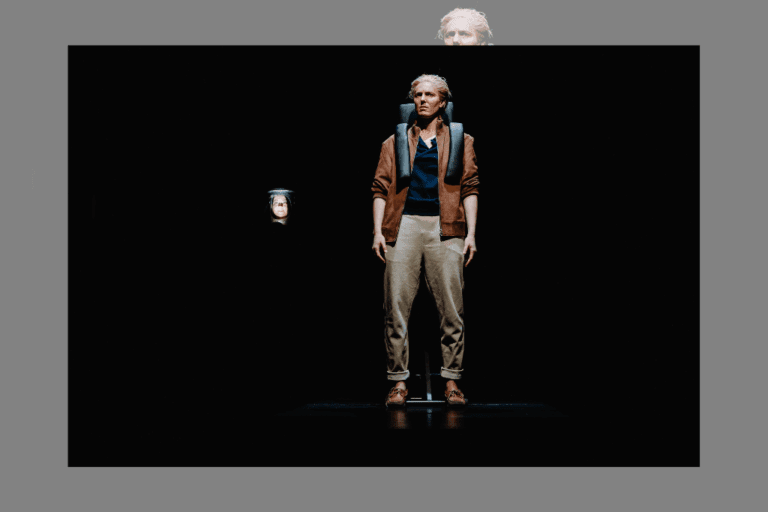 iPhoto caption: Lauren Gillis and Alaine Hutton in 'Public Consumption.' Photo by Eden Graham.
REVIEW: Lester Trips’ stylish Public Consumption captures the internet’s profound emptiness
Rather than directly representing online life, Public Consumption speculates — with virtuosity — about how the digital world affects our bodies. And the show's findings are by no means comfortable.
 iPhoto caption: Tony Ofori and Daren A. Herbert in 'Moonlight Schooner.' Photo by Dahlia Katz.
Kanika Ambrose’s Moonlight Schooner is animated and visually stunning, but its individual pieces don’t come together as neatly as I would've expected.
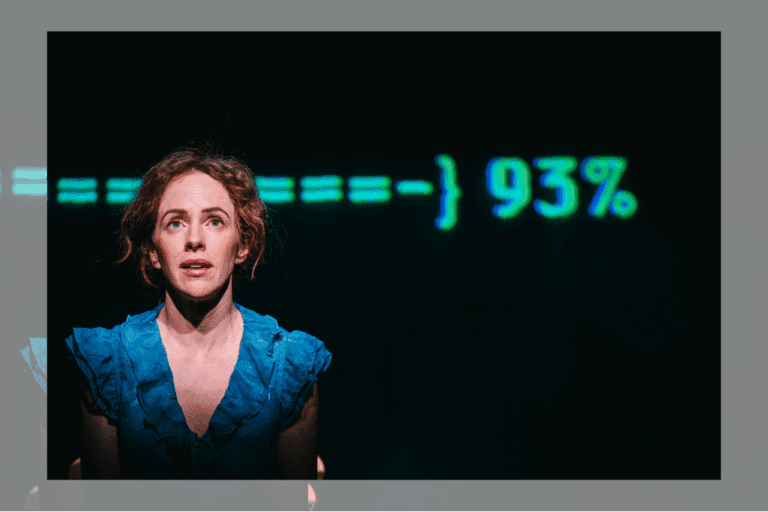 iPhoto caption: Fiona Mongillo in 'Reproduktion.' Photo by Ann Baggley.
REVIEW: Here For Now’s well-acted Reproduktion attempts to tackle too much
Amy Rutherford’s world premiere script is ambitious and the material it covers is complex — but the narrative feels disjointed.
 iPhoto caption: Production still from The Nutcracker courtesy of the National Ballet of Canada.
Why should you go to the ballet?
My childhood memories of learning to dance were front and centre for me when I attended opening night of The Nutcracker, performed by the National Ballet of Canada at the Four Seasons Centre for the Performing Arts.
 iPhoto caption: ROSA promotional image courtesy of RUTAS.
RUTAS redefines ‘American’ theatre and performance
“I think [Latinx artists] have always been a strong voice, but now we need to be even louder to the rest of Canada,” says multidisciplinary performance artist Carlos Rivera. “The things that we can bring to the table and bring to the stages can show the beauty, and the strain, and the capacities that Latino Americans carry with us in our bodies, in our minds, in our souls.”
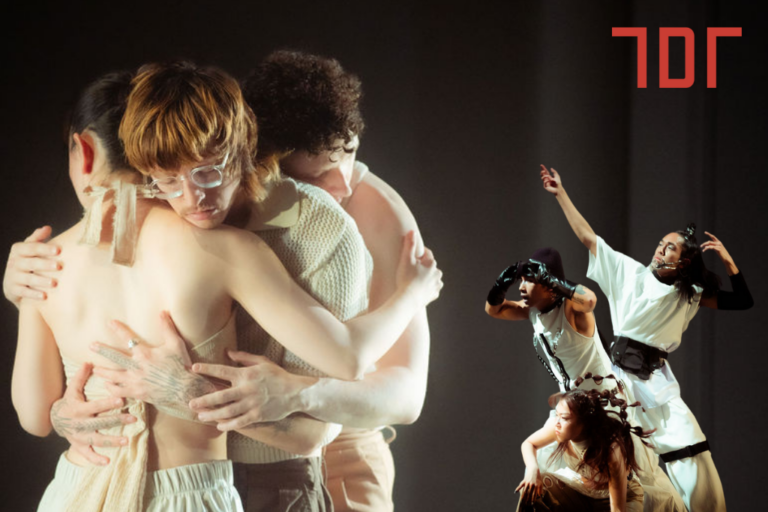 iPhoto caption: Original photos by Kendra Epik.
With its Spring Double Bill, Toronto Dance Theatre centres community and new voices
For the Spring Double Bill, artistic director Andrew Tay is considering how programming can be a means of supporting emerging artists.
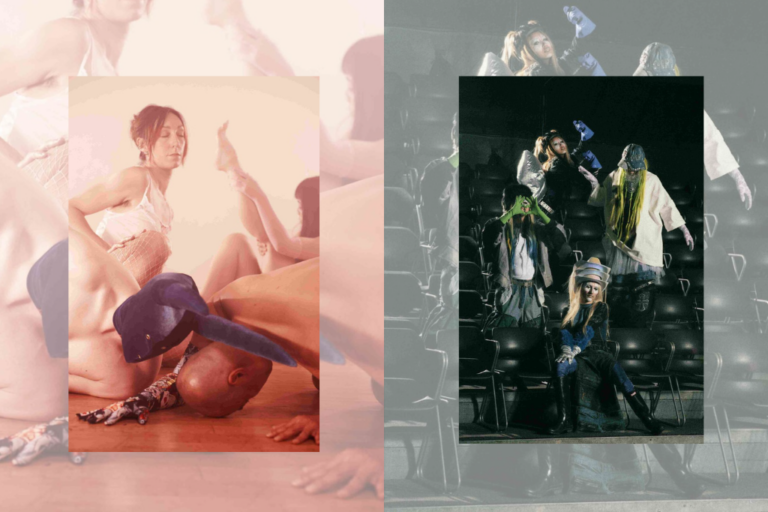 iPhoto caption: Photos by Roya DelSol
REVIEW: Boundary-pushing TDT double bill features face-riding and odd sensuality
Both pieces in the winter double bill are par for the course with TDT’s recent artistic output: unabashedly queer and consistently experimental.
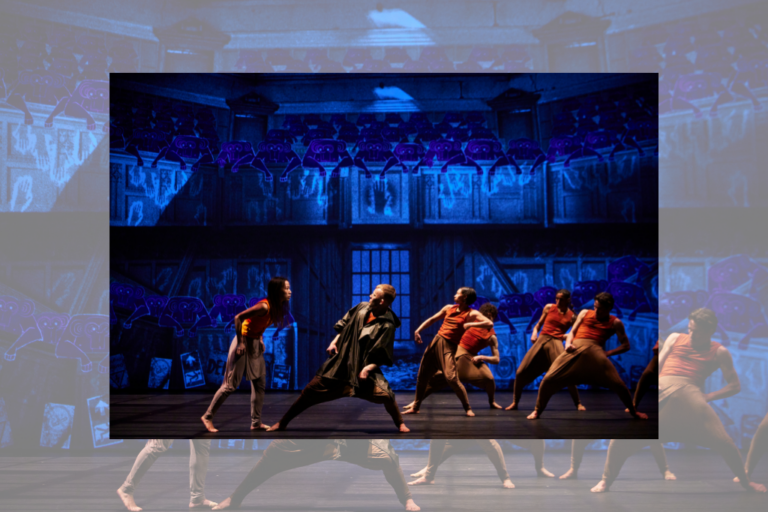 iPhoto caption: Photo by Ambra Vernuccio.
REVIEW: Jungle Book reimagined needs a little reimagining
Indeed, Akram Khan “reimagines” a historically complex story into a two-hour exposé on the environmental catastrophe. Jungle Book’s captivating visual effects and dynamic physicality brought the opening night audience to their feet. But as the choreographer’s first billing as director, Jungle Book’s storytelling doesn’t always live up to Khan’s skill as a dancemaker.
When it comes to dance made in Canada, there’s an overabundance of great work happening.
Comments