
Any Happy Little Thought
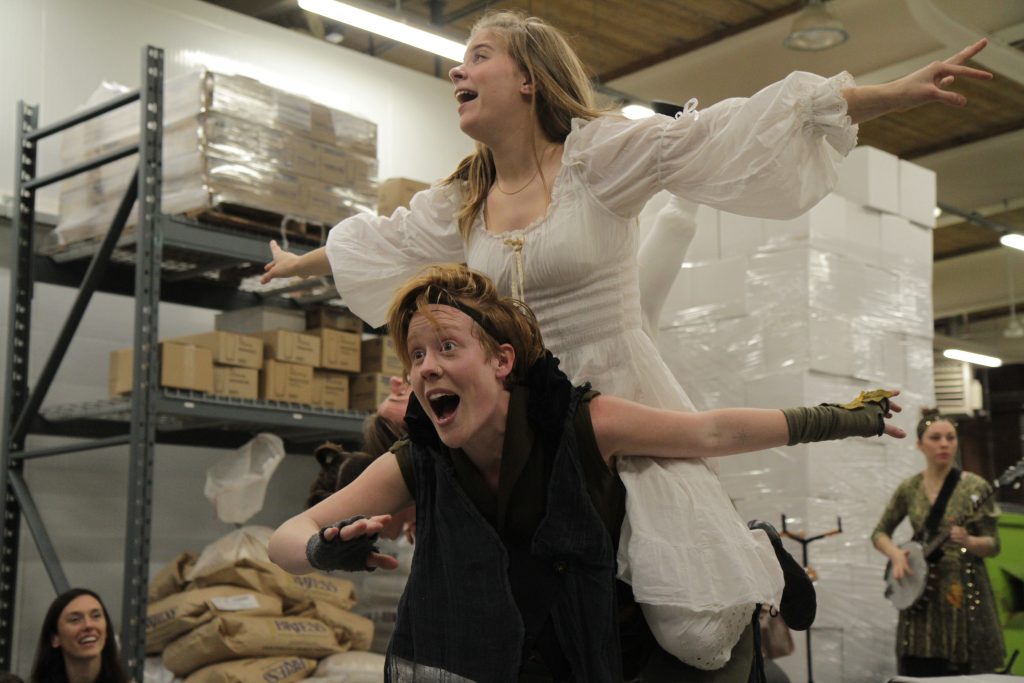 iPhoto caption: Lena Maripu and Fiona Sauder. Photo by Nicholas Porteous
Three things I know for certain: 1) I like making plays. 2) Magic is real. 3) The first is bettered by my steadfast belief in the second.
One of the ways I practice this is by working on/with/in a production of Peter Pan, which has consumed the better part of my creative attention during the holidays for the last three years. Peter Pan centres around things that don’t exist unless you believe in them: fairies, flying ships, Neverland, and so on. So, when adapting it for the stage, it was hugely important to make something that would only succeed if the people watching believed in it.
“You see, children know such a lot now, they soon don’t believe in fairies, and every time a child says, ‘I don’t believe in fairies,’ there is a fairy somewhere that falls down dead.”
The longer I spend with the piece, the more I believe that the best experts in magic are children, and they quickly become the authorities in the room. I’m glad for this not only because it reflects the themes of the story so directly—how right that Peter Pan is about a boy who refuses to grow up—but because it also sets the precedent for viewing theatre in general. Children may be stubborn as hell, but they are, at all times, ready to be surprised. This is what allows them to believe so deeply in something they’re encountering for the first time.
We adults have become less and less willing to implicitly buy in, or, even worse, we’ve agreed to pretend to buy in, a habit that makes both creators and consumers increasingly lazy and disheartened. Generally, when people don’t want to play, it’s not because they’re mean or unwilling, it’s because they underestimate the potential of the moment at hand. It’s the same quality that stops people from offering help to strangers. They assume that either the outcome will be minimal or, horror of horrors, that they will look foolish.
“The moment you doubt whether you can fly, you cease forever to be able to do it.”
Children don’t have this problem. They aren’t as familiar with the habitual disbelief that comes from measuring whether or not they might look stupid. They assume utter potential in every moment, and it makes them powerful. Though often quickly forgotten as children grow up, this ability is impossible to lose and can be recalled. And while so many things pull us away from the present moment, we have to make room for believing that a sheet is a ship, an acorn is a kiss, an empty room is an ocean.
I work in the independent theatre scene, and the lack of money often synonymous with that has been helpful, believe it or not. It has forced me to redefine the role audiences play in my storytelling, relying on them to complete images I can’t afford to put on stage. It’s a special kind of challenge, finding new ways to ask the question: “Do you see this thing I see?” I’m interested in making theatre that, without this exchange, cannot exist; theatre that can only succeed with the complicity of its audience. The result has been a reclaiming of the empty spaces where the forty-foot bookcases or antique chaise longues would be. I find I make better work when I’m asking people to suspend their disbelief further than simply accepting that the parlour that looks exactly like a parlour could maybe be a parlour.
Take, for example, the flying in Peter Pan. We figured if you hook someone up to a fancy system and swing them around from wing to wing, it may look cool, but it doesn’t ask anything of the audience. All it allows for is, “Hey, it looks like you’re flying,” while everyone tries to catch a glimpse of the strings. But magic is most palpable when everyone in the room has to participate for it to be possible at all. Our interpretation of Peter Pan refuses the notion of illusions, of strings and harnesses, of hidden tricks. Instead, we pick someone up in our arms, spin them around and put them down, and we call this flying. We choose to show our hand and it’s extremely gratifying to watch parents swing their kids around after the shows. “I’m flying!” the kids say. “Yes, you are!” the parents say.
My collaborator, Nicola Atkinson, describes magic as “Anything and everything outside the veil of knowledge.” She’s right. What’s great is that nobody knows anything. It’s all a best guest, so you can’t really ever get it wrong. If you can stop the stuff you’re so busy doing (being a grown up, or whatever) long enough to let yourself be surprised you might realize there are things right in front of you, waiting for you to believe in them. The moment when you open yourself up to this is where the magic lives. Second star to the right, and straight on till morning.
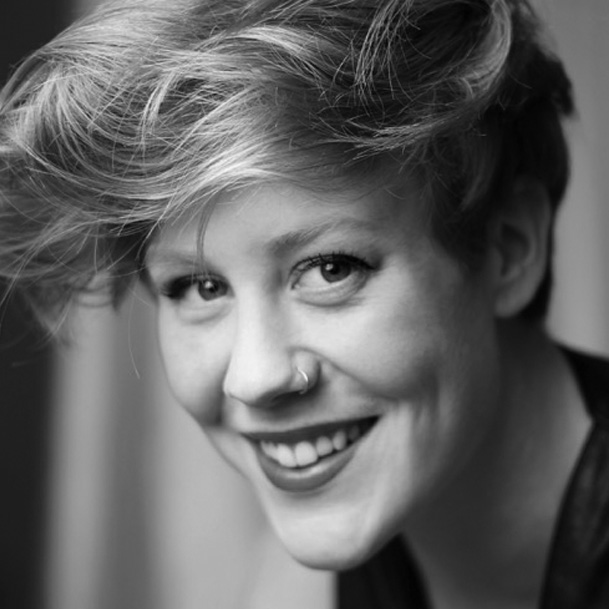
Fiona Sauder
Fiona is an Ottawa-born, Toronto-based maker of things and educator of organized nonsense. She is the proud co–artistic director of Bad Hats Theatre and owner of too many toothbrushes.
LEARN MORE iPhoto caption: Photo of Jordan Laffrenier by Sandro Pehar.
Preparing to direct Slave Play: A travel guide to Richmond, Virginia
Since reading Slave Play, I’ve asked every romantic partner whether or not they experience a racial dynamic between us in the bedroom. No one has given the same answer. What is it that I am asking them to acknowledge in these scenarios? Who is it that I am asking them to hold? What does it mean to hold someone’s history?
 iPhoto caption: 'Delirious Night' at the Festival d'Avignon. Photo by Christophe Raynaud de Lage.
At the 2025 Festival d’Avignon, politics were never far off
I’d performed and directed for festivals in Canada and elsewhere, but it wasn’t at all the same as being on the bum-in-seat side. There I was, in Avignon, rubbing shoulders with the umpteen visitors hungry for a good show. I came away feeling that here, theatre mattered. A lot. In the stony fields of Toronto, that can be easy to forget.
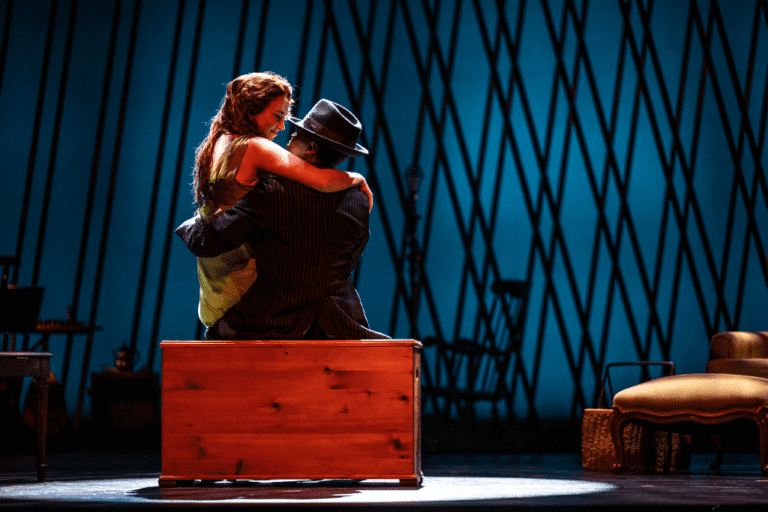 iPhoto caption: Set design by Camellia Koo,
Costume design by Judith Bowden,
Lighting design by Leigh Ann Vardy,
and photo by Dahlia Katz. Features Samantha Hill and Amaka Umeh.
iPhoto caption: Set design by Camellia Koo,
Costume design by Judith Bowden,
Lighting design by Leigh Ann Vardy,
and photo by Dahlia Katz. Features Samantha Hill and Amaka Umeh.
A story with no expiry date: Adapting Fall On Your Knees
At this critical political juncture, as so many forces in the world try to mute and silence women, our Canadian stories merit our advocacy and fervent attention.

Armchairs, tattoos, and an online theatre magazine
When I started at Intermission, my world was limited to the confines of an armchair. Arts journalism was a high it felt dangerously fruitless to chase. The life stretched ahead of me was amorphous and frightening, a chasm filled with hand sanitizer and immigration concerns. It was worth crying over a spilled kombucha and scrubbing at the stain.
 iPhoto caption: Production still from The Nutcracker courtesy of the National Ballet of Canada.
Why should you go to the ballet?
My childhood memories of learning to dance were front and centre for me when I attended opening night of The Nutcracker, performed by the National Ballet of Canada at the Four Seasons Centre for the Performing Arts.
 iPhoto caption: Photo by Grace Mysak.
Want to see a magic show about race? Wait, what?
You’d be forgiven for the double-take. It’s a fairly common reaction when I tell folks about my work as a magician.
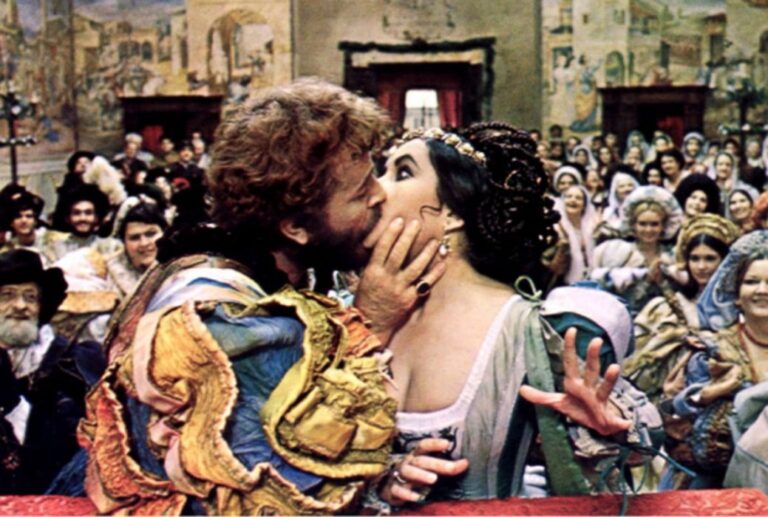
Bringing New Life to Old Plays
Someone asked me recently: Why do we still do Shakespeare?
Comments