
Reflections, Reviews, and Revelations on Alvin Ailey
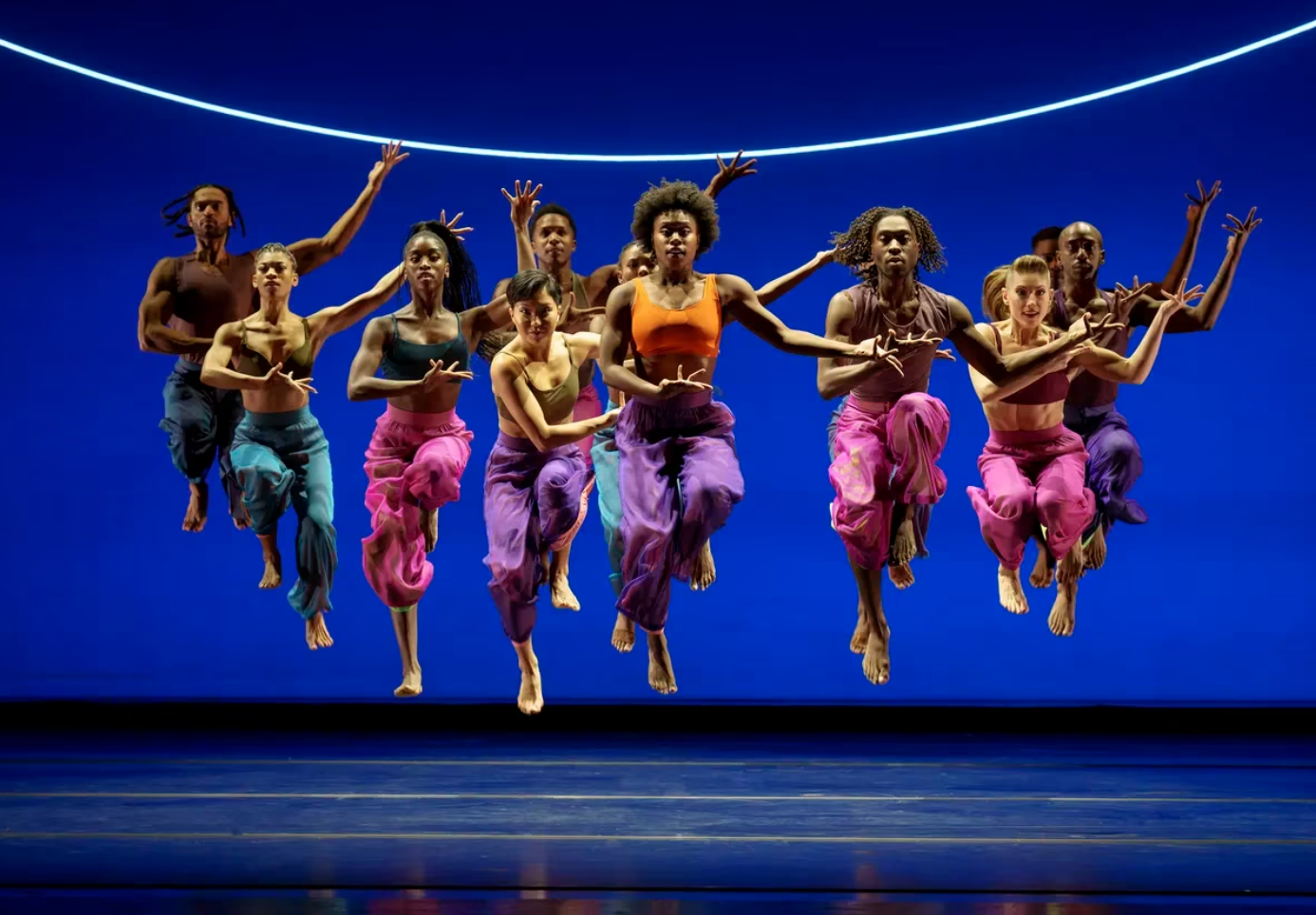 iPhoto caption: Photo by Paul Kolnik
When I settled into my seat at Meridian Hall for Alvin Ailey’s first performance in Toronto since 2019, I knew this wouldn’t be a typical review for me.
For most, this show was a special visit from the world’s largest touring dance company (by many metrics). But for me, watching Ailey felt like catching up with an old flame.
My love for Ailey started young. Already a dedicated dance student by my early teens, I stumbled upon grainy video clips of Alvin Ailey’s masterwork Revelations on YouTube in middle school. Having never seen modern dance before, I would watch Revelations regularly, enamored by the dancers’ strength, grace, and vulnerability. All I knew at that young age was that I wanted to dance like them.
So I started taking local classes in Ailey’s Horton technique exemplified by percussive, grounded movement through geometric poses. Eventually, I received acceptance and scholarship to The Ailey School’s Professional Division, and I moved across the United States to New York City.
Then and now, Ailey have been irreplaceable stewards of Black culture, celebrating Black performers in a dance industry that still does not adequately support BIPOC performers. And as a white dancer training with them, it was never my expectation to be a member of the Ailey company. Yet spending long hours training in the same building as the troupe I had loved for so many years prior was a consistent inspiration for my pursuit of dance jobs all over the States.
My time at Ailey was a complex catalyst for many coming-of-age moments. One is that we would always receive tickets for the company’s yearly opening night galas at New York City Center, hosted by the likes of Queen Latifah, Solange, and Janelle Monae. Up in the balcony, I would see some of the world’s greatest dancers shine from a distance.
I thought of my journey from grainy YouTube videos to New York nosebleeds as I now sat in Meridian Hall’s orchestra seats, deeply grateful for the sightlines reserved for press. Even though I’ve moved from New York and I’m no longer the dancer I used to be, I sat closer to the company this weekend than I ever did before. Growth doesn’t usually look like how we imagine it will when we’re young.
Maybe I’m too nostalgic, but if I am, an Alvin Ailey American Dance Theater performance is the right place to be. Over their two-day residency at Meridian Hall with TOLive, the Ailey company alternated between two repertory schedules. I opted for the first program, which featured Ailey classics from the ‘60s and ‘70s alongside choreography by artistic director Robert Battle. The other program with Princess Grace Award-winning choreographer Kyle Abraham was equally enticing, but I was, unsurprisingly, swayed by nostalgia.
Each performance ended with Revelations, holding up as the world’s most performed piece of modern dance. Alvin Ailey’s career took off after he premiered this three-part masterwork at Manhattan’s 92nd Street Y in 1960. Employing elements of the modern Horton technique with theatrical elements, Revelations is often considered the trailblazer for Black voices in modern dance. As his company and practice flourished until his death in 1989, Alvin Ailey’s name as a modern choreographer is canonized among the likes of Martha Graham and Paul Taylor.
Yet Mr. Ailey (as he’s often called by company veterans) expected his dancers to be equally as versed in modern and ballet training. Friday night/Saturday afternoon’s program began with Alvin Ailey’s 1974 classic Night Creature, a fitting mix of light, petit allegro jumps and Horton lateral turns with geometric arms exemplify. To say I know this piece is an understatement — it’s incredibly ballet-heavy, so Ailey School students often learn it for outreach performances around the greater New York City area. I can still hear the Ailey instructors: “who’s gonna be the star?” This is because the “night creature” in question is a woman who aims to end the night as a star, and on Friday night Sarah Daley-Perdomo did just that by waving her other company members offstage. Set to the music of Duke Ellington, dancers in flowing fabrics of light blues, purples, and whites leap and twirl in a sensual twilight. Altogether, Night Creature epitomizes the Ailey aesthetic, and exemplifies some of Mr. Ailey’s best choreography.
Ailey’s other classic performed on Friday night was the 1963 solo Reflections in D featuring dancer Vernard J. Gilmore. Gilmore is one of the company’s most seasoned members, and he was a regular presence in my ballet classes. His clean, elegant, and focused execution to (again) Duke Ellington was a testament to great technique and performance experience.
If Alvin Ailey’s classic choreography showcased the company’s legacy, then Battle’s contributions are an exciting glimpse into the future. His two works, For Four (2021) and Unfold (2007), highlight how he adapts contemporary innovations to Ailey’s sensibilities.
The older of the two works is a duet performed by star company members Ashley Mayeux and Jeroboam Bozeman. The hyper-dramatic choreography sees Mayeux contorting her body in direct reaction to Leontyne Price’s dramatic opera score as Bozeman gazes on pensively.
Yet it’s Battle’s sparkling new quartet that brought audience members to their feet, even before Revelations. Set to the dynamic jazz of Wynton Marsalis, this choreography is as intricate as it is jubilant. The four tuxedo-wearing dancers were led by Ashley Kaylynn Green, who may be one of the best dancers to hit a Toronto stage in recent memory. Pirouette-ing as quickly as she descends to the ground, she and the other dancers showed off exceptional virtuosity for the most exciting piece of the night.
And finally, what can I say about Revelations? Simply that everyone should try and see it at least once in their lifetime. It remains a testament to the trials and triumphs of the Black American experience, set to a score of spiritual music so iconic that many in the auditorium were singing along with it last week.
Revelations usually inspires intense emotions in its audiences. So I was surprised that this time around, my overwhelming feeling was comfort. I spent so much time at Ailey’s Manhattan home that I anticipated bawling my eyes out at some point in the night. But as I stood up and clapped along to the jubilant finale of Revelations, the Ailey dancers dressed in sunny yellows as women whipped fans back and forth, I was given the chance to simply exist within my past dreams. Seeing performance can do a lot for people. It’s truly special when it reminds you of who you are.

Martin Austin
Martin Austin is a PhD student at the University of Toronto’s Centre for Drama, Theatre & Performance Studies. Martin’s research explores the past and current state of ethics in Euro-American dance practice. He is research assistant for Category Is, a study of house ballroom communities in Toronto and Montréal, and lead administrative coordinator of the Institute for Dance Studies.
LEARN MORE iPhoto caption: Photo of Jordan Laffrenier by Sandro Pehar.
Preparing to direct Slave Play: A travel guide to Richmond, Virginia
Since reading Slave Play, I’ve asked every romantic partner whether or not they experience a racial dynamic between us in the bedroom. No one has given the same answer. What is it that I am asking them to acknowledge in these scenarios? Who is it that I am asking them to hold? What does it mean to hold someone’s history?
 iPhoto caption: 'Delirious Night' at the Festival d'Avignon. Photo by Christophe Raynaud de Lage.
At the 2025 Festival d’Avignon, politics were never far off
I’d performed and directed for festivals in Canada and elsewhere, but it wasn’t at all the same as being on the bum-in-seat side. There I was, in Avignon, rubbing shoulders with the umpteen visitors hungry for a good show. I came away feeling that here, theatre mattered. A lot. In the stony fields of Toronto, that can be easy to forget.
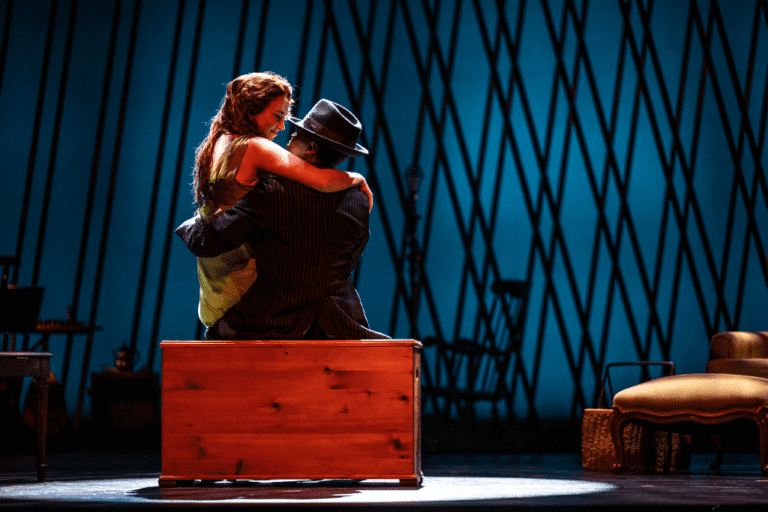 iPhoto caption: Set design by Camellia Koo,
Costume design by Judith Bowden,
Lighting design by Leigh Ann Vardy,
and photo by Dahlia Katz. Features Samantha Hill and Amaka Umeh.
iPhoto caption: Set design by Camellia Koo,
Costume design by Judith Bowden,
Lighting design by Leigh Ann Vardy,
and photo by Dahlia Katz. Features Samantha Hill and Amaka Umeh.
A story with no expiry date: Adapting Fall On Your Knees
At this critical political juncture, as so many forces in the world try to mute and silence women, our Canadian stories merit our advocacy and fervent attention.

Armchairs, tattoos, and an online theatre magazine
When I started at Intermission, my world was limited to the confines of an armchair. Arts journalism was a high it felt dangerously fruitless to chase. The life stretched ahead of me was amorphous and frightening, a chasm filled with hand sanitizer and immigration concerns. It was worth crying over a spilled kombucha and scrubbing at the stain.
 iPhoto caption: Production still from The Nutcracker courtesy of the National Ballet of Canada.
Why should you go to the ballet?
My childhood memories of learning to dance were front and centre for me when I attended opening night of The Nutcracker, performed by the National Ballet of Canada at the Four Seasons Centre for the Performing Arts.
 iPhoto caption: Photo by Grace Mysak.
Want to see a magic show about race? Wait, what?
You’d be forgiven for the double-take. It’s a fairly common reaction when I tell folks about my work as a magician.
iPhoto caption: Production still from The Nutcracker courtesy of the National Ballet of Canada.
Why should you go to the ballet?
My childhood memories of learning to dance were front and centre for me when I attended opening night of The Nutcracker, performed by the National Ballet of Canada at the Four Seasons Centre for the Performing Arts.
 iPhoto caption: ROSA promotional image courtesy of RUTAS.
RUTAS redefines ‘American’ theatre and performance
“I think [Latinx artists] have always been a strong voice, but now we need to be even louder to the rest of Canada,” says multidisciplinary performance artist Carlos Rivera. “The things that we can bring to the table and bring to the stages can show the beauty, and the strain, and the capacities that Latino Americans carry with us in our bodies, in our minds, in our souls.”
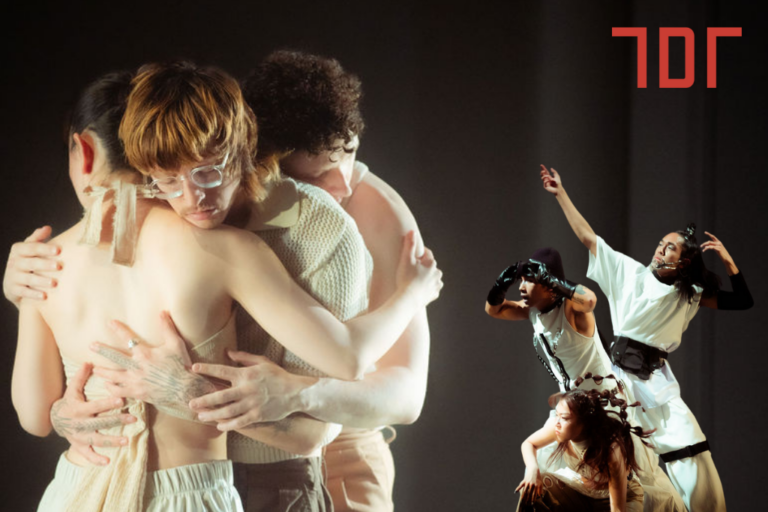 iPhoto caption: Original photos by Kendra Epik.
With its Spring Double Bill, Toronto Dance Theatre centres community and new voices
For the Spring Double Bill, artistic director Andrew Tay is considering how programming can be a means of supporting emerging artists.
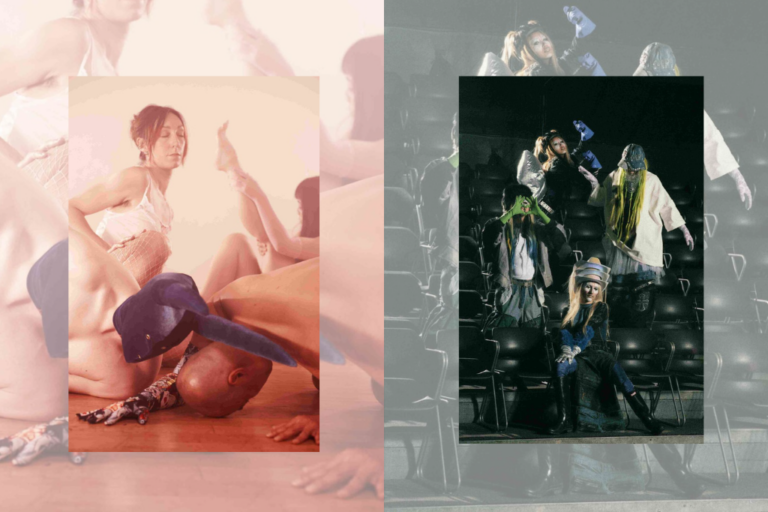 iPhoto caption: Photos by Roya DelSol
REVIEW: Boundary-pushing TDT double bill features face-riding and odd sensuality
Both pieces in the winter double bill are par for the course with TDT’s recent artistic output: unabashedly queer and consistently experimental.
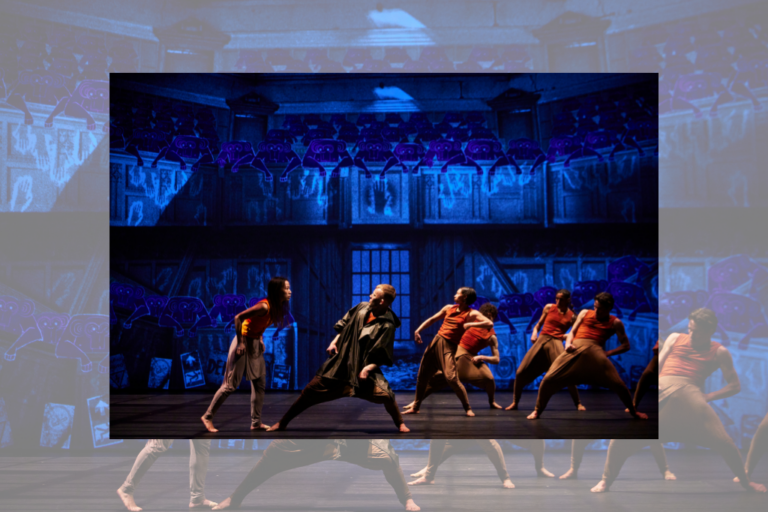 iPhoto caption: Photo by Ambra Vernuccio.
REVIEW: Jungle Book reimagined needs a little reimagining
Indeed, Akram Khan “reimagines” a historically complex story into a two-hour exposé on the environmental catastrophe. Jungle Book’s captivating visual effects and dynamic physicality brought the opening night audience to their feet. But as the choreographer’s first billing as director, Jungle Book’s storytelling doesn’t always live up to Khan’s skill as a dancemaker.

When it comes to dance made in Canada, there’s an overabundance of great work happening.
Comments