
In Conversation: Hannah Moscovitch

Playwright Hannah Moscovitch is currently writing an opera, while her 2016 play Bunny is enjoying an acclaimed run at Tarragon and last year’s Old Stock is opening in New York. Now her 2015 play What a Young Wife Ought to Know, about the ways women navigated love and sex and desire before birth control was made legal, is about to open at Crow’s Theatre. At a time when conversations around female sexuality are increasingly necessary, she talked to us about the play’s real-life inspiration, awful old-school birth control methods, and why looking at women’s history is especially important right now.
On the real-life stories that made Moscovitch want to examine women’s sexuality before birth control was legal or accessible
I picked up a book at a garage sale. I think it was 75 cents. It’s a book of letters written to Dr. Marie Stopes—she was a pioneering birth control advocate in the 1920s in England. Women were writing to her, asking her for help with birth control. Many letters don’t really distinguish between birth control and abortion, because they were both illegal.
It was this weird entry into this world that I had never heard of, and it was women, all women. Women were the subject, even when husbands wrote in. And there was a helplessness in the love husbands had, because they wanted their wives to live. They wanted them to survive childbirth.
[The letters came from women] worldwide. You get to see letters from Canada, and letters from Australia, and letters from India. They’re predominantly working-class women. Because birth control was illegal there was a black market, and it was extraordinarily expensive. That was part of the problem. The working class— often they’ll say things at the beginning of the letters like: I saved up the money to buy the paper for this letter. I didn’t buy butter this week so I could buy paper so I could write to you.
Reading the letters, I felt like: This is a world with machine guns and telephones and electricity. It’s a modern, technological world. And it just shows the difference in women’s lives before and after the legalization and proliferation of birth control.

Liisa Repo-Martell and Rebecca Parent in What a Young Wife Ought to Know
How the letters uncovered truer narratives about abortion
What is striking about the letters is that they were so in contradiction to abortion narratives about some young unmarried girl who gets knocked up by a rich man and then has a back-alley abortion and dies. That story is omnipresent. But these are married women who want abortions, with husbands who love them. Almost every letter starts with how much they make and how many children they have. So it will be like: My husband makes eight dollars a week, and I bring in two dollars doing laundry. I’ve buried three children, had four stillbirths, two miscarriages, and I have four living. Can you please help me to stop having more children? My womb has prolapsed twice now, and every time I go into the hospital it’s so much money, and the children need me at home. Every letter sounds similar, kind of like a scream into the dark, written to a woman they’d never met.
Why it was refreshing to read women speaking candidly about sex
It’s so strange, when you think about the literature of the period and how masked all of that stuff is. Then to read this thing where it’s just fully on the table, you know? They’re like: here are all the things that went wrong in my childbirth. And birth is something that’s so often alighted. Even in movies today—birth in movies today is exactly like fucking used to be before HBO. It’s a woman in a sheet, a little bit of sweat, she looks fulfilled but tired. No! Twenty-nine hours of labour does not look like that! But we see that over and over again. In a way this is the opposite of that: everything unmasked, the dirty, slutty, gothic side of what birthing would have been like.
On the problem of sexual pleasure
Desire is actually a problem in What a Young Wife Ought to Know, and in the letters. Some of these women are pleading to be able to continue to have sex with their husbands without having babies as a consequence. What if you’re twenty-three, and you’ve been married since you were eighteen, and you’ve already got four children? You want to fuck your husband once or twice more before you die.
To women whose uteruses had become prolapsed from so many pregnancies, often doctors would say, you have to stop having children. [Women] would ask, how? And [doctors] would say, that’s not a medical question, that’s between you and God. So they’re stuck in a marriage with desire but no way to fulfill it. What do you do with desire in a marriage where you cannot fuck your husband without the consequences being disfigurement and death?

Liisa Repo-Martell and David Patrick Flemming in What a Young Wife Ought to Know
The horror of early birth control methods
Some of them shocked the shit out of me, like using acid. It’s apparently spermicidal. That’s a scene in the play. They would bake acid into something like butter—it looked like a brownie—and you would stick it up your vag. And it would burn you and your husband, but you could have sex. I know, it’s grim.
The middle class sometimes went for abstinence as a solution. There are cases of men writing in and being like: My wife doesn’t want to have any more children and so she spends a lot of time in the garden. Stuff like that. Or they went for very, very expensive illegal, and often botched, abortions.
What hasn’t changed since the 1920s
There is a kind of isolation to bearing the burden of labour and childbearing alone. That alone-ness was just so stark in the letters, and that felt contemporary. Maybe it’s strictly true to heterosexual relationships, but if you’re a woman and [pregnancy is happening within] your body, to some degree, it’s going to be your responsibility more. That’s inescapable. However much you love your husband, there’s going to be some places where he cannot follow you. And that will make you feel isolated. That’s something that I learned about when I had my own child.
On how conversations about the play have changed since its premiere three years ago
When we were working on it in 2015, people kept saying, “Why do you think this is relevant?” Artistic directors said that, too. I kept having to defend it. I felt like what was being said on some level was that women’s history wasn’t relevant. What the fuck?
[Women’s lives before birth control] was this extraordinary thing, an unusual part of women’s history, that felt lost to me. And, like with anything else, it can come back. The leader of our Conservative party right now is against abortion, openly. Mike Pence is second in line for the presidency in America, and he is stridently, in all cases, anti-abortion. It’s annoying to be too alarmist, but it’s worth saying.
It’s amazing to me that three years ago, interviews started with, “What’s relevant about this?” And now they’re starting with, “This is so relevant.”

Maija Kappler
Maija is the co-founder and former co-editor of Intermission. She’d like you to know that her name is pronounced just like “Maya.”
LEARN MORE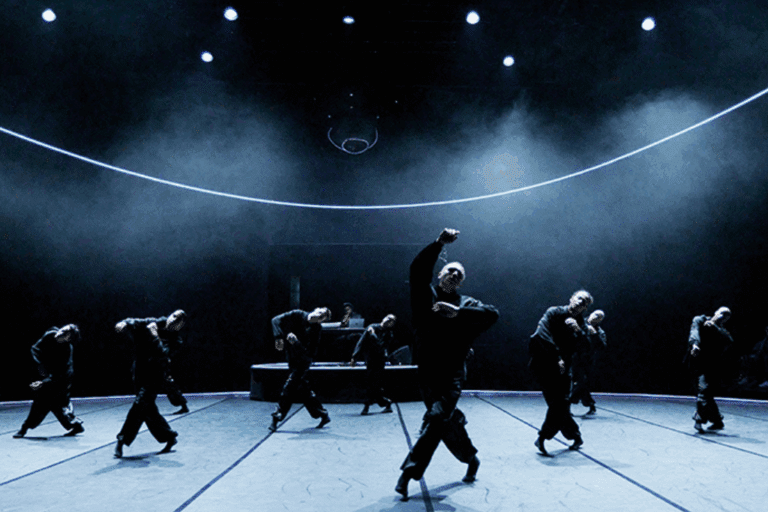 iPhoto caption: Photo by Fabian Hammerl.
In A a | a B : B E N D, choreographer Aszure Barton aims to rebuild dance from the inside out
“It’s so easy to over-intellectualize dance in general, but B E N D is about hearing and moving to cool-ass music together,” says Barton ahead of the show's run at the Bluma Appel Theatre.
 iPhoto caption: Elinor Holt and Ellen Close in 'How Patty and Joanne Won High Gold at the Grand Christmas Cup Winter Dance Competition.' Photo by Benjamin Laird.
“We’re living in a world right now where failure is not an option,” says actor Elinor Holt. “And a lot of times people would rather not try anything at all, rather than try something and risk failing at it.”
 iPhoto caption: Jane Spidell as Bettye, Kevin Bundy as Jim, and Noah Beemer as Steve in 'Twelve Dinners.' Photo by Dahlia Katz.
With TIFT’s Twelve Dinners, actor Steve Ross makes the leap to playwright-director
"I love sitting with the actors before rehearsals and discussing, especially when they ask questions,” says Ross. “I love the blocking and staging. I love directing my own work, but find it challenging."
 iPhoto caption: Manus Halligan in Dan Colley's adaptation of 'A Very Old Man with Enormous Wings'. Photo by Ste Murray.
A contemporary Gabriel García Márquez adaptation touches down in Toronto
A Very Old Man with Enormous Wings has toured internationally since 2022, with a shifting cast of performers. Halligan and Beaman, the original actors and co-adaptors, will reprise their roles for the Toronto premiere.
 iPhoto caption: 'Narnia' in rehearsal. Photo by Dahlia Katz.
"What emerged for us was this idea of life cycles,” reflects Narnia adaptor-director Fiona Sauder. “‘What happens when you get stuck in one season [of life], and what happens when that season comes to an end? [What things] have to die and fall away in order for new things to grow?’”
 iPhoto caption: Jordan Pettle, Janelle Cooper, and Monique Mojica in CHILD-ish. Photo by Jae Yang.
Tarragon’s upcoming show gives audiences a verbatim taste of children’s wisdom, wit, and weirdness
The first inklings of CHILD-ish came to Drake in 2017. “I got to an age where I started having a lot more kids in my life,” he said. That “got me curious about what adults can learn from kids: playing with and flipping that power dynamic of who’s the learner and who’s the teacher.”
A Message from Intermission’s Editors
May Antaki and Maija Kappler, co-founders and co-editors-in-chief of Intermission, are stepping down.

Casting Announcement: what I call her
Here's the cast for Ellie Moon's play "what I call her," directed by Sarah Kitz, opening at Crow's Theatre this November.
Theatre this Week: Stratford Edition
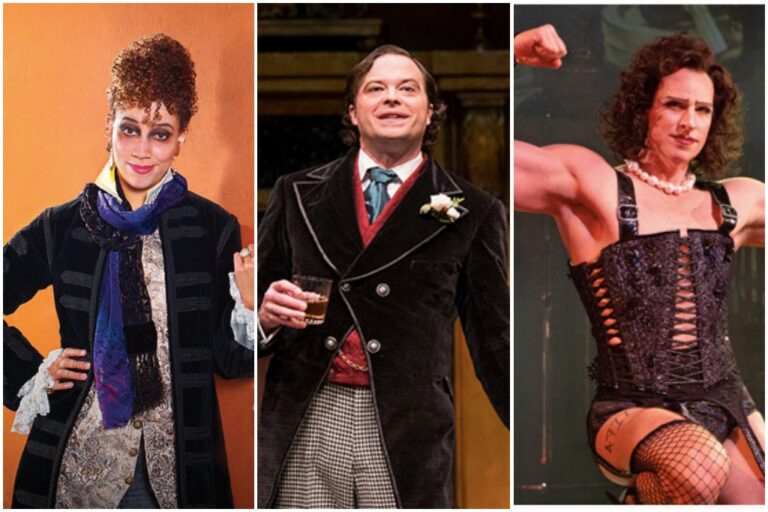
Here are the Stratford Festival plays to see for the week of June 4 - 10, 2018.

Theatre this Week: May 28 – June 3
These are the plays to see in Toronto for the week of May 28 - June 3, 2018.

Here Are the 2018 Toronto Theatre Critics Award Winners
Toronto's theatre critics just announced their favourite shows of the year for 2018.
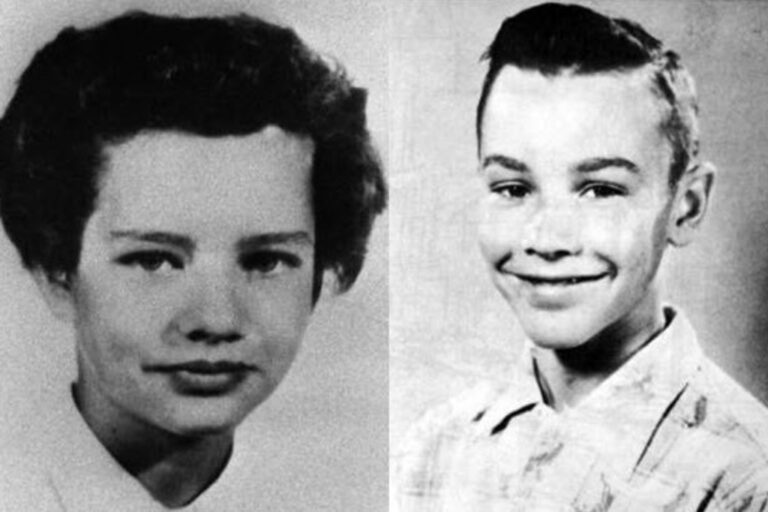 iPhoto caption: Lynne Harper, left, and Steven Truscott, right
Telling the Story of the Murder Trial that Changed the Country
Fiction about a real-world tragedy risks sensationalizing the events that remain painful for a lot of people. But they also provide the opportunity to explore human behaviour, to directly address the impacts of violence and trauma.
Comments