
REVIEW: A Number at That Theatre Company
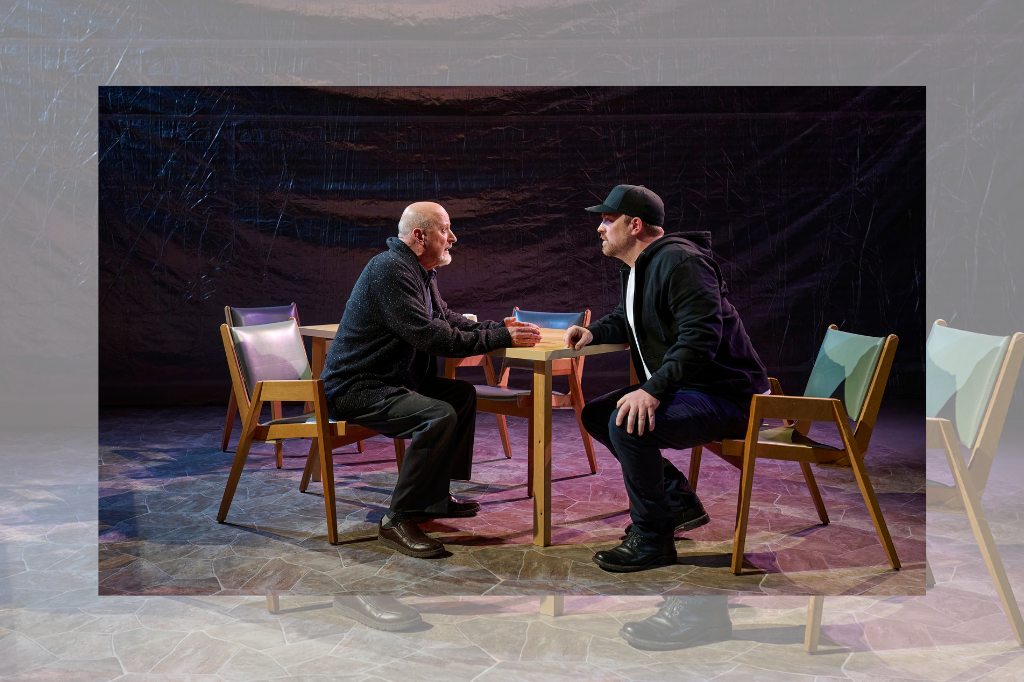 iPhoto caption: Jim Mezon (left) and Craig Pike (right) in Caryl Churchill's A Number, presented by That Theatre Company. Photo by Michael Cooper.
Caryl Churchill’s 2002 play A Number is the perfect demonstration of why her work is a staple in the contemporary theatrical canon, showcasing her unflinching approach to writing about socio-political topics as well as her ability to manipulate language. In typical Churchill style, the published text is very spare: no set specifications, few stage directions, and deliberately stylized text. Even the key conflict of the play is never directly mentioned, only hinted at: it’s a surreal story about identity, individuality, and the battle of nature versus nurture.
The 60-minute play sees Salter reconnect with Bernard, his adult son, whose recent experience has thrown the very nature of his identity into question. He’s come to Salter seeking comfort and answers, but as the play progresses, stories change, details twist, and new “Bernards” begin to appear, leaving the audience questioning who Salter really is: master manipulator or penitent father?
A Number is the inaugural production for That Theatre Company, an offshoot of That Arts Group (TAG), created by a solid team of seasoned theatre-makers. Award-winning director Severn Thompson helms the two-hander, which stars Jim Mezon and Craig’s Cookies founder and TAG artistic director Craig Pike as father and son. The pace, set, and sound design are marvellous, but despite the strength of its individual parts, the production never quite realizes its stakes.
The design team embraces the sci-fi elements of the play with nuance. Set designer Steve Lucas uses translucent plastic sheeting to cordon off a small thrust stage in the middle of the church, creating an intimate playing space in the cavernous St. Anne’s Hall. The set is simple — two mint green chairs and a table, with a coat rack and small cabinet in opposite upstage corners — but highly effective. The constrained, sterile playing space gives the feeling of observing a medical trial, unseen by the patients. Yusuke Takase’s lighting design emphasizes the clinical coldness of the space: the audience is partially lit, which only augments the feeling of being an intruder in a private setting.
The high, domed ceilings of St. Anne’s Hall creates a distorted echo, highlighting the most explosive moments in the script. While Heidi Chan’s sound design is mostly limited to scene transitions, an insistent, droning hum fills the space in moments of conflict, and pulsating, lyricless rock music throbs through scene changes: combined with the dimensions of the space, the effect is spectacularly off-putting.
Where this production started to fizzle on opening night was its performances. The first two scenes, which introduce the characters and conflict, felt stilted considering the urgency of the situation. The actors are often seated and remain largely at a distance, grounding the energy in a way that doesn’t quite suit the frenetic tone of the piece: the characters had a detached pensiveness that didn’t match the weight of the identity crisis Bernard is experiencing.
Mezon expertly navigates Salter’s vulnerability and pain, delivering a character who is both villain and victim, but his delivery in the first two scenes felt slightly stiff. Churchill’s text features many interruptions, with characters speaking over each other and changing thoughts mid-sentence. For the first half of the play, these shifts felt clunky and somewhat unnatural; however, Mezon leaned further into the character with every scene, and by the end of the play he was breathing naturalism into a surreal story.
Pike tackles an immense challenge in portraying three characters, and on opening night he was able to navigate their distinct personalities well. However, his performance felt overly controlled: he wasn’t quite able to connect to the weight of the situation and embrace the characters’ reality fully.
Some of the fumbles in the performance might have been saved by more deliberate staging: I would have loved to see more exploration of distance and relationship, and there was plenty of opportunity to explore style and storytelling in Pike’s character transitions. The audience is able to see him changing costumes in the corner of the stage between scenes, and a more artistic approach to those transitions might have maintained more of the tension created in each scene.
Ultimately, what’s lacking in the production are clear stakes: the conflicts of the piece are earth-shattering, reality-bending, but as events unfold, they read more as annoyances or disappointing mistakes rather than the series of cataclysmic revelations they are.
A Number is a difficult piece to tackle as a first undertaking, but the successes of the piece show promise for That Theatre Company’s future. Toronto audiences have proven themselves eager to navigate intellectual, human stories and I hope to see this company continue to challenge their audiences for years to come.
A Number runs at St. Anne’s Parish Hall until May 6, 2023. Tickets are available here.

Jessica Watson
Jessica is a former associate editor at Intermission, as well as a writer, classically-trained actor, and plant enthusiast. Since graduating from LAMDA in the UK with her MA in acting, you can often find her writing screenplays and short plays in the park, writing extensive lists of plant care tips, or working on stage and screen (though she uses a stage name). Jessica freelances with various companies across Canada, but her passion lies in working with theatre artists and enthusiasts.
LEARN MORE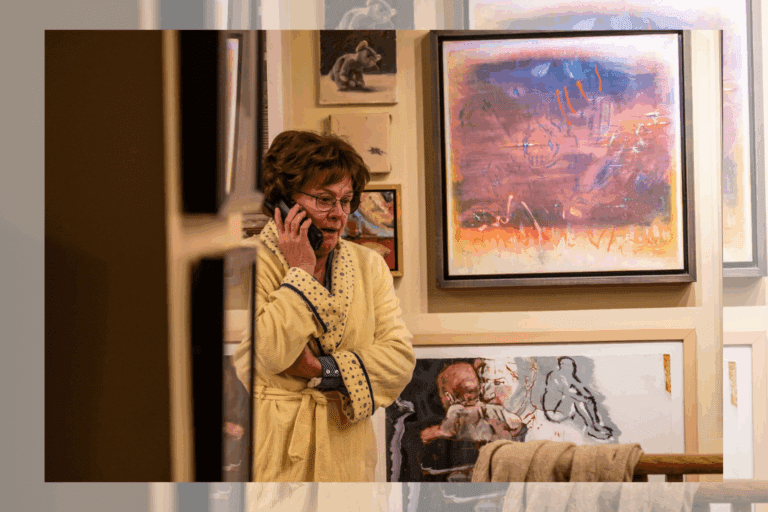 iPhoto caption: Jane Spidell in 'Twelve Dinners.' Photo by Dahlia Katz.
REVIEW: Family tensions run high in TIFT’s intimate Twelve Dinners
In the now-closed Twelve Dinners, an autobiographical play written and directed by Steve Ross, audiences received intimate access to an unvarnished version of a younger Ross through 12 evening meals with his parents.
 iPhoto caption: Members of the company of 'Narnia.' Photo by Dahlia Katz.
REVIEW: Bad Hats’ Narnia is a joyful, heartwarming escape
The spirit of openness and the joy of discovery rule over this Narnia. Open the wardrobe and see.
 iPhoto caption: Members of the company of 'Robin Hood.' Photo by Dahlia Katz.
REVIEW: Canadian Stage’s Robin Hood panto is anti-capitalist fun for the whole family
Following Ross Petty’s legacy of scene-stealing, Damien Atkins as the evil Prince John is easily the greatest delight of the show.
 iPhoto caption: Lauren Gillis and Alaine Hutton in 'Public Consumption.' Photo by Eden Graham.
REVIEW: Lester Trips’ stylish Public Consumption captures the internet’s profound emptiness
Rather than directly representing online life, Public Consumption speculates — with virtuosity — about how the digital world affects our bodies. And the show's findings are by no means comfortable.
 iPhoto caption: Tony Ofori and Daren A. Herbert in 'Moonlight Schooner.' Photo by Dahlia Katz.
Kanika Ambrose’s Moonlight Schooner is animated and visually stunning, but its individual pieces don’t come together as neatly as I would've expected.
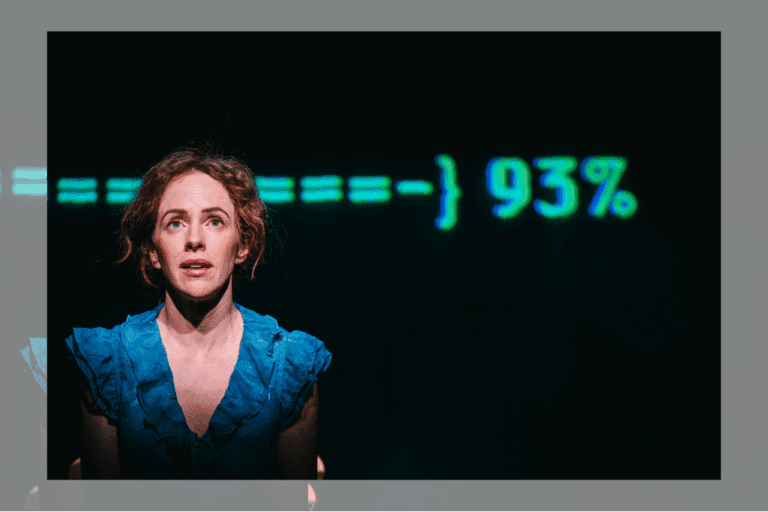 iPhoto caption: Fiona Mongillo in 'Reproduktion.' Photo by Ann Baggley.
REVIEW: Here For Now’s well-acted Reproduktion attempts to tackle too much
Amy Rutherford’s world premiere script is ambitious and the material it covers is complex — but the narrative feels disjointed.

Pakistani-Canadian actor Ahad Raza Mir ‘goes back to basics’ with Brampton production of Hamlet
“The South Asian community in Calgary, and even Toronto, is a whole different story than Brampton in terms of size,” says Mir. “I'm excited to have this show come to a larger group of South Asians: most importantly, young people who maybe want to go into the arts who want to be actors."
 iPhoto caption: From top left, clockwise: Nikki Shaffeeullah, Adele Noronha, Michelle Mohammed, Jay Northcott, Anand Rajaram, and Virgilia Griffith.
Tarragon Theatre Announces A Poem for Rabia Cast
Award-winning theatre and film artist Nikki Shaffeeullah’s play A Poem for Rabia will make its debut in a Tarragon Theatre production in association with Nightwood Theatre and Undercurrent Creations.
 iPhoto caption: Jeremy Smith and Tom Lillington in Driftwood Theatre's Living With Shakespeare. Original image by Dahlia Katz.
REVIEW: Living With Shakespeare at Driftwood Theatre
Living With Shakespeare is a deeply intimate exploration of Smith’s life and work, using Shakespeare’s words to bring to life some of his most personal, exciting, and challenging experiences.

REVIEW: Shakespeare By Any Other Name at Dauntless City Theatre
Part history lesson, part joyful romp through Shakespeare’s works, the sixty-minute play in the heart of St. James’ Park attempts to return the playwright to the people.
Guild Festival Theatre’s The Drowning Girls Opens in Scarborough
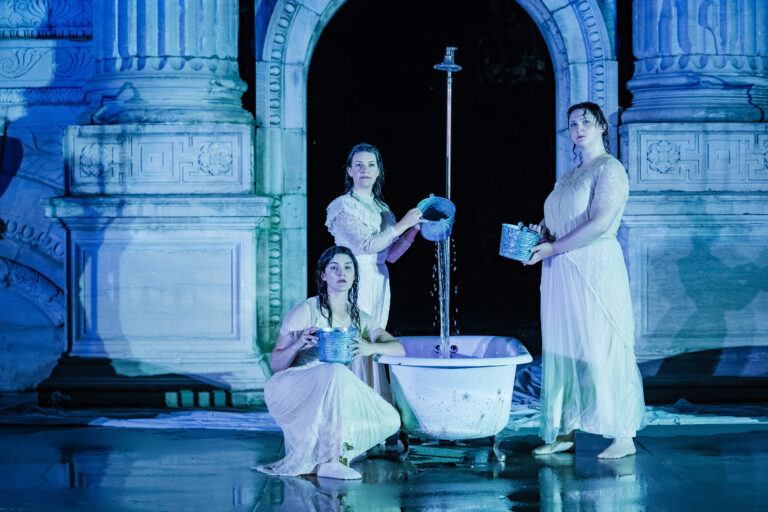
GFT’s final production is the multi-award-winning play The Drowning Girls, a true crime tale about three women married to and murdered by the same man.
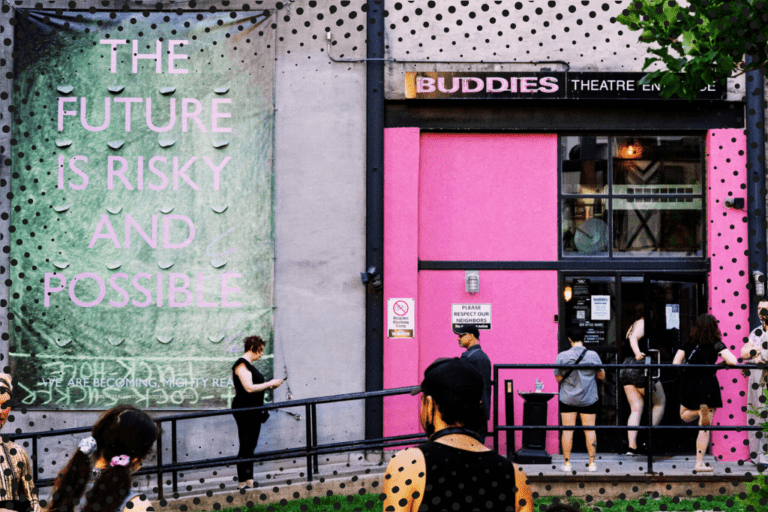
Buddies in Bad Times Theatre Reveals Their 45th Anniversary Season
Buddies in Bad Times Theatre is celebrating with a season that showcases both epic queer stories from history and innovative new works from a diverse roster of artists.
Comments