
REVIEW: No One’s Special at the Hot Dog Cart is a heartfelt slice of autobiography
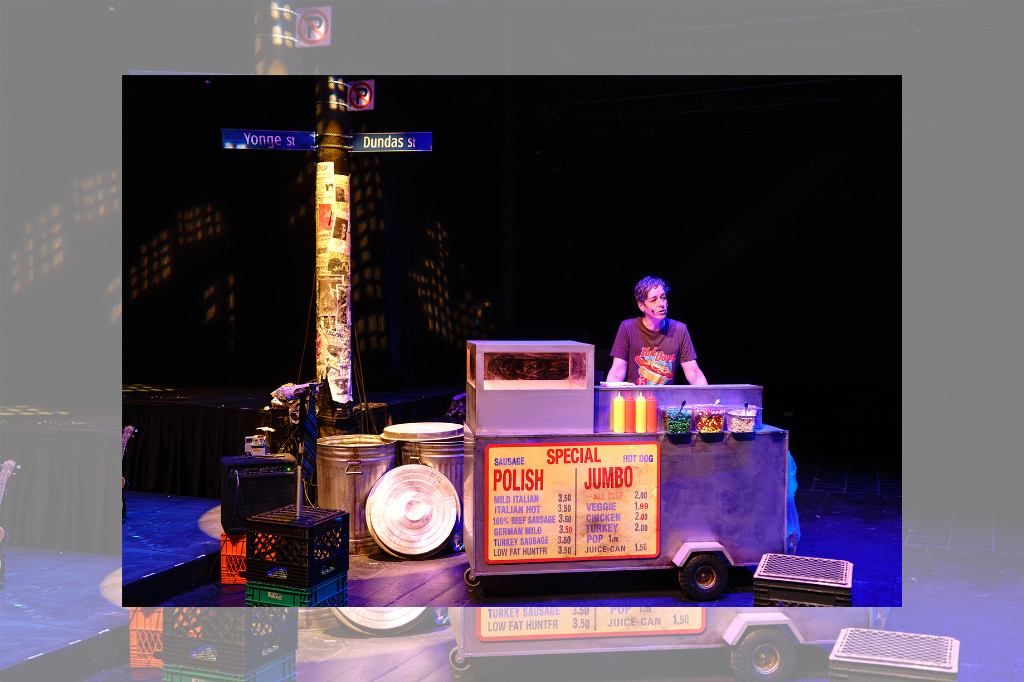 iPhoto caption: Photo by Nika Belianina
If you’ve ever passed through Yonge-Dundas Square as the August sun blazes down – heating to scalding heights the concrete upon which lunching lawyers trample, preachers into megaphones inaudibly shout, and high schoolers from the Eaton Centre lumber – you’ll understand where actor-playwright Charlie Petch is coming from with their new solo show No One’s Special at the Hot Dog Cart, produced by Theatre Passe Muraille (TPM) in collabaration with Erroneous Productions.
Petch, who uses they/he pronouns, worked opposite that clamorous, soon-to-be-renamed stomping ground as a teenage hotdog vendor in the 1990s. His 65-minute show details the lessons slinging relish and toasting buns taught him about Toronto and its inhabitants. Although Autumn Smith’s production at the TPM mainspace is on the static side, Hot Dog Cart remains a heartfelt slice of autobiography, embroidered with care.
Monologuing to the audience, Petch, called Charlie in the script, sets the scene, explaining how Yonge-Dundas was different in the ’90s – no flashing walls of light, for one – before describing Frank, a recurring figure in the story. Frank, who harbours deep sadness over losing custody of his daughter, steals videotapes from nearby stores for a living. Charlie listens to his constant venting with compassion, calming the man.
Looking back, Charlie realizes that with Frank he was “practising the first steps in de-escalation technique.” He’d develop his conflict resolution skills further at Church and Gerrard, his next intersection, where he got to know the queer community (Petch himself is trans), before working a series of jobs requiring he thrive in emergencies: 911 operator, emergency room clerk, hospital bed allocator, and so on. They’re now a certified instructor in non-violent crisis intervention. (But no stranger to the arts: their bio labels them “a poet, playwright, librettist, musician, lighting designer, and host.”)
As he details his experiences working these positions, Charlie is careful to share mistakes made – moments in which he failed to “manage [his] response” to a situation. He tells of “yelling at an overworked nurse” and “making a man feel as if his vomited blood was nothing.” Charlie has learned from these bumps in the road; by including them, he lets us in on that valuable knowledge.
Joel Richardson’s set fills Theatre Passe Muraille with ’90s ephemera. A dilapidated NOW Magazine newsrack sits to the left of two telephone poles covered in black-and-white posters advertising cultural events. Centre-stage, milk crates and steel garbage cans flank a full-sized hotdog cart on wheels, complete with retro prices (an all-beef dog is a toonie, the sign tells us, though sadly none are cooked up during the show).
These references to an older Toronto buoy the first half of the play, which focuses on Charlie’s hotdog vendor experience. Once they begin discussing their later jobs, the set stops doing much. There’s figurative significance – working in the ER has similarities to working as a hotdog vendor, the show purports, so it makes a degree of sense that Charlie stays tucked behind his stand – but little reason for Charlie to interact with the ’90s playing space now that the show’s timeline has progressed. They, and it, remain more or less stuck in place.
As a memoir, Petch’s play has significant power, and the writing – laced with occasional jaunts into poetry – often resonates. But its joys are literary; he and Smith have not yet entirely worked out how to translate this story into stage action. An exception is a theatrical device involving a loop machine. A few times, Charlie picks up a couple instruments and uses the gadget to record beats, which serve as background music for the next few minutes of monologue. The spirit of this choice, requiring Petch to juggle instruments as a vendor might hotdogs, is lovely – but on opening night, the grooves didn’t always click, with the loop machine emphasizing musical errors by repeating them.
While Petch is in an excellent position to tell their own story, the play’s status as a solo show occasionally muddies its attempts to put forth an argument about crisis response. It’s tough to explore the importance of active listening when there’s only a single person onstage – Charlie can talk about it, but never embody it. Same goes for the audience: though we’re encouraged to actively listen, all we can do is listen closer to Charlie instructing us to listen, creating an infinite feedback loop. Hot Dog Cart flourishes whenever Petch accepts that the show is ultimately about him – he’s lived a mighty interesting life, and there’s real pleasure in hearing it detailed.
No One’s Special at the Hot Dog Cart runs at Theatre Passe Muraille until March 23. Tickets are available here.
Intermission reviews are independent and unrelated to Intermission‘s partnered content. Learn more about Intermission‘s partnership model here.
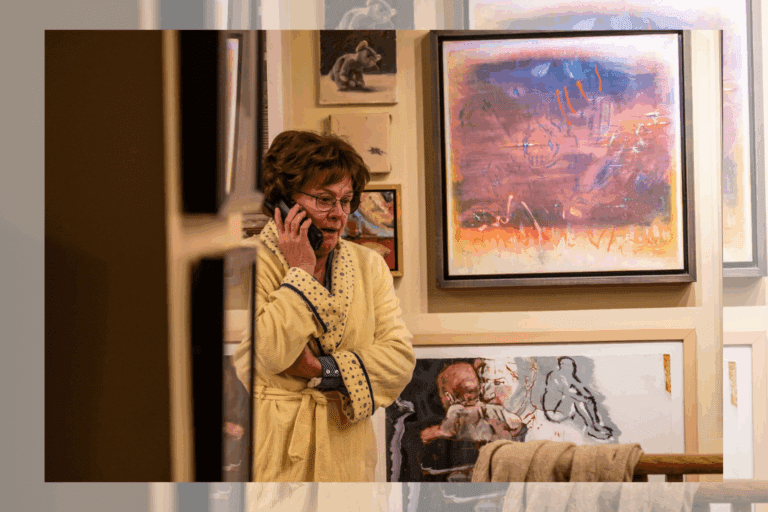 iPhoto caption: Jane Spidell in 'Twelve Dinners.' Photo by Dahlia Katz.
REVIEW: Family tensions run high in TIFT’s intimate Twelve Dinners
In the now-closed Twelve Dinners, an autobiographical play written and directed by Steve Ross, audiences received intimate access to an unvarnished version of a younger Ross through 12 evening meals with his parents.
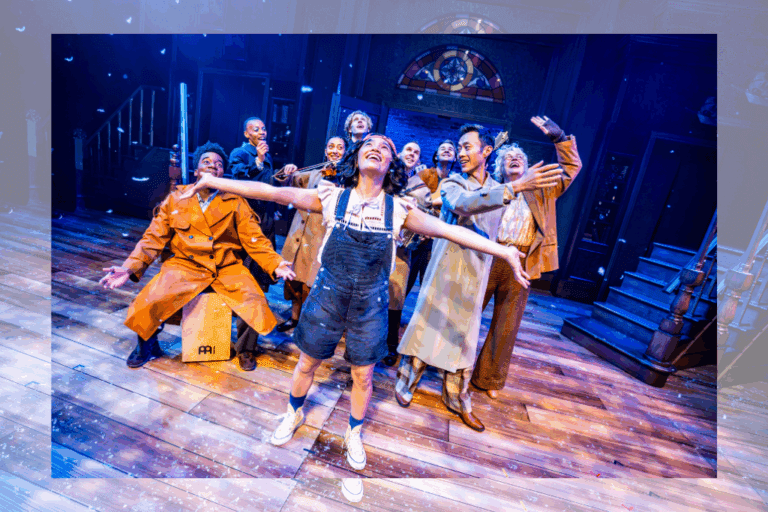 iPhoto caption: Members of the company of 'Narnia.' Photo by Dahlia Katz.
REVIEW: Bad Hats’ Narnia is a joyful, heartwarming escape
The spirit of openness and the joy of discovery rule over this Narnia. Open the wardrobe and see.
 iPhoto caption: Members of the company of 'Robin Hood.' Photo by Dahlia Katz.
REVIEW: Canadian Stage’s Robin Hood panto is anti-capitalist fun for the whole family
Following Ross Petty’s legacy of scene-stealing, Damien Atkins as the evil Prince John is easily the greatest delight of the show.
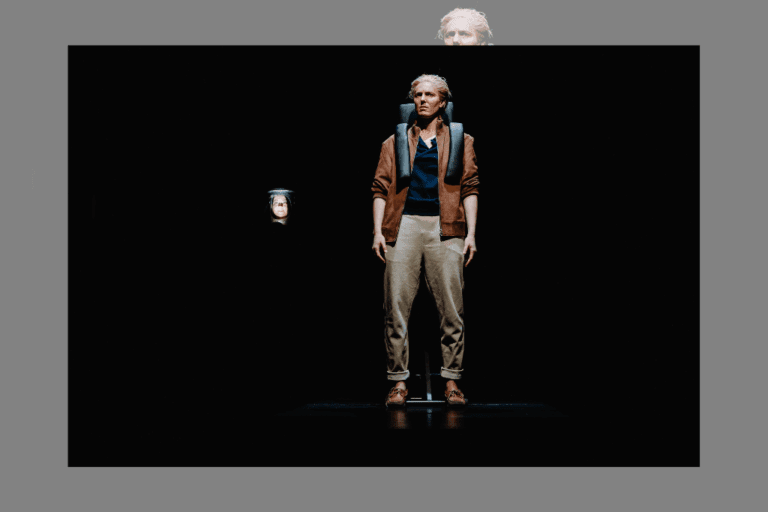 iPhoto caption: Lauren Gillis and Alaine Hutton in 'Public Consumption.' Photo by Eden Graham.
REVIEW: Lester Trips’ stylish Public Consumption captures the internet’s profound emptiness
Rather than directly representing online life, Public Consumption speculates — with virtuosity — about how the digital world affects our bodies. And the show's findings are by no means comfortable.
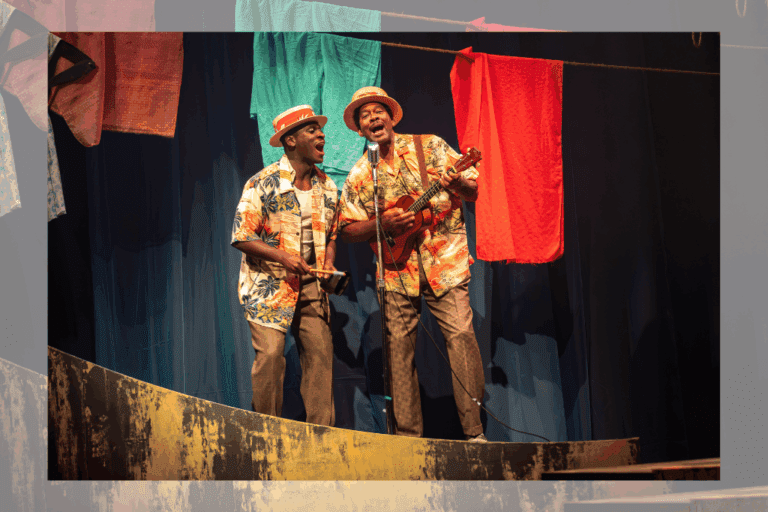 iPhoto caption: Tony Ofori and Daren A. Herbert in 'Moonlight Schooner.' Photo by Dahlia Katz.
Kanika Ambrose’s Moonlight Schooner is animated and visually stunning, but its individual pieces don’t come together as neatly as I would've expected.
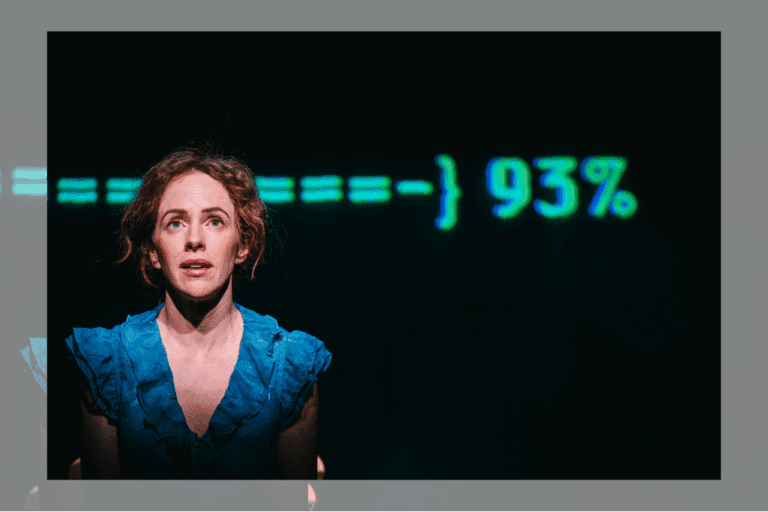 iPhoto caption: Fiona Mongillo in 'Reproduktion.' Photo by Ann Baggley.
REVIEW: Here For Now’s well-acted Reproduktion attempts to tackle too much
Amy Rutherford’s world premiere script is ambitious and the material it covers is complex — but the narrative feels disjointed.
iPhoto caption: Lauren Gillis and Alaine Hutton in 'Public Consumption.' Photo by Eden Graham.
REVIEW: Lester Trips’ stylish Public Consumption captures the internet’s profound emptiness
Rather than directly representing online life, Public Consumption speculates — with virtuosity — about how the digital world affects our bodies. And the show's findings are by no means comfortable.
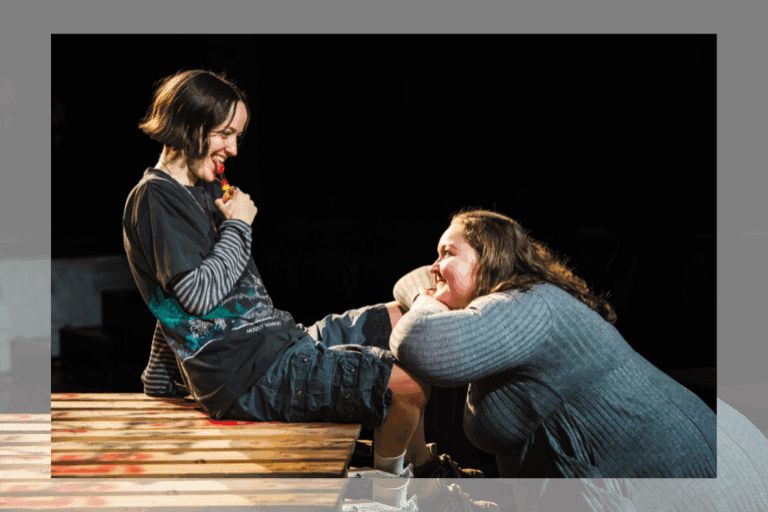 iPhoto caption: Photo by Elana Emer.
REVIEW: Icarus Theatre’s DNA paints a disturbing mural of teenage rebellion
While director Erik Richards’ tendency toward snappy, thriller-esque pacing doesn’t suit all of DNA’s more intimate moments, it adds electricity to the drama’s group scenes, bringing playwright Dennis Kelly’s reflections on groupthink and collective grief into clear view.
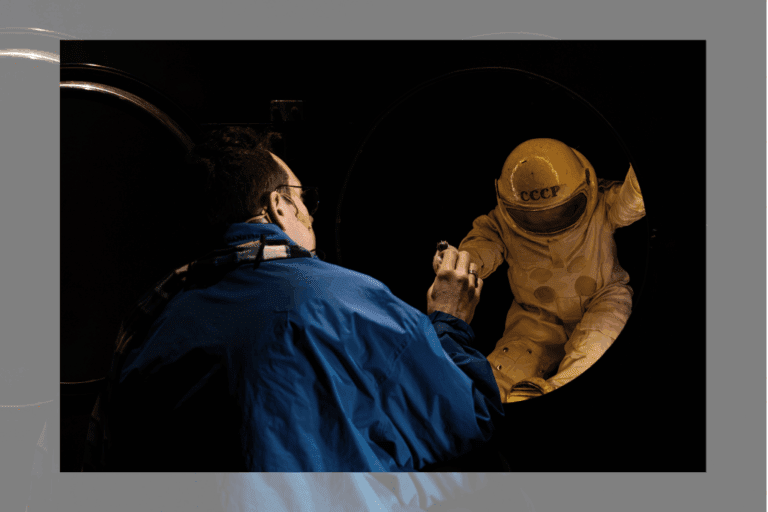 iPhoto caption: Olivier Normand in 'The Far Side of the Moon.' Photo by Li Wang.
REVIEW: Lepage’s ethereal The Far Side of the Moon is insomniac theatre
The Far Side of the Moon begins and ends with a large mirror on stage, and the show extracts enigmatic power from the tantalizing question of whether its protagonist is losing himself in his reflection, or moving toward self-discovery.
 iPhoto caption: 'Kokuho' still courtesy of TIFF.
REVIEW: During this year’s TIFF, two films depicted theatre as a vessel for transcendence
Of the several performing arts-adjacent selections I took in, most affecting were two dramas: Lee Sang-il’s Kokuho and Chloé Zhao’s Hamnet. In both period pieces, theatre creation serves as an emotional outlet for an artist navigating devastating loss.
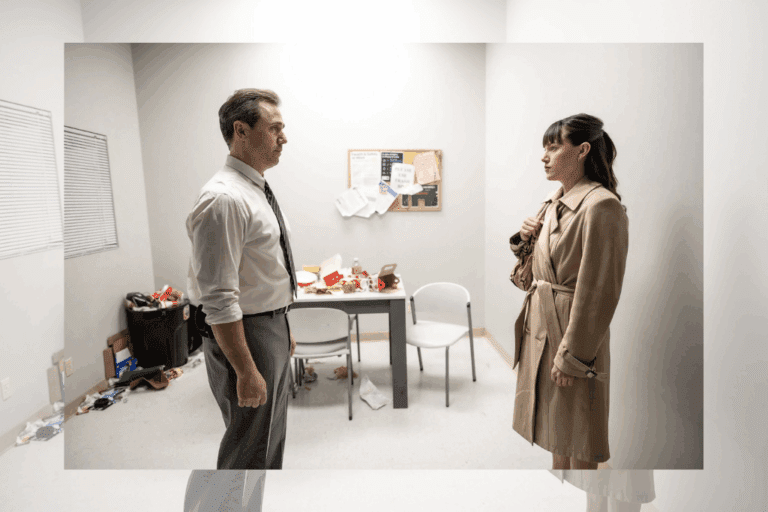 iPhoto caption: Cyrus Lane and Kirstyn Russelle in Barrie run of 'Blackbird.' Photo by Dahlia Katz.
REVIEW: Talk is Free Theatre’s Blackbird offers a close-up look at two detailed performances
Emerging director Dean Deffett has concocted a tight, straightforward production, primarily of interest as an intimate character study.
 iPhoto caption: Sleman Aldib and an audience member in 'The Opposite.' Still from a trailer by Spectrum Associates.
REVIEW: Kitchener’s biennial IMPACT Festival crackled with urgency
Most of the six works I viewed tackled urgent topics, from the convoluted Canadian immigration system to the Palestinian experience of displacement: explorations that line up with artistic director Pam Patel’s curatorial statement, which discusses how IMPACT ‘25 “unpacks what it means to survive, to resist, and to seek refuge” through a global, Indigenous-focused lens.
Comments