
REVIEW: 1s1 Theatre’s Qalb marries autobiography with ASL poetry
 iPhoto caption: Photo by Dahlia Katz
Deaf-led indie company 1s1 Theatre stands out for its commitment to producing work that’s rich in atmosphere. At both its debut Lady M (Margaret), which premiered at SummerWorks Performance Festival in 2023, and Qalb — A Journey of the Ego, its graceful new two-hander playing in the Tarragon Extraspace, the thoughtfulness of the productions’ visual and sonic worlds had a nourishing effect on me as a viewer.
In Lady M, that sumptuousness buttressed a fictional setting: Scotland during the First World War (it’s a Macbeth adaptation). But Qalb — collectively written by Salla Fagerström, Dawn Jani Birley, director Debbie Z. Rennie, and Deb’e Taylor — involves a great deal more abstraction. Unmoored from a specific time or place, Rennie’s hour-long production transpires on a playing space of neutral white. Set designer Maryam Hafizirad uses thin sheets of rectangular fabric hung vertically from the ceiling to frame the theatre’s back wall, on which she mounts a large circle, used as a screen for projections.
For the meat of the associatively structured script, Birley — best known for playing Horatio in Prince Hamlet with Why Not Theatre, a co-presenter of Qalb — recounts stories from her life as a Deaf person facing audism (discrimination against Deaf people). In American Sign Language (ASL), she tells of her family excluding her from jokes at the dinner table, and of a law school rescinding her acceptance after learning she’s Deaf. At one point, she even sets her crosshairs on the theatre industry, and its tendency to cast hearing actors as Deaf characters — something she says theatre critics often fail to call out. While Birley signs, Taylor speaks an English adaptation by playwright Chelsea Woolley into a microphone on the side of the stage.
Qalb’s title means heart in Persian, leading to another of its subjects: Rumi. For the second time in three months, the words of the beloved 13th-century poet are appearing on a Toronto stage. Between the autobiographical material, Birley translates his verses into ASL poetry while English translations float behind her as part of Laura Warren’s projection design.
The memoir and the Rumi both work on their own; the former is insightfully specific, the latter compellingly abstract. That said, the link between these alternating sections remains a touch vague. In a program note, Birley writes that the play is “about the struggle between the mind (Ego) and the heart (Qalb)… the philosophy of Rumi urges us to transform our oppression, anger, and frustration into a force of love in the world.” So the philosophy embedded in the poems is meant to serve as a kind of antidote to Birley’s painful memories — a moving conceptual proposition, but not one that always comes through clearly in the piece itself.
Still, so much of the production just feels right. Lighting designer André du Toit did tactile, superlative work in Lady M, and he again flies high here, using the white of Hafizirad’s set as a canvas for rich splatters of colour. A lighting cue that rotates through the rainbow is particularly key to the piece’s superb ending, in which Birley and Taylor finally unite. After performing a short bout of close-quarters choreography (a repetition of the show’s opening), they meet on stage right, next to a set of taiko drums, which Taylor had previously used to punctuate transitions. They strike them with childlike freedom as vibrations crescendo and joy abounds. It’s an ecstatic, passionate sequence, yet one with figurative resonance; since much of Qalb is about distance — between mind and heart, justice and reality, me and you — it’s a powerful statement of hope to conclude with the bridging of a gap.
Although a high proportion of Qalb’s opening night audience seemed fluent in ASL, the script at one point acknowledges that’s unlikely to be the case at most performances. But the fact that Qalb engages both demographics simultaneously is part of what makes 1s1’s work so vital (and perhaps connects it with a growing wave of professional bilingual theatre in Ontario, this year including Nowadays Theatre’s February Earworm and the Stratford Festival’s ongoing Salesman in China). As the company puts it on Why Not Theatre’s website, “provoking the hearing world is one of the ways to push for positive changes for us as a society.”
Qalb runs until September 14 at Tarragon Theatre. You can learn more about the production here.
Intermission reviews are independent and unrelated to Intermission’s partnered content. Learn more about Intermission’s partnership model here.
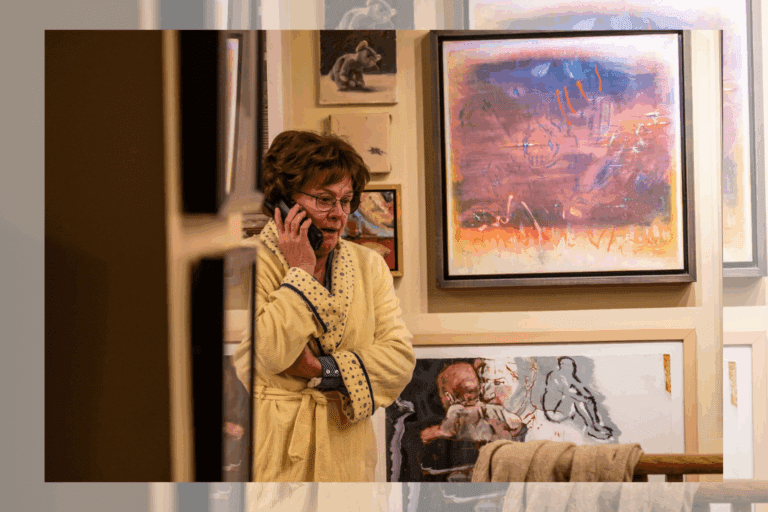 iPhoto caption: Jane Spidell in 'Twelve Dinners.' Photo by Dahlia Katz.
REVIEW: Family tensions run high in TIFT’s intimate Twelve Dinners
In the now-closed Twelve Dinners, an autobiographical play written and directed by Steve Ross, audiences received intimate access to an unvarnished version of a younger Ross through 12 evening meals with his parents.
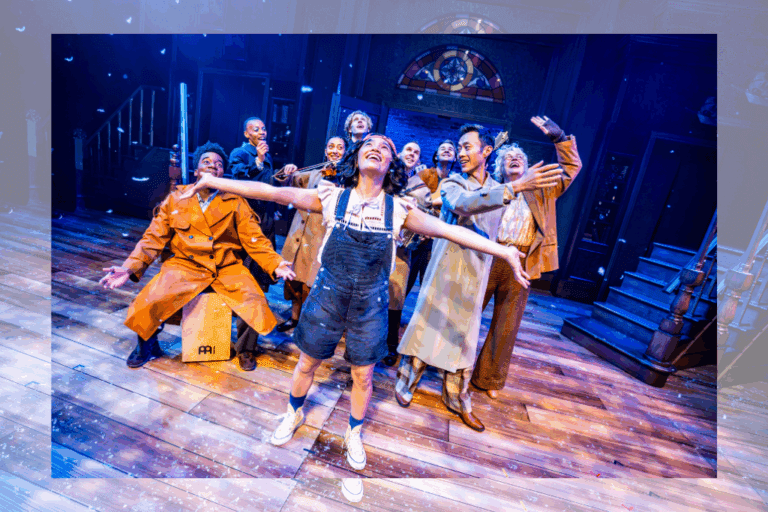 iPhoto caption: Members of the company of 'Narnia.' Photo by Dahlia Katz.
REVIEW: Bad Hats’ Narnia is a joyful, heartwarming escape
The spirit of openness and the joy of discovery rule over this Narnia. Open the wardrobe and see.
 iPhoto caption: Members of the company of 'Robin Hood.' Photo by Dahlia Katz.
REVIEW: Canadian Stage’s Robin Hood panto is anti-capitalist fun for the whole family
Following Ross Petty’s legacy of scene-stealing, Damien Atkins as the evil Prince John is easily the greatest delight of the show.
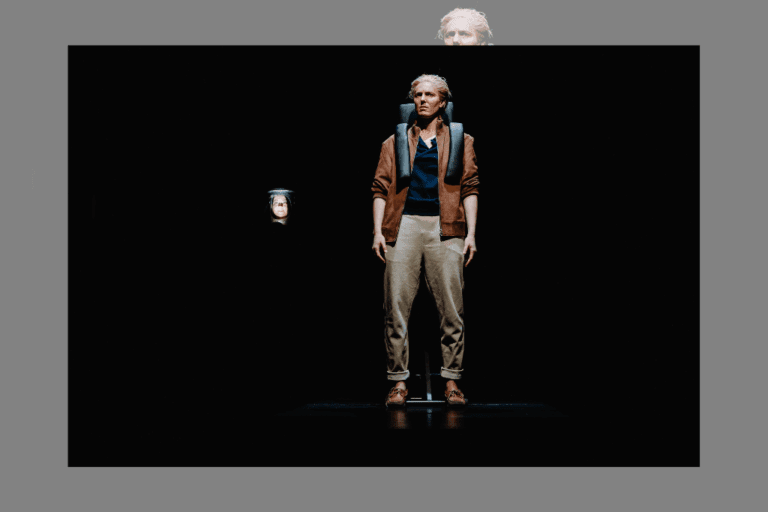 iPhoto caption: Lauren Gillis and Alaine Hutton in 'Public Consumption.' Photo by Eden Graham.
REVIEW: Lester Trips’ stylish Public Consumption captures the internet’s profound emptiness
Rather than directly representing online life, Public Consumption speculates — with virtuosity — about how the digital world affects our bodies. And the show's findings are by no means comfortable.
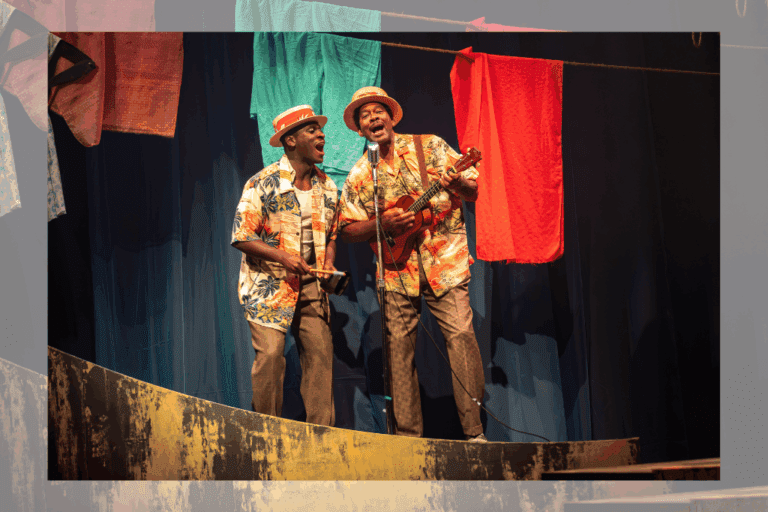 iPhoto caption: Tony Ofori and Daren A. Herbert in 'Moonlight Schooner.' Photo by Dahlia Katz.
Kanika Ambrose’s Moonlight Schooner is animated and visually stunning, but its individual pieces don’t come together as neatly as I would've expected.
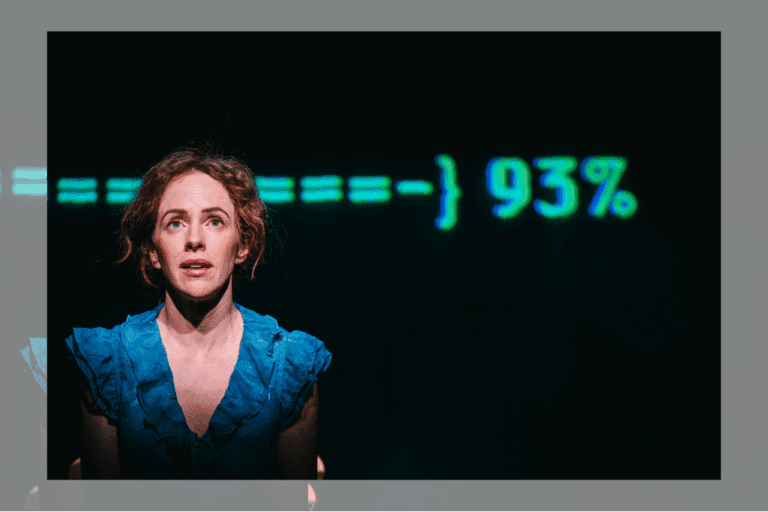 iPhoto caption: Fiona Mongillo in 'Reproduktion.' Photo by Ann Baggley.
REVIEW: Here For Now’s well-acted Reproduktion attempts to tackle too much
Amy Rutherford’s world premiere script is ambitious and the material it covers is complex — but the narrative feels disjointed.
iPhoto caption: Lauren Gillis and Alaine Hutton in 'Public Consumption.' Photo by Eden Graham.
REVIEW: Lester Trips’ stylish Public Consumption captures the internet’s profound emptiness
Rather than directly representing online life, Public Consumption speculates — with virtuosity — about how the digital world affects our bodies. And the show's findings are by no means comfortable.
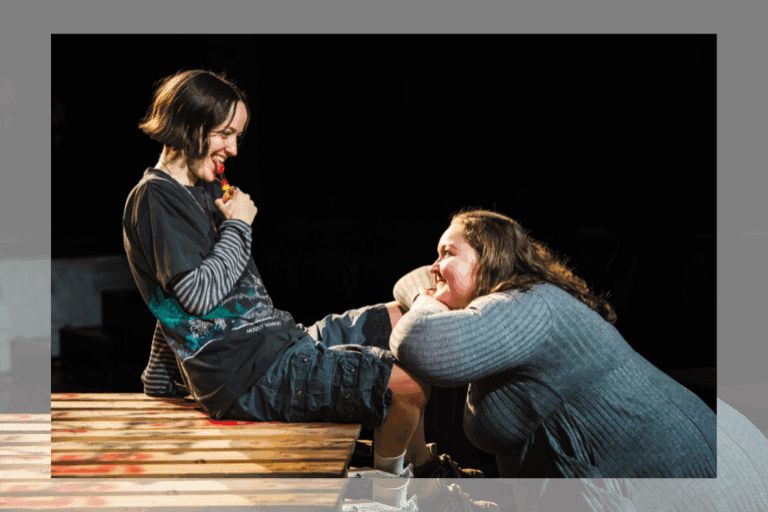 iPhoto caption: Photo by Elana Emer.
REVIEW: Icarus Theatre’s DNA paints a disturbing mural of teenage rebellion
While director Erik Richards’ tendency toward snappy, thriller-esque pacing doesn’t suit all of DNA’s more intimate moments, it adds electricity to the drama’s group scenes, bringing playwright Dennis Kelly’s reflections on groupthink and collective grief into clear view.
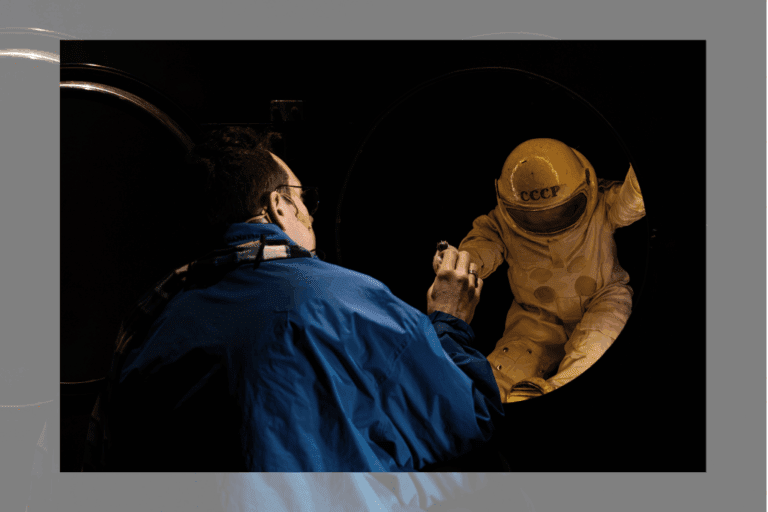 iPhoto caption: Olivier Normand in 'The Far Side of the Moon.' Photo by Li Wang.
REVIEW: Lepage’s ethereal The Far Side of the Moon is insomniac theatre
The Far Side of the Moon begins and ends with a large mirror on stage, and the show extracts enigmatic power from the tantalizing question of whether its protagonist is losing himself in his reflection, or moving toward self-discovery.
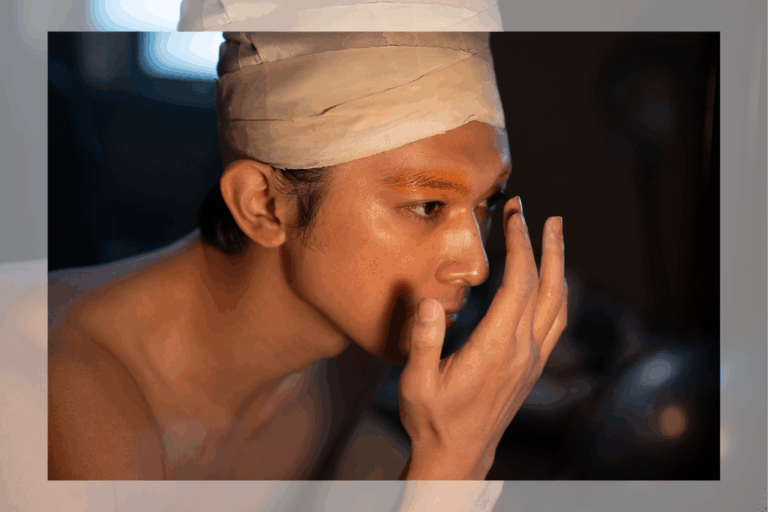 iPhoto caption: 'Kokuho' still courtesy of TIFF.
REVIEW: During this year’s TIFF, two films depicted theatre as a vessel for transcendence
Of the several performing arts-adjacent selections I took in, most affecting were two dramas: Lee Sang-il’s Kokuho and Chloé Zhao’s Hamnet. In both period pieces, theatre creation serves as an emotional outlet for an artist navigating devastating loss.
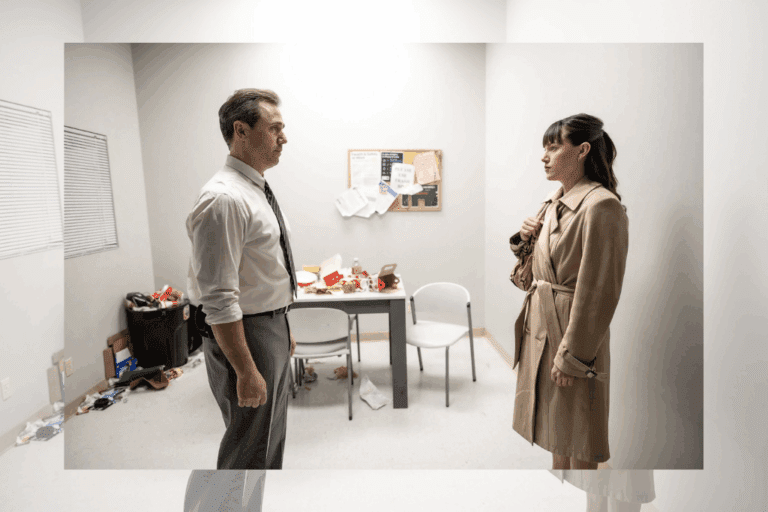 iPhoto caption: Cyrus Lane and Kirstyn Russelle in Barrie run of 'Blackbird.' Photo by Dahlia Katz.
REVIEW: Talk is Free Theatre’s Blackbird offers a close-up look at two detailed performances
Emerging director Dean Deffett has concocted a tight, straightforward production, primarily of interest as an intimate character study.
 iPhoto caption: Sleman Aldib and an audience member in 'The Opposite.' Still from a trailer by Spectrum Associates.
REVIEW: Kitchener’s biennial IMPACT Festival crackled with urgency
Most of the six works I viewed tackled urgent topics, from the convoluted Canadian immigration system to the Palestinian experience of displacement: explorations that line up with artistic director Pam Patel’s curatorial statement, which discusses how IMPACT ‘25 “unpacks what it means to survive, to resist, and to seek refuge” through a global, Indigenous-focused lens.
Comments