
REVIEW: Dance Nation at York University
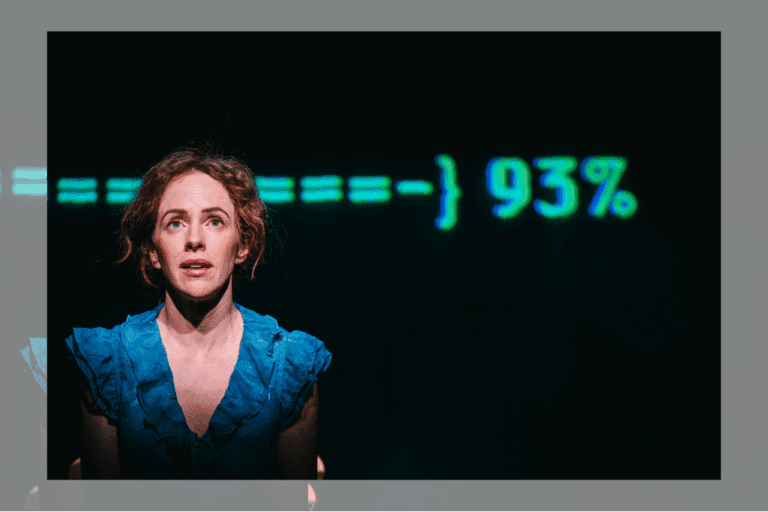
 iPhoto caption: Photo by Jeremy Mimnagh
Want a thought-provoking, soul-stirring, hip-shaking night at the theatre? Head uptown.
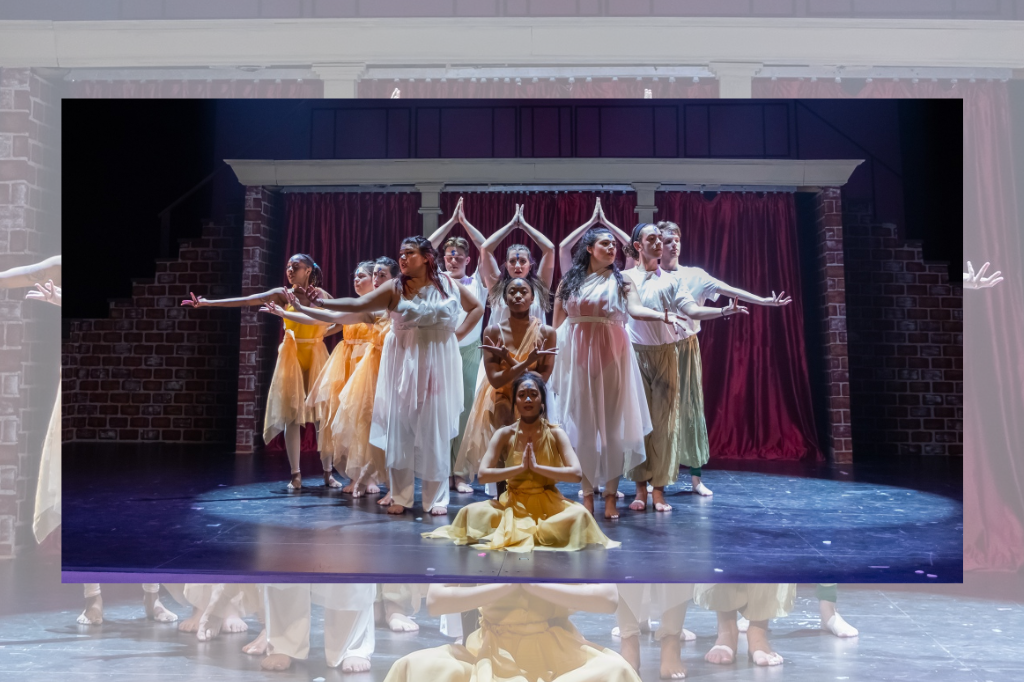
Some of the best theatrical work in Toronto right now is happening inside the concrete walls of York University’s School of Arts, Media, Performance, and Design. Their electric production of Clare Barron’s Pultizer-shortlisted Dance Nation is well-choreographed, well-directed, and supremely well-acted. Director Anita La Selva has clearly seen her fair share of reality show Dance Moms — more on that later — but at no point does the production feel derivative, soapy, or outdated. It’s just a damn good production of a damn good play.
Dance Teacher Pat is a monster — or maybe he means well? — with clear-as-day favourites and a harsh tongue. He’s coaching his competitive dance team for Nationals in Tampa Bay, and he has his work cut out for him. This is a group of girls (or is it women? Barron leaves it ambiguous) who pirouette into monologues about abuse, and then tumble right into immature protestations of love for their toy horse collections. This elite, placeless dance team wanders in and out of childhood, navigating all the hallmarks of adolescence (First period! First orgasm! First sexual fantasy!) while chasing the ultimate goal that is a solo at Nationals.
And oh, what a solo it is: Mahatma Gandhi.
There’s a season three episode of Dance Moms in which a nearly all-white group of Pittsburgh tweens auditions for the role of Rosa Parks. Given there’s one Black girl on the team, one would think the casting is obvious. Surprisingly, no, it’s not. (It’s a great episode.)
And so it goes here — Barron’s play echoes that specific episode, as well as other tropes of Dance Moms, several times. There’s a girl on Dance Teacher Pat’s team, Connie, who’s a talented (and racially appropriate) dancer for the role, but competition amongst the team is fierce. Especially when it comes to girls like Amina, who’s stunningly good and just a tad bit neurotic. And, of course, Zuzu, who’s used to coming in second despite her obsessive desire to overcome the things holding her back. She wishes her dancing could cure her mom’s cancer, she tells us — it’s a good representation of just how badly she wants to succeed in this art form.
Dance Nation is the perfect university show, with a large ensemble in which there are truly no small parts. La Selva’s gone even further and double-cast many of the roles, including Dance Teacher Pat, Amina, Zuzu, and Ashlee, who at thirteen is “smarter than you” and fully aware of her “amazing” ass and tits. I saw Cast A on opening night. Rachel Cucheron captures the anxiety and arrogance of Amina with grace and grit, a masterful performance. Zoe Cason’s Zuzu, too, is nuanced, thoughtful, and impeccably danced. And Mercedes Clunie’s Ashlee beautifully walks the line between funny and terribly sad; her character feels like Dance Nation in miniature, all the sharp commentary and humour distilled into one teen on the cusp of the rest of her life.
Anoshinie M’s choreography is tonally appropriate and a joy to watch — some of the gestures are almost camp in their cliché, steps seen on every competition dance stage in North America, and yet in the context of Dance Nation, that choice totally works. Heather Theriault’s costume designs, too, feed in well to Barron and La Selva’s respective visions: this is not a play about adolescents, it’s a play about adults playing adolescents, and Theriault’s willingness to lean into the curves, panty lines, and imperfections of young women approximating children is just perfection. Kudos too to La Selva’s choices in music — Dance Nation is perhaps the best context for The Pussycat Dolls’ “Buttons” since the early 2000s.
Clare Barron’s play speaks to anyone who’s ever been, parented, or loved a teenage girl. (And no, I’m not laying on the praise thick because York’s was a student production — if elements needed work in Dance Nation, I’d say so.) Dance Nation at York U embodies the liminal complexities of womanhood through dance, laughter, and remarkable poise. A total delight.
Dance Nation closed at York University on April 1. For more information, click here.
Aisling Murphy
Aisling is Intermission's former senior editor and the theatre reporter for the Globe and Mail. She likes British playwright Sarah Kane, most songs by Taylor Swift, and her cats, Fig and June. She was a 2024 fellow at the National Critics Institute in Waterford, CT.
LEARN MORE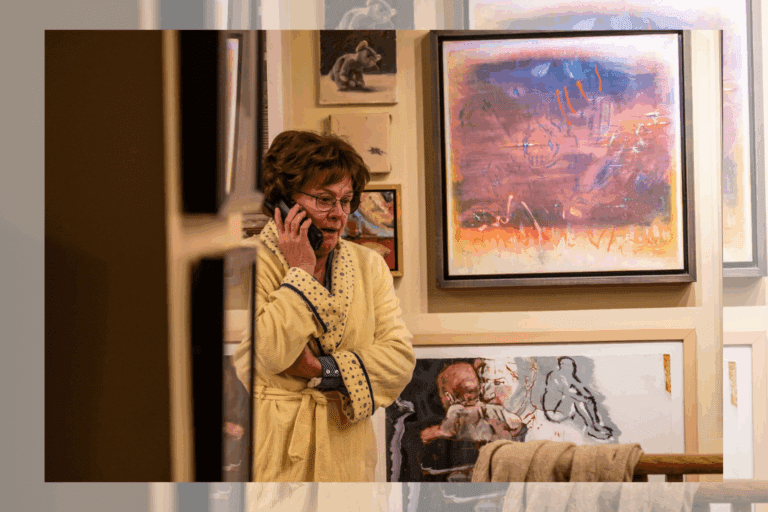 iPhoto caption: Jane Spidell in 'Twelve Dinners.' Photo by Dahlia Katz.
REVIEW: Family tensions run high in TIFT’s intimate Twelve Dinners
In the now-closed Twelve Dinners, an autobiographical play written and directed by Steve Ross, audiences received intimate access to an unvarnished version of a younger Ross through 12 evening meals with his parents.
 iPhoto caption: Members of the company of 'Narnia.' Photo by Dahlia Katz.
REVIEW: Bad Hats’ Narnia is a joyful, heartwarming escape
The spirit of openness and the joy of discovery rule over this Narnia. Open the wardrobe and see.
 iPhoto caption: Members of the company of 'Robin Hood.' Photo by Dahlia Katz.
REVIEW: Canadian Stage’s Robin Hood panto is anti-capitalist fun for the whole family
Following Ross Petty’s legacy of scene-stealing, Damien Atkins as the evil Prince John is easily the greatest delight of the show.
 iPhoto caption: Lauren Gillis and Alaine Hutton in 'Public Consumption.' Photo by Eden Graham.
REVIEW: Lester Trips’ stylish Public Consumption captures the internet’s profound emptiness
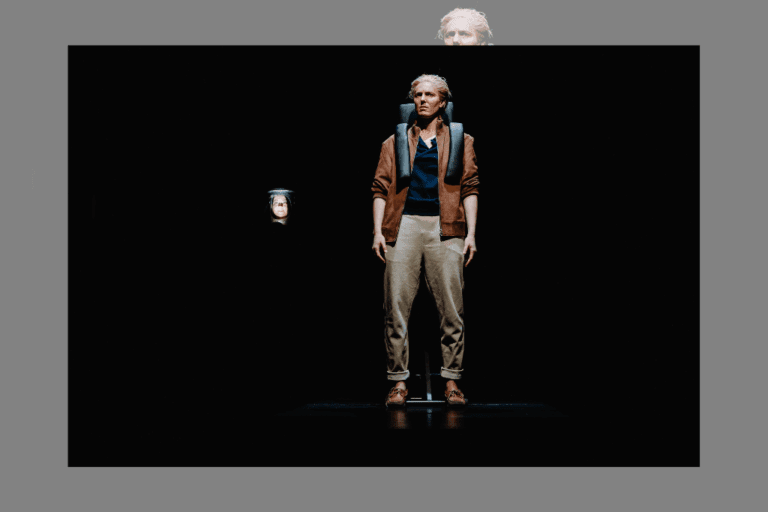
Rather than directly representing online life, Public Consumption speculates — with virtuosity — about how the digital world affects our bodies. And the show's findings are by no means comfortable.
 iPhoto caption: Tony Ofori and Daren A. Herbert in 'Moonlight Schooner.' Photo by Dahlia Katz.
Kanika Ambrose’s Moonlight Schooner is animated and visually stunning, but its individual pieces don’t come together as neatly as I would've expected.
 iPhoto caption: Fiona Mongillo in 'Reproduktion.' Photo by Ann Baggley.
REVIEW: Here For Now’s well-acted Reproduktion attempts to tackle too much
Amy Rutherford’s world premiere script is ambitious and the material it covers is complex — but the narrative feels disjointed.
 iPhoto caption: Photo by Aisling Murphy.
In the darkest months of Yukon winter, it’s all about the Sun Room
I’m here for a week in January as a guest of Nakai Theatre, a hub for theatrical experimentation and outside-the-box programming in Canada’s westernmost territory.

Armchairs, tattoos, and an online theatre magazine
When I started at Intermission, my world was limited to the confines of an armchair. Arts journalism was a high it felt dangerously fruitless to chase. The life stretched ahead of me was amorphous and frightening, a chasm filled with hand sanitizer and immigration concerns. It was worth crying over a spilled kombucha and scrubbing at the stain.
 iPhoto caption: Liz Appel headshot courtesy of Liz Appel.
Five questions with Wights playwright Liz Appel
Intermission spoke with Appel over email for a brief Q&A about Wights, now playing at Crow’s Theatre until February 9.

Call for applications: Publishing and editorial assistant
Intermission Magazine is seeking a dynamic and collaborative individual to join our team.
 iPhoto caption: What Writing Can Do: The 2025 Musical Theatre Critics Lab
Announcing What Writing Can Do: The 2025 Musical Theatre Critics Lab
What Writing Can Do is timed to coincide with the Grand and Theatre Aquarius’ co-production of Waitress, which will serve as a jumping-off point for discussions throughout the Lab.
 iPhoto caption: A Christmas Story production still by Dahlia Katz.
REVIEW: A Christmas Story feels fresh at Theatre Aquarius
If you want to catch A Christmas Story before it closes, good luck — the show is close to sold out, and with the talent on that stage, it’s not hard to see why.
Comments