
REVIEW: Le Concierge at Théâtre Français de Toronto
Spoiler warning: this review contains detailed description of the contents and structure of Le Concierge at Théâtre Français de Toronto.
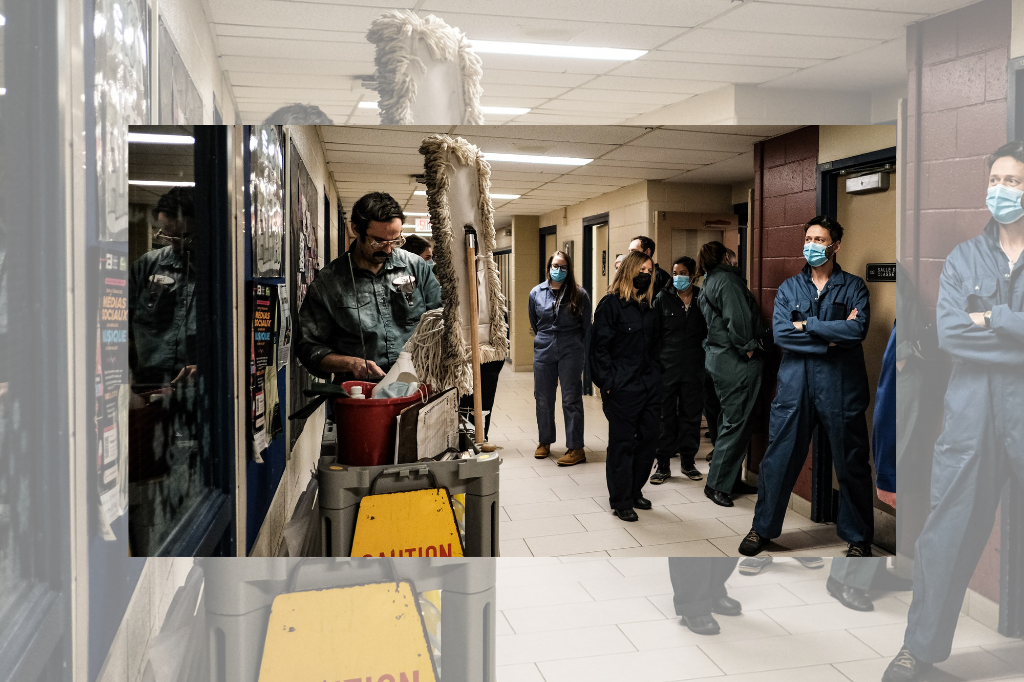
At the beginning of Le Concierge (The Caretaker), Théâtre Français de Toronto’s new immersive theatre production at Saint-Frère-André Catholic Secondary School, the 15-person audience sits on stools on the stage of a large auditorium, waiting for the curtain to be drawn back. Just before the journey starts, we are reminded (bilingually) of the importance and scarcity of silence within the urban world. We’re meant to remain silent through the 80 wordless minutes, during which we follow the high school’s janitor (Vincent Leblanc-Beaudoin) through his cleaning process, rest periods, and intimate personal moments that can only occur when you think you’re completely by yourself.
During the roving performance, the silence is not quite total. It’s punctuated by the sound of fifteen pairs of audience feet trying to keep up with the titular caretaker on his way through the school’s halls, classrooms, and sketchy-looking basement. Our main character isn’t completely quiet, either. He plays ambient music on the small boombox perched on his janitorial cart, exclaims wordlessly, tinkers on a piano in a classroom-turned-chapel, and cleans with gusto. Meanwhile, small interruptions over the P.A. system and down the halls lend the experience an eerie feeling, making us question whether we’re really alone.
However, the overarching quiet provides a contemplative and meditative effect through the fascinating performance. Director Daniele Bartolini’s vision takes us on a roller-coaster-like, stream-of-consciousness ride through mundane reality and frantic imagination, artistic dreams, and anxious nightmares.
The performer does not, for the most part, acknowledge the presence of the audience, giving one the feeling of being a fly (or janitor) on the wall. However, to forge a bond between the group and the only character, the audience dons coveralls in the waiting room, physically clocking in with a ticket and stamp as we hear the show’s equivalent of hold music (appropriate for a holding area). Since the instructions are bilingual and the experience largely silent, everything can be enjoyed by English and French-speakers alike. Make sure to get there at least ten minutes before show time to have enough time to change and peruse the rules. In fact, get there twenty minutes early, because the entrance is on the southwest side of the school and not particularly easy to find if you’re coming from the north.
Though we move swiftly through the halls, the experience begins slowly, demonstrating the exacting banality of a caretaker’s tasks. He sweeps the floor as if nobody is there (watch those feet). He lifts each chair onto its corresponding desk, rotating them exactly so that the tennis balls on the legs line up. He turns off the smartboards in the classrooms, wistfully observing the melancholy painting on each one. He leads us into the boys’ washroom, cleaning the stalls and urinals before tidying up his own appearance in the mirror.
Though there are places to sit, and we’re encouraged to sit whenever we need to, this is an active show, and you need to keep up. Audience members climb and descend staircases, move through basements and studios, and avoid knocking over piles of equipment. Some of this movement occurs in low or flashing light. As we’re told by the group’s handler, our physical vantage point for the action turns our eyes into a camera, and, as directors of our own experience, we can always change the angle if we wish.
Always in motion, Le Concierge combines gentle humour and a genuine eerie feeling of something happening on the edge of your consciousness. At the outset, for example, the cavernous auditorium is disorienting in darkness; its glowing exit signs make it look like an Escher painting. Seeing the show in the evening gives it a suitably spooky vibe.
While there are hints of an inner life from the beginning, the janitor becomes more complex as we delve into his private, seemingly frustrated, artistic ambitions. As we descend into his inner sanctum, we really begin to see the personality and talent hidden under the coveralls. The only frustrating thing about the show is its inherent limitations in letting us into his thoughts, even though Leblanc-Beaudoin is a very expressive actor. The brushstrokes of his art may be fine, but his identity is painted in necessarily broader strokes. However, that doesn’t lessen the entertainment factor of a section where he removes items from what looks like a box from the lost and found with an inner light that illuminates his reactions to each piece of electronic detritus.
The most visually inventive and exciting part of the show is a surreal, climactic sequence which very much manages to capture the feeling of a nightmare. (Kudos to set and costume designer Melanie Mcneill, lighting designer Sarah Mansikka, and sound designer Andrea Gozzi.) Without spoiling the content of our main character’s cleaning-based visions, the exaggerated items he encounters combined with tiny details for the eagle-eyed participant are almost Disney-esque in how they manipulate our sense of reality. This sequence demonstrates the frustration of a job that many consider demeaning and repetitive, and how it has the potential to detach a person from connection with others.
Perhaps it’s appropriate, then, that near the end we stop being mere witnesses and become participants in the action, cleaning becoming a collaborative task that brings strangers together.
The dreamscape-like nature of much of Le Concierge means that not every image or moment makes immediate rational sense, but it doesn’t really have to. It’s a quiet but engrossing journey that may sweep you off your feet. If you don’t watch out for the “Wet Floor” signs, that is.
Le Concierge runs until March 26 at Saint-Frère-André Catholic Secondary School. Tickets are available here.

Ilana Lucas
Ilana Lucas is a professor of English in Centennial College’s School of Advancement. She is the President of the Canadian Theatre Critics Association. She holds a BA in English and Theatre from Princeton University, an MFA in Dramaturgy and Script Development from Columbia University, and serves as Princeton’s Alumni Schools Committee Chair for Western Ontario. She has written for Brit+Co, Mooney on Theatre, and BroadwayWorld Toronto. Her most recent play, Let’s Talk, won the 2019 Toronto Fringe Festival’s 24-Hour Playwriting Contest. She has a deep and abiding love of musical theatre, and considers her year working for the estate of Tony winners Phyllis Newman and Adolph Green one of her most treasured memories.
LEARN MORE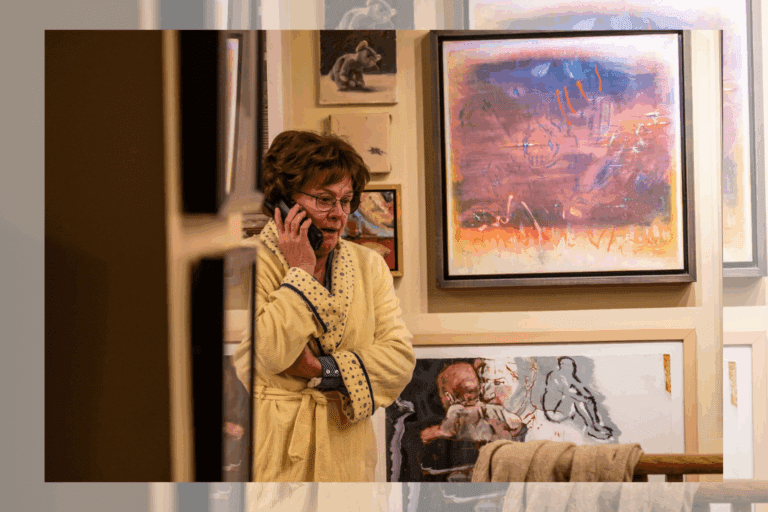 iPhoto caption: Jane Spidell in 'Twelve Dinners.' Photo by Dahlia Katz.
REVIEW: Family tensions run high in TIFT’s intimate Twelve Dinners
In the now-closed Twelve Dinners, an autobiographical play written and directed by Steve Ross, audiences received intimate access to an unvarnished version of a younger Ross through 12 evening meals with his parents.
 iPhoto caption: Members of the company of 'Narnia.' Photo by Dahlia Katz.
REVIEW: Bad Hats’ Narnia is a joyful, heartwarming escape
The spirit of openness and the joy of discovery rule over this Narnia. Open the wardrobe and see.
 iPhoto caption: Members of the company of 'Robin Hood.' Photo by Dahlia Katz.
REVIEW: Canadian Stage’s Robin Hood panto is anti-capitalist fun for the whole family
Following Ross Petty’s legacy of scene-stealing, Damien Atkins as the evil Prince John is easily the greatest delight of the show.
 iPhoto caption: Lauren Gillis and Alaine Hutton in 'Public Consumption.' Photo by Eden Graham.
REVIEW: Lester Trips’ stylish Public Consumption captures the internet’s profound emptiness
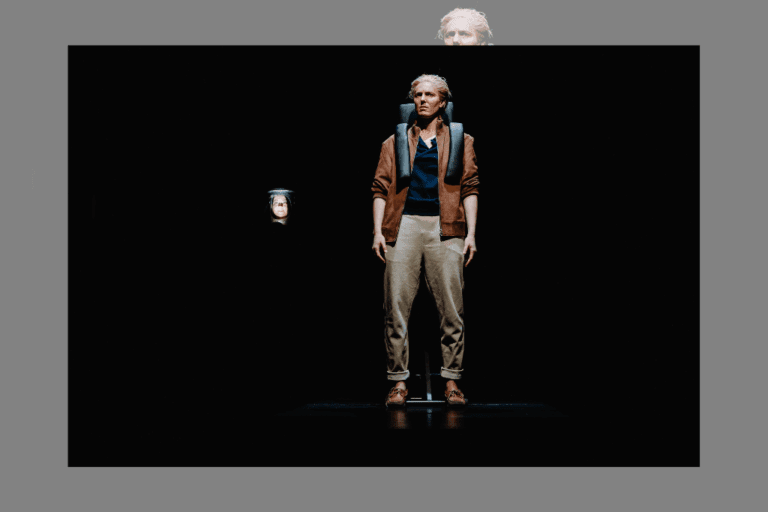
Rather than directly representing online life, Public Consumption speculates — with virtuosity — about how the digital world affects our bodies. And the show's findings are by no means comfortable.
 iPhoto caption: Tony Ofori and Daren A. Herbert in 'Moonlight Schooner.' Photo by Dahlia Katz.
Kanika Ambrose’s Moonlight Schooner is animated and visually stunning, but its individual pieces don’t come together as neatly as I would've expected.
 iPhoto caption: Fiona Mongillo in 'Reproduktion.' Photo by Ann Baggley.
REVIEW: Here For Now’s well-acted Reproduktion attempts to tackle too much
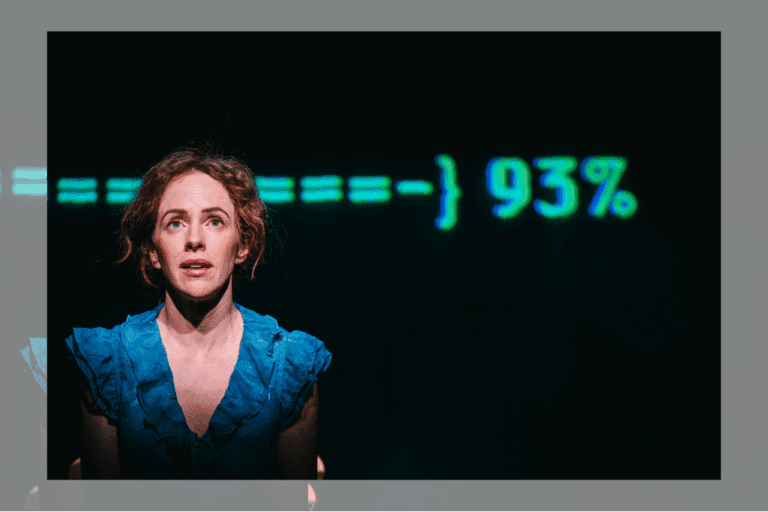
Amy Rutherford’s world premiere script is ambitious and the material it covers is complex — but the narrative feels disjointed.
iPhoto caption: Members of the company of 'Narnia.' Photo by Dahlia Katz.
REVIEW: Bad Hats’ Narnia is a joyful, heartwarming escape
The spirit of openness and the joy of discovery rule over this Narnia. Open the wardrobe and see.
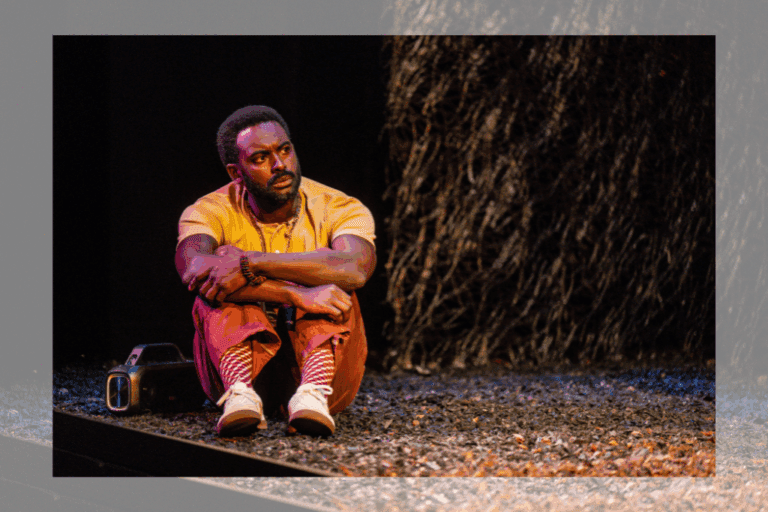 iPhoto caption: Mazin Elsadig in 'The Comeuppance.' Photo by Dahlia Katz. Set design by Shannon Lea Doyle, costume design by Ming Wong, lighting design by Jason Hand.
Macabre and drama-filled yet surprisingly gentle, The Comeuppance will probably be most compelling to the around-40 crowd who share its specific touchstones and millennial angst from a high-school experience bookended by Columbine and 9/11.
 iPhoto caption: Kaylee Harwood with members of the 'Bright Star' ensemble. Photo by Dahlia Katz.
REVIEW: Garner Theatre Productions’ Bright Star coasts on charm and likability
Bright Star covers it all: thwarted love, coming of age, family drama, the power of art, the importance of remaining true to oneself. Yet co-writer Steve Martin’s wit, which blazes in plays like Picasso at the Lapin Agile, merely twinkles here.
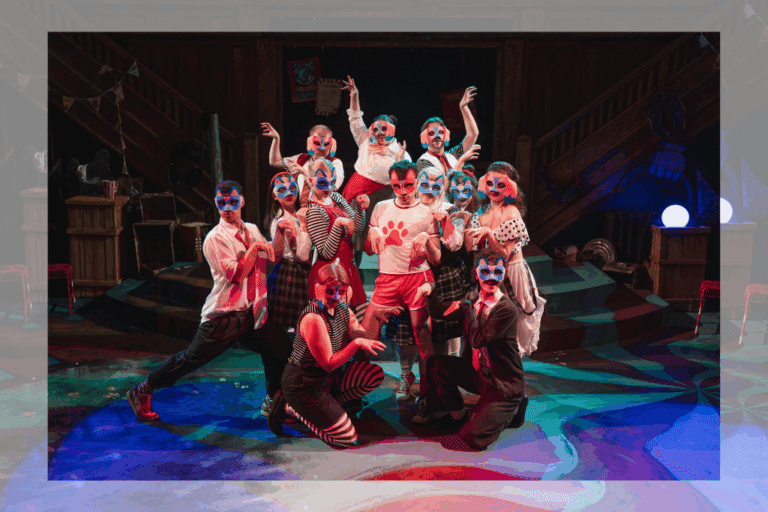 iPhoto caption: The company of 'Ride the Cyclone.' Photo by Taylor Long.
REVIEW: Shifting Ground Collective delivers heartfelt, overloaded Ride the Cyclone
Director 郝邦宇 Steven Hao hits the carnival bullseye when it comes to heart and fun, but just misses the top prize by expanding the cast and reducing the original’s compelling creepiness.
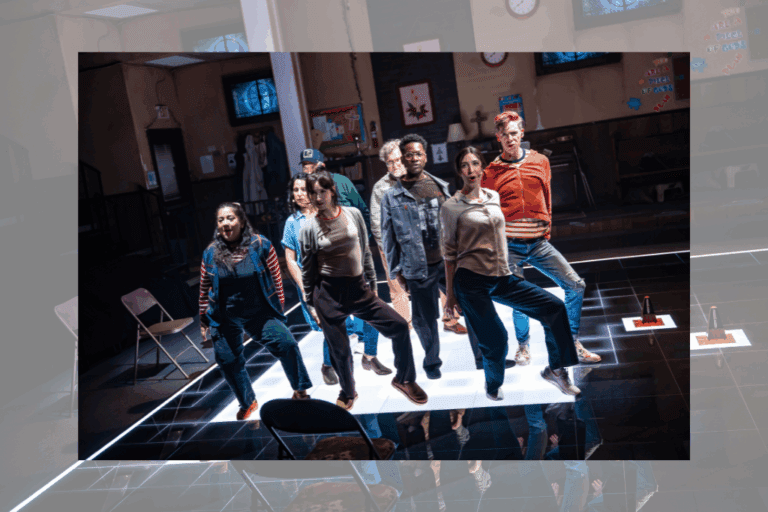 iPhoto caption: Photo by Dahlia Katz.
REVIEW: Dave Malloy’s Octet vibrates with sublime vocal beauty at Crow’s Theatre
Malloy’s intricate a cappella compositions, rich with complex harmonies, are the hymns and confessionals in a show about a support group for internet addiction. Regardless of what form their ego-feeding or doomscrolling compulsions take, the characters know it’s actually about appeasing what they call “the monster” inside — that gaping maw of emptiness that begs for shiny treats in the absence of real connection.
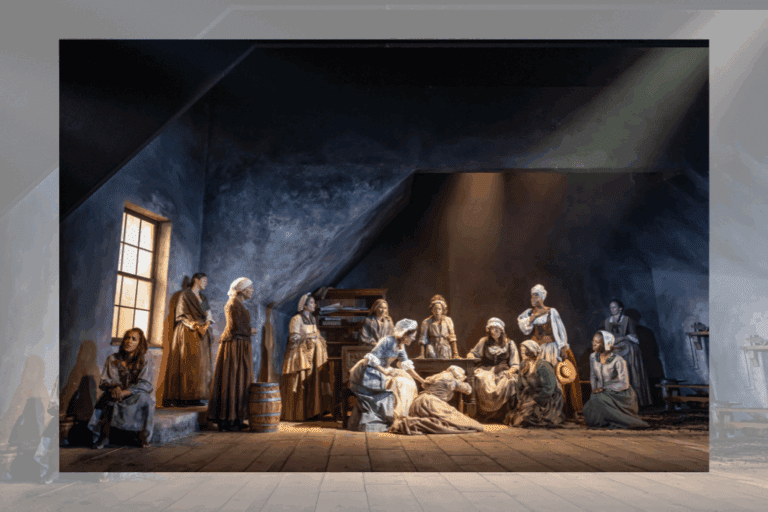 iPhoto caption: The company of 'The Welkin.' Photo by Dahlia Katz.
REVIEW: The Welkin careens from raucous comedy to crushing tragedy
The problem with human rights is that, if you believe in them, you have to apply them to everyone. Political opponents. Murderers. Your ex. People whose phones go off at the theatre. Women. The character of Sally puts this theory to a stress test; in bahia watson’s assured hands, she’s gleefully unlikeable, glorying in a storm of suspiciously modern swearing, lacking any flicker of conscience, and biting the hands that are trying to help her.
Comments