
Review: My Name is Asher Lev
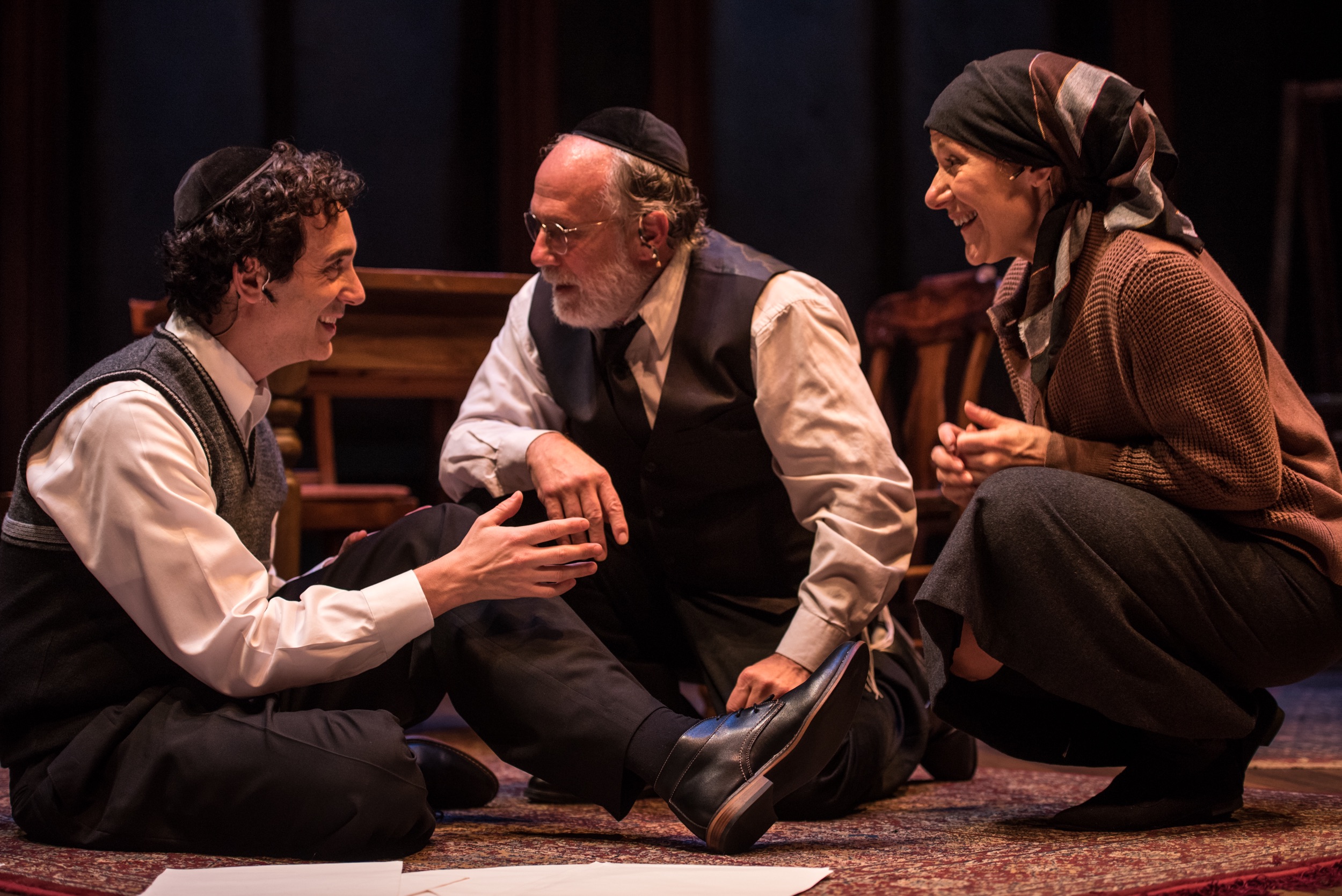 iPhoto caption: Cast of My Name is Asher Lev. Photo by Dahlia Katz
My Name is Asher Lev
Studio 180 Theatre/Harold Green Jewish Theatre
By Aaron Posner, adapted from the novel by Chaim Potok. Directed by Joel Greenberg. At Toronto Centre for the Arts. Runs until November 26.
Asher Lev (Jonas Chernick) is an observant Hassidic Jew who is also a celebrated artist, painting crucifix scenes and nude women. How he reconciles these two disparate lives, under the shadow of his devout parents, is the struggle at the heart of My Name is Asher Lev.
Throughout the play, Asher constantly spars with his straight-laced, rigid-thinking father (Ron Lea). His mother (Sarah Orenstein) spends most of her time trying to calm the two men and keep them from fighting. As with any good artist, Asher is watchful and sensitive to what this fighting was doing to the family. In one soul-crushing scene, Asher says that in his Jewish tradition there was nothing into which he could pour his anguish. And so he created a painting that depicted that pain. It was devastating, especially to his parents.
Longing, yearning, and giving into obsession drive the story. Director Joel Greenberg guides this production with a sure hand, and it crackles with explosive emotion. Chernick as Asher is consistently firm, committed to standing his ground, whether as a precocious six-year-old, a ten-year-old, or a teenager. Chernick almost slumps when his father berates him. When his mentor compliments his work, he straightens subtly, though his newfound confidence is unmistakable.
Asher addresses the audience in many scenes, standing apart from his family. Greenberg emphasises Asher’s separateness from his family in those scenes. In a sense Asher is in two worlds: the traditional devout world and the art world. One wonders if he is equally comfortable in both.
Lea and Orenstein both play various parts. Lea is Asher’s father, uncle, and art mentor, as well as the Rabbi, and he portrays each with a distinct physicality and emotional life. As the father, Lea creates a man frustrated with his son, demanding he follow the well-ordered religious life, and his son not falling into line.
Orenstein is Asher’s devoted mother, a sophisticated art dealer, and a young model who poses nude for Asher. As Asher’s mother, Orenstein is loving and appreciative of Asher’s art, but is concerned when it veers into the troubling area of explicitly Christian imagery. In one scene, Orenstein is buoyant, full-faced and embracing of Asher. In another when his mother is mourning the death of her brother, she has shifted into a sunken-cheeked, haunted woman who looks like the life has slipped out of her. Lovely work here.
Aaron Posner has taken Chaim Potok’s novel and created a play that illuminates the confined, ordered life of a devout Jew and the wonder and curiosity of an artist whose life has exploded open. The production builds on that beautifully.
For tickets or more information, click here.
To read about how Jonas Chernick connected with his character, the prodigy Asher Lev, click here.
Lynn Slotkin
Lynn is the former theatre critic for Intermission, and currently writes reviews on her blog The Slotkin Letter. She also does theatre reviews, interviews, and commentary for CIUT Friday Morning (89.5 FM). She was a theatre reviewer for CBC's Here and Now for ten years. On average, she sees 280 shows a year.
LEARN MORE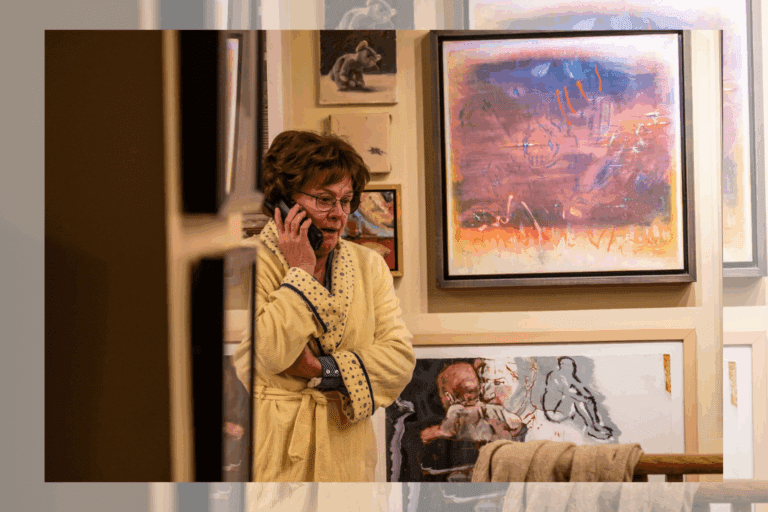 iPhoto caption: Jane Spidell in 'Twelve Dinners.' Photo by Dahlia Katz.
REVIEW: Family tensions run high in TIFT’s intimate Twelve Dinners
In the now-closed Twelve Dinners, an autobiographical play written and directed by Steve Ross, audiences received intimate access to an unvarnished version of a younger Ross through 12 evening meals with his parents.
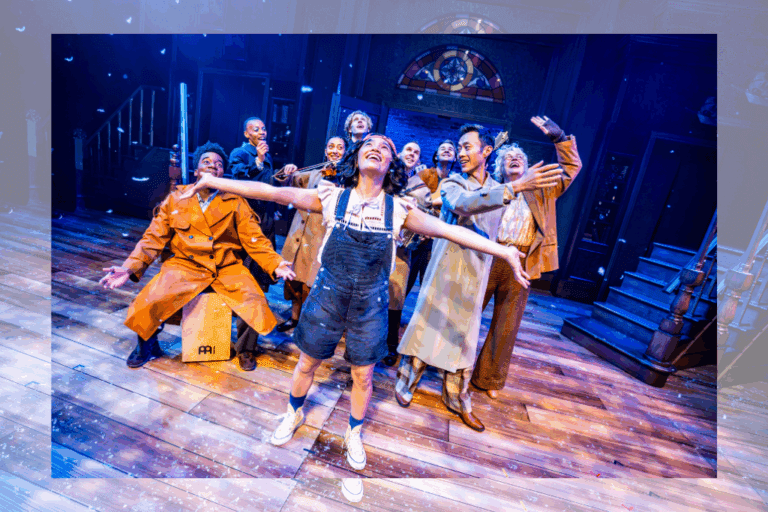 iPhoto caption: Members of the company of 'Narnia.' Photo by Dahlia Katz.
REVIEW: Bad Hats’ Narnia is a joyful, heartwarming escape
The spirit of openness and the joy of discovery rule over this Narnia. Open the wardrobe and see.
 iPhoto caption: Members of the company of 'Robin Hood.' Photo by Dahlia Katz.
REVIEW: Canadian Stage’s Robin Hood panto is anti-capitalist fun for the whole family
Following Ross Petty’s legacy of scene-stealing, Damien Atkins as the evil Prince John is easily the greatest delight of the show.
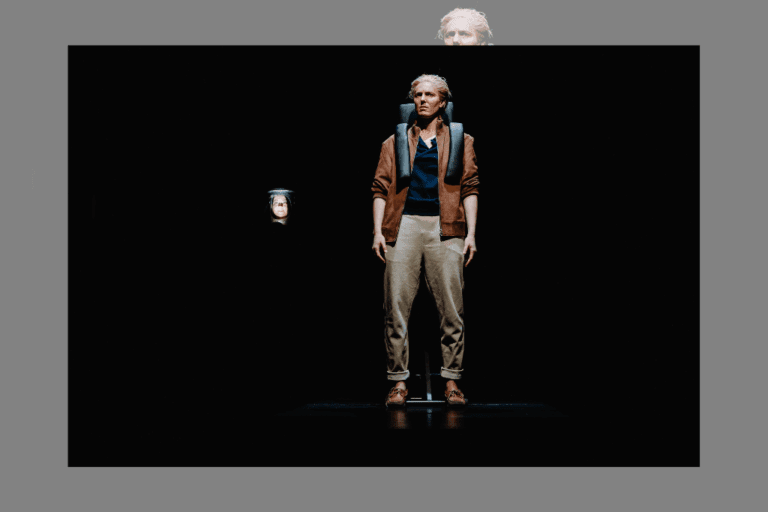 iPhoto caption: Lauren Gillis and Alaine Hutton in 'Public Consumption.' Photo by Eden Graham.
REVIEW: Lester Trips’ stylish Public Consumption captures the internet’s profound emptiness
Rather than directly representing online life, Public Consumption speculates — with virtuosity — about how the digital world affects our bodies. And the show's findings are by no means comfortable.
 iPhoto caption: Tony Ofori and Daren A. Herbert in 'Moonlight Schooner.' Photo by Dahlia Katz.
Kanika Ambrose’s Moonlight Schooner is animated and visually stunning, but its individual pieces don’t come together as neatly as I would've expected.
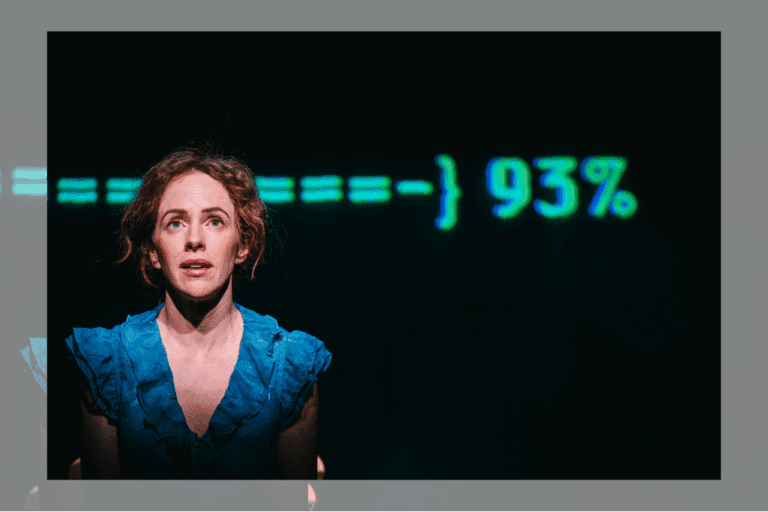 iPhoto caption: Fiona Mongillo in 'Reproduktion.' Photo by Ann Baggley.
REVIEW: Here For Now’s well-acted Reproduktion attempts to tackle too much
Amy Rutherford’s world premiere script is ambitious and the material it covers is complex — but the narrative feels disjointed.
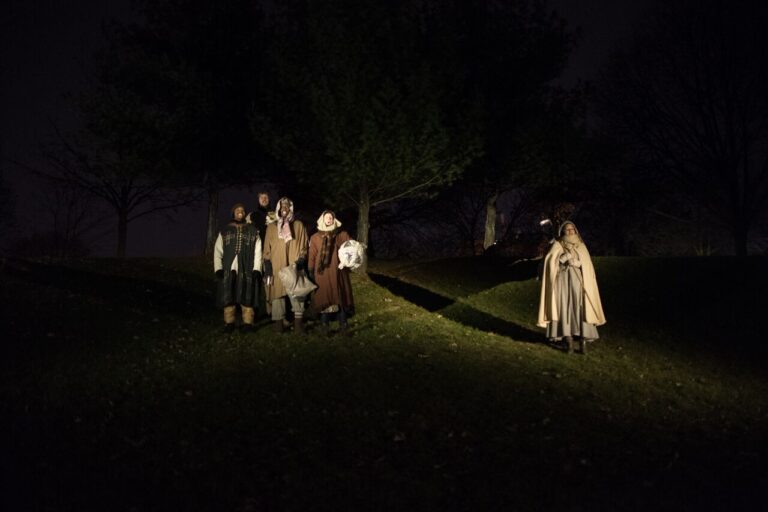 iPhoto caption: Marcel Stewart, Dan Mousseau, Christef Desir, Alex Bulmer, Shakura Dickson in The Story. Photo by Neil Silcox
It was frigid the night I saw the production, and when you are freezing and can’t feel your fingers or toes, time-wasting shenanigans wear thin.
 iPhoto caption: Lena Maripuu, Graham Conway, and Peter Pan ensemble. Photo by Nicholas Porteous
Joy to the world—the most inventive, lively, whimsical production of Peter Pan has arrived for the holidays!
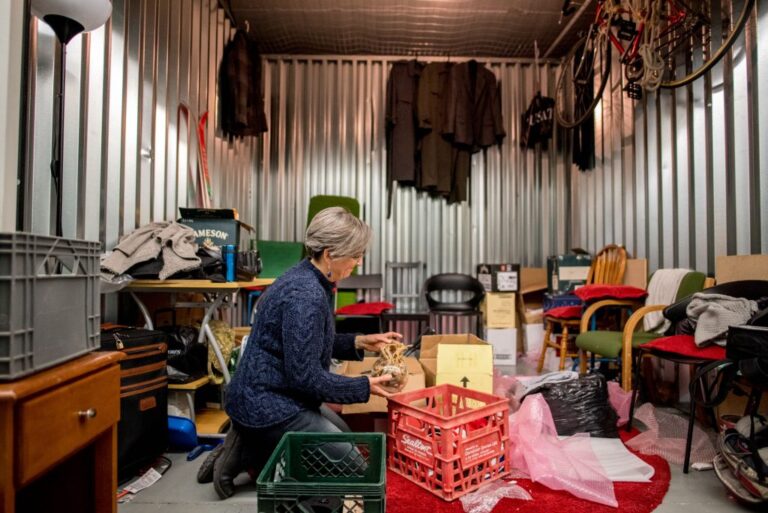 iPhoto caption: Robyn Stevan in The Mess. Photo by Dahlia Katz
Co-creators Mikaela Davies and Polly Phokeev have devised a short, complex, layered story of how the mess a person creates can affect those around them.
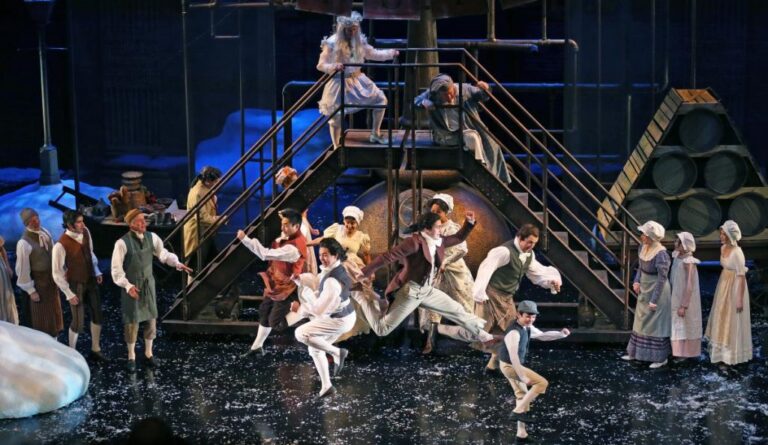 iPhoto caption: Company in the Grand Theatre's production of A Christmas Carol. Photo by Claus Andersen
Reviews: A Christmas Carol (x2)
Reviews of two productions of A Christmas Carol—Ross Petty Productions and the Grand Theatre, in London, Ont.—that couldn’t be more different.
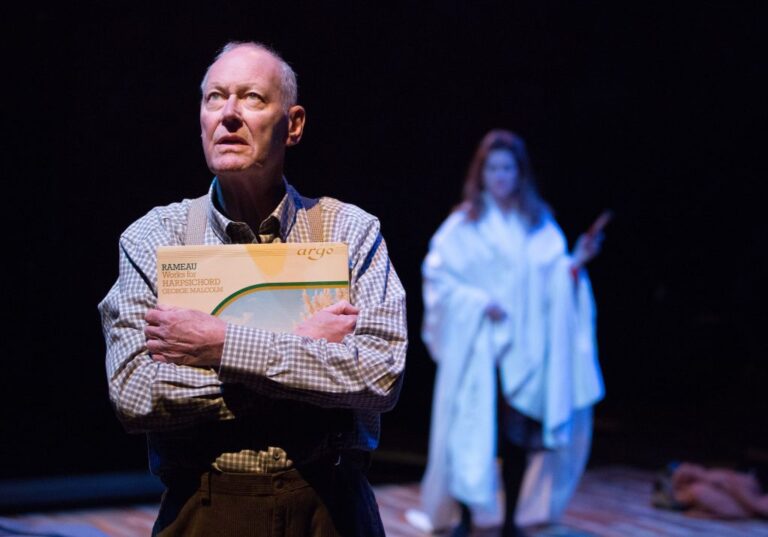 iPhoto caption: David Schurmann and Carly Street in Heisenberg. Photo by Cylla von Tiedemann
Of the three productions I’ve seen of Heisenberg—on Broadway in New York, the West End in London, and here in Toronto—this one is the best.
Comments