
REVIEW: Our Fathers, Sons, Lovers and Little Brothers at Tarragon Theatre
When it hits, it hits hard.
When it doesn’t, it recovers quickly and with grace.
Our Fathers, Sons, Lovers and Little Brothers, written by and starring Makambe K. Simamba and presented as a co-production between Tarragon and Black Theatre Workshop, is a “prayer for Black life,” a requiem for lost generations of Black men, a ceremony, a dirge. Simamba’s gut-punch of a monologue defies genre. I’m not the first person to be impressed by it — the piece won two Dora awards in 2019, both for solo performance and for writing.
Before digging into the performance, I’ll state plainly: Simamba’s “main audience” for this piece, as articulated in the above-linked Star preview, is Black teens. That’s not me — I’m a white woman in my early twenties, and there are surely elements of this performance which didn’t resonate with me on a personal level as deeply as they might have for other audience members. But the play’s content is ubiquitous — the racial reckonings it references won’t be breaking news to any audience member, and the conversations Simamba seeks to initiate aren’t necessarily limited to a single demographic.
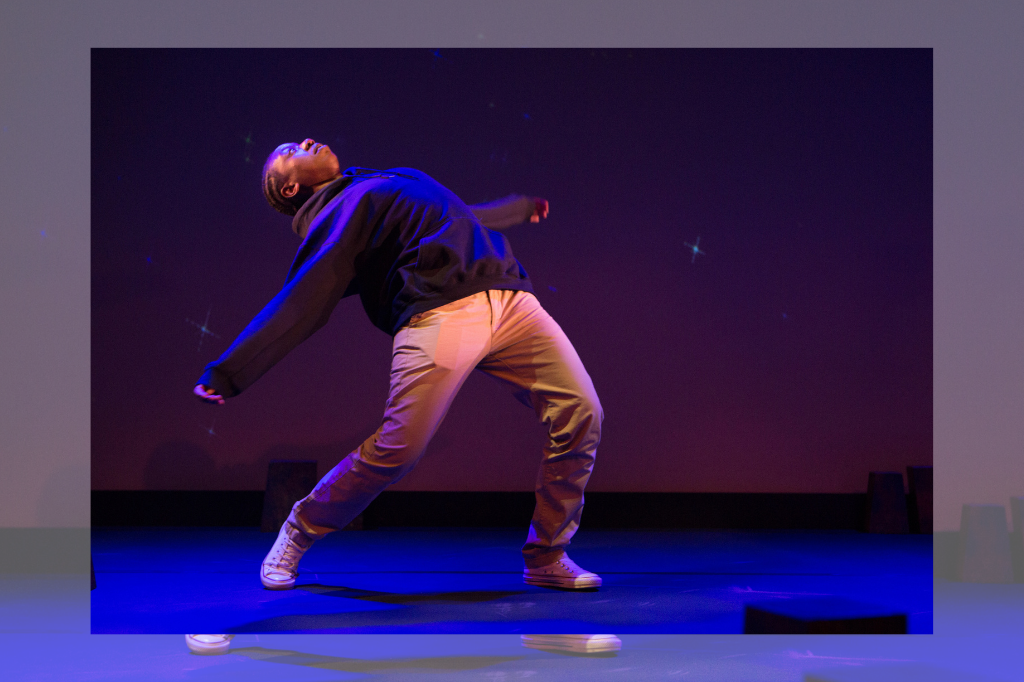
Unfurling across Tarragon’s sparse Extraspace stage, Our Fathers, Sons, Lovers and Little Brothers follows Black teenager Slimm through his journey into the afterlife, a celestial purgatory framed by a video backdrop and a few brown theatre blocks of varying sizes. Also in the space is a sacred-looking book, a guide for Slimm as he embarks upon his new existence as a murdered Black man. Slimm’s true identity is vague, then mysterious, then all too clear: Simamba navigates the reveal gorgeously, using tissue-thin layers of character to build towards the whole, entire Slimm we see at the end of the play.
Clothed simply in a blue-black hoodie and khakis, Simamba commands the space: she can dance, she can find laughs in unlikely places, and seriously, can she work a room. Simamba is magnetic, surprising, unrestrained — her talent shines through equally as both playwright and performer. The first half of Our Fathers, Sons, Lovers and Little Brothers has only a few infrequent fumbles: moments of imprecise vocal mask, for instance, when Slimm embodies his mother, his friend, his girlfriend. It’s occasionally hard to tell who’s who. But where vocal mask falters, physical choreography prevails: Simamba executes an astonishing physical score magnetically and with total precision. It’s a sight to behold.
Director Donna-Michelle St. Bernard has shaped Simamba’s vision into a concise, efficient solo show — no choice in Simamba’s movement or text work feels redundant or under-supported. Simamba’s performance echoes St. Bernard’s own award-winning play, Sound of the Beast: there’s a clear influence there, and not at all an unwelcome one as two generations of lauded Black playwrights come together to create this thought-provoking work.
This production’s aesthetic composition is what leaves Our Fathers, Sons, Lovers and Little Brothers at the precarious border between good and great. Diana Reyes’ sound design is fine, but a little thin in places — the reverberation of Slimm’s voice in the afterlife somehow feels both unnecessary and incomplete. Video design by Trevor Schwellnus is more consistently strong, particularly in the second half of the show, and yet still feels, at times, unfinished — the on-screen appearance of the text which Slimm reads from the sacred book is only sometimes effectively timed, indicating either opening-night jitters in the booth or an under-rehearsed element of the play. Music, too, sometimes feels hasty — songs like “(Crank That) Soulja Boy” make total dramaturgical sense, but seem unearned in their unedited lengths at the top of the show. Simamba has much to offer in her performance and in her writing: one finds themselves wishing we’d get to that a little quicker.
Our Fathers, Sons, Lovers and Little Brothers is a must-see — the reveal alone is a glorious, heartbreaking moment of live theatre. Simamba has a hit on her hands, which bears repeating even in the years following the piece’s 2019 b current premiere: I look forward to seeing it again in new spaces and with a different design team over the next few years.
Our Fathers, Sons, Lovers and Little Brothers runs at Tarragon live through April 10. It is available digitally starting March 22. Tickets are available here.
Aisling Murphy
Aisling is Intermission's former senior editor and the theatre reporter for the Globe and Mail. She likes British playwright Sarah Kane, most songs by Taylor Swift, and her cats, Fig and June. She was a 2024 fellow at the National Critics Institute in Waterford, CT.
LEARN MORE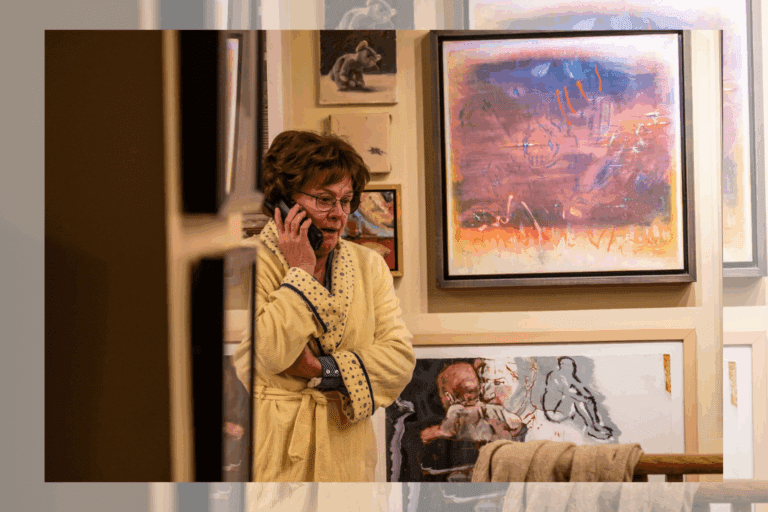 iPhoto caption: Jane Spidell in 'Twelve Dinners.' Photo by Dahlia Katz.
REVIEW: Family tensions run high in TIFT’s intimate Twelve Dinners
In the now-closed Twelve Dinners, an autobiographical play written and directed by Steve Ross, audiences received intimate access to an unvarnished version of a younger Ross through 12 evening meals with his parents.
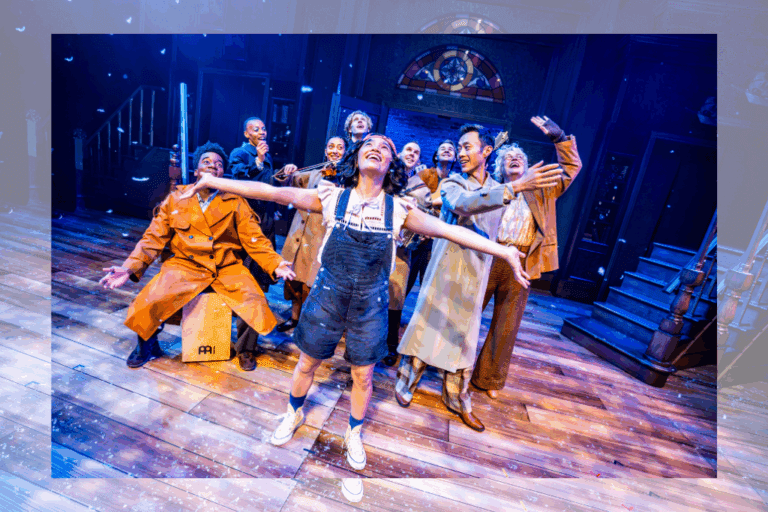 iPhoto caption: Members of the company of 'Narnia.' Photo by Dahlia Katz.
REVIEW: Bad Hats’ Narnia is a joyful, heartwarming escape
The spirit of openness and the joy of discovery rule over this Narnia. Open the wardrobe and see.
 iPhoto caption: Members of the company of 'Robin Hood.' Photo by Dahlia Katz.
REVIEW: Canadian Stage’s Robin Hood panto is anti-capitalist fun for the whole family
Following Ross Petty’s legacy of scene-stealing, Damien Atkins as the evil Prince John is easily the greatest delight of the show.
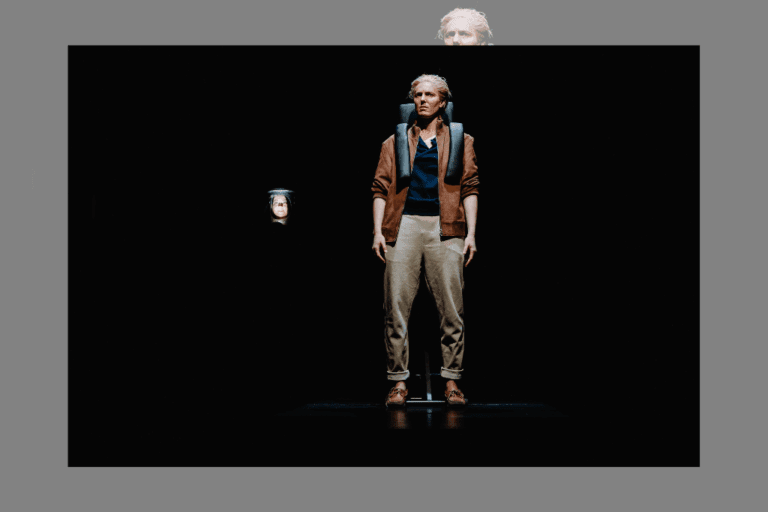 iPhoto caption: Lauren Gillis and Alaine Hutton in 'Public Consumption.' Photo by Eden Graham.
REVIEW: Lester Trips’ stylish Public Consumption captures the internet’s profound emptiness
Rather than directly representing online life, Public Consumption speculates — with virtuosity — about how the digital world affects our bodies. And the show's findings are by no means comfortable.
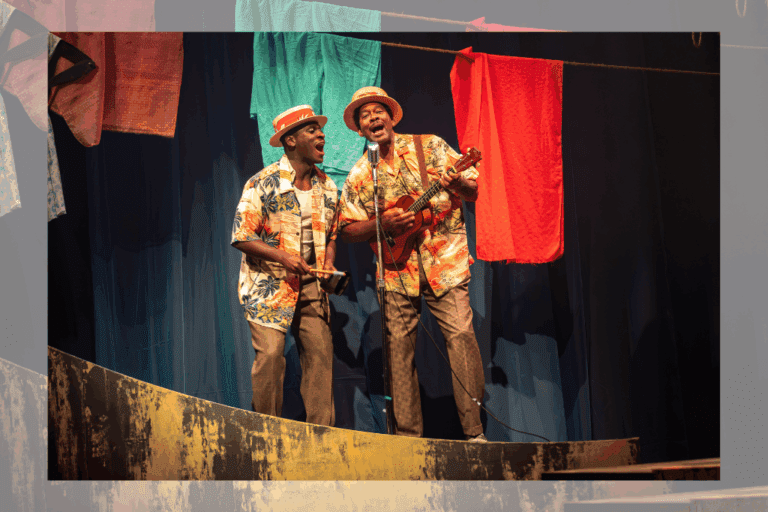 iPhoto caption: Tony Ofori and Daren A. Herbert in 'Moonlight Schooner.' Photo by Dahlia Katz.
Kanika Ambrose’s Moonlight Schooner is animated and visually stunning, but its individual pieces don’t come together as neatly as I would've expected.
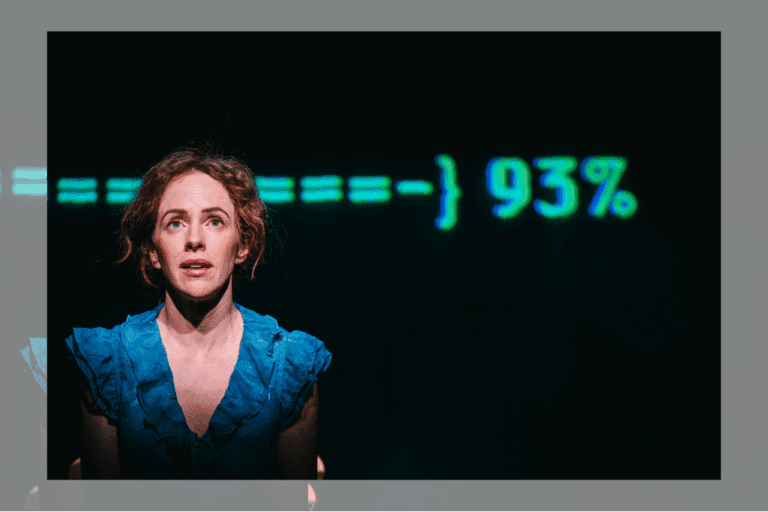 iPhoto caption: Fiona Mongillo in 'Reproduktion.' Photo by Ann Baggley.
REVIEW: Here For Now’s well-acted Reproduktion attempts to tackle too much
Amy Rutherford’s world premiere script is ambitious and the material it covers is complex — but the narrative feels disjointed.
 iPhoto caption: Photo by Aisling Murphy.
In the darkest months of Yukon winter, it’s all about the Sun Room
I’m here for a week in January as a guest of Nakai Theatre, a hub for theatrical experimentation and outside-the-box programming in Canada’s westernmost territory.

Armchairs, tattoos, and an online theatre magazine
When I started at Intermission, my world was limited to the confines of an armchair. Arts journalism was a high it felt dangerously fruitless to chase. The life stretched ahead of me was amorphous and frightening, a chasm filled with hand sanitizer and immigration concerns. It was worth crying over a spilled kombucha and scrubbing at the stain.
 iPhoto caption: Liz Appel headshot courtesy of Liz Appel.
Five questions with Wights playwright Liz Appel
Intermission spoke with Appel over email for a brief Q&A about Wights, now playing at Crow’s Theatre until February 9.

Call for applications: Publishing and editorial assistant
Intermission Magazine is seeking a dynamic and collaborative individual to join our team.
 iPhoto caption: What Writing Can Do: The 2025 Musical Theatre Critics Lab
Announcing What Writing Can Do: The 2025 Musical Theatre Critics Lab
What Writing Can Do is timed to coincide with the Grand and Theatre Aquarius’ co-production of Waitress, which will serve as a jumping-off point for discussions throughout the Lab.
 iPhoto caption: A Christmas Story production still by Dahlia Katz.
REVIEW: A Christmas Story feels fresh at Theatre Aquarius
If you want to catch A Christmas Story before it closes, good luck — the show is close to sold out, and with the talent on that stage, it’s not hard to see why.
Comments