
REVIEW: Singin’ in the Rain at Mirvish
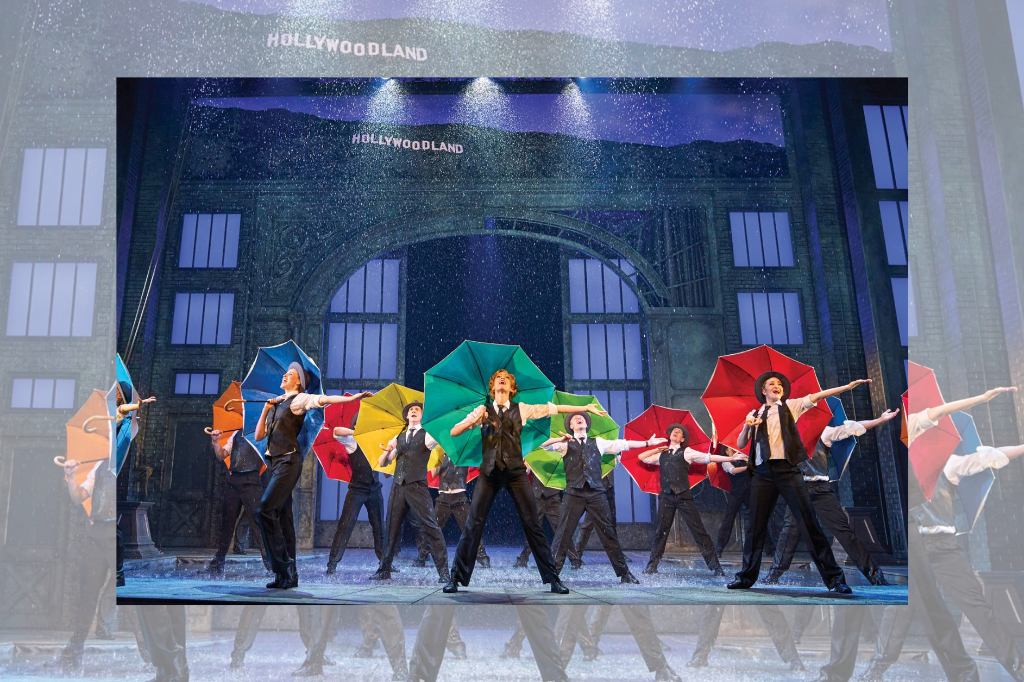
Mirvish has brought in a 2012 UK touring production of Singin’ In the Rain — get your umbrellas ready.
Playing at the Princess of Wales Theatre through the end of October, Singin’ In the Rain is two-and-a-half-hours of tightly choreographed pastiche and joy. Splashy to the point that the first few rows get wet, some audiences will no doubt enjoy the spectacle of shimmering costumes and high-brow buffoonery.
But with a single person visibly of colour performing in a cast of 28 and motifs fifty years removed from the Roaring ‘20s, there are problems here and they are not simply representational: it’s a historical production that doesn’t address its history. As with Mirvish’s other opening last week, just because Singin’ in the Rain is a great movie doesn’t necessarily mean it’s a great show. While this production of Singin’ in the Rain may bring the 1952 film to life for you, here’s why it didn’t for me.
“Spectacle” is this production’s operative word. Simon Higlett’s costumes are so colourful and bedazzled that Baz Luhrmann himself would blush. Higlett also created the mammoth-sized, dynamic sets. These aren’t just geographic in scope; they literally create weather events. As other reviews have gushed (pun intended), this production engulfs you, stormy weather and all, in the world of a film — particularly in the titular song and its encore. And yes, sometimes it’s just cool to experience such advanced stage technology.
Both the film and stage show centre around fictional silent film star Don Lockwood, played by master triple-pirouetter Sam Lips. Don is joined by Cosmo, the studio’s music director, attached to Don at the hip for reasons never addressed. Here, Alastair Crosswell approaches Cosmo (Mr. “Make ‘Em Laugh”) with gleeful energy and adept skill for physical comedy.
The central tension in Singin’ In the Rain is the advent of the “talkies,” and how the fictional Monumental Studio must shift its day-to-day practices. They’re concerned that the viewing public will realize Lockwood’s partner and their biggest starlet, Lina Lamont, has a voice and personality like sandpaper. Faye Tozer’s turn as Lina is the highlight of the production, a triumph in consistent antagonism. Never breaking from the affect of a prepubescent Brooklyn ruffian, Tozer curates a hilarious yet effectively original foil.
The corporation is experiencing this flux when Don has a chance encounter with a sweet-voiced stage actor. Kathy Seldon, played by the charming Charlotte Gooch, catches Don’s eye as she rides the waves of film industry change. But her success won’t be before she has to do the dirty work for the studio by pretending to be Lina Lamont’s voice to salvage otherwise unusable footage.
These are fine performances. But this Singin’ In the Rain encapsulates why fine performances alone may not make a great show. Even though this production aims to recreate the movie, director Jonathan Church and choreographer Andrew Wright take puzzling cuts and content liberties that make its characters and cast seem less well-rounded.
Gone are “Gotta Dance”’s famous green sequined dress, scar-faced quarter-flippers, and faux pas de deux ending. Gone is much of Zelda, the character played in the film by Rita Moreno. We instead get a white actor (Imogen Brooke) playing a Zelda that shows up three quarters of the way into the show. Instead of 1920s charleston and jitterbug, we get what appears to be choreography inspired by Bob Fosse (active from 1954 to 1983) and A Chorus Line (first premiered in 1975).
Another problem arises in underdeveloped characters, particularly Cosmo and Kathy. Basic dramaturgy asks: what are the supporting characters’ goals for personal and professional growth? What’s the world they’re living in? The answers could be rich; different casting choices could engage with the fact that not everyone in 1920s Los Angeles was straight and white. Just because the original has representation issues doesn’t mean that the revival should too.
Also, Ian William Galloway’s many long video projections of Lockwood and Lamont movies are head-scratchers. For a stage production transcribed from a movie, these could have been live-acted to great success. Why pay more to watch awkward videos onstage when you could watch a high-quality movie at home? These inserts deflate the liveness, and they lead to onstage recreations of Graumann’s Chinese Theatre that invoke more Orientalist fonts and symbolism than the original building does.
Altogether, this is a lot to overlook. I left the Princess of Wales feeling disappointed, when I was supposed to feel happy.
Of course the asterisk to my disappointment is the objective “I.” There’s no doubt that this production may inspire joy in many who watch it. It warrants “oohs” and “aahs” when Lips Lockwood strikes his umbrella on the water-soaked stage. Claps erupted on opening night at the expert synchronicity and astounding alliteration in “Moses Supposes.”
But my suggestion is to stay in, stay dry, and watch the original, along with the work of Vaudeville pioneers like the Nicholas Brothers, Josephine Baker, and Bill “Bojangles” Robinson.
Singin’ in the Rain runs at the Princess of Wales Theatre through October 23. Tickets are available here.

Martin Austin
Martin Austin is a PhD student at the University of Toronto’s Centre for Drama, Theatre & Performance Studies. Martin’s research explores the past and current state of ethics in Euro-American dance practice. He is research assistant for Category Is, a study of house ballroom communities in Toronto and Montréal, and lead administrative coordinator of the Institute for Dance Studies.
LEARN MORE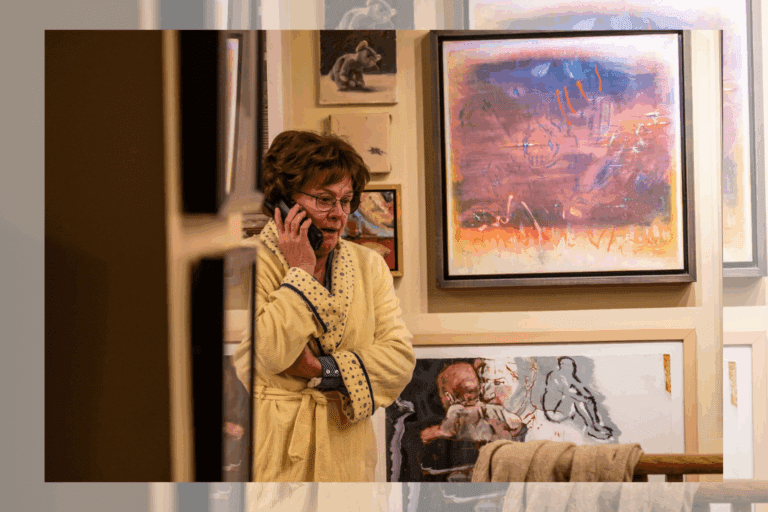 iPhoto caption: Jane Spidell in 'Twelve Dinners.' Photo by Dahlia Katz.
REVIEW: Family tensions run high in TIFT’s intimate Twelve Dinners
In the now-closed Twelve Dinners, an autobiographical play written and directed by Steve Ross, audiences received intimate access to an unvarnished version of a younger Ross through 12 evening meals with his parents.
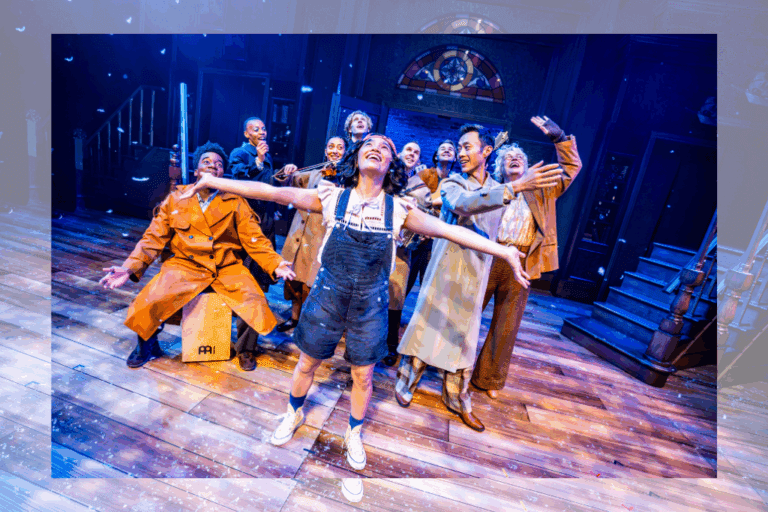 iPhoto caption: Members of the company of 'Narnia.' Photo by Dahlia Katz.
REVIEW: Bad Hats’ Narnia is a joyful, heartwarming escape
The spirit of openness and the joy of discovery rule over this Narnia. Open the wardrobe and see.
 iPhoto caption: Members of the company of 'Robin Hood.' Photo by Dahlia Katz.
REVIEW: Canadian Stage’s Robin Hood panto is anti-capitalist fun for the whole family
Following Ross Petty’s legacy of scene-stealing, Damien Atkins as the evil Prince John is easily the greatest delight of the show.
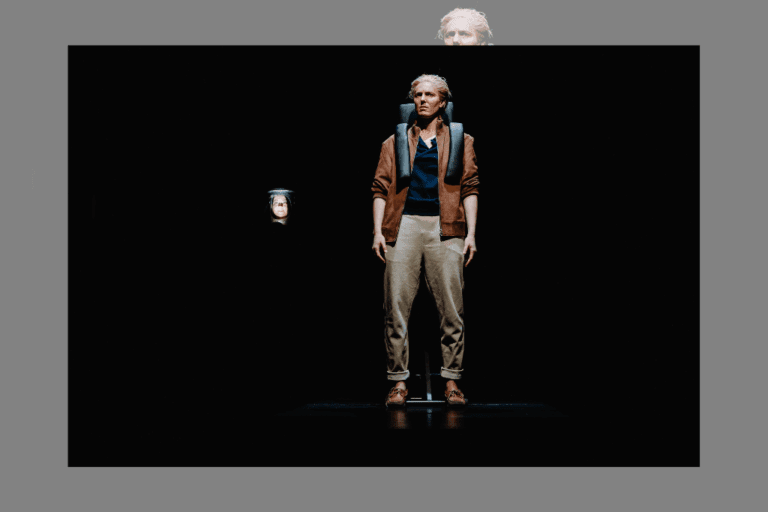 iPhoto caption: Lauren Gillis and Alaine Hutton in 'Public Consumption.' Photo by Eden Graham.
REVIEW: Lester Trips’ stylish Public Consumption captures the internet’s profound emptiness
Rather than directly representing online life, Public Consumption speculates — with virtuosity — about how the digital world affects our bodies. And the show's findings are by no means comfortable.
 iPhoto caption: Tony Ofori and Daren A. Herbert in 'Moonlight Schooner.' Photo by Dahlia Katz.
Kanika Ambrose’s Moonlight Schooner is animated and visually stunning, but its individual pieces don’t come together as neatly as I would've expected.
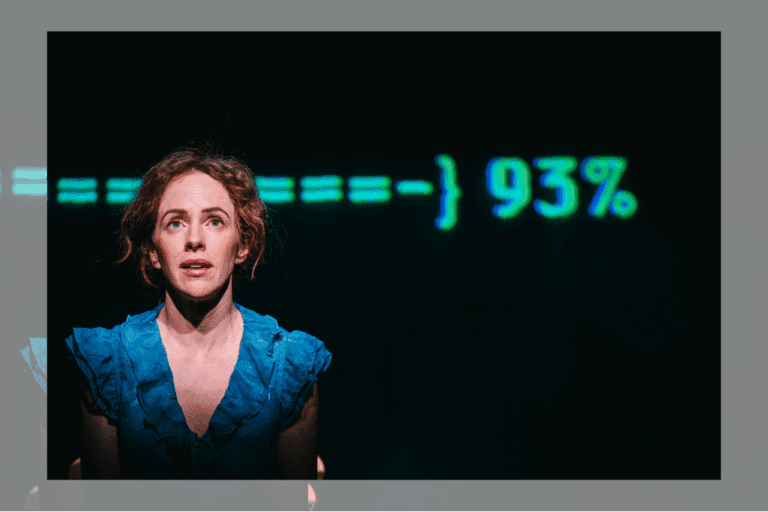 iPhoto caption: Fiona Mongillo in 'Reproduktion.' Photo by Ann Baggley.
REVIEW: Here For Now’s well-acted Reproduktion attempts to tackle too much
Amy Rutherford’s world premiere script is ambitious and the material it covers is complex — but the narrative feels disjointed.
 iPhoto caption: Production still from The Nutcracker courtesy of the National Ballet of Canada.
Why should you go to the ballet?
My childhood memories of learning to dance were front and centre for me when I attended opening night of The Nutcracker, performed by the National Ballet of Canada at the Four Seasons Centre for the Performing Arts.
 iPhoto caption: ROSA promotional image courtesy of RUTAS.
RUTAS redefines ‘American’ theatre and performance
“I think [Latinx artists] have always been a strong voice, but now we need to be even louder to the rest of Canada,” says multidisciplinary performance artist Carlos Rivera. “The things that we can bring to the table and bring to the stages can show the beauty, and the strain, and the capacities that Latino Americans carry with us in our bodies, in our minds, in our souls.”
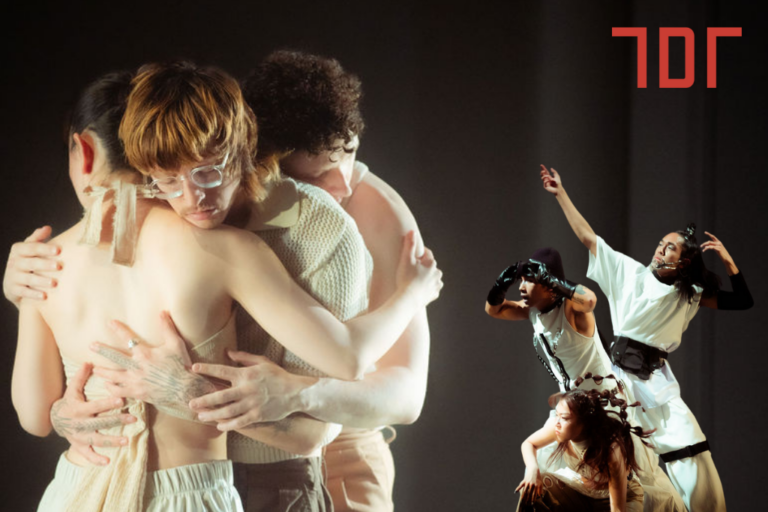 iPhoto caption: Original photos by Kendra Epik.
With its Spring Double Bill, Toronto Dance Theatre centres community and new voices
For the Spring Double Bill, artistic director Andrew Tay is considering how programming can be a means of supporting emerging artists.
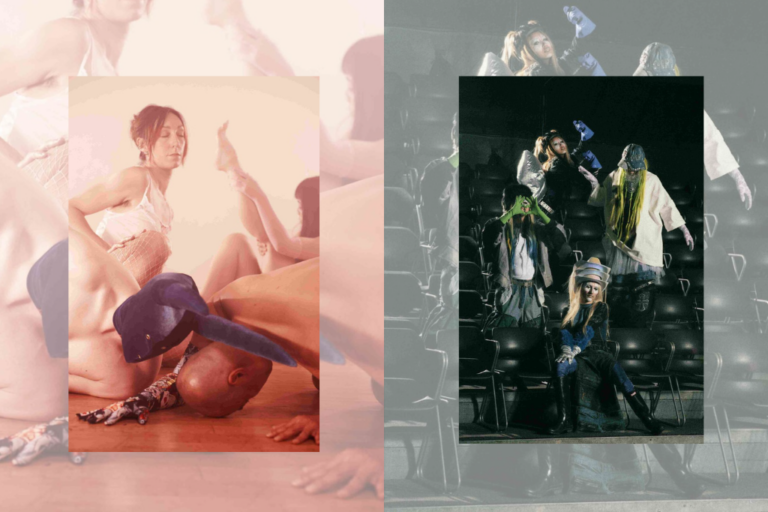 iPhoto caption: Photos by Roya DelSol
REVIEW: Boundary-pushing TDT double bill features face-riding and odd sensuality
Both pieces in the winter double bill are par for the course with TDT’s recent artistic output: unabashedly queer and consistently experimental.
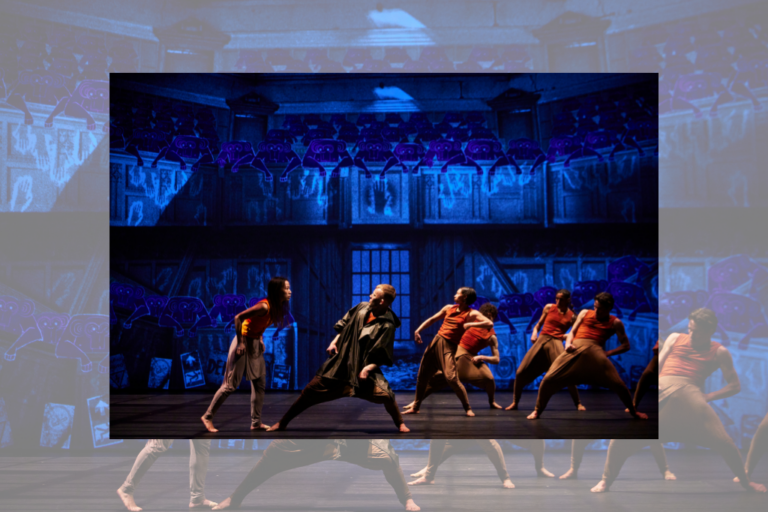 iPhoto caption: Photo by Ambra Vernuccio.
REVIEW: Jungle Book reimagined needs a little reimagining
Indeed, Akram Khan “reimagines” a historically complex story into a two-hour exposé on the environmental catastrophe. Jungle Book’s captivating visual effects and dynamic physicality brought the opening night audience to their feet. But as the choreographer’s first billing as director, Jungle Book’s storytelling doesn’t always live up to Khan’s skill as a dancemaker.

When it comes to dance made in Canada, there’s an overabundance of great work happening.
Comments