
REVIEW: Theatre Rusticle’s Tempest goes gale-force in Act Two
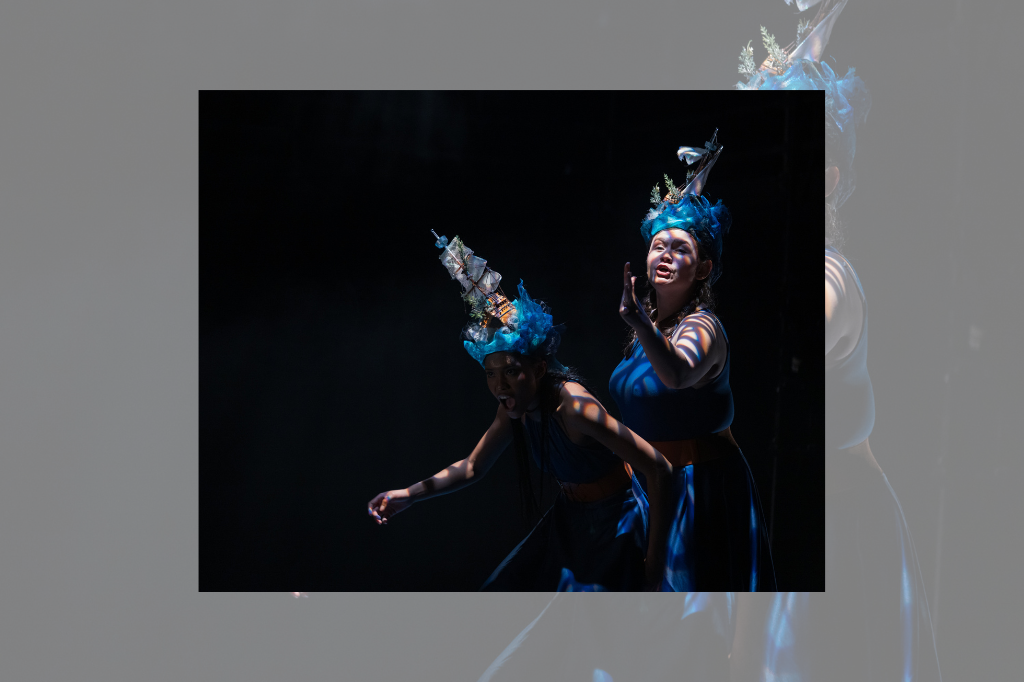
There’s something delightfully theatre school about Theatre Rusticle’s new production of The Tempest. Where else in Toronto but a scene study class is Shakespeare performed on an empty indoor stage (the Buddies in Bad Times Chamber, in this case), by a quintet of women in matching neutral garb, with the roles traded about essentially at random?
Furthermore, in the production’s conception, the well-loved indie physical theatre company, formed in 1998, mostly sidesteps the questions of intention often raised around the programming of classical texts (or, question: “why?”). That’s to say: director Allyson McMackon’s primary goal with The Tempest seems to be to do a show in Theatre Rusticle’s signature style (identified by its website as “spare yet image drenched”), with the choice of text coming off as almost secondary. When the production isn’t working, this un-intentionality produces an aura of aimlessness. But when it clicks, the show exudes a wild freedom, like a young person running drenched through a gale for the hell of it.
The production follows Shakespeare’s plot fairly closely. On an ocean island live Prospero (a sorcerer and the former Duke of Milan), his daughter Miranda, along with Ariel and Caliban, a couple of magic-infused servants. The titular storm wrecks a nearby ship carrying a court from Milan, including Prospero’s duplicitous brother Antonio, the new duke. Once the group is on the island, Prospero makes a series of moves aimed at clawing back his old title. Though the majority of his lines are retained (the production runs two hours and 45 minutes), the choice to have a five-woman cast may be an attempt to decentre Prospero from the narrative, as it parallels a throwaway line (here slightly emphasized through performance) regarding Miranda’s early childhood: “Had I not four or five women once that tended me?”
A pair of costume designers (Lindsay Anne Black and Brandon Kleiman) use accessories, including an abundance of gorgeous hats, to mark out the rotating roles with clarity. Despite this, the casting’s constantly shifting nature means the production is always one step ahead of the viewer. It’s at times confusing, and for me endearingly so; it goes a long way toward reproducing the overwhelming whirlwind of sensations that accompanied those first childhood dives into Shakespeare.
Rarely have I seen the Buddies space used to create such deep stage pictures. In a proscenium setup containing no scenography, the space is vast, and McMackon makes use of its full range, often placing the actors startlingly near or far. Then, in electric moments that put the “physical” in physical theatre, she has them push their bodies to the limit by running in circles about the space. Lighting designer Michelle Ramsay facilitates these explorations with the repeated use of a giant octagon of patterned light, which the performers traverse like an ethereal moonlit path or a sunny Olympic track as appropriate.
At other times, however, the production appears confined by the text. Particularly during the first act, the performers (Brefny Caribou, Jill Goranson, Beck Lloyd, Trinity Lloyd, and Annie Tuma) work hard at capital-C communicating the script’s meaning to the audience. This means plenty of hyper-literal gesturing, along with a frothy tone that at times made me wonder if the piece is intended for young audiences.
But the second act brings a richer texture, plus freer performances. The reason for the change? I’d chalk it up to the exposition being over. There’s less vital information for the audience to process, so performance is allowed to take precedence over text — and the show becomes disarmingly beautiful. Such late activations are common to English-language productions of King Lear, which often take until the storm to get exciting, but it’s curious to see this kind of arc in The Tempest; thanks to Prospero’s late-game speechifying, many productions actually slow down toward their end.
My first encounter with Theatre Rusticle, The Tempest at first frustrated me: why does the company appear to be leaning on what the show’s marketing calls its “inimitable style,” instead of working on thinking up new approaches? But as the production gradually unveils its splendours, the company’s impressive capacity for magic became clear. So here’s to further Rusticle revels, in all their schoolhouse playfulness.
The Tempest runs at Buddies in Bad Times Theatre until January 28. Tickets are available here.
Intermission reviews are independent and unrelated to Intermission’s partnered content. Learn more about Intermission’s partnership model here.

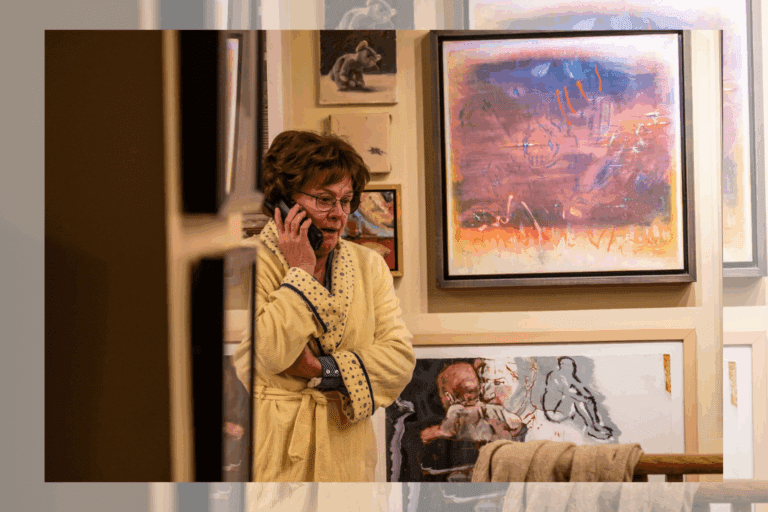 iPhoto caption: Jane Spidell in 'Twelve Dinners.' Photo by Dahlia Katz.
REVIEW: Family tensions run high in TIFT’s intimate Twelve Dinners
In the now-closed Twelve Dinners, an autobiographical play written and directed by Steve Ross, audiences received intimate access to an unvarnished version of a younger Ross through 12 evening meals with his parents.
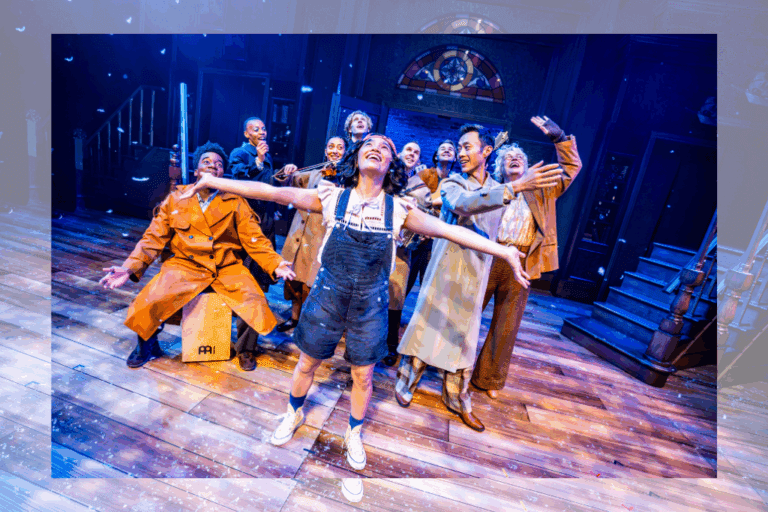 iPhoto caption: Members of the company of 'Narnia.' Photo by Dahlia Katz.
REVIEW: Bad Hats’ Narnia is a joyful, heartwarming escape
The spirit of openness and the joy of discovery rule over this Narnia. Open the wardrobe and see.
 iPhoto caption: Members of the company of 'Robin Hood.' Photo by Dahlia Katz.
REVIEW: Canadian Stage’s Robin Hood panto is anti-capitalist fun for the whole family
Following Ross Petty’s legacy of scene-stealing, Damien Atkins as the evil Prince John is easily the greatest delight of the show.
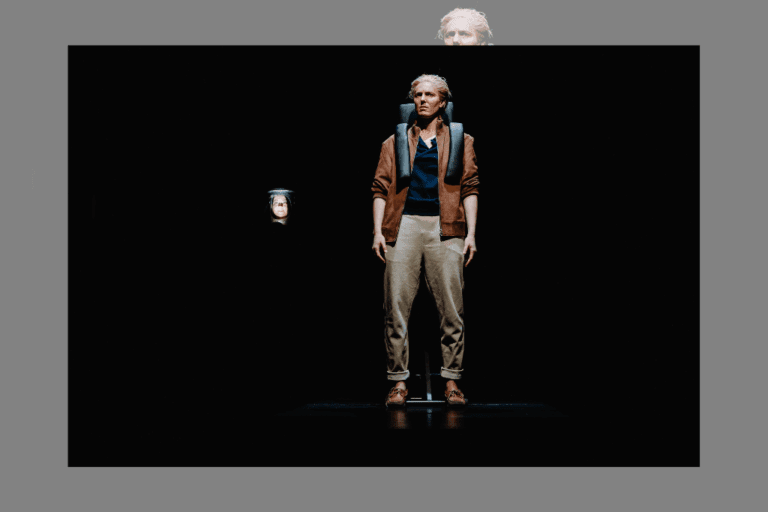 iPhoto caption: Lauren Gillis and Alaine Hutton in 'Public Consumption.' Photo by Eden Graham.
REVIEW: Lester Trips’ stylish Public Consumption captures the internet’s profound emptiness
Rather than directly representing online life, Public Consumption speculates — with virtuosity — about how the digital world affects our bodies. And the show's findings are by no means comfortable.
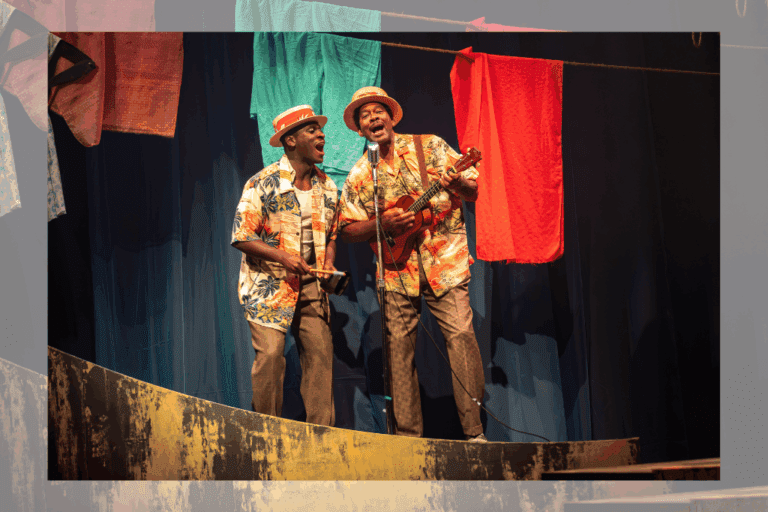 iPhoto caption: Tony Ofori and Daren A. Herbert in 'Moonlight Schooner.' Photo by Dahlia Katz.
Kanika Ambrose’s Moonlight Schooner is animated and visually stunning, but its individual pieces don’t come together as neatly as I would've expected.
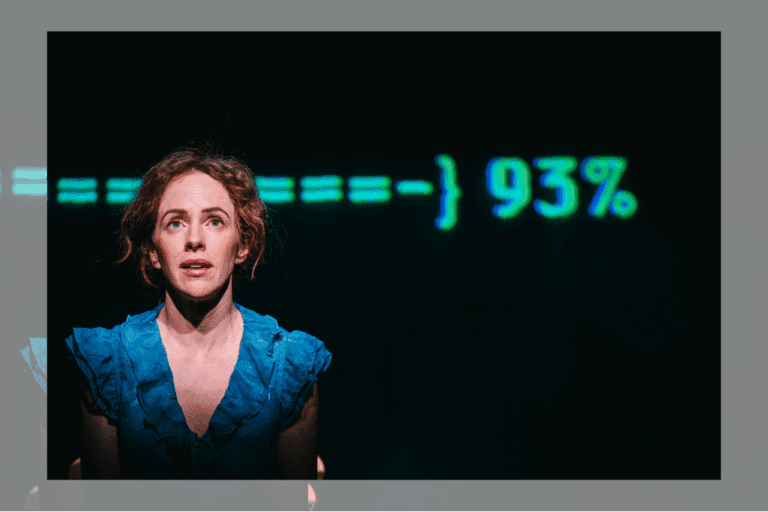 iPhoto caption: Fiona Mongillo in 'Reproduktion.' Photo by Ann Baggley.
REVIEW: Here For Now’s well-acted Reproduktion attempts to tackle too much
Amy Rutherford’s world premiere script is ambitious and the material it covers is complex — but the narrative feels disjointed.
iPhoto caption: Lauren Gillis and Alaine Hutton in 'Public Consumption.' Photo by Eden Graham.
REVIEW: Lester Trips’ stylish Public Consumption captures the internet’s profound emptiness
Rather than directly representing online life, Public Consumption speculates — with virtuosity — about how the digital world affects our bodies. And the show's findings are by no means comfortable.
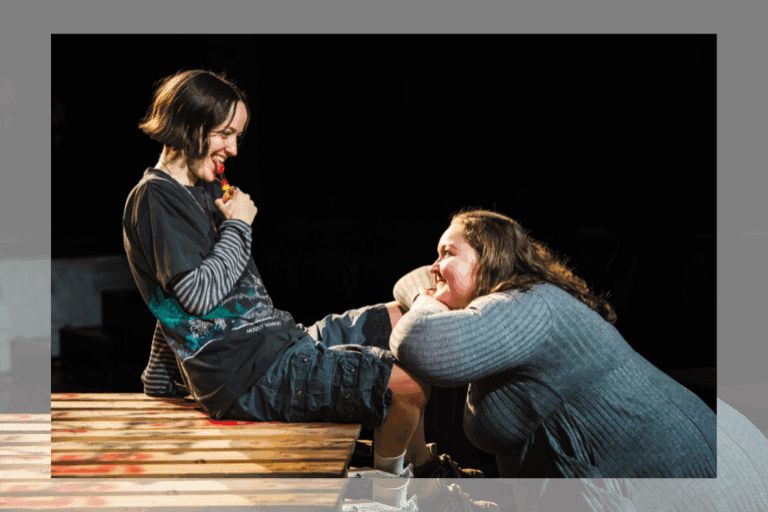 iPhoto caption: Photo by Elana Emer.
REVIEW: Icarus Theatre’s DNA paints a disturbing mural of teenage rebellion
While director Erik Richards’ tendency toward snappy, thriller-esque pacing doesn’t suit all of DNA’s more intimate moments, it adds electricity to the drama’s group scenes, bringing playwright Dennis Kelly’s reflections on groupthink and collective grief into clear view.
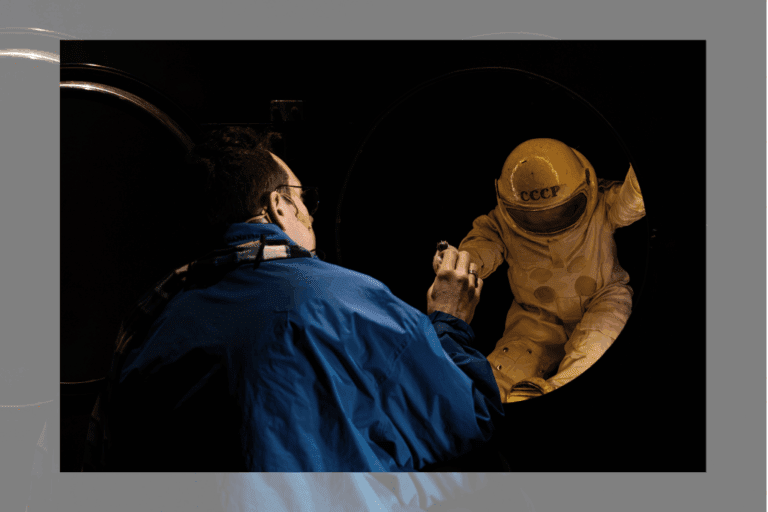 iPhoto caption: Olivier Normand in 'The Far Side of the Moon.' Photo by Li Wang.
REVIEW: Lepage’s ethereal The Far Side of the Moon is insomniac theatre
The Far Side of the Moon begins and ends with a large mirror on stage, and the show extracts enigmatic power from the tantalizing question of whether its protagonist is losing himself in his reflection, or moving toward self-discovery.
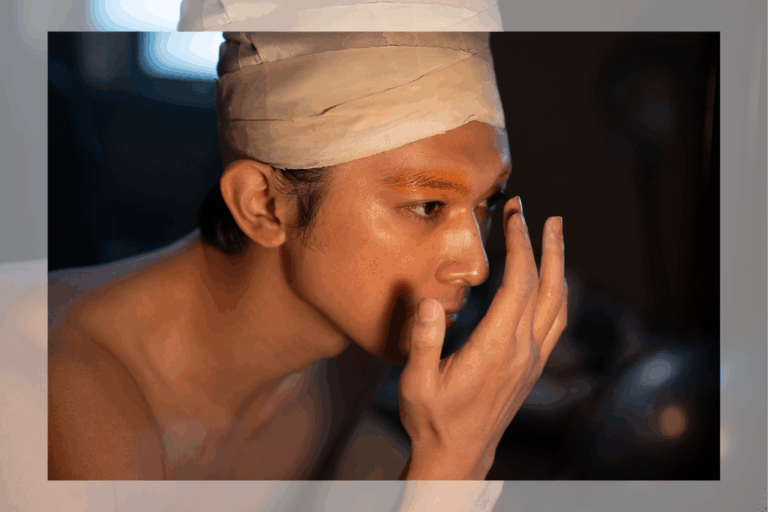 iPhoto caption: 'Kokuho' still courtesy of TIFF.
REVIEW: During this year’s TIFF, two films depicted theatre as a vessel for transcendence
Of the several performing arts-adjacent selections I took in, most affecting were two dramas: Lee Sang-il’s Kokuho and Chloé Zhao’s Hamnet. In both period pieces, theatre creation serves as an emotional outlet for an artist navigating devastating loss.
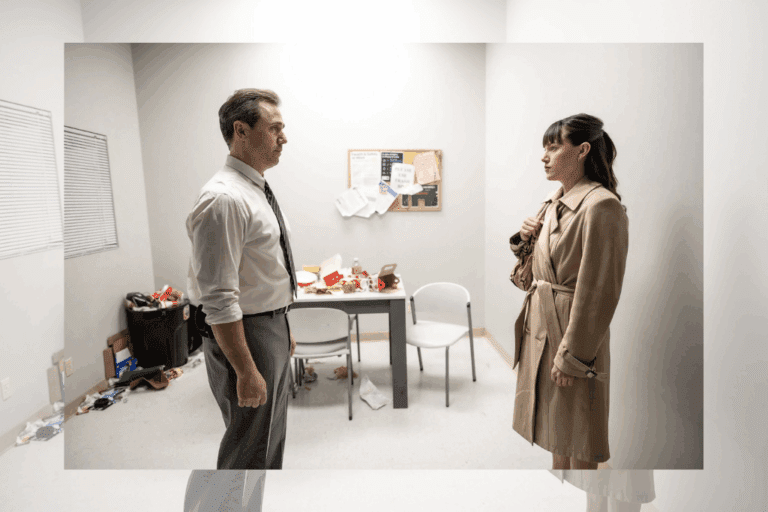 iPhoto caption: Cyrus Lane and Kirstyn Russelle in Barrie run of 'Blackbird.' Photo by Dahlia Katz.
REVIEW: Talk is Free Theatre’s Blackbird offers a close-up look at two detailed performances
Emerging director Dean Deffett has concocted a tight, straightforward production, primarily of interest as an intimate character study.
 iPhoto caption: Sleman Aldib and an audience member in 'The Opposite.' Still from a trailer by Spectrum Associates.
REVIEW: Kitchener’s biennial IMPACT Festival crackled with urgency
Most of the six works I viewed tackled urgent topics, from the convoluted Canadian immigration system to the Palestinian experience of displacement: explorations that line up with artistic director Pam Patel’s curatorial statement, which discusses how IMPACT ‘25 “unpacks what it means to survive, to resist, and to seek refuge” through a global, Indigenous-focused lens.
Comments