
REVIEW: In 3 Fingers Back, Donna-Michelle St. Bernard explores the extremes of war
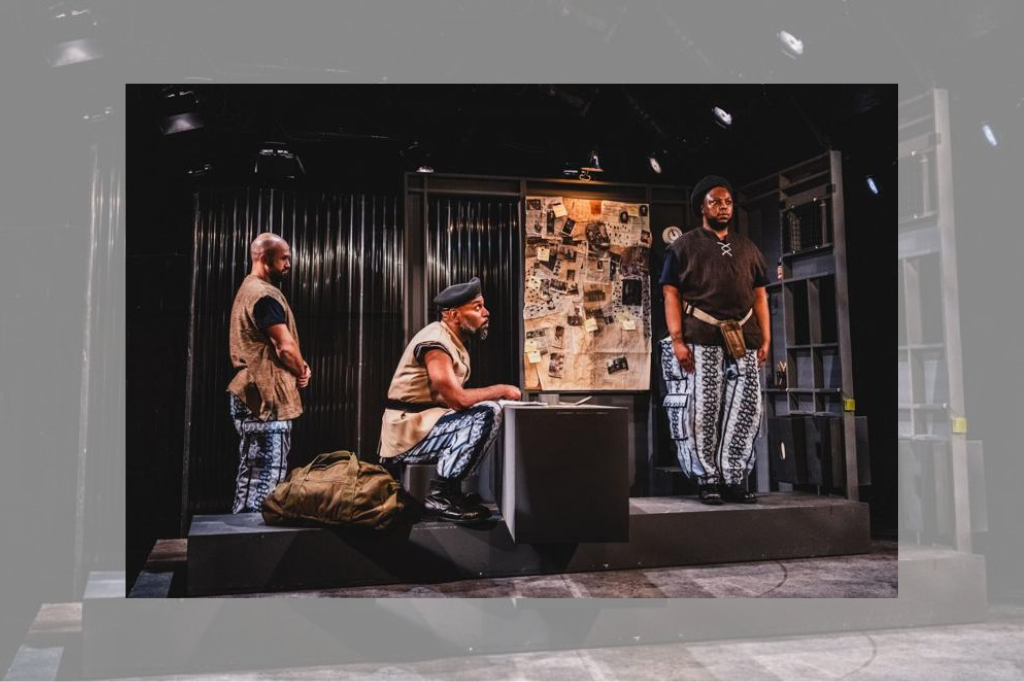 iPhoto caption: Photo by Jae Yang.
If there are those who create war and those who survive it, which one are you?
3 Fingers Back ain’t no regular play about war. We don’t see or hear the destruction of the land or the cry of the people. Instead, Donna-Michelle (DM) St. Bernard’s double bill of plays is more intimate, an inward crawl to what she calls the “repetitive stress patterns” that constitute the world.
3 Fingers Back, a co-production between Tarragon Theatre and LemonTree creations, follows the journey of five characters shaped by war. Fuelled by liberation and power, each character must face their truth and ultimate fate. The dynamic rhythm of the plays, individually titled Give It Up and The Smell of Horses, keeps pace, thanks to co-directors Yvette Nolan and Cole Alvis, and the audience is dropped into a world that sees from all sides. This panoramic view leaves the audience standing in the middle of it all, searching for a way out.
Give It Up and The Smell of Horses are part of Bernard’s 54ology project, in which she writes a play inspired by every country in Africa – she’s now a quarter of the way through! Give It Up is inspired by a woman’s resistance group from Angola, while The Smell of Horses is inspired by events around torture in Guinea Conakry.
While these plays may feel far away, the familiarity of the characters is what keeps them anchored to the present day, by showing people just doing the best with what they’ve been given.
Give It Up sets the night off with an honest, confrontational dialogue between two women captives: Yol (a stern Uche Ama) and Ada (the jovial Megan Legesse), who come from the same resistance group but had never before met. While they occupy a small cell, both characters aim to contain the hostility of the situation they are in by staying focused on their mission.
Both plays take place inside a small military base where captives are held to acquire information, and while the audience does not witness the abuse, the character of Saad, a soldier played by Tsholo Khalema, becomes the connector between both plays. The decisions he makes in Give It Up become clearer in The Smell of Horses, effectively tying the halves together.
It’s in The Smell of Horses where the audience is exposed to the loop of the base’s hostility. The three soldiers – Adam (Christopher Bautista), Beech (Indrit Kasapi), and Saad – struggle with reconciling with their power while simultaneously perpetrating violence against the captives, as well as to each other. Kasapi and Khalema exchange memorably endearing moments with each other in their scenes, but the part of the show that stuck out the most for me was the set designed by César El Hayeck, along with the lighting by Michelle Ramsay.
The multi-leveled set softens the intensity of the subject matter but never distracts from the intimacy between the characters. It becomes this articulation of time, and while the characters push the boundaries of their confinement, what’s created is a heterotopia, or a world within a world, mirroring yet disrupting the world outside. Meanwhile, Ramsay’s lighting draws the audience in as each corner and doorway appears and disappears, folding in and sliding out, emulating the bends and curves of passing time.
Overall, Give It Up and The Smell of Horses work well together as one show, presenting a compelling twist on the metaphor of a two-sided coin. Ultimately, I missed the sense of urgency one might usually experience in a play about war – but perhaps that’s the point.
3 Fingers Back runs at Tarragon Theatre until March 24. Tickets are available here.
Intermission reviews are independent and unrelated to Intermission‘s partnered content. Learn more about Intermission‘s partnership model here.

Aisha Lesley Bentham
Aisha Lesley Bentham BFA, MA is an internationally trained artist-scholar, vegan chef, and wellness coach. Aisha’s research and passion examines the intersections of cooking and performance and aims to integrate notions of care, eco-somatics, and cookery from the perspective of a first-generation Black Canadian. Her new work will premiere at SummerWorks August 2023.
LEARN MORE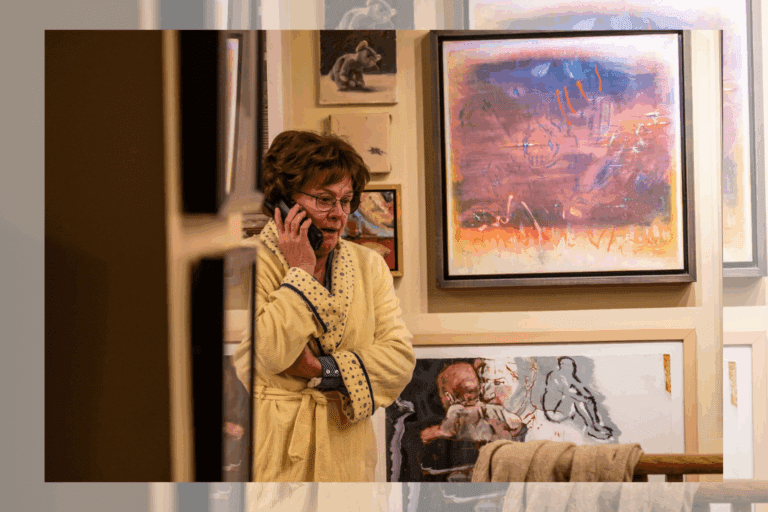 iPhoto caption: Jane Spidell in 'Twelve Dinners.' Photo by Dahlia Katz.
REVIEW: Family tensions run high in TIFT’s intimate Twelve Dinners
In the now-closed Twelve Dinners, an autobiographical play written and directed by Steve Ross, audiences received intimate access to an unvarnished version of a younger Ross through 12 evening meals with his parents.
 iPhoto caption: Members of the company of 'Narnia.' Photo by Dahlia Katz.
REVIEW: Bad Hats’ Narnia is a joyful, heartwarming escape
The spirit of openness and the joy of discovery rule over this Narnia. Open the wardrobe and see.
 iPhoto caption: Members of the company of 'Robin Hood.' Photo by Dahlia Katz.
REVIEW: Canadian Stage’s Robin Hood panto is anti-capitalist fun for the whole family
Following Ross Petty’s legacy of scene-stealing, Damien Atkins as the evil Prince John is easily the greatest delight of the show.
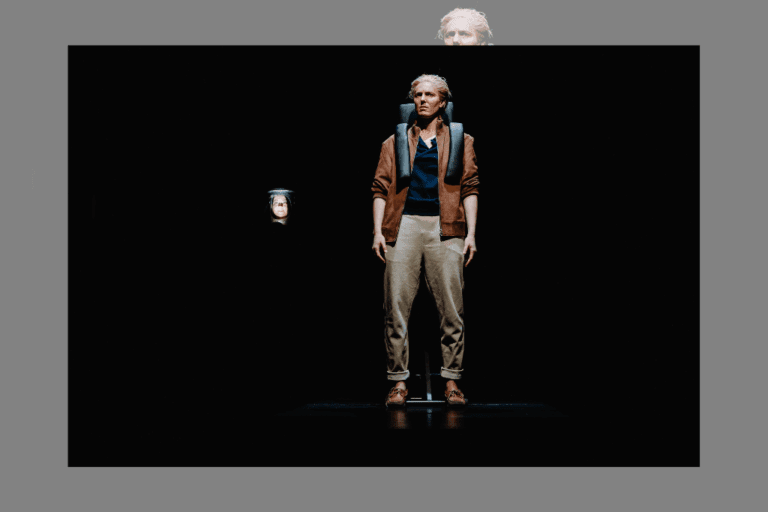 iPhoto caption: Lauren Gillis and Alaine Hutton in 'Public Consumption.' Photo by Eden Graham.
REVIEW: Lester Trips’ stylish Public Consumption captures the internet’s profound emptiness
Rather than directly representing online life, Public Consumption speculates — with virtuosity — about how the digital world affects our bodies. And the show's findings are by no means comfortable.
 iPhoto caption: Tony Ofori and Daren A. Herbert in 'Moonlight Schooner.' Photo by Dahlia Katz.
Kanika Ambrose’s Moonlight Schooner is animated and visually stunning, but its individual pieces don’t come together as neatly as I would've expected.
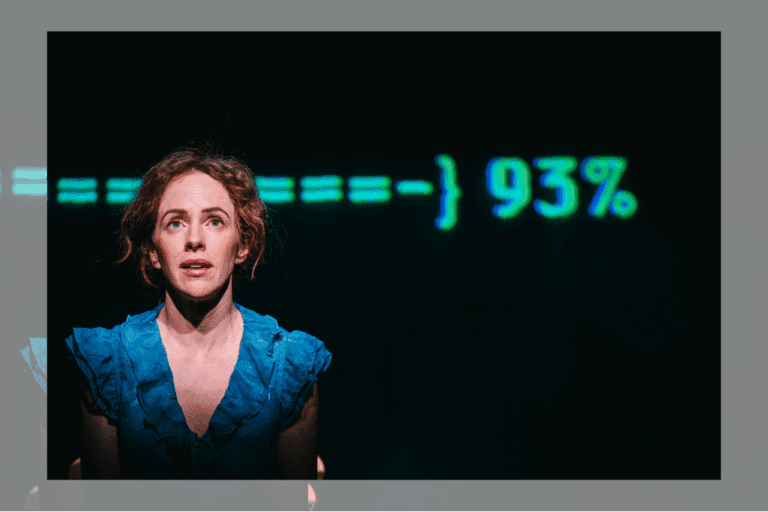 iPhoto caption: Fiona Mongillo in 'Reproduktion.' Photo by Ann Baggley.
REVIEW: Here For Now’s well-acted Reproduktion attempts to tackle too much
Amy Rutherford’s world premiere script is ambitious and the material it covers is complex — but the narrative feels disjointed.
 iPhoto caption: Photo courtesy of the Canadian Opera Company.
REVIEW: Aportia Chryptych marks many firsts for Canadian opera
While representation is important, re-telling stories of Black Canadians comes with even greater responsibility. Our stories are not monoliths, nor should they exist within a digestible social narrative. Imbued with...
 iPhoto caption: Photo of Come Home — The Legend of Daddy Hall by Cylla von Tiedemann.
REVIEW: The Legend of Daddy Hall feels like coming home
Home is not a place, it’s a feeling, and Come Home — The Legend of Daddy Hall feels like I came home. I was taken on a journey watching this play and came out honoured to be a witness to such an incredible story. I encourage you to do the same.
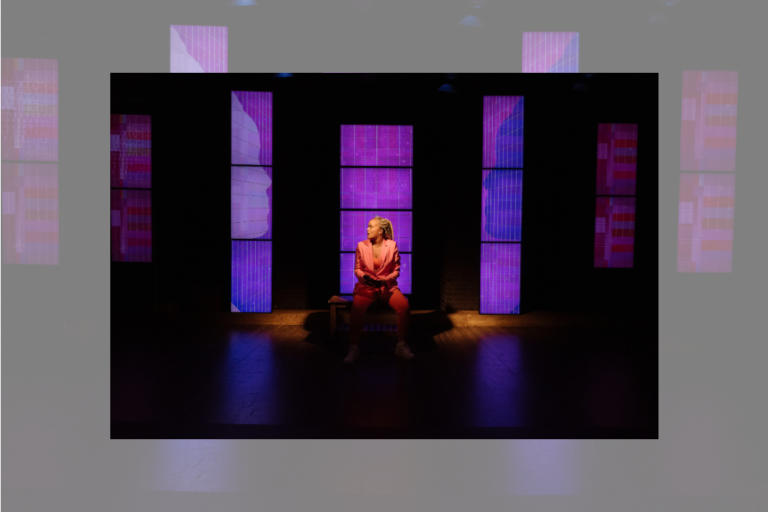 iPhoto caption: Photo by Roya DelSol.
This play is such a delight to watch, and I would definitely go again. I live for this quality of performance, and I’m looking forward to how this play will continue to inspire Black Canadian theatre to come.
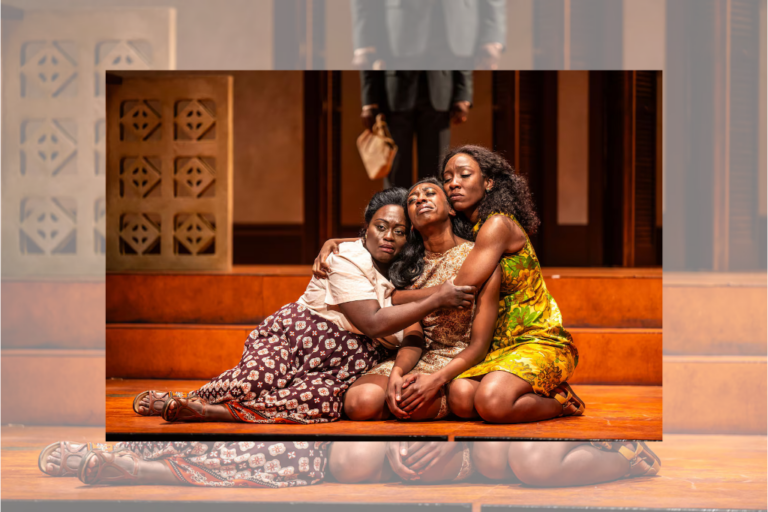 iPhoto caption: Photo by Dahlia Katz.
REVIEW: Three Sisters weaves together joy, fear, and the Biafran Civil War
In this conversational review of Three Sisters, contributors Kemi King and Aisha Lesley Bentham reflect on a masterful production helmed by Mumbi Tindyebwa Otu.

Think of both of these plays not side-by-side but instead facing each other and reflecting to us, the audience.

After 12 wild and wonderful days of theatre, the 2023 Toronto Fringe has come to an end. Read our mini reviews here!
Comments