
REVIEW: In Ronnie Burkett’s darkly intelligent Wonderful Joe, gentrification hits like a meteor
 iPhoto caption: Photo by Ian Jackson
When Siminovitch-winning puppet virtuoso Ronnie Burkett decided to centre his latest play Wonderful Joe on a landlord’s attempts to transform a rundown apartment complex into a chic arts centre, was he thinking of TO Live’s $421-million plan to redevelop its St. Lawrence Centre for the Arts into something a little less 1970s? I’d wager not — but as Burkett performed it in the building’s Jane Mallett Theatre, with city staff’s recent recommendation against the proposal still hovering in the air, parallels arose. A squall of chuckles even rolled in after a character putting on a devised theatre production in an alley proclaimed that fancy glass enclosures aren’t required to make art.
Wonderful Joe’s pointed depiction of a close-knit neighbourhood’s struggle with gentrification and rising costs of living is pertinent in other ways, too. Nearly every character is queer, for instance, a detail that brings to mind the Gay Village’s constant attempts to defend itself from overzealous condo developers. But as the ingeniously structured play sails on, these contemporary resonances duck below the waves, giving way to darker, more fantastical happenings.
As is his tendency, Burkett performs solo, bringing dozens of figures to life through intricately designed marionettes and sharply defined character voices. After Joe Pickle, an aging resident of the aforementioned building, hears of his coming eviction, he takes to the halls, gabbing about the news with everyone he encounters. Between dilapidated, graffiti-blanketed walls — and above the ocean of black garbage bags that fills the building’s basement — we meet an effervescent community of working-class folks.
The narrative then swerves, suddenly becoming much less about its titular evictee. Though Joe and his inexpressive dog attend the performance in the alley, Burkett barely highlights his reaction to it, instead transforming Wonderful Joe into the play-within-a-play for an extended period of time, oddly complex lighting design (by Kevin Humphrey) and all.
This ramshackle collective creation reminded me of Act 3 Theatre’s Disarming Venus, a production at this year’s Toronto Fringe Festival, penned and performed by a group of women aged 50 and up. In both works, the creators recall memories that have come to define their understanding of society. The actors in Wonderful Joe highlight the moment each feels “the meteor hit” in their lives, implying the world around them — which might be mistaken for ours — now resembles a dystopia. And my audience was invested: After each puppet told their tale, applause rained down, a testament to Burkett’s impassioned performance(s) and the scene’s finely wrought dialogue.
Because this material — the journey through the building, then the alley play — serves to paint a (rich, loving, varied) portrait of the community Joe lives in, it can have an expository feel, despite taking up the majority of Wonderful Joe’s 90-minute, intermission-less runtime. But the two remaining scenes venture into more surreal territory. The first, set in a gay bar, involves lengthy discussion of mascots like the Tooth Fairy and Santa Claus. The even weirder second further explores notions of imagination, especially as it relates to childhood.
Looking back at the rest of the show, this context in hand, I’m tempted to say Wonderful Joe’s primary concern is belief. Watching a puppet show always involves a degree of mental adjustment — the equipping of figurative glasses, if not physical ones. The show’s plodding, relatively ordinary first scene is therefore useful as a gentle reintroduction to Burkett’s brand of miniature storytelling, which includes puppets hanging in clear view, technical-glitch-shrouding improvisations, and volleys of curse words (children under the age of 16 won’t be admitted, warns TO Live’s website). Once he’s won our belief, Burkett can then stretch it like a mound of Plasticine, adding on extra globs from his shelf of props before tossing it into the moonlit sky.
And, for the record: As I exited this remarkable production, the vintage nature of the St. Lawrence Centre’s exterior didn’t bother me one bit — I was too giddy thinking about Wonderful Joe’s witty, winding ways.
Wonderful Joe runs at the St. Lawrence Centre for the Arts until October 23. Tickets are available here.
Intermission reviews are independent and unrelated to Intermission’s partnered content. Learn more about Intermission’s partnership model here.

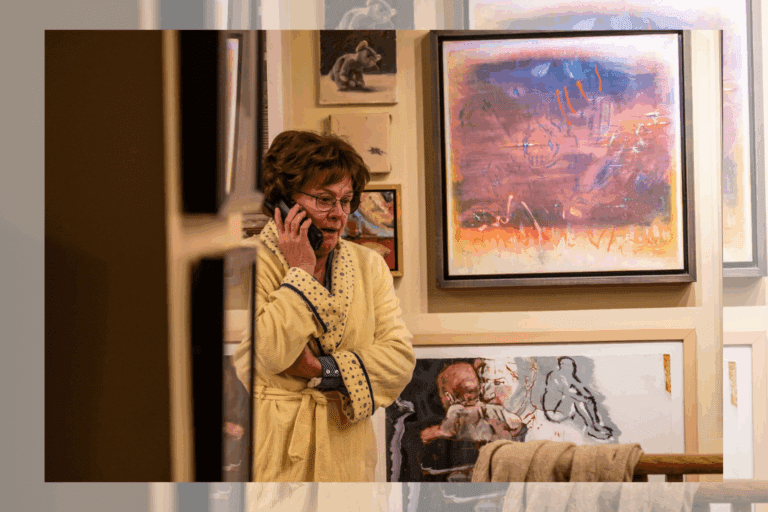 iPhoto caption: Jane Spidell in 'Twelve Dinners.' Photo by Dahlia Katz.
REVIEW: Family tensions run high in TIFT’s intimate Twelve Dinners
In the now-closed Twelve Dinners, an autobiographical play written and directed by Steve Ross, audiences received intimate access to an unvarnished version of a younger Ross through 12 evening meals with his parents.
 iPhoto caption: Members of the company of 'Narnia.' Photo by Dahlia Katz.
REVIEW: Bad Hats’ Narnia is a joyful, heartwarming escape
The spirit of openness and the joy of discovery rule over this Narnia. Open the wardrobe and see.
 iPhoto caption: Members of the company of 'Robin Hood.' Photo by Dahlia Katz.
REVIEW: Canadian Stage’s Robin Hood panto is anti-capitalist fun for the whole family
Following Ross Petty’s legacy of scene-stealing, Damien Atkins as the evil Prince John is easily the greatest delight of the show.
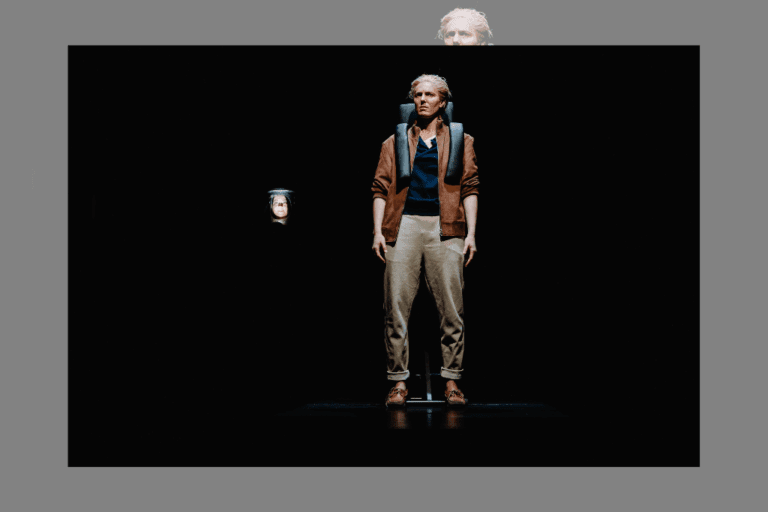 iPhoto caption: Lauren Gillis and Alaine Hutton in 'Public Consumption.' Photo by Eden Graham.
REVIEW: Lester Trips’ stylish Public Consumption captures the internet’s profound emptiness
Rather than directly representing online life, Public Consumption speculates — with virtuosity — about how the digital world affects our bodies. And the show's findings are by no means comfortable.
 iPhoto caption: Tony Ofori and Daren A. Herbert in 'Moonlight Schooner.' Photo by Dahlia Katz.
Kanika Ambrose’s Moonlight Schooner is animated and visually stunning, but its individual pieces don’t come together as neatly as I would've expected.
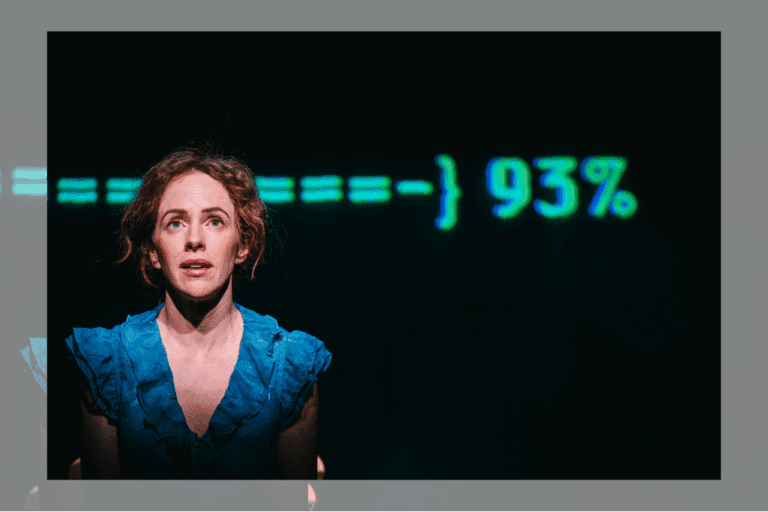 iPhoto caption: Fiona Mongillo in 'Reproduktion.' Photo by Ann Baggley.
REVIEW: Here For Now’s well-acted Reproduktion attempts to tackle too much
Amy Rutherford’s world premiere script is ambitious and the material it covers is complex — but the narrative feels disjointed.
iPhoto caption: Lauren Gillis and Alaine Hutton in 'Public Consumption.' Photo by Eden Graham.
REVIEW: Lester Trips’ stylish Public Consumption captures the internet’s profound emptiness
Rather than directly representing online life, Public Consumption speculates — with virtuosity — about how the digital world affects our bodies. And the show's findings are by no means comfortable.
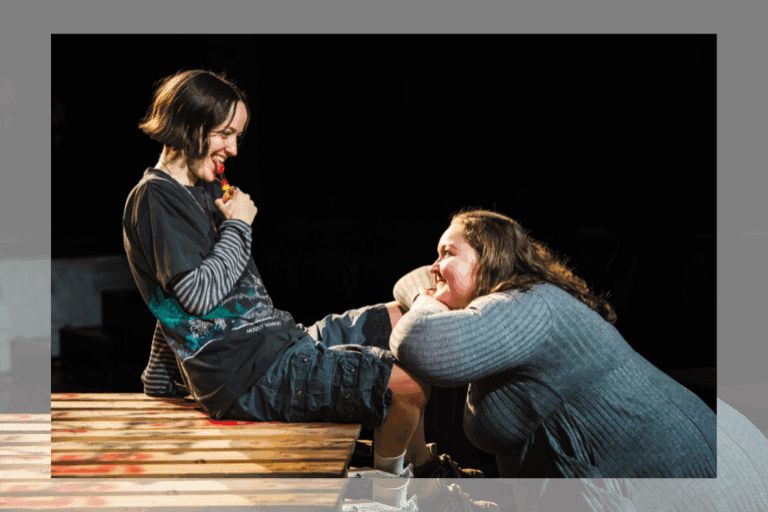 iPhoto caption: Photo by Elana Emer.
REVIEW: Icarus Theatre’s DNA paints a disturbing mural of teenage rebellion
While director Erik Richards’ tendency toward snappy, thriller-esque pacing doesn’t suit all of DNA’s more intimate moments, it adds electricity to the drama’s group scenes, bringing playwright Dennis Kelly’s reflections on groupthink and collective grief into clear view.
 iPhoto caption: Olivier Normand in 'The Far Side of the Moon.' Photo by Li Wang.
REVIEW: Lepage’s ethereal The Far Side of the Moon is insomniac theatre
The Far Side of the Moon begins and ends with a large mirror on stage, and the show extracts enigmatic power from the tantalizing question of whether its protagonist is losing himself in his reflection, or moving toward self-discovery.
 iPhoto caption: 'Kokuho' still courtesy of TIFF.
REVIEW: During this year’s TIFF, two films depicted theatre as a vessel for transcendence
Of the several performing arts-adjacent selections I took in, most affecting were two dramas: Lee Sang-il’s Kokuho and Chloé Zhao’s Hamnet. In both period pieces, theatre creation serves as an emotional outlet for an artist navigating devastating loss.
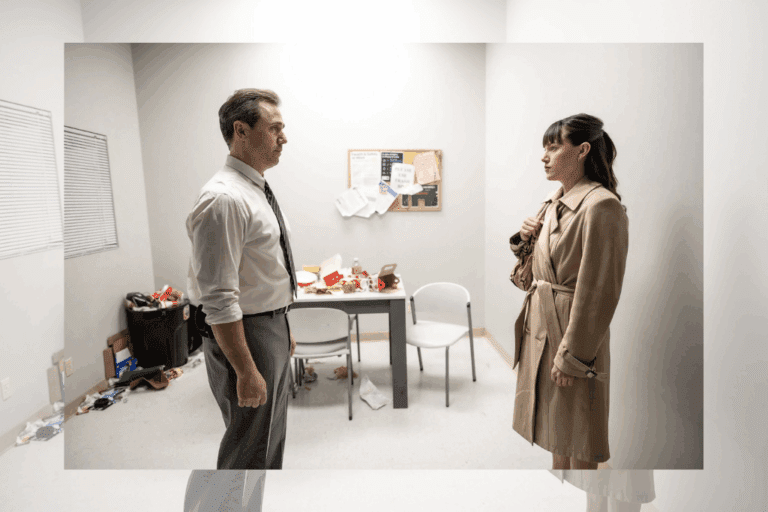 iPhoto caption: Cyrus Lane and Kirstyn Russelle in Barrie run of 'Blackbird.' Photo by Dahlia Katz.
REVIEW: Talk is Free Theatre’s Blackbird offers a close-up look at two detailed performances
Emerging director Dean Deffett has concocted a tight, straightforward production, primarily of interest as an intimate character study.
 iPhoto caption: Sleman Aldib and an audience member in 'The Opposite.' Still from a trailer by Spectrum Associates.
REVIEW: Kitchener’s biennial IMPACT Festival crackled with urgency
Most of the six works I viewed tackled urgent topics, from the convoluted Canadian immigration system to the Palestinian experience of displacement: explorations that line up with artistic director Pam Patel’s curatorial statement, which discusses how IMPACT ‘25 “unpacks what it means to survive, to resist, and to seek refuge” through a global, Indigenous-focused lens.
Comments