
REVIEW: House: The Isolation Version

Daniel MacIvor’s play House is a living document. Premiered in 1992 by da da kamera in association with Factory Theatre, MacIvor has adapted and updated it several times since – into a 1995 film directed by Laurie Lynd, and for a 2007 production at Buddies in Bad Times. There were likely other tweaks along the way as the play was produced many times then and since, in Canada and elsewhere.
Factory was set to revive House as the final offering of its 50th anniversary season and initially cancelled the production when COVID-19 hit, but then – at MacIvor’s suggestion – mounted it as a one-night-only staged reading, with the text and staging (by Nina Lee Aquino) updated to reflect our current predicament. Kevin Hanchard performed House: The Isolation Version in his own home and spectators received it in theirs, so that this very metatheatrical play became… something else that I am still working to process and conceptualize. It wasn’t meta-filmic, because this was not film: it was a live performance intended to be watched live, zooming through the camera on Hanchard’s computer into our personal spaces; as we watched, the world went on around us (was I the only one whose wifi reception got sketchy during the 7:30 banging of pots and pans?).
As originally produced, the title takes on multiple meanings, literal and metaphorical. The central character Victor (who’s really more of a loser) is ungrounded, perennially about to skid into rage or madness, holding himself just about together through his self-narration, which he punctuates with little bursts of cheerleading, shouting “House!” and throwing his arms up in the air “in victory” (as the published script notes indicate). On the surface he has all the marks of middle-class legitimacy – job, house, marriage – but each one of these is warped and compromised. The job is literally shitty – it’s at a septic tank company; his wife is his third cousin and moonlights as a dominatrix; and the house becomes the ultimate site of Victor’s humiliation and downfall when a dinner party turns into a big reveal that both his boss and his work nemesis are his wife’s clients. The fourth wall in the original play is as unstable as Victor’s psychological state: he frequently addresses the audience and acknowledges they’re sharing the same space: “I know it’s a theatre. I know it’s a stage… I know you’re a house.”
In The Isolation Version, MacIvor has tweaked references to theatrical viewing to acknowledge the particular circumstances: “Thank you for watching me” says Victor/Hanchard initially, rather than “Thank you for coming.” The moments of metatheatrical acknowledgement of audience turn into Victor/Hanchard playing with proximity to the camera, getting up super-close during a blackout so that all we can see is his mouth moving in the dark (evoking shades of Beckett’s Not I), then pulling back a bit so that his eyes are boring straight into the screen. “I know you’re a house” turns into Victor/Hanchard holding onto the computer saying, “I know you’re there.” Hanchard performs off-book and with complete focus and conviction, which is impressive given that this was a staged reading with limited rehearsal.
I’m insisting on the co-existence of actor and character here because that was how the “meta” worked for me. In a pre-show speech, Aquino thanked Hanchard’s wife and children for allowing the production to invade their living space, and in the post-show discussion, his young son Quincy appeared on screen to receive praise for running the lighting and sound effects. I never stopped wondering where the family was as Hanchard played out this intense scenario—and I offer that as a positive comment not a negative one, evidence that the shift between media was successful: Hanchard was in his house and we knew it, just as we couldn’t but be aware we were in ours. The fiction/real life bleed which in the original play comes from acknowledgement of the co-presence of performer and spectators becomes the character (and actor) acknowledging our simultaneous proximity and distance. Live/not-live; co-present but not really; acting, but not on stage; trapped at home, briefly liberated through story, him and us both.
MacIvor said in an Instagram conversation after the broadcast that he’s not sure if the performance will be shown again—“Perhaps not. True theatre!”—and I think I get his point. If it were re-broadcast, it would become something else again, different than the experience of watching it live as it was performed—and it’s that ephemeral quality that kept theatre in this House.

Karen Fricker
Karen Fricker is Intermission’s editorial director and adjunct professor of Dramatic Arts at Brock University. She has worked as a critic in Toronto, London (UK), Dublin, and New York City, and has a PhD in theatre studies from Trinity College, Dublin. Sustaining the field of theatre criticism in our digital age is a big focus of her work, through academic research projects and training/mentorship ventures including Page Turn and Youareacritic.com. She is co-director of the international research network Circus and its Others, and has researched the Eurovision Song Contest for two glorious decades and counting.
LEARN MORE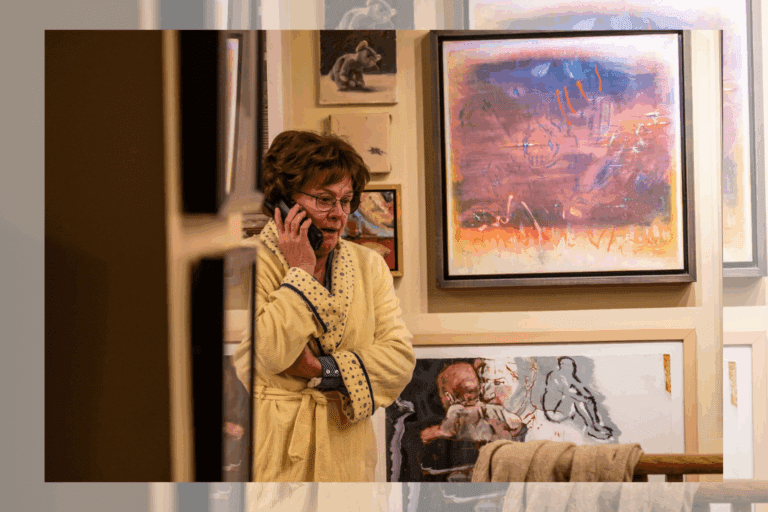 iPhoto caption: Jane Spidell in 'Twelve Dinners.' Photo by Dahlia Katz.
REVIEW: Family tensions run high in TIFT’s intimate Twelve Dinners
In the now-closed Twelve Dinners, an autobiographical play written and directed by Steve Ross, audiences received intimate access to an unvarnished version of a younger Ross through 12 evening meals with his parents.
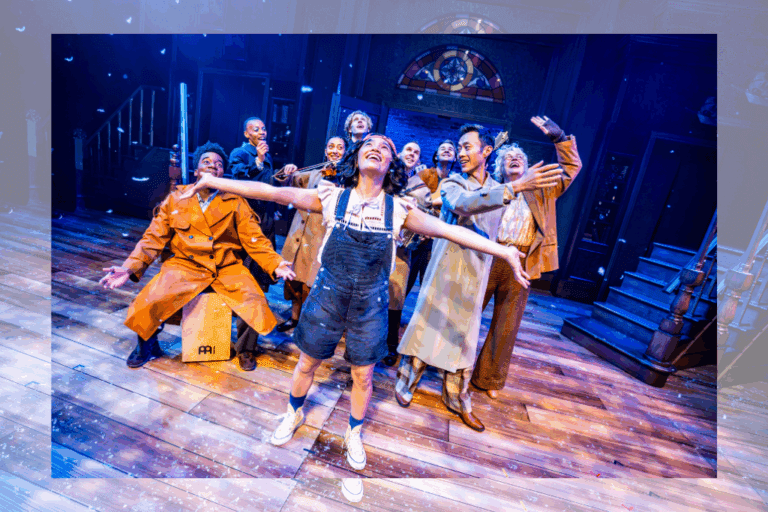 iPhoto caption: Members of the company of 'Narnia.' Photo by Dahlia Katz.
REVIEW: Bad Hats’ Narnia is a joyful, heartwarming escape
The spirit of openness and the joy of discovery rule over this Narnia. Open the wardrobe and see.
 iPhoto caption: Members of the company of 'Robin Hood.' Photo by Dahlia Katz.
REVIEW: Canadian Stage’s Robin Hood panto is anti-capitalist fun for the whole family
Following Ross Petty’s legacy of scene-stealing, Damien Atkins as the evil Prince John is easily the greatest delight of the show.
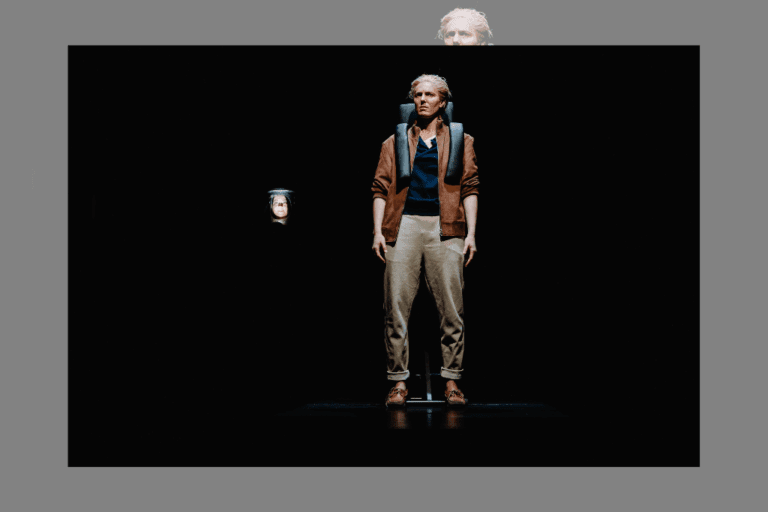 iPhoto caption: Lauren Gillis and Alaine Hutton in 'Public Consumption.' Photo by Eden Graham.
REVIEW: Lester Trips’ stylish Public Consumption captures the internet’s profound emptiness
Rather than directly representing online life, Public Consumption speculates — with virtuosity — about how the digital world affects our bodies. And the show's findings are by no means comfortable.
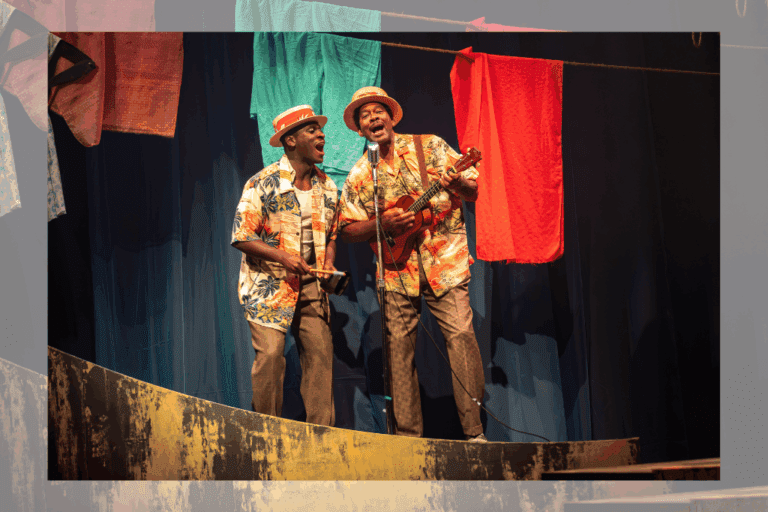 iPhoto caption: Tony Ofori and Daren A. Herbert in 'Moonlight Schooner.' Photo by Dahlia Katz.
Kanika Ambrose’s Moonlight Schooner is animated and visually stunning, but its individual pieces don’t come together as neatly as I would've expected.
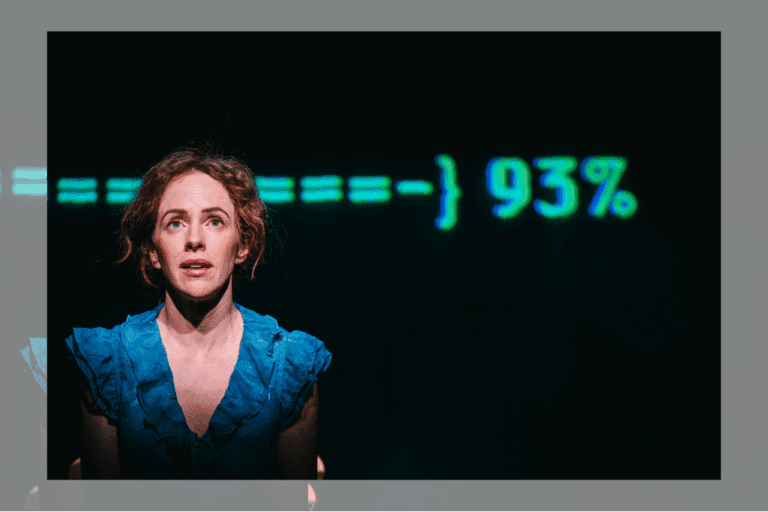 iPhoto caption: Fiona Mongillo in 'Reproduktion.' Photo by Ann Baggley.
REVIEW: Here For Now’s well-acted Reproduktion attempts to tackle too much
Amy Rutherford’s world premiere script is ambitious and the material it covers is complex — but the narrative feels disjointed.
 iPhoto caption: Members of the company in 'Ransacking Troy.' Photo by David Hou.
REVIEW: At the Stratford Festival, two adventurous new plays reflect on war
Erin Shields’ brilliant Ransacking Troy reimagines one of Western culture’s foundational narratives — the Trojan War — from the perspective of the women implicated in it. And in The Art of War, Yvette Nolan thoughtfully imagines the life of a Canadian soldier-artist in the Second World War, who’s wracked both by what he witnesses and the responsibility of recording it.
 iPhoto caption: Philip Myers as Mamillius (left) and Lucy Peacock as Time in 'The Winter's Tale.' Photo by David Hou.
Stratford Festival reviews: The Winter’s Tale and Anne of Green Gables
A winter story told by a melancholy child and a fanatical Lucy Maud Montgomery book club help frame the final two productions in the Stratford Festival’s 2025 opening week.
 iPhoto caption: Graphic by Krystal Abrigo.
York University’s Facing Backlash symposium builds solidarities in tough times
The symposium’s two packed days felt to me like the collective pursuit of an elusive, shape-shifting prey. But as participants shared experiences, and common-interest groups opened up their internal dialogue to the rest of the symposium, the contours of what we’re all up against started to come into focus for me, and I felt a collective sense of purpose growing.
 iPhoto caption: Photo by Jae Yang.
REVIEW: Guillermo Verdecchia’s Feast is a fascinating text, but Tarragon’s new production feels hazy
I found the play really resonant and rich and layered. It’s about globalization, privilege, travel, displacement, and inequity, and it brought up many associations and past experiences for me. But I don’t feel that Soheil Parsa’s production fully comes together.
 iPhoto caption: Photo by Marie-Andree Lemire.
REVIEW: Titaníque loves Céline Dion with all its heart
Content quibbles aside, Titaníque’s inarguable accomplishment is musical: What an amazing showcase for a Canadian cast’s vocal chops and capacity to deliver character through song.
 iPhoto caption: What the Constitution Means to Me production still by Dahlia Katz.
REVIEW: What the Constitution Means to Me froths with urgency
Despite the surprisingly intimate nature of the material, I found myself more impressed than moved by this show. It’s one of those pieces that slowly reveals itself as theatrical premises strip away, and perhaps it’s the extra layers of distance and biography that for me kept the material at an emotional distance.
Comments