
REVIEW: The Magic of Assembly at Toronto Dance Theatre

Post-COVID, the Winchester Street Theatre has felt more like a DIY pop-up club than a concert dance venue. This isn’t just mine and others’ pent up desire for a night out; under the leadership of new artistic director Andrew Tay, Toronto Dance Theatre (TDT) has challenged the normative conventions of concert dance with innovative choreographic voices who channel queer, experimental, BIPOC, and nightlife traditions.
The Magic of Assembly, playing at the Winchester Street Theatre until February 11, is a choreographic collaboration between Tay, Dora Mavor Moore-award winning dancer/ choreographer Ashley Colours Perez, and Toronto-based electronic music duo LAL. While Tay’s lineage is in conceptual, contemporary dance, Colours Perez is a practitioner of a street dance form called punking/whacking. This piece alternates between different sections of Colours Perez’s punking/whacking and Tay’s experimental compositions, united into a single evening through LAL’s musical score, costuming, and other production aspects.
The result of this weaving is an often compelling dancework that evokes the before and after of nightclub experiences. Like nights that don’t seem to end, The Magic of Assembly plays out as a series of experiments that blossom from having the time and space to evolve. Here, Toronto Dance Theatre continues to provide audiences and artists alike with a sense of belonging through inclusive yet profound dance performance.
Watching The Magic of Assembly is to watch a weekend go by in a blur. Lighting designer Gabriel Copley and production designer Bryan Kling capture the ever-changing colors of ambient club lights, the smoke and vapors that stick to your clothes for weeks after. The live musical accompaniment by LAL slips between pulsing beats and drawn-out soundscapes with caterwauling vocals. The fantastic costumes by Angela Cabrera weave colors and patterns from different garments, evoking the sense that we’re witnessing a collage of many different experiences from many different nights.
With many of the dancers being trained in other techniques prior to this performance, the whacking/punking sections often play out as introductory technical exercises that build to complex rhythms and ensemble work. For example, one section begins with dancer Megumi Kokuba simply pointing her finger down to the floor, rolling it up to her shoulder, and shooting it up to point to the ceiling. She reverses and repeats this movement, altering the ways it responds to LAL’s thumping bass as her gestures change, her other hand joins, and she starts to move around the space before being joined by other dancers. Here, these simple movements build to a fun and pulsing fervor that had audience members enthusiastically calling out their support.
These whacking/punking sections are similar and interspersed throughout The Magic of Assembly. What I find most compelling in them are the little moments of play that wiggle into such tight rhythmic and technical structures. Dancers Siwar Soria, Erin Poole, and more trade around a few pairs of sunglasses between them, embodying a “too cool for school” attitude as they whip and spin their arms. The ensemble displays confidence in the choreography and each other, one of many signals of their seasoned virtuosity as performers. For this company, there seems to be agency, freedom, and collective support to be silly.
If Colours Perez’s choreography evokes the pinnacles of nightlife, then Tay’s embodies everything that happens in between. Tay’s sections often play out as conceptual tableaux that evolve at mellow paces. These sections seem purposed for a dramaturgy of care, providing dancers with rest from the more upbeat choreography (they rarely leave the stage throughout the production). In one, the dancers place large speakers and disperse them around the space, responding and wrapping their bodies around them as they emanate a dissonant reverb. In another, the dancers lie on the floor and moan alongside LAL vocalist Rosina Kazi, slowly standing up as their voices become more harmonious until they are eventually singing like a chorus.
With sectioned choreography marked by substantial shifts in styles, tones, and movement, The Magic of Assembly is clearly the product of two different artists who collaged instead of co-created. While their interplays are abstractly compelling, movement interactions between the two choreographers and their dance forms could have set off the Tay/Colours Perez compositional pattern. And considering that TDT is not a street dance company, I wonder: what other magic could occur by inviting punkers/whackers to perform alongside the talented TDT company?
I offer these thoughts knowing how high TDT is already setting the bar(re?), including with The Magic of Assembly. The piece ends with the dancers laying down a tarp, going topless, and covering their hands in slime. As the dancers play with stretching it between their hands, clapping, watching it dissolve, it’s refreshing to watch play and experimentation unencumbered by a need to present something polished or pretty. It’s little risks like this that makes The Magic of Assembly feel refreshing — even when it’s sticky.
The Magic of Assembly runs through February 11 at TDT. For more information, click here.

Martin Austin
Martin Austin is a PhD student at the University of Toronto’s Centre for Drama, Theatre & Performance Studies. Martin’s research explores the past and current state of ethics in Euro-American dance practice. He is research assistant for Category Is, a study of house ballroom communities in Toronto and Montréal, and lead administrative coordinator of the Institute for Dance Studies.
LEARN MORE iPhoto caption: Production still from The Nutcracker courtesy of the National Ballet of Canada.
Why should you go to the ballet?
My childhood memories of learning to dance were front and centre for me when I attended opening night of The Nutcracker, performed by the National Ballet of Canada at the Four Seasons Centre for the Performing Arts.
 iPhoto caption: ROSA promotional image courtesy of RUTAS.
RUTAS redefines ‘American’ theatre and performance
“I think [Latinx artists] have always been a strong voice, but now we need to be even louder to the rest of Canada,” says multidisciplinary performance artist Carlos Rivera. “The things that we can bring to the table and bring to the stages can show the beauty, and the strain, and the capacities that Latino Americans carry with us in our bodies, in our minds, in our souls.”
 iPhoto caption: Original photos by Kendra Epik.
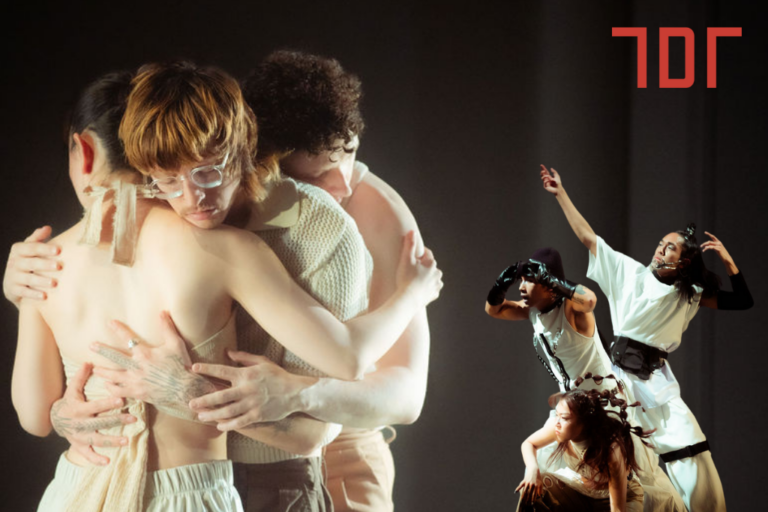
With its Spring Double Bill, Toronto Dance Theatre centres community and new voices
For the Spring Double Bill, artistic director Andrew Tay is considering how programming can be a means of supporting emerging artists.
 iPhoto caption: Photos by Roya DelSol
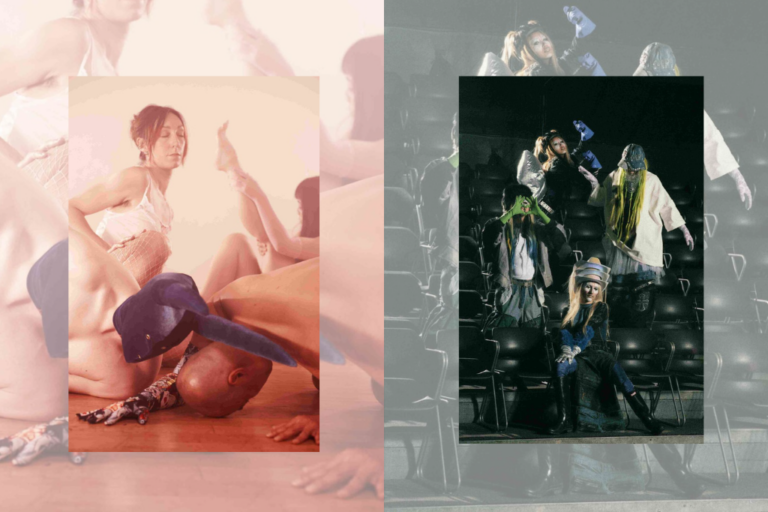
REVIEW: Boundary-pushing TDT double bill features face-riding and odd sensuality
Both pieces in the winter double bill are par for the course with TDT’s recent artistic output: unabashedly queer and consistently experimental.
 iPhoto caption: Photo by Ambra Vernuccio.
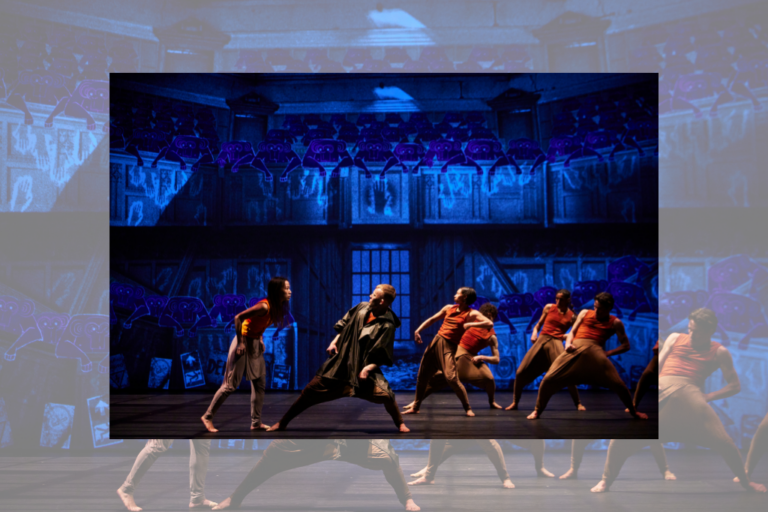
REVIEW: Jungle Book reimagined needs a little reimagining
Indeed, Akram Khan “reimagines” a historically complex story into a two-hour exposé on the environmental catastrophe. Jungle Book’s captivating visual effects and dynamic physicality brought the opening night audience to their feet. But as the choreographer’s first billing as director, Jungle Book’s storytelling doesn’t always live up to Khan’s skill as a dancemaker.
When it comes to dance made in Canada, there’s an overabundance of great work happening.
Comments