
Perceptual Archaeology (Or How to Travel Blind): In Conversation with Alex Bulmer
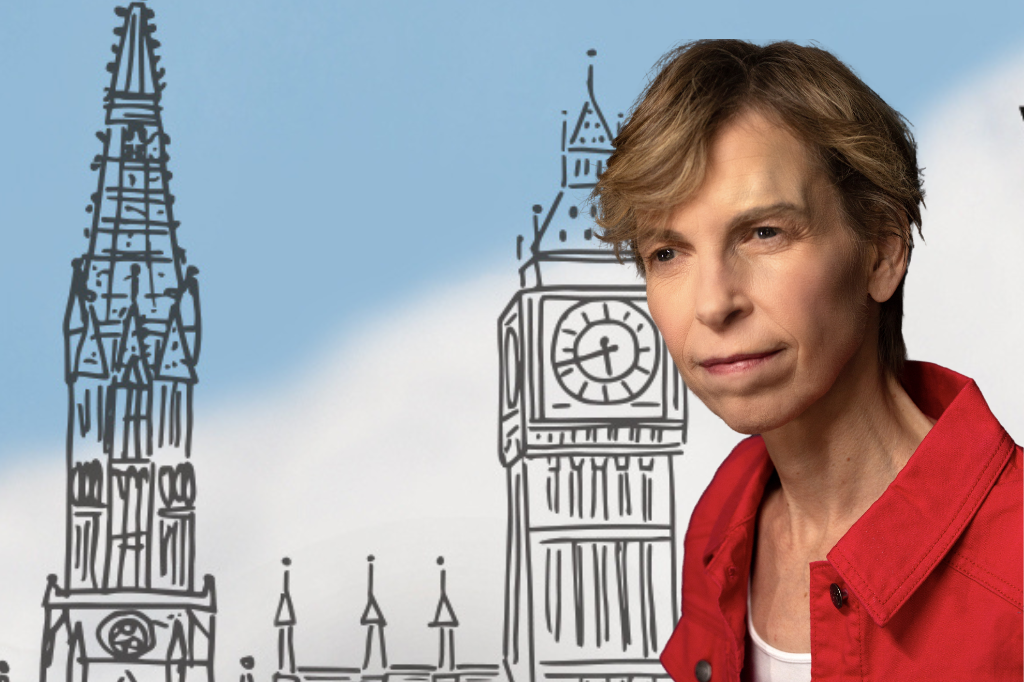
In 2019, Alex Bulmer was commissioned by the BBC to write a series of essays comparing her 21st century travels as a blind woman with the travels of 19th century blind British adventurer, James Holman.
When she began adapting those essays into her new play, Perceptual Archaeology (Or How to Travel Blind) for Crow’s Theatre, the work was transformed by her saying “no.”
“[Crow’s] really wanted to do this piece as a podcast, and it was really interesting for me to think ‘Do I want to do this as a podcast?,’” she said in a phone interview. “Having that opportunity presented to me made me make some clear decisions about my relationship with the piece, and I thought, ‘no, I really want people to see me, my body, and the way I move and travel through a space.’ I didn’t want it to just be an auditory experience.”
After all, Bulmer’s travels around the world have always been richest when these experiences have meaningfully engaged all of her senses. Perceptual Archaeology (Or How to Travel Blind) chronicles how Bulmer “learned to stay in command” of her own journey, “travelling to places that engage my ears and my feet and my hands, and my kinesthetic sense of space, getting beyond a notion of sight-seeing and into hear-listening,” she said.
”Or, to quote Holman, ‘to learn how to see better with my feet.’”
I’m travelling to places that engage my ears and my feet and my hands, and my kinesthetic sense of space, getting beyond a notion of sight-seeing and into hear-listening.
To bring that very physical, embodied concept to the stage, Bulmer collaborated with director Leah Cherniak to “interrogate the notion of perception,” developing both an acoustic vocabulary for sound and a physical process to figure out how Bulmer was going to move through the space.
To that end, she centered interdependence — or, creating a community that helps one another — in both the process and the product of Perceptual Archaeology (Or How to Travel Blind).
As part of her artistic process, Bulmer works with creative enablers who have a dual skillset in theatre and offering personal support.
“[In performance], the text of the show is being fed to me using a little audio device. We call it line feeding,” she said. “That’s how I work on a new piece of writing, because I don’t have the script in hand. And both [Cherniak] and I loved the interdependent relationship between myself and my line feeders so much that we decided, ‘let’s put it in the show.’
“So [Enzo Campa] as a line feeder is onstage with me, and he’s there also to give me some verbal guiding around the space. We end up having this lovely relationship together onstage.”
For Bulmer, this is the first time that she’s ever theatricalized her access needs to this extent. “I love it, and I’m really excited by it. It also really fits into [Cherniak’s] artistic wheelhouse, because it physicalizes the space and storytelling even more with the two of us onstage.”
Creating a theatrical experience like this — where she has all the tools she needs to succeed onstage as a blind artist — as been a long time coming for Bulmer, who left Canada in 2003 to continue her artistic career in England, “because I could just not imagine growing as an artist in Canada as a blind person.”
But much has changed in the Canadian theatre landscape for disabled artists since then.
“I kind of lost hope in 2003 for [opportunities for disabled artists] here,” she said. “I don’t feel that at all anymore.” Bulmer returned to Canada permanently in 2017.
She shared that the unique, interdisciplinary nature of this piece is made possible because of the unique artistic landscape in Canadian theatre. “We don’t have the weight of hundreds of years of theatre tradition on our backs here in Canada,” she explained.
“We are still influenced by European traditions, but I feel that we can explore and experiment and try things out a little bit more. I certainly feel a kind of freedom here that I wouldn’t always feel in England. I’m working with people who bring different theatrical practices into the work, like [Cherniak’s] physical theatre background, and [sound designers] Deanna Choi and Thomas Ryder Payne, who bring this incredible practice in acoustic storytelling. I’m finding this process to be a real intersection of artistic approaches. And I don’t know that I would have had access to that level of expertise anywhere else.”
The result is a piece that, for blind and sighted audiences alike, disrupts expectations and asks audiences to consider their own relationship to their other 4 senses beyond vision, and how different sensations and sensory experiences might engage us with the spaces we encounter.
“All the familiar things around us go away when we’re travelling. So I think everybody is challenged by these questions of ‘where am I?’ and ‘how am I gonna get through the day?’,” said Bulmer.
“And as a blind person, I experience that [even] if I just happen to turn left rather than right, and end up going down the wrong street. And sometimes [the question] is ‘who am I?,’ because I don’t have a relationship to the space around me. Suddenly the sense of self just disappears. So I think travel has the potential to open up some great conversations between people with very differing life experiences.”
Indeed, those conversations may begin before the audience has even left the theatre.
“This piece works at its best when there are both blind and sighted people in the audience,” said Bulmer. “I don’t know that I have ever created a piece where I would say that that is absolutely true. But it really is!,” she said. “One of the ways that is evidenced in the play [is in] my interdependence with the audience, and the ways in which both the sighted and blind audience will participate in that interdependence, and the fun that we’re going to have with that.”
Perceptual Archaeology (or How to Travel Blind) runs at Crow’s Theatre from June 1-25. Tickets are available here.
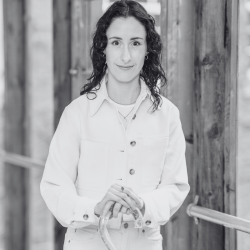
Alethea Bakogeorge
Alethea Bakogeorge (she/her) is a physically disabled access professional, fundraiser, and artist. She is currently the director of development and performing arts at the National accessArts Centre in Calgary, leading all fundraising and performing arts strategy for Canada’s oldest and largest disability arts organization. Alethea also teaches and consults with organizations across Canada on disability representation in the arts, meeting access needs, and disability-inclusive organizational change. She has worked extensively in Canadian and American theatre, at organizations including the Musical Stage Company, Theatre Gargantua, the Williamstown Theatre Festival, and Theatre Aspen. She maintains an active acting career as a disabled actor. She lives in Toronto.
LEARN MORE iPhoto caption: Poster courtesy of Toronto Fringe.
This collection of Toronto Fringe Festival capsule reviews will be updated throughout the festival with writing from eight different critics.
 iPhoto caption: Photo by Kira Kynd
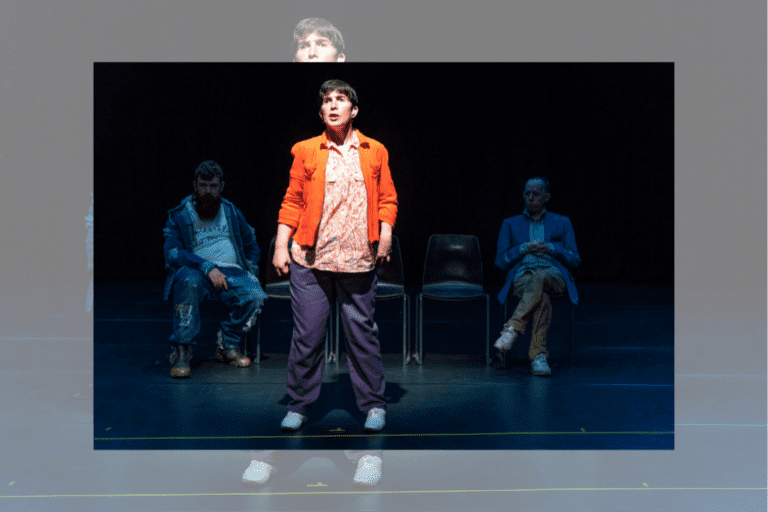
REVIEW: The Shadow Whose Prey the Hunter Becomes is a Trojan Horse of disability theatre
At its core, Shadow is less about the threat of AI and more about how deeply ableism affects us all — even those of us who are not disabled.
 iPhoto caption: (left to right) Alex Bulmer, Christine Horne, and Alexia Vassos in Richard Three. Original images by Mike McPhaden.
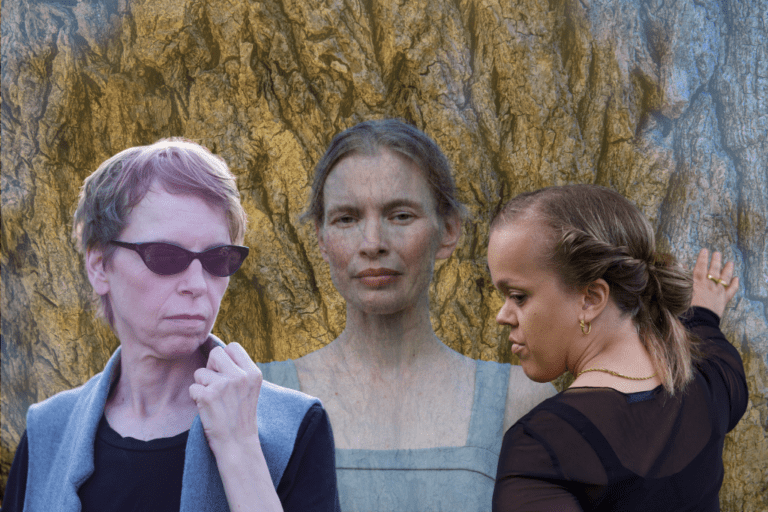
‘Two Perspectives on Disability’: In Conversation with Richard Three at Shakespeare in the Ruff
“There’s a need for [Richard Three] because there’s so little work in this country that centres two disabled people at its core," Bulmer said.
 iPhoto caption: Photo by Dahlia Katz
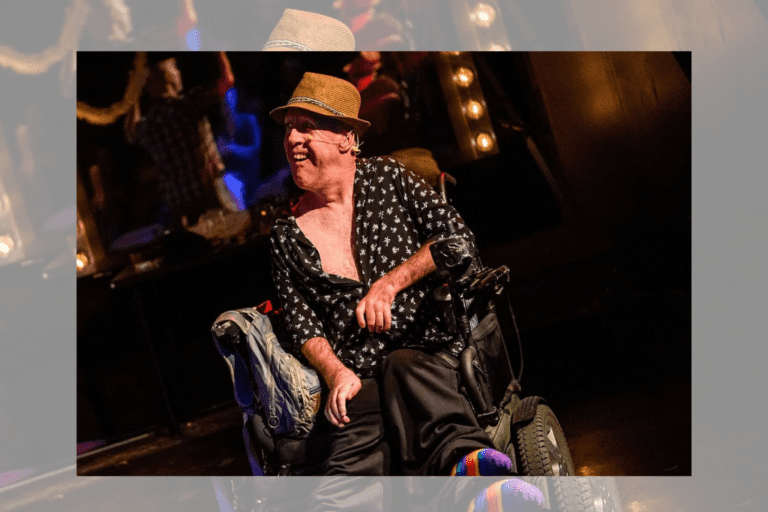
REVIEW: Access Me at Aki Studio/Boys in Chairs Collective
In a world where disabled people are up against the erroneous cultural myth that it’s possible to “overcome” your disability if you work hard enough, it’s lovely to see the idea of interdependence centred throughout this piece.
Comments