
REVIEW: A new take on Don Pasquale re-imagines its lead as a cat-loving crank
 iPhoto caption: Photo courtesy of Canadian Opera Company.
If you love cats, you’ll like Barbe & Doucet’s production of Don Pasquale.
The opera is already a delightful romantic comedy without any creative alterations by the directors, but with Barbe & Doucet’s dramaturgical addition of a cat motif, the Scottish Opera production of Don Pasquale, now onstage at the Four Seasons Centre as part of the Canadian Opera Company season, is even more ridiculous and fun. Barbe & Doucet’s directorial enhancement, which transforms the titular character into a cat-obsessed curmudgeon, provides plenty of comic flair in the opera composed by Gaetano Donizetti with libretto by Donizetti and Giovanni Ruffini. So much so that you should secure tickets right meow.
The action of Donizetti’s opera buffa begins after Ernesto refuses to marry the woman his uncle, Don Pasquale, has chosen for him, because he is in love with Norina. The audience joins the story when Don Pasquale decides to marry, despite his old age, which prompts his doctor, Dr. Malatesta, to hatch a scheme. The doctor plans to disguise Norina as the cat-like Sofronia, Pasquale’s bride-to-be, who at first, is a meek, gentle kitten (aligned with Barbe & Doucet’s production concept) but then becomes a tigress, abandoning the façade of submission, humility, and purity, after they take their vows.
Sofronia, under the guidance of Malatesta, arranges for a romantic rendezvous in the garden with a lover, which further infuriates Pasquale. This lover doesn’t exist; he is only an element of Malatesta’s scheme to make Pasquale’s marriage a nightmare. When Pasquale tries to catch his new bride with another man, Ernesto appears in the garden to declare he will marry Norina despite his uncle’s objection and Sofronia declares that she will not live under the same roof with another woman. Pasquale takes this opportunity to end his marriage with Sofronia. Now that Don Pasquale has experienced the horrors of a bad marriage, Dr. Malatesta reveals the bride’s identity, exposing his scheme. Pasquale accepts that he should celebrate that his nephew has found true love and allows him to marry Norina.
Pasquale as a cat-obsessed recluse is a clever, appropriate, and impeccably integrated dramaturgical detail from Barbe & Doucet. As a multi-hyphenate team who have directed, dramaturged, choreographed, and even designed costumes and sets for over 40 operas since joining forces in 2000, the duo has plenty of experience weaving all aspects of production into a cohesive tapestry. This choice, along with setting the opera in a pensione (or guest house) owned and poorly operated by the titular Don Pasquale in mid-’60s Rome, offers audiences a fresh, delightful, often silly, and entertaining opera experience.
Barbe & Doucet’s set features a reception and living room of the pensione center stage, flanked on one side by a stairway that leads to a quaint rooftop restaurant above. Laundry hangs on either side of the main structure and three clotheslines hang in the centre, initially hiding the second level from view. Even though Pasquale’s guest house is drab and dusty, Barbe & Doucet pepper it with neon green cat figurines that Pasquale uses to fill the void left behind by his flesh-and-blood beloved felines.
After Sofronia becomes Pasquale’s wife, she redecorates, replacing the cats and rundown furnishings with a pair of futurist white chairs, a minimalist white circular coffee table, a tall lamp, and black and white optical pop art, typical of Mid-century Modern style. The contrast between old, bland furniture and the bright, white, modern style highlights how much Sofronia disrupts Pasquale’s comfortable life.
In addition to the comic dramaturgical and design elements, the casting provides several opportunities for humour. Don Pasquale, played by Mishi Kiria, is a towering oaf, in contrast to Norina, played by Simone Osborne, who is comparatively petite. Osborne as Sofronia elicits laughter as she orders her new husband to obey, despite her diminutive size and his imposing presence.
Unfortunately, the voices of Osborne and Santiago Ballerini as Ernesto are similarly small at times. Especially in contrast to Kiria’s full, booming baritone, Osborne and Ballerini don’t always fill the hall with the vocal flair of Donizetti’s score. They do have their moments — their duet in the final act when they declare their love, for instance — but they are not consistently strong throughout.
The trio of pensione staff — an alcoholic cook, a chain-smoking cleaner, and a shrunken old bellhop, not credited specifically in the program — are consistently hilarious throughout the opera. After the first scene, the cleaner walks onstage with a heavy rope hanging from the fly, which she pulls with concerted effort to reveal the rooftop patio restaurant hiding just behind the clothesline. The bellhop shuffles at a laughably slow place in pants that have gathered in folds from his feet to below his knees and a jacket that has become far too big for him, suggesting that he is so old he has shrunk in his uniform.
Don Pasquale is an expertly directed and designed production performed by capable singers, who in turn are supported by a trio of clowns who provide laughs beyond the romantic plot. Directorial changes and additions to hits from the opera repertoire can often feel forced, confusing, or unnecessary. As a team, Barbe & Doucet have found dramaturgical elements that seem so well-suited to Don Pasquale, that if I didn’t know any better, I would have thought that Donizetti and Ruffini had come up with them themselves.
Don Pasquale runs at the Four Seasons Centre until May 18. Tickets are available here.
Intermission reviews are independent and unrelated to Intermission’s partnered content. Learn more about Intermission’s partnership model here.

Stephen Low
Stephen Low received his PhD from Cornell University in April 2016, where he also received his Masters in Theatre Studies in 2014. He received his first Masters from the University of Texas at Austin in the Performance as Public Practice Program. His scholarly interests include twentieth-century theatre and performance, dance, musicals, queer theory, sex and sexuality, gender, critical race studies, and gay culture. His current book project, Hail Mary: The Theatrical Constitution of Gay Culture, identifies theatricality as the constitutive feature of contemporary gay culture. His essays have been published in Modern Drama, Theatre Research in Canada, Canadian Theatre Review, Queer Theatre in Canada. Critical Perspectives in Canadian Theatre in English Series, Opera Canada, and Intermission.
LEARN MOREComments
Leave a Comment
 iPhoto caption: Production stills from Faust and Nabucco courtesy of the Canadian Opera Company.
REVIEW: Excellent singing elevates lacklustre productions in Faust and Nabucco
Both operas in the Canadian Opera Company’s current fall repertoire, Faust and Nabucco, include stellar performances from world-class singers in productions featuring directorial and design choices that abandon historical accuracy and realistic mise-en-scène to varying degrees of success.
 iPhoto caption: Photo by Michael Cooper
REVIEW: Chiara Isotton burns like a supernova in COC’s Medea
Isotton is riveting, offering a masterful vocal and physical performance that swings wildly from one emotional episode to the next.
REVIEW: Little Shop of Horrors at Capitol Theatre Port Hope
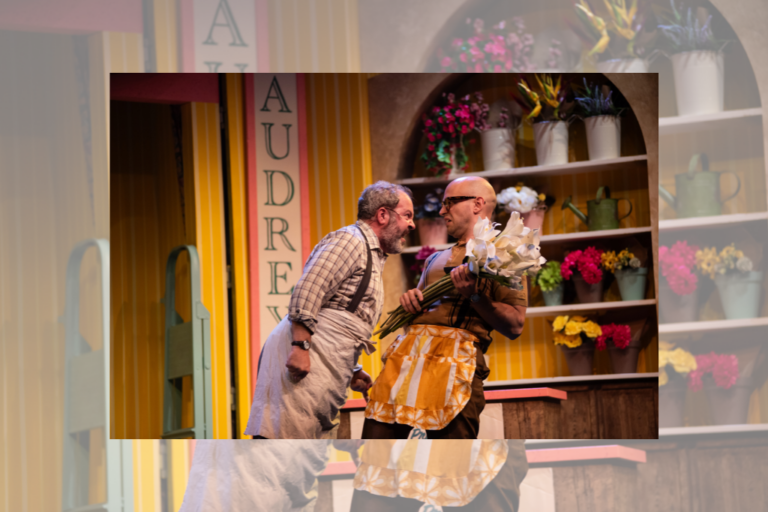
The performances in Little Shop of Horrors at the Cameco Capitol Theatre in Port Hope are proof that there is formidable talent in theatres out of town that aren’t part of the Stratford and Shaw festivals.
 iPhoto caption: Photo by Michael Cooper
REVIEW: Tosca and Macbeth at Canadian Opera Company
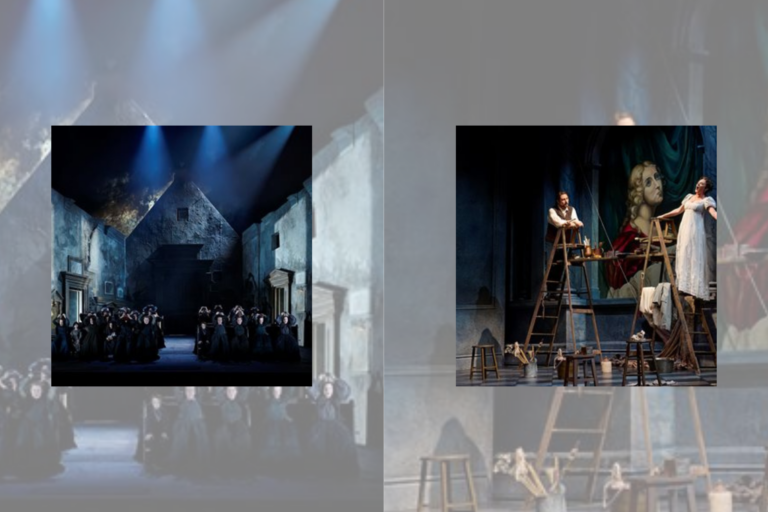
Be it the lush and extravagant production of Tosca or the brooding and eerie production of Macbeth, both operas capture the spirit of romantic opera to delight audiences.

REVIEW: The Marriage of Figaro at Canadian Opera Company
Guth’s staging highlights the profound dimensions of human relationships in his exploration of individuals torn between morality, desire, and impulse.
REVIEW: Peter’s Final Flight at Ross Petty Productions
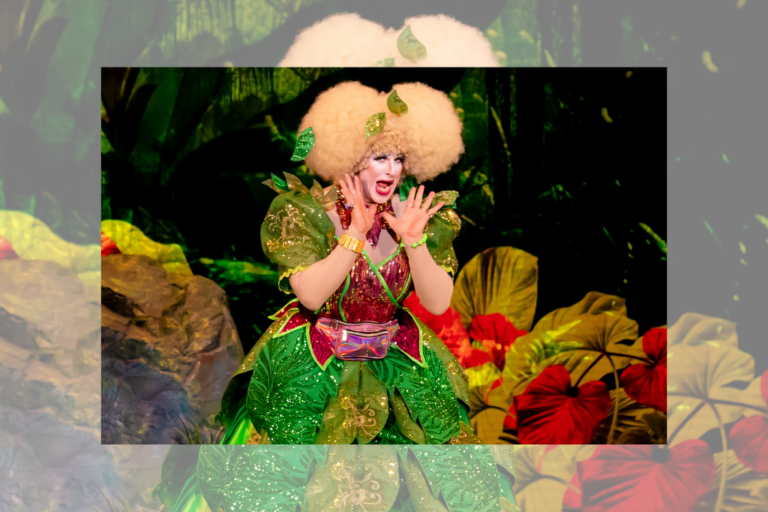
It’s clear that Petty’s aim over the past quarter-century to instil the love of live theatre in young audiences has been a success.
One factor that may have influenced Osborne and Ballerini’s volume and voice colour is the stage clothes lines that were lowered at times. When these singers sang in front of the clothes there was an acoustical dampening effect from the heavy use of cloths that occupied much of the stage. The voice colour and volume were noticeably better when the clothe lines were raised and off the stage.
I really think you had a bad day or your competence is not right or worse – you are biased on some reason. Ballerini’s voice is amazing. He sings beautifully and absolutely effortless. I wish I didn’t read your review at all, but I’ll try to remember your name to avoid your articles in future.