
REVIEW: Eldritch Theatre’s The House at Poe Corner delights and disturbs
Let’s be clear — unless the child is a budding six-year-old goth (and maybe not even then), this puppet show is not for children.
The House at Poe Corner, presented by Eldritch Theatre at the Red Sandcastle, is instead an alchemical mixture of Edgar Allan Poe and Winnie the Pooh’s greatest hits, as delightfully and deeply disturbing as a pit that just happens to contain a knife-edged pendulum.
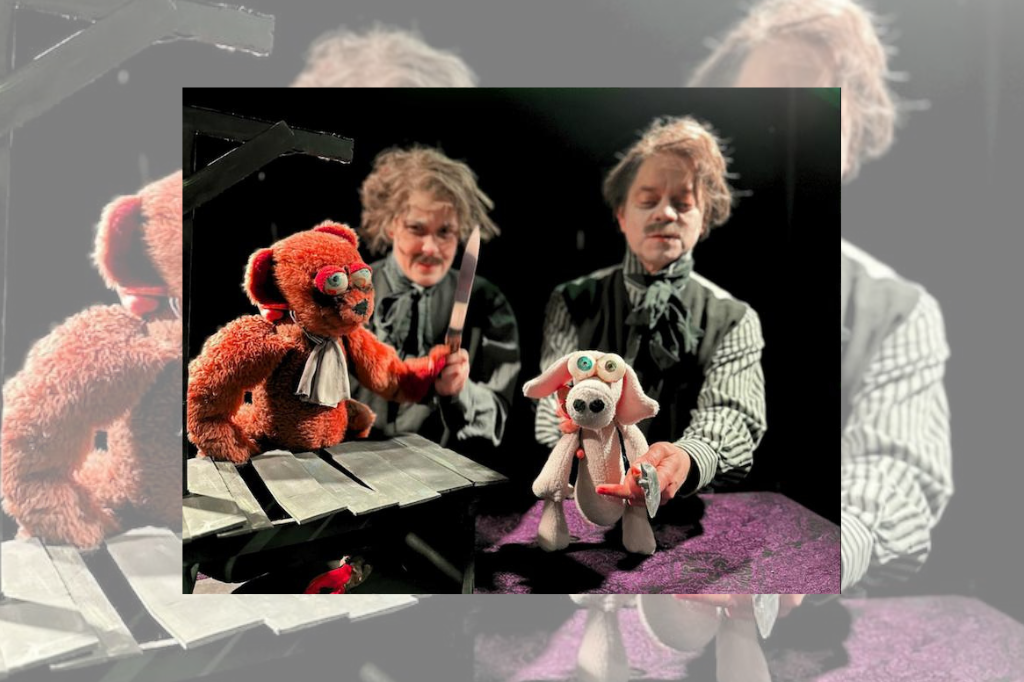
Edgar (Eric Woolfe, who wrote the script with Michael O’Brien) and Allan (Mairi Babb), standing behind a table under a tent that looks like it should be used to hawk questionable cure-alls at a Victorian circus, are our (House of) ushers for an evening of spooky storytelling and puppet-on-puppet violence. They’re clad in garb that resembles the famous Poe-rtrait of EAP himself, white and black makeup accentuating their ghostly paleness, eye bags, and cavernous cheeks. The obscure program credits all “gloomy sights” to Melanie McNeill, and they are gloomy indeed, with deep red, green, and blue lighting and stage haze creating a forbidding atmosphere.
There doesn’t seem to be a grand philosophical tie between these two sets of media. The joy is mostly in the odd juxtaposition of gentle children’s stories and Gothic horror — and, of course, the puns, which are an end in themselves. To that end, welcoming us to the “ghoul-haunted woodland of Weir,” Woolfe and Babb introduce us to their slate of maniacal puppets. All the Hundred Acre Wood creatures are represented, from Poe Bear (a thousand-yard-stare Pooh Bear) to Cutlet (Piglet), to Jack Hare (Rabbit), to Vile Cat (Tigger, a truly strange tiger-Gremlin hybrid). Kanga and Roo are now Walla and B.
Most of the puppets look in the ballpark of normal, even if their fur is somewhat distressed; only Walla, more Alien than stuffed toy, crosses the line from endearingly deranged to genuinely grotesque. For the rest, it’s their wild, off-kilter eyes that pull you in, as difficult to escape as a brick wall erected in your path while you search for a cask of Amontillado.
By design, Woolfe and Babb are obvious in their puppet manipulation, highlighting how the beasts’ limbs stretch under their hands. Much like watching the Muppets, though, it’s still easy to forget the puppeteers as their creations come to life — or, it would be, if the humans weren’t deliberately calling attention to their sillier moves, or breaking into clever songs they call “warbles” (by Cathy Nosaty).
Cutlet’s expressive eyes, pointing in slightly different directions, and the perfect nasal high-pitched whine of his voice from Woolfe, make him an oddly endearing character. He’s the (telltale) heart of the show, despite his murderous behaviour. In a particularly clever mashup (ten points if you can guess the punny title), Cutlet believes he’s cured his madness from our Eeyore stand-in Gloomhoof’s swishing tail. He doesn’t realize, though, that the tail will continue to swish under the floorboards as he receives visitors, driving him further into insanity — or, shall we say, going stark Raven mad. Later, his seemingly unfounded belief in the Red Blunderbeast earns him the ire of his “best friend” Poe Bear, and after a point the bear’s public mockery of his friend becomes almost a parable of what it means to stick to your convictions despite loneliness and ostracism.
Meanwhile, the murders — and subsequent “unmurders,” as there are more stories to tell than characters to survive them — are plentiful and dramatic. Edgar and Allan chuck ribbons of red cloth into the audience to symbolize blood as several characters meet their exit, pursued by Poe Bear.
Though the Red Sandcastle could be charitably described as “small” at best, the show manages to feel surprisingly expansive, ranging into the unseen basement and even the washroom. Credit for that probably goes to Annasofie Jakobsen, given the obfuscatory title of “Weird Woodland Management.”
Speaking of obfuscation, the other draw is Woolfe’s magic tricks, including an extended cup-and-ball routine that retells “The Murders in the Rue Morgue,” a switcher-Roo involving Poe’s mysterious titular Gold Bug, and the diaphanous disappearance of drawings of the cast of characters. Woolfe skillfully uses misdirection and “botched” tricks to make the magic more impressive when it actually happens. The magic show functions as the sprinkles on top of the I-scream, just enough to get my interest and wish there were a couple more tricks throughout.
Woolfe and Babb cover a surprising amount of (under)ground in just 80 minutes, cycling through several Poe tales. Some are sillier, and some spookier; Poe Bear getting fatally stuck due to his obsession with honey — I mean, “bumblegoo” — is an example of the former, while the visage of the Red Blunderbeast, evoking the Masque of the Red Death, might provoke a genuine existential thrill. In any case, you may want to brush up on both your Poe and your Pooh before attending, because there are plenty of sly references to both.
Though the point of the show is mostly ghastly gothic fun, rather than to say anything philosophical, Edgar and Allan do share a thoughtful digression about why we tell these kinds of stories. The reason, they conclude, is to purge our own melancholy; by experiencing our eerie ennui reflected in fiction, we lighten that relentless load.
You’re likely to feel that way, as you leave The House at Poe Corner: disturbed, but a bit lighter from laughing so much.
It’s Poe-sitively droll.
The House at Poe Corner runs at the Red Sandcastle Theatre until April 21. Tickets are available here.
Intermission reviews are independent and unrelated to Intermission‘s partnered content. Learn more about Intermission‘s partnership model here.

Ilana Lucas
Ilana Lucas is a professor of English in Centennial College’s School of Advancement. She is the President of the Canadian Theatre Critics Association. She holds a BA in English and Theatre from Princeton University, an MFA in Dramaturgy and Script Development from Columbia University, and serves as Princeton’s Alumni Schools Committee Chair for Western Ontario. She has written for Brit+Co, Mooney on Theatre, and BroadwayWorld Toronto. Her most recent play, Let’s Talk, won the 2019 Toronto Fringe Festival’s 24-Hour Playwriting Contest. She has a deep and abiding love of musical theatre, and considers her year working for the estate of Tony winners Phyllis Newman and Adolph Green one of her most treasured memories.
LEARN MORE iPhoto caption: Dan Mousseau and bahia watson in 'Summer and Smoke.' Photo by Dahlia Katz.
REVIEW: Tennessee Williams deep cut Summer and Smoke warms up Crow’s Theatre
I wondered if further following the directive to push upward instead of outward, balancing the corporeal dark with a little more spiritual lightness, might have made this ambitious and heartfelt production spark just a little bit hotter.
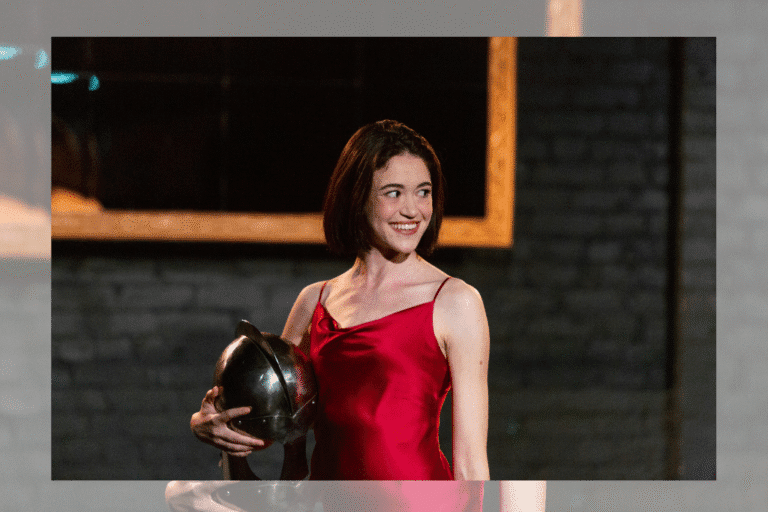 iPhoto caption: Kate Martin in 'Troilus and Cressida.' Photo by Kyle Purcell.
REVIEW: Shakespeare BASH’d brings focus to the mystifying Troilus and Cressida
This spare, thoughtful staging prioritizes a clarity of text that comes through even when the script’s overall trajectory is less than clear.
 iPhoto caption: Aidan deSalaiz and the cast of 'Company.' Photo by Dahlia Katz.
REVIEW: Talk Is Free’s Company is valiant but imperfect
Playing at The Theatre Centre, it’s an entertaining staging that, like its central character, is still waiting to completely connect.
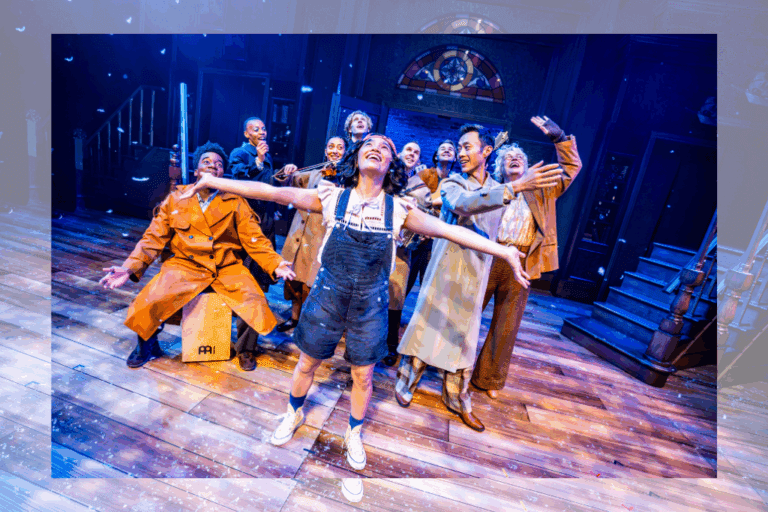 iPhoto caption: Members of the company of 'Narnia.' Photo by Dahlia Katz.
REVIEW: Bad Hats’ Narnia is a joyful, heartwarming escape
The spirit of openness and the joy of discovery rule over this Narnia. Open the wardrobe and see.
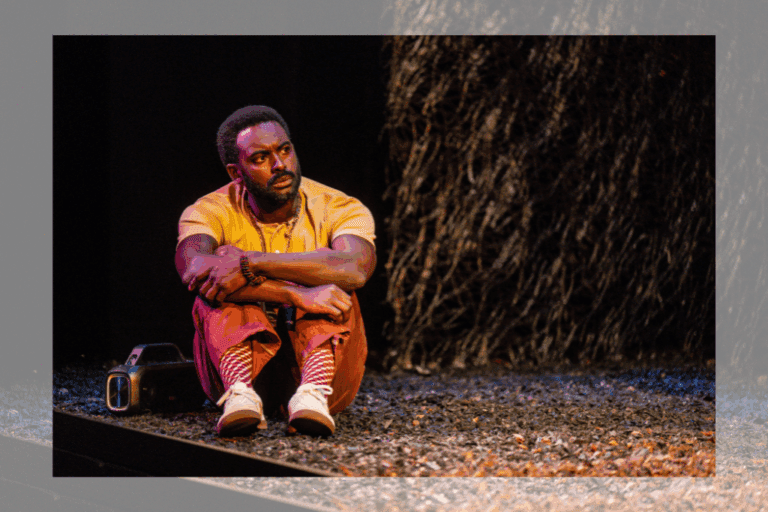 iPhoto caption: Mazin Elsadig in 'The Comeuppance.' Photo by Dahlia Katz. Set design by Shannon Lea Doyle, costume design by Ming Wong, lighting design by Jason Hand.
Macabre and drama-filled yet surprisingly gentle, The Comeuppance will probably be most compelling to the around-40 crowd who share its specific touchstones and millennial angst from a high-school experience bookended by Columbine and 9/11.
 iPhoto caption: Kaylee Harwood with members of the 'Bright Star' ensemble. Photo by Dahlia Katz.
REVIEW: Garner Theatre Productions’ Bright Star coasts on charm and likability
Bright Star covers it all: thwarted love, coming of age, family drama, the power of art, the importance of remaining true to oneself. Yet co-writer Steve Martin’s wit, which blazes in plays like Picasso at the Lapin Agile, merely twinkles here.
Comments