
REVIEW: Shakespeare BASH’d brings focus to the mystifying Troilus and Cressida
 iPhoto caption: Kate Martin in 'Troilus and Cressida.' Photo by Kyle Purcell.
Troilus and Cressida is rarely performed Shakespeare, and it’s easy to guess why. The dramaturgically mystifying play’s take on The Iliad filters the Trojan War tale through two of its deservedly minor characters, who fall in love but are separated by circumstance. Full of intriguing ideas and lyrical passages but also dropped threads, the script lacks a resolution that justifies centring the titular pair. It settles uneasily between genres of sweeping romance, political satire, and war epic.
This makes the show no small Trojan horse for Shakespeare BASH’d to fill at The Theatre Centre, following distinctive productions of fellow problem play The Merchant of Venice in 2025 and even rarer curiosity The Two Noble Kinsman in 2024. Under James Wallis’ direction, this spare, thoughtful staging, clocking in at over three hours of near-constant motion, prioritizes a clarity of text that comes through even when the script’s overall trajectory is less than clear. For anyone filling a missing slot in their Shakespeare canon viewing, it’s a great chance to see a curiosity performed with fluidity and confidence.
Trojan prince Troilus (Deivan Steele) refuses to fight for love of Cressida (Breanne Tice), whose father Calchas (Geoffrey Armour) has defected to the Greeks, and whose uncle Pandarus (also Armour) is desperate to make the match. Meanwhile, the vainglorious Achilles (Andrew Iles) also refuses to fight, to the dismay of the Greek war council.
Shakespeare awkwardly interweaves three stories of stolen love leading to violence: there’s war-starting Helen (associate director Kate Martin), seemingly delighted to trade lewd jokes with new beau Paris (Ben Yoganathan); Cressida, tragically forced to join the other camp and barter her body to survive after her father demands they be reunited; and Patroclus (Felix Beauchamp), Achilles’ lover, whose murder results in the high-action final scenes of revenge.
To clearly connect love and war from the start, Wallis replaces the soldier who delivers the prologue with Helen, a striking initial image as Martin, clad in a fire-red slip dress and Corinthian-style metal helmet, regards herself in a large mirror through miniscule eye slits. The lone set piece (set design is uncredited), that mirror then hangs largely abandoned, a missed opportunity in a play that’s also a satire of military ego.
If Wallis’ production of The Two Noble Kinsmen was all about triangles, his Troilus and Cressida gives us precise compositions of squares and straight lines, characters standing at all corners of the intimate playing space or assembling downstage. Though the convoluted script sometimes feels like watching the famous events from another room even when the main players are present, the cast does painstaking work to imbue it with life.
Armour stands out in an accomplished cast, his bright, Key West retiree outfit contrasting with most of the characters’ military neutrals (costumes, which lend the play an unobtrusively contemporary aesthetic, are also uncredited). He plays Pandarus with delightfully catty flamboyance as he pushes the titular pair, his living dolls, together like a person writing Heated Rivalry fanfiction to avoid thinking about world events.
Many of Shakespeare’s funniest moments go to obtuse muscleman Ajax, whose eagerness to make his name through battle outweighs any idea that he’s being insulted or manipulated. Adriano Reis plays him with the puppyish tenacity of a CrossFit himbo mixed with a Jack Russell terrier, constantly running around the stage and beating his tactical vest.
On the other hand, Jordin Hall gives kind Hector a calming, grounding physical presence; the only character with a moral compass, Hector provides a desperately needed balance to the macho posturing, and his fate creates a genuinely affecting sequence in the final melee.
Flitting around like a mosquito, Julia Nish-Lapidus’ Thersites acts as war correspondent, taking flash photos and providing acerbic commentary. And as the slimy Diomedes who assaults Cressida before passing her around to the council in the show’s most stomach-churning moment (fight and intimacy direction by Jennifer Działoszynski), Austin Eckert is admirably understated, letting the reality of his actions show his menace.
Iles efficiently displays Achilles’ complexities, sunnily lounging while assured of his reputation then darkly brooding when he fears becoming overshadowed. His wild, violent grief at Patroclus’ loss is palpable, though the production could emphasize that love before the fall by showing their textually acknowledged relationship through a closer physicality.
Steele and Tice find vivid chemistry in the push-and-pull flirting of their characters, making us care despite their story fading in and out of the play — and all the stolen lovers disappearing well before its final moments.
As Pandarus plays dolls with Troilus and Cressida, Shakespeare’s Troy story is more of a toy story, erudite but focused on the next shiny speech rather than overall clarity. It’s a good thing, then, that Shakespeare BASH’d lends focus to even the thorniest works in the canon.
Troilus and Cressida runs at The Theatre Centre until February 8. More information is available here.
Intermission reviews are independent and unrelated to Intermission’s partnered content. Learn more about Intermission’s partnership model here.

Ilana Lucas
Ilana Lucas is a professor of English in Centennial College’s School of Advancement. She is the President of the Canadian Theatre Critics Association. She holds a BA in English and Theatre from Princeton University, an MFA in Dramaturgy and Script Development from Columbia University, and serves as Princeton’s Alumni Schools Committee Chair for Western Ontario. She has written for Brit+Co, Mooney on Theatre, and BroadwayWorld Toronto. Her most recent play, Let’s Talk, won the 2019 Toronto Fringe Festival’s 24-Hour Playwriting Contest. She has a deep and abiding love of musical theatre, and considers her year working for the estate of Tony winners Phyllis Newman and Adolph Green one of her most treasured memories.
LEARN MORE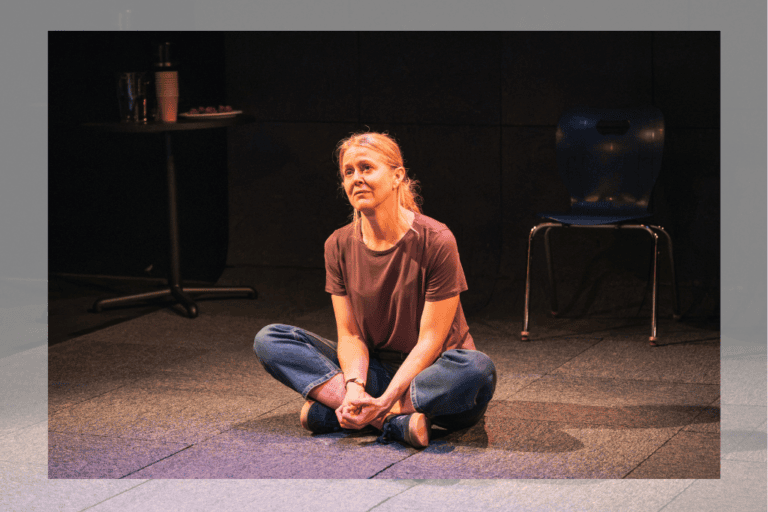 iPhoto caption: Amy Rutherford in 'Pre-Existing Condition.' Photo by Elana Emer.
In an attempt to create an issue-based work with a central everywoman, the play sends the message that we shouldn’t allow domestic violence to define a person while simultaneously staging that definition.
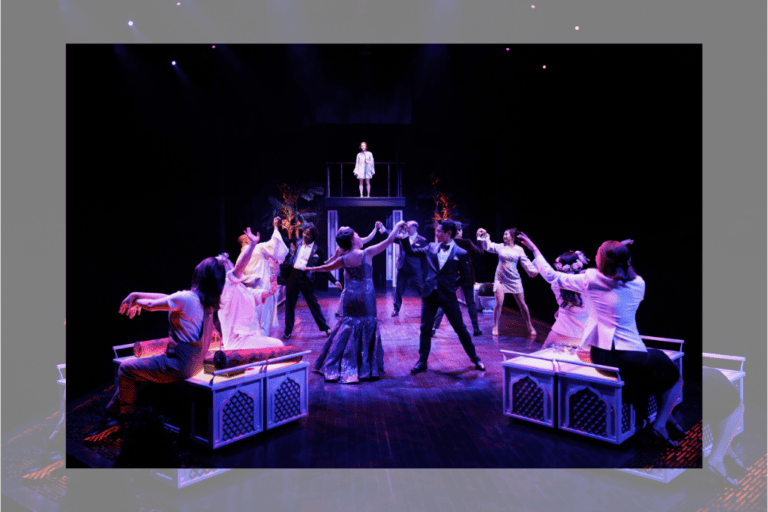 iPhoto caption: Members of the company in 'The Tao of the World.' Stratford Festival 2026. Photo by David Hou.
Set in an opulent world of Singaporean elites, writer-director Jovanni Sy 施崇梵’s world premiere work at the Tom Patterson Theatre is a bubbly, Crazy Rich Asians-style romcom that sweetens the palate before releasing a poignant pop of acidic social commentary, arguing that the concept of restoration is laughable to those who suffered most in the interim and returned to a status quo little better than the disruption.
 iPhoto caption: André Sills and Krystin Pellerin in 'Othello.' Photo by David Hou.
REVIEW: In The Tempest and Othello, the Stratford Festival gets vengeful — and it rocks
The two strong productions, seen as a double bill, make a compelling case against choosing vengeance, with director Haysam Kadri’s Othello an especially riveting and taut interpretation.
 iPhoto caption: Sara Farb and Qasim Khan in 'Funny Girl.' Photo by David Cooper.
REVIEW: Sara Farb shines in Funny Girl at the Shaw Festival
One theme of Funny Girl is acceptance of the self despite its flaws and inconsistencies. The musical, likewise, is full of flaws and inconsistencies, but compelling all the same. Luckily, Sara Farb as Fanny Brice in all her boastful vulnerability gives us that central figure who delights — an umbrella to ward off the rain.
 iPhoto caption: Raymond Strachan and Tom McCamus in 'Death of a Salesman.' Photo by David Hou.
REVIEW: Stratford Festival’s Death of a Salesman is stark and melancholy
The relatively straightforward production is aesthetically austere, but strong central performances of the family at its core keep it human.
 iPhoto caption: Members of the company of 'Fiddler on the Roof.' Photo by Dahlia Katz.
REVIEW: Exquisite Yiddish Fiddler on the Roof bursts with both elation and pain
The word “Torah” in Hebrew dominates centre stage, constantly illuminated and glowing like an eternal flame. The backdrop’s sanctification, desecration, and resurrection signifies the resilience and endurance of the people before it.
Comments