
REVIEW: Sara Farb shines in Funny Girl at the Shaw Festival
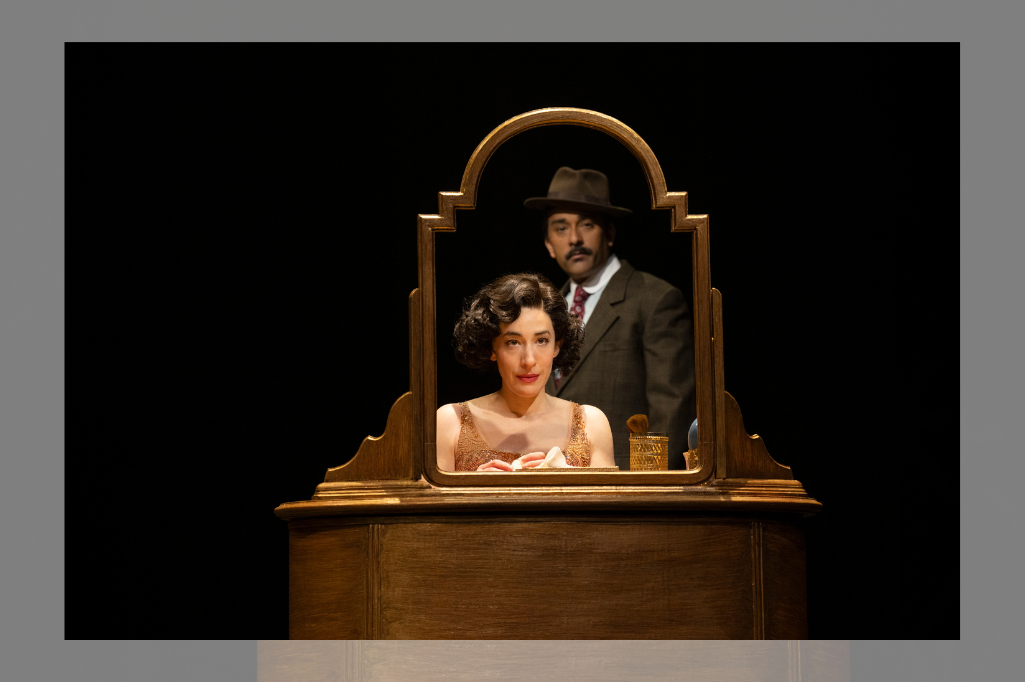 iPhoto caption: Sara Farb and Qasim Khan in 'Funny Girl.' Photo by David Cooper.
When it comes to the 1964 musical Funny Girl, casting is key.
Based on the true story of the comic actress Fanny Brice, who transcended her unconventional look to achieve Broadway stardom in 1910 with the Ziegfeld Follies, the initial production struggled pre-opening when attached to Peter Pan’s Mary Martin; it only became a massive hit when the producers hired an early-career Barbra Streisand instead. A 2022 Broadway revival similarly turned around when Lea Michele replaced Beanie Feldstein as Fanny.
The Shaw Festival puts its 2026 entry in the hands of Sara Farb, which turns out to have been a strong move. Director Eda Holmes’ Funny Girl is a good production of an uneven bio-musical, shining with the bright light of Farb at its centre. While the quirky material is imperfect, it’s hard to rain on Farb’s parade.
The first half of Jule Styne, Bob Merrill, and Isobel Lennart’s show has a clear and compelling arc, as Fanny battles the world for career success and then battles herself to admit that she both wants and deserves romance with mysterious businessman and gambler Nicky Arnstein (Qasim Khan), even when the two paths clash. Farb projects a mixture of supreme professional confidence and personal insecurity. She belts out her solos with panache and verve, throwing herself gamely into Fanny’s physical comedy, whether she’s playing a chicken on a nightclub stage or exaggeratedly sliding off a sofa to deny Arnstein’s romantic overtures.
Set and costume designer James Lavoie visually captures the personal-professional dichotomy, suggesting the need for balance in Fanny’s life by using a palette of neutrals and metallics for the showbiz scenes, which feature dazzling headdresses in the Ziegfeld Follies years; and a warmer, more colourful palette in the world outside the theatre. A stunner of a bright orange outfit with a matching sculptural hat puts all eyes on Farb as she delivers the beloved Act Two closer, “Don’t Rain on My Parade,” and Lavoie’s long, white staircase makes the Follies girls’ descent in their towering heels feel death-defying.
Styne’s music sounds glorious and lush under Paul Sportelli’s musical direction; unfortunately, when the orchestra rises, the sound balance falters. Most of the time, it’s manageable, but a spate of engaging tap dancing by choreographer Parker Esse seals the fate of one comic patter song (“Rat-Tat-Tat-Tat/Private Schwartz”), where Bob Merrill’s presumably clever lyrics are completely drowned out by the barrage of movement and music. Slower solos ring more clearly, like Farb’s introspective rendition of “People,” and Taurian Teelucksingh’s resonant tenor in Follies number “His Love Makes Me Beautiful.”
Fanny’s hometown crowd makes her past feel full. Matt Alfano as Fanny’s long-suffering, friend-zoned choreographer Eddy Ryan does a nifty dance atop a suitcase and has a surprising amount of chemistry with Mrs. Brice (Patty Jamieson), the tough but loving owner of a friendly downtown dive. The bar’s poker table is always hopping with conversation and chump change bets; Janelle Cooper as charmingly nosy neighbour Mrs. Strakosh seems like a person you’d want in your betting corner.
Funny Girl’s script follies come out in the unbalanced second half, which focuses on the love story that’s far less interesting than Fanny’s career. It also features numbers that seem to lack relevance; in one sequence, Eddie Ryan and Mrs. Strakosh exhort Mrs. Brice to “Find Yourself a Man,” a subsequently dropped thread. Other numbers feel strangely generic, such as “Sadie, Sadie,” where Fanny celebrates her new married identity like it’s a part she’s been hired to play. Both these numbers hint at a message about societal pressures that insist career women sublimate their achievements for love, but read onstage as straightforward, fun romps; not emphasizing the thematic connection seems like a missed directorial opportunity.
While Khan is a fine foil for Farb and often sympathetic as Fanny’s fragile manchild of a love interest, the character (even when softened for the musical) is so repellant that Arnstein requires oodles of chemistry with Fanny to make the audience root for these crazy kids. The sparks here are pleasant but muted, making the characters’ relationship appear more motivated by Fanny’s doubts about her desirability than a passionate affair. While Merrill’s lyrics support this reading by creating a direct line from an early song entirely about Fanny’s lack of looks to her post-marriage declarations that “the groom was prettier than the bride” and that she “finally got a guy to marry me,” more fire between the lovers might bolster a second act so focused on the increasingly stormy union.
Arnstein’s descent from in-charge charmer to insecure cad contrasts well with the more minor journey of impresario Florenz Ziegfeld (Damien Atkins), who initially clashes with Fanny’s attempts to exert any control over his meticulous stage pictures, but comes to respect her as an equal. Atkins defrosts from icy disdain to warm fondness between Fanny’s first executive decision and her last, thoroughly charmed by her force of nature and creating an appealing relationship that seems lived-in despite its relatively limited stage time.
One theme of Funny Girl is acceptance of the self despite its flaws and inconsistencies. The musical, likewise, is full of flaws and inconsistencies, but compelling all the same. Luckily, Sara Farb as Fanny Brice in all her boastful vulnerability gives us that central figure who delights — an umbrella to ward off the rain.
Funny Girl runs at Shaw’s Festival Theatre until October 3. More information is available here.
Intermission reviews are independent and unrelated to Intermission’s partnered content. Learn more about Intermission’s partnership model here.

Ilana Lucas
Ilana Lucas is a professor of English in Centennial College’s School of Advancement. She is the President of the Canadian Theatre Critics Association. She holds a BA in English and Theatre from Princeton University, an MFA in Dramaturgy and Script Development from Columbia University, and serves as Princeton’s Alumni Schools Committee Chair for Western Ontario. She has written for Brit+Co, Mooney on Theatre, and BroadwayWorld Toronto. Her most recent play, Let’s Talk, won the 2019 Toronto Fringe Festival’s 24-Hour Playwriting Contest. She has a deep and abiding love of musical theatre, and considers her year working for the estate of Tony winners Phyllis Newman and Adolph Green one of her most treasured memories.
LEARN MORE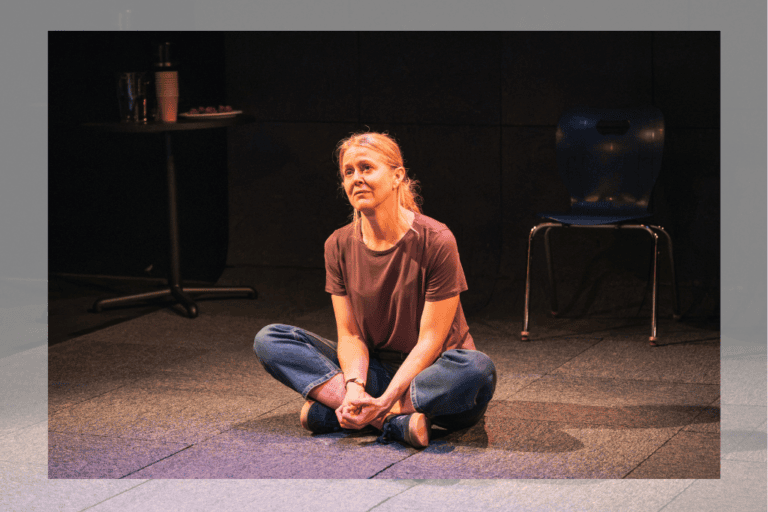 iPhoto caption: Amy Rutherford in 'Pre-Existing Condition.' Photo by Elana Emer.
In an attempt to create an issue-based work with a central everywoman, the play sends the message that we shouldn’t allow domestic violence to define a person while simultaneously staging that definition.
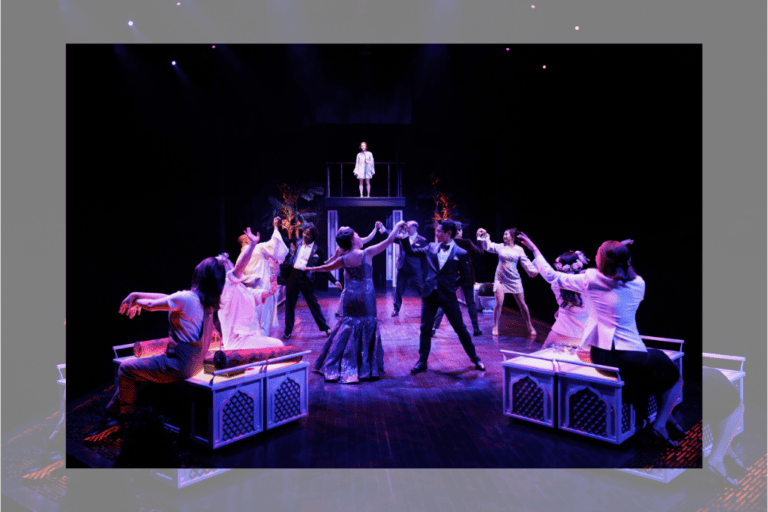 iPhoto caption: Members of the company in 'The Tao of the World.' Stratford Festival 2026. Photo by David Hou.
Set in an opulent world of Singaporean elites, writer-director Jovanni Sy 施崇梵’s world premiere work at the Tom Patterson Theatre is a bubbly, Crazy Rich Asians-style romcom that sweetens the palate before releasing a poignant pop of acidic social commentary, arguing that the concept of restoration is laughable to those who suffered most in the interim and returned to a status quo little better than the disruption.
 iPhoto caption: André Sills and Krystin Pellerin in 'Othello.' Photo by David Hou.
REVIEW: In The Tempest and Othello, the Stratford Festival gets vengeful — and it rocks
The two strong productions, seen as a double bill, make a compelling case against choosing vengeance, with director Haysam Kadri’s Othello an especially riveting and taut interpretation.
 iPhoto caption: Raymond Strachan and Tom McCamus in 'Death of a Salesman.' Photo by David Hou.
REVIEW: Stratford Festival’s Death of a Salesman is stark and melancholy
The relatively straightforward production is aesthetically austere, but strong central performances of the family at its core keep it human.
 iPhoto caption: Members of the company of 'Fiddler on the Roof.' Photo by Dahlia Katz.
REVIEW: Exquisite Yiddish Fiddler on the Roof bursts with both elation and pain
The word “Torah” in Hebrew dominates centre stage, constantly illuminated and glowing like an eternal flame. The backdrop’s sanctification, desecration, and resurrection signifies the resilience and endurance of the people before it.
 iPhoto caption: Daniel Maslany and Karl Ang in 'The Division.' Photo by Dahlia Katz.
REVIEW: Andrew Kushnir’s The Division confronts the impossibility of fully knowing the past
Playing at Crow’s Theatre, The Division is a thorny, intimate work of theatre that examines inherited guilt, the relentlessness of eye-for-an-eye justice, and the seductive promise of being able to clearly define and banish evil forever, if only you could choose and label the correct side.
Comments