
REVIEW: How Shakespeare BASH’d transformed The Merchant of Venice into a tense, layered tragedy
 iPhoto caption: Photo by Kyle Purcell.
When Mark Leiren-Young’s Playing Shylock opened at Canadian Stage late last year, it asked audiences to consider the complexities of Shakespeare’s Jewish “villain” and The Merchant of Venice’s depiction of the virulently antisemitic attitudes of the period that continue to bleed into contemporary life. The show starred actor Saul Rubinek as himself giving a fiery rant on the eve of a cancelled production of Merchant. Watching Rubinek wrestle with theatre’s current relationship to its problematic classics, I longed to see the fictitious cancelled show, with its audaciously punk design.
The recent production of Merchant by Shakespeare BASH’d at The Theatre Centre isn’t an overt response to Playing Shylock (which returns to the stage at the CAA Theatre in April). It also couldn’t be more different aesthetically, a fluid, simple staging by Julia Nish-Lapidus with a predominantly Jewish team and the company’s signature focus on text. In elegantly foregrounding the play’s Jewish characters without changing its words, however, it feels no less audacious, a gem of a reimagining that sensitively explores the issues raised in Playing Shylock without purporting to offer any answers.
In Shakespeare’s play, suitors compete for the hand of Portia (Hallie Seline) by answering a riddle. Portia only has eyes for Bassanio (Cameron Laurie), but her faithful suitor needs cash. His dear friend Antonio (Jesse Nerenberg) acts as guarantor for the funds provided by Shylock (Alon Nashman), a Jewish man Antonio has consistently treated with the utmost disrespect. Fuelled by his long-standing hatred of Antonio, Shylock’s contracted price for a missed payment is a literal pound of flesh.
The company quickly makes it clear that, while the play is classified as a comedy due to the happy ending for its Christian characters, it’s not a comedy for everyone. Audiences gather to strains of Jewish music (sound designed by Matt Nish-Lapidus), including “Avinu Malkeinu,” a prayer sung during the High Holy Days, as the cast stands around a Shabbat table set with candlesticks and Manischewitz wine, previewing some famous lines from the play to come.
“All that glitters is not gold,” starts one speaker, only for a castmate to remind them the original word was “glisters.” Followed by Shylock’s plaintive plea for Jewish personhood, “If you prick us, do we not bleed?,” these lines imply that language and mores may both change, but language we might now see as objectionable will remain as-is in the production, a work of its time presented for our current judgment.
Before intermission, characters gradually strip bare the table that promises fellowship and remove it, casually stealing the linens and chugging the wine, a quiet, consistent reminder of the impunity and cruelty with which most treat Shylock and his faith.
The production successfully mines the tension from what now feels like charged and ugly language sprinkled throughout Shakespeare’s beautiful speeches. As Portia, Seline looks luminous while she dotes on Laurie’s soppy Bassanio; however, her wine-fuelled gossip sessions about other suitors with gleeful servant Nerissa (Brittany Kay) are filled with trash-talking that wouldn’t be out of place on Drag Race, with a focus on degrading a suitor with the “complexion of a devil.”
Nerenberg’s Antonio, warm when conversing with Bassanio, ices over completely when he speaks to Shylock; I was nauseated by his cavalier sense of entitlement to use Shylock’s funds without acknowledging him as a human being. Asher Rose’s Gratiano livens up every scene he’s in with witty wordplay and a partying personality, but behind the fun lurks glibness and inconstancy.
Under Nish-Lapidus’ careful direction, like the three caskets (gold, silver, and lead) in Portia’s riddle, the happy, close-knit characters carry something wildly different from their appearances inside them, a viciousness toward the outsider that feels painfully relevant.
Bearing the brunt of their ugliness is Shylock’s daughter Jessica (Cameron Scott), who attempts assimilation to become more palatable; running away with the Christian Lorenzo (Ori Black), she is lost between worlds, never fully accepted in either. Clad in black and shaking with terror, Scott draws attention even when silent. Her character drives this version of the play’s powerful ending, placing the focus back on the humanity of our supposed villain after he vanishes following the showstopping court scene in the fourth act.
And then there’s Nashman’s Shylock, neither a caricature nor an outsized portrayal but an ordinary man pushed to desperation and near-madness by his untenable position in society. When Nashman, tallis strings protruding from beneath his suit, begs the court to uphold his contract and thus show he is deserving of equal protection under the law, it’s hard to begrudge him his fleshy fine. But the game is rigged.
As Canadian Stage’s current production of Fat Ham adapts the Bard’s famous tragedy into a comedy, Shakespeare BASH’d turns this problematic comedy into a tragedy, exploring Jewish characters written progressively for the time but nonetheless treated as expendable. Here, Shylock may still disappear from the page, but a reminder of him never disappears from the stage — and as his table, family, and religious clothing are stripped from him, the company lays bare the contradictions at the heart of Shakespeare’s controversial play.
The Merchant of Venice ran at The Theatre Centre from February 13 to 23. More information is available here.
Intermission reviews are independent and unrelated to Intermission’s partnered content. Learn more about Intermission’s partnership model here.

Ilana Lucas
Ilana Lucas is a professor of English in Centennial College’s School of Advancement. She is the President of the Canadian Theatre Critics Association. She holds a BA in English and Theatre from Princeton University, an MFA in Dramaturgy and Script Development from Columbia University, and serves as Princeton’s Alumni Schools Committee Chair for Western Ontario. She has written for Brit+Co, Mooney on Theatre, and BroadwayWorld Toronto. Her most recent play, Let’s Talk, won the 2019 Toronto Fringe Festival’s 24-Hour Playwriting Contest. She has a deep and abiding love of musical theatre, and considers her year working for the estate of Tony winners Phyllis Newman and Adolph Green one of her most treasured memories.
LEARN MORE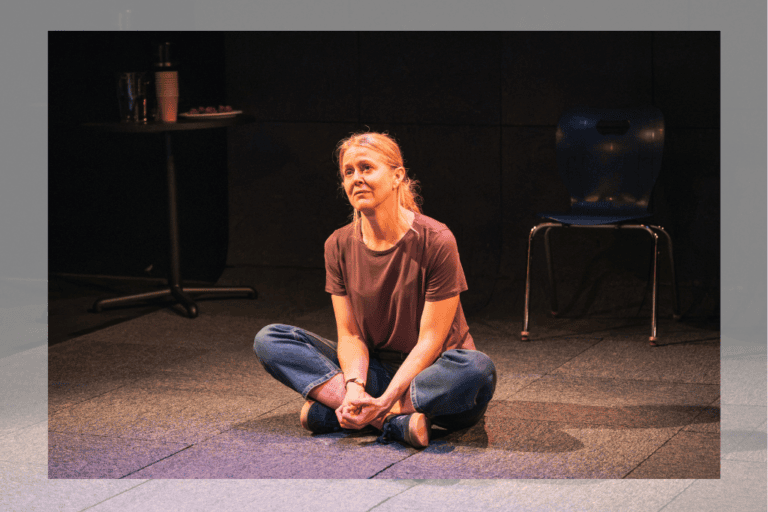 iPhoto caption: Amy Rutherford in 'Pre-Existing Condition.' Photo by Elana Emer.
In an attempt to create an issue-based work with a central everywoman, the play sends the message that we shouldn’t allow domestic violence to define a person while simultaneously staging that definition.
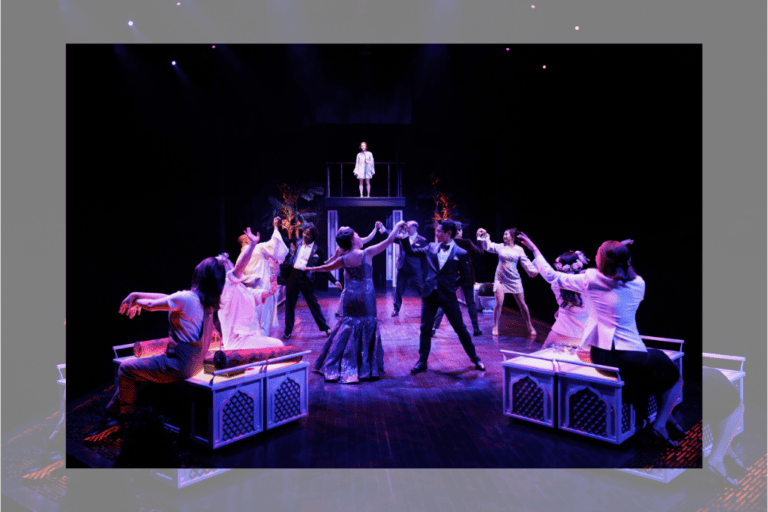 iPhoto caption: Members of the company in 'The Tao of the World.' Stratford Festival 2026. Photo by David Hou.
Set in an opulent world of Singaporean elites, writer-director Jovanni Sy 施崇梵’s world premiere work at the Tom Patterson Theatre is a bubbly, Crazy Rich Asians-style romcom that sweetens the palate before releasing a poignant pop of acidic social commentary, arguing that the concept of restoration is laughable to those who suffered most in the interim and returned to a status quo little better than the disruption.
 iPhoto caption: André Sills and Krystin Pellerin in 'Othello.' Photo by David Hou.
REVIEW: In The Tempest and Othello, the Stratford Festival gets vengeful — and it rocks
The two strong productions, seen as a double bill, make a compelling case against choosing vengeance, with director Haysam Kadri’s Othello an especially riveting and taut interpretation.
 iPhoto caption: Sara Farb and Qasim Khan in 'Funny Girl.' Photo by David Cooper.
REVIEW: Sara Farb shines in Funny Girl at the Shaw Festival
One theme of Funny Girl is acceptance of the self despite its flaws and inconsistencies. The musical, likewise, is full of flaws and inconsistencies, but compelling all the same. Luckily, Sara Farb as Fanny Brice in all her boastful vulnerability gives us that central figure who delights — an umbrella to ward off the rain.
 iPhoto caption: Raymond Strachan and Tom McCamus in 'Death of a Salesman.' Photo by David Hou.
REVIEW: Stratford Festival’s Death of a Salesman is stark and melancholy
The relatively straightforward production is aesthetically austere, but strong central performances of the family at its core keep it human.
 iPhoto caption: Members of the company of 'Fiddler on the Roof.' Photo by Dahlia Katz.
REVIEW: Exquisite Yiddish Fiddler on the Roof bursts with both elation and pain
The word “Torah” in Hebrew dominates centre stage, constantly illuminated and glowing like an eternal flame. The backdrop’s sanctification, desecration, and resurrection signifies the resilience and endurance of the people before it.
Comments