
REVIEW: Aportia Chryptych marks many firsts for Canadian opera
 iPhoto caption: Photo courtesy of the Canadian Opera Company.
While representation is important, re-telling stories of Black Canadians comes with even greater responsibility.
Our stories are not monoliths, nor should they exist within a digestible social narrative. Imbued with complexities of race, time, and gender, we often become myths, as opposed to stories, detaching the face from the body and gentrifying what’s left.
As a Black Canadian woman, watching an imagined work about a historical Black Canadian woman feels salient in this pursuit. My viewing becomes a type of cartography in the quilt of Canada’s history, and a full-circle moment that reminds me that endings are in fact the beginning of something new.
Aportia Chryptych: A Black Opera for Portia White, created by HAUI (librettist and director) and Sean Mayes (composer and conductor) and produced by the Canadian Opera Company (COC), marks many firsts. It offers a glimpse into the life of Canada’s first Black Canadian woman concert singer to gain international fame; it’s also the world premiere of the first-ever Black opera about a Black Canadian woman.
Portia White’s legacy inspires this Black opera, bringing together a cross-culture of communities in a rendering of Portia that captures many perspectives of her.
The opera begins with a spirited sung land acknowledgment, underscored by the orchestra. This compelling introduction sets the tone of the show. Then, as each performer emerges with long white veils over their faces, we segue from the land acknowledgement to the bardo — the space of existence between death and rebirth — where we meet Portia and her son.
The story starts at the end of Portia White’s life, with the character split into three fragments; Portia Body (Neema Bickersteth), Portia Spirit (Adrienne Danrich), and Portia Soul (SATE). Each fragment of herself moves through the people and the places that hold what’s left of the memory of Portia White. The audience watches Aportia Chryptych unfold through a compilation of images, music, and myth. Not following the traditional opera style, the orchestra introduces a wide range of Black music — funk, jazz, gospel, hip hop, and spoken word — that encapsulates the diversity of Portia’s musical stylings.
Portia traverses the memories of her life and reflects on her relationships and her travels, where she shares in conversations with celebrated contralto Marian Anderson, Canada’s civil rights pioneer Viola Desmond, and Queen Elizabeth II. As Portia navigates the bardo, the audience follows as the Nova Scotia native becomes one of Canada’s most influential voices of the 20th century.
Aportia Chryptych is definitely more of a creative imagining than a biopic. Although a linear storytelling of Portia’s life is delivered through short scenes, each Portia plays multiple characters, and the audience experiences her through the incredible connection between the three women on stage.
Bickersteth, Danrich, and SATE carry this two and half hour opera, weaving in and out of their portrayals of Portia without a hitch. Playing Portia’s lover and her father as well as Portia Body, Bickersteth is stoic, a generous and kind performer. As one of Portia’s sisters and an Armenian photographer in addition to Portia Spirit, Danrich’s rich voice spans octaves as well as musical styles, from opera to rap. SATE’s powerful voice stands true to her hard rock and gritty blues style as Portia’s soul and older Portia. A final performer, Henos Girma, plays the child that Portia gave up for adoption when she was 24 years old. Girma shines bright in a solo at the end of the show, showing off a magnificent voice at just the beginning of his career.
Set and projections by Laura Warren, along with costume design by Diséiye Thompson, create a high modernist aesthetic. A single black chair centre stage and a huge circular projector screen form the backdrop, displaying images of Portia along with graphic designs. Thompson’s palette offers a mix of couture and Afrocentric design, which allows for the larger-than-life costumes to take up space on the stage, from Victorian petticoats to Zulu basket hats.
HAUI and Sean Mayes had a mission to bring the story of Portia White to the world. While the opera and production pays homage to Black women, I wonder if the opera could have benefitted from the additional expertise of a Black woman librettist. I do recognize the creative contributions of assistant director Sheree Spencer and dramaturg Bickersteth, but it’s the nuance of our experiences that cannot get lost in the generality of what it means to be a woman.
I am forever grateful to have received the opportunity to witness such beautiful work by all involved. We just made history!
You can learn more about Aportia Chryptych here.
Intermission reviews are independent and unrelated to Intermission’s partnered content. Learn more about Intermission’s partnership model here.
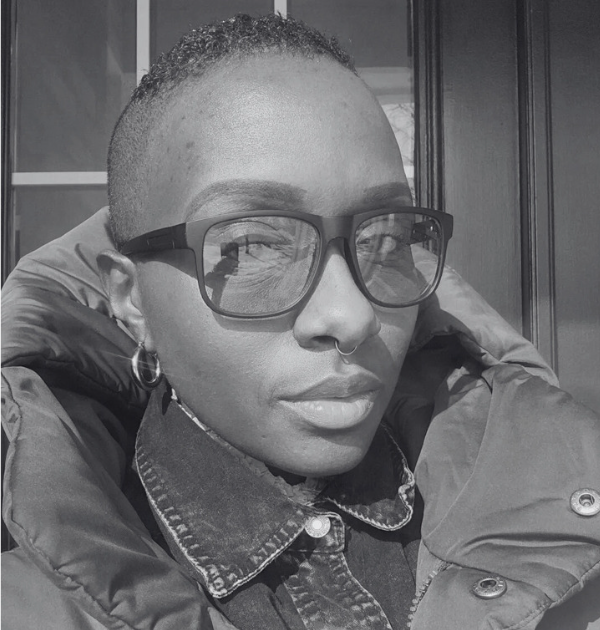
Aisha Lesley Bentham
Aisha Lesley Bentham BFA, MA is an internationally trained artist-scholar, vegan chef, and wellness coach. Aisha’s research and passion examines the intersections of cooking and performance and aims to integrate notions of care, eco-somatics, and cookery from the perspective of a first-generation Black Canadian. Her new work will premiere at SummerWorks August 2023.
LEARN MORE iPhoto caption: Photo of Come Home — The Legend of Daddy Hall by Cylla von Tiedemann.
REVIEW: The Legend of Daddy Hall feels like coming home
Home is not a place, it’s a feeling, and Come Home — The Legend of Daddy Hall feels like I came home. I was taken on a journey watching this play and came out honoured to be a witness to such an incredible story. I encourage you to do the same.
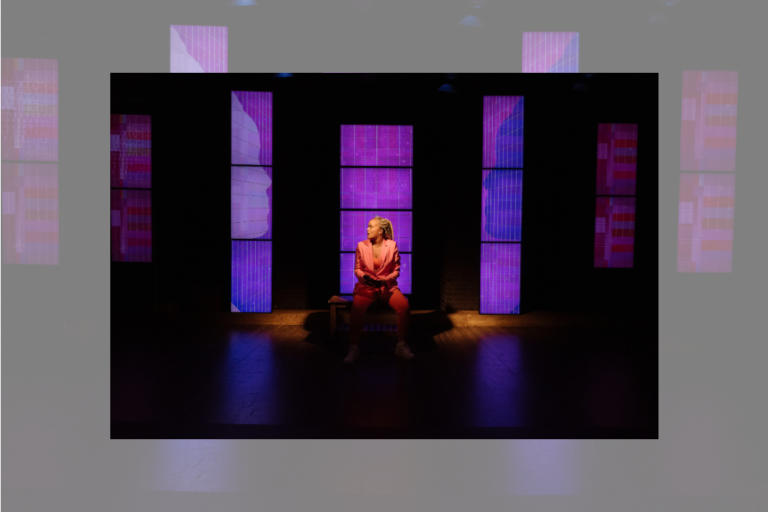 iPhoto caption: Photo by Roya DelSol.
This play is such a delight to watch, and I would definitely go again. I live for this quality of performance, and I’m looking forward to how this play will continue to inspire Black Canadian theatre to come.
 iPhoto caption: Photo by Dahlia Katz.
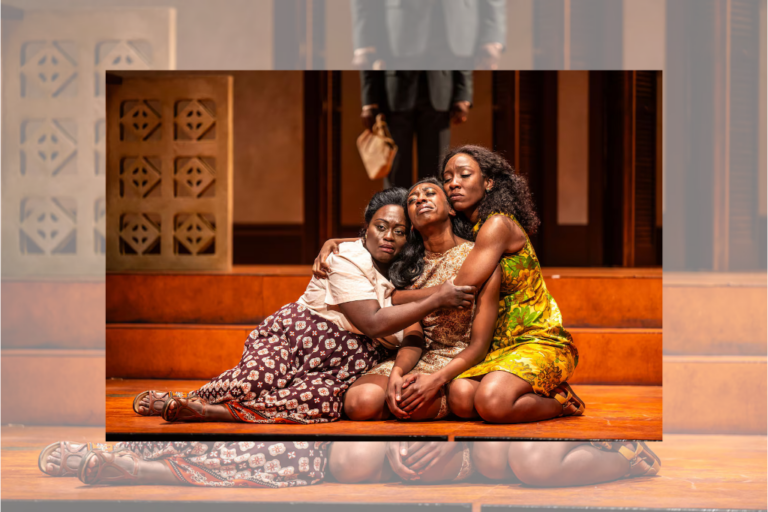
REVIEW: Three Sisters weaves together joy, fear, and the Biafran Civil War
In this conversational review of Three Sisters, contributors Kemi King and Aisha Lesley Bentham reflect on a masterful production helmed by Mumbi Tindyebwa Otu.
 iPhoto caption: Photo by Jae Yang.
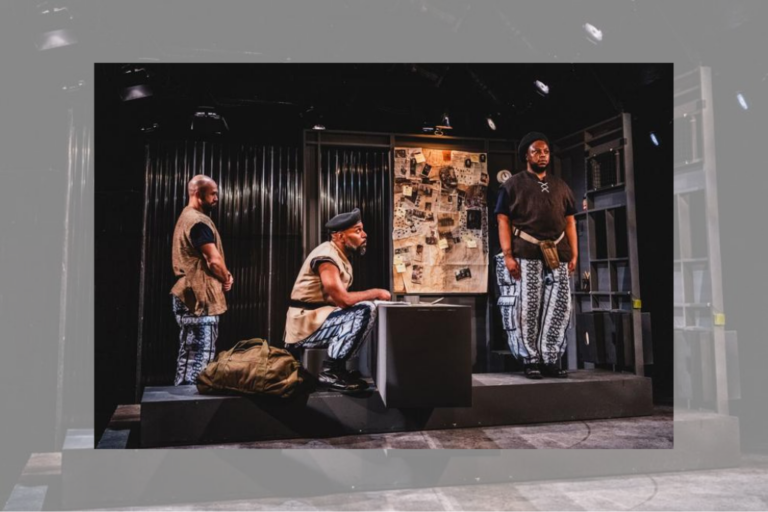
REVIEW: In 3 Fingers Back, Donna-Michelle St. Bernard explores the extremes of war
3 Fingers Back ain't no regular play about war. We don't see or hear the destruction of the land or the cry of the people. Instead, Donna-Michelle (DM) St. Bernard's double bill of plays is more intimate, an inward crawl to what she calls the repetitive stress patterns that constitute the world.

Think of both of these plays not side-by-side but instead facing each other and reflecting to us, the audience.

After 12 wild and wonderful days of theatre, the 2023 Toronto Fringe has come to an end. Read our mini reviews here!
Comments