
REVIEW: Yes, Holiday! An Improvised Musical really is different every night
 iPhoto caption: Photo by Danelle Jane Tran.
Putting aside its opening number and a single proper noun, every word of Bad Dog Theatre’s Dora Award-nominated Holiday! An Improvised Musical has the potential to change from performance to performance. The show’s program explains as much, which should really be adequate assurance, considering the group’s elite reputation in the Toronto improv community.
But as someone who’s seen almost 150 scripted performances in 2024, I found it difficult not to look for signs of premeditation in the opening night performance. While I felt sure the lines were all-new, maybe the general character dynamic is similar each time? Or perhaps the chord progressions? Three days later, I returned to the Factory Studio to see the 75-ish-minute show — created and directed by Jan Caruana — again. It was an ecstatic experience that outed those earlier whiffs of skepticism as silly. I hope that by reading my account, you’ll be able to put aside any impulse to doubt, and submit to Bad Dog’s sorcery on your first watch.
First, the constants. The aforementioned opening (and closing) number is a joyous riff on the title song of Sondheim’s Company that among other lyrical liberties swaps the word “company” for “holiday” and the phrase “phone rings, door chimes” for “eggnog, yule log.” The cast pauses this tune and asks the audience to name something the holidays wouldn’t be the same without; for my first audience’s most impulsive bellower, it was “cheese ball,” for my second’s, “Rudolph.” And, like Company, the basic conceit is that a character named Bobby — played by one of the seven onstage comedians, a lineup that itself shifts nightly — hosts a party. (In the Sondheim show, he’s actually the victim of a surprise birthday celebration, but, you know, close enough.)
Guests with various connections to Bobby soon enter. Across the two performances, our protagonist welcomed spouses, ex-spouses, twin daughters, roommates refusing to wear pants, and a bevy of colleagues (on night one, Bobby was a geology professor, while on night two she was a mid-level employee of “Rudolph Electric” saddled with hosting the company party). And everyone sings. Unlike most musicals, there are no script-only scenes: The action continues to rise until the characters are emotional enough to justify a song.
Scott Christian, a composer and former Second City music director, does the musical masterminding. Perched behind a keyboard, he’ll pick up on where the performers are driving and start playing in the appropriate harmonic world. The goal is to improvise Sondheim-esque songs, but that means an all but unattainable level of complexity, as the team surely knows — it’s a goal to strive for, more than reach (failure is funny).
Still, from Company, I recognized musical nods to “The Little Things You Do Together,” “Not Getting Married” (yes, they attempted a patter song), and “Being Alive,” which the cast referenced at the end of both shows. Sondheim-wise, Christian also employed the chords of “Send In the Clowns.” But at times the influences hailed from elsewhere: I remember hearing snippets of Jule Styne’s plucky “Don’t Rain on My Parade,” from Funny Girl, as well as Cy Coleman’s ominous “Funny,” from City of Angels.
Especially with the Sondheim mandate in play, the potential exists for generic solo ballads to emerge as the default musical mode. On opening night, the improvisation was grounded, packed with characters almost fit for a family drama, and the cast came close to falling into such a pattern, but stayed afloat by abruptly transforming several solos into group numbers; performers not in the scene would rise from their waiting area at the back of the stage and add backing vocals, along with simple choreography.
Night two’s hurdles were rather opposite: With the characters a little more vague, the story started to become overly wacky, landing, as improv so easily can, in an anarchic realm laced with sex and drugs. But the cast seemed to notice they were losing control, and managed to re-focus the lens on Bobby. This incredible ability to problem-solve is part of what makes Holiday so entrancing.
Among a uniformly excellent ensemble stands out Brandon Hackett, part of the cast at my second performance. He introduced himself to Bobby as “father,” implying himself a man of the cloth. But actor Sam Hancock responded as if Hackett was Bobby’s literal father — at which point Hackett made the distinctive choice to mutate his character into a priest-slash-dad hybrid. This led to a glorious confession-themed number in which he revealed himself to be an “ethical slut.” And as if that notion wasn’t funny enough, he rumbled the song out at the very bottom of his range, Judge Turpin-like, convincing me that contemporary musical theatre composers would do well to write more bass-baritone comic relief characters.
Bad Dog knows exactly what it’s doing and doesn’t need my endorsement. Still, it’s lovely to see the company reaching out beyond its devoted fanbase by collaborating with Factory. In February, the improvisers will be back in the Studio to do a show called Hookup — before that, though, I’m considering a third Holiday.
Holiday! An Improvised Musical runs at Factory Theatre until December 21. Tickets are available here.
Intermission reviews are independent and unrelated to Intermission’s partnered content. Learn more about Intermission’s partnership model here.
Liam Donovan
Liam is Intermission’s senior editor. He lives in Toronto. His Substack newsletter is available at loamdonovan.substack.com.
LEARN MORE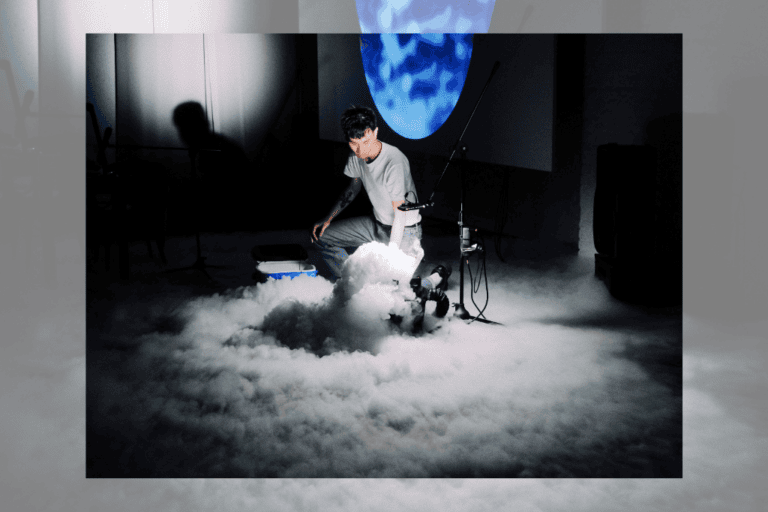 iPhoto caption: Ping-Hsiang Wang in 'Retina Maneuver.' Photo by Hang Su.
REVIEW: At this year’s SummerWorks Performance Festival, physical storytelling is central
From a dancer becoming a canine to a shy theatre director practicing his swordsmanship, the shows I’ve seen so far use performers’ bodies to dramatize defiance.
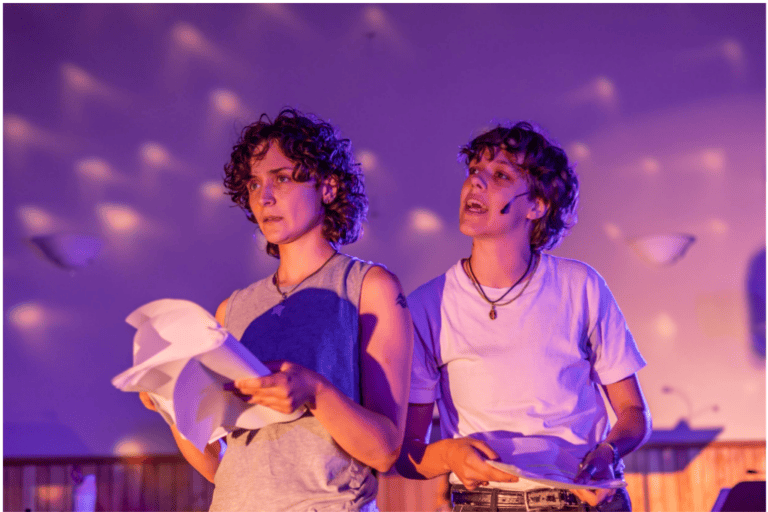 iPhoto caption: Anna Morreale and Luca McPhee perform in 'From Stardust' at the 2025 MADGEN Theatre Festival. Photo by Dave Klassen.
MADGEN Theatre Festival returns to the Danforth
Theatre of the Beat selected four producers under the age of 30 to receive paid mentorship from Toronto theatre-makers. From August 20 to 22, each member of the cohort mounts a new one-act Canadian play.
 iPhoto caption: Steven Sutcliffe and company in 'Twelfth Night.' Photo by Dahlia Katz.
REVIEW: High Park Twelfth Night pays tribute to the crazy things we do for love
As the play’s events ping-pong between seriousness and frivolity, Caroline Toal’s Viola appears constantly aware of the dangerous contradictions in the air, remaining guarded against the chaos' pull — and yet never entirely abandoning the possibility of enchantment.
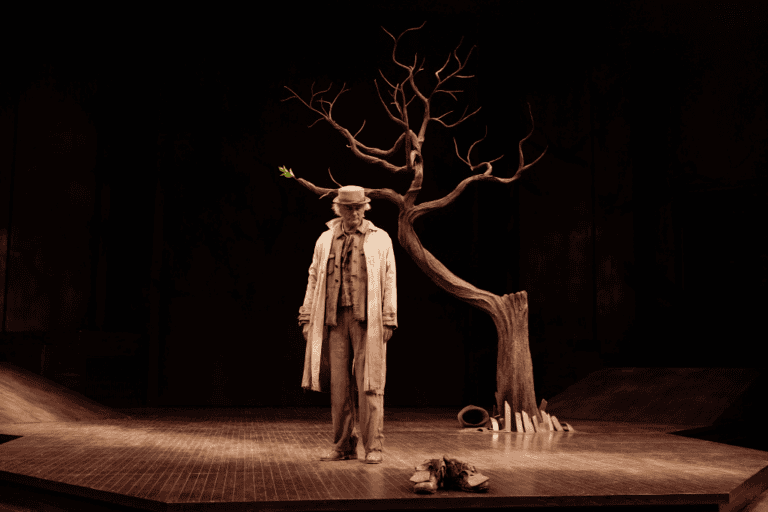 iPhoto caption: Paul Gross in 'Waiting for Godot.' Photo by David Hou.
Why Paul Gross thinks Waiting for Godot is ‘one of the great achievements of human creativity’
“The audience is with you. You bring them in. There isn't a big division between the stage and the audience,” says Gross, currently playing Vladimir in Waiting for Godot at the Stratford Festival. “They’re the final piece of the storytelling. We need them to complete the circle.”
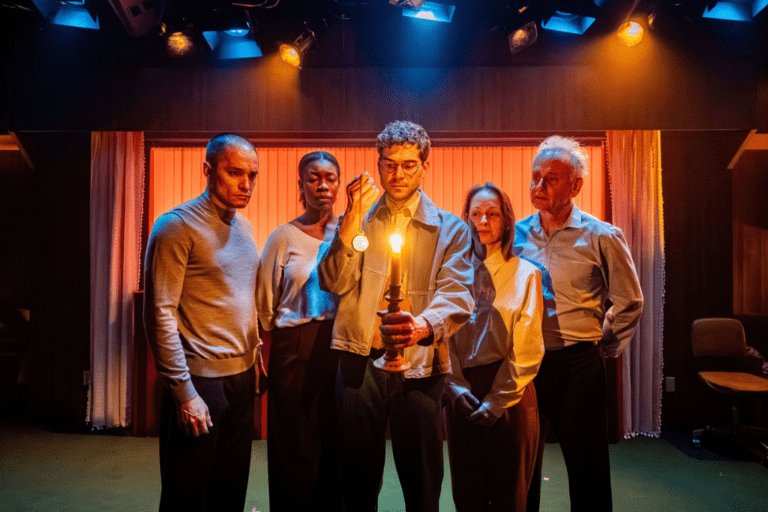 iPhoto caption: Karl Ang, Ivy Charles, Daniel Maslany, Mariya Khomutova, and Alon Nashman in 'The Division.' Photo by Dahlia Katz.
Productions at Crow’s and Theatre Passe Muraille win top honours at the 2026 Dora Awards
This evening at Meridian Hall, the Toronto Alliance for the Performing Arts (TAPA) announced the recipients of the 46th annual Dora Awards, celebrating local theatre, dance, and opera.
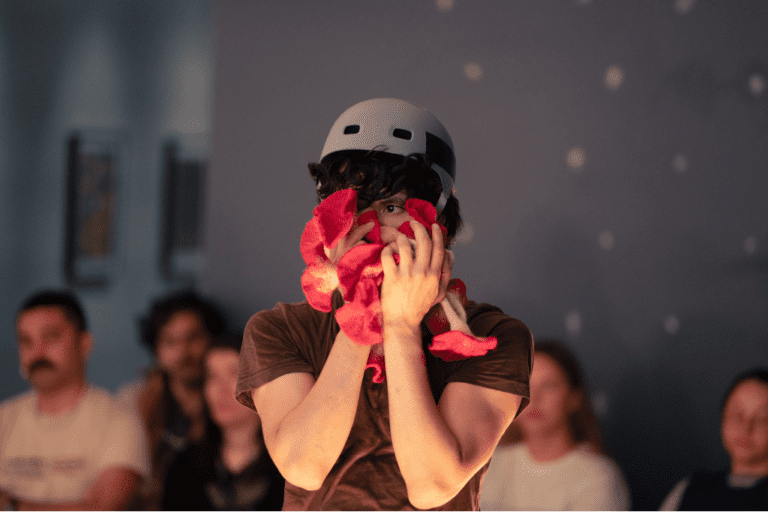 iPhoto caption: 'Golden Rez Dog.' Photo by Philippe Latour.
Creations from Denmark, Hong Kong, Iran, Mexico, and beyond feature in this year’s SummerWorks Performance Festival programming.
Comments