
REVIEW: Eldritch’s Night at the Grand Guignol features spurting blood and severed eyes
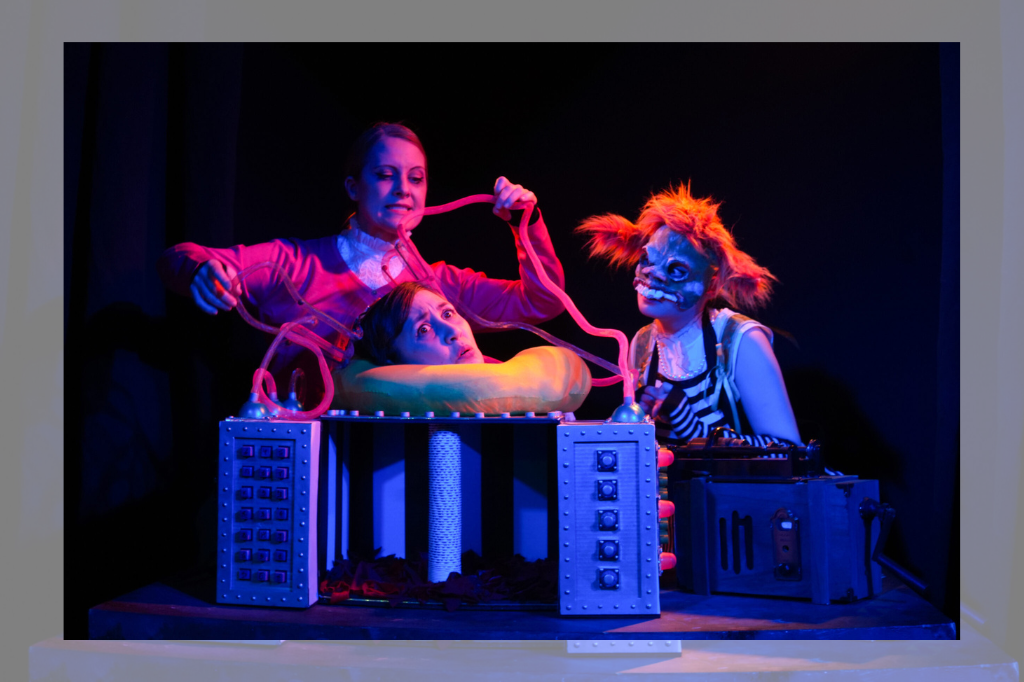 iPhoto caption: Pip Dwyer, Jeanie Calleja, and Natalia Bushnik in 'Night at the Grand Guignol.' Photo by Jack Woolfe.
Night at the Grand Guignol is both a classic Eldritch Theatre offering and something of an exception. Aesthetically, it hits the pulpy B-movie bullseye at which the indie company has long taken aim. Over the course of four playlets, a catalogue of deaths unfurls — shlockily! gorily! — in macabre locales. But personnel-wise, this is the rare Eldritch production in which artistic director Eric Woolfe doesn’t appear. He’s instead involved as writer-director, ably leading a three-woman cast through one of his imaginative, horror-inflected worlds.
Those performers appear in corsets, speaking in exaggerated French accents. “Imagine for a moment you are not here; it is not now,” one intones, the actors relaying around the text. “We are not gathered in this opulent auditorium, or upon this spacious, cultured stage… Instead, we are crammed into a claustrophobic, filthy, rat-infested, theatre in a seedy end of town… The smallest theatre in the city.” Though this narration draws ironic parallels with the east end’s tiny Red Sandcastle Theatre — Eldritch’s home and the production’s venue — it refers to the Grand Guignol, a historic Paris theatre that presented highly influential horror shows in a similar vignette structure. We, a 1920s audience, are in for one-and-a-half hours of frights.
The playlets are largely adapted from real Guignol scripts. There’s “Crimes in the Madhouse,” about a little girl left to the violent whims of two hags; “At the Telephone,” in which a terrifying phone call interrupts a high-stakes business deal; “Orgy in the Lighthouse,” where a young boy’s religious zeal meets the test of a prostitute; and “The Woman Who Killed Death,” featuring a distressed mother’s powerful torture machine.
These plots are outlandish, but Woolfe calibrates grounded, cohesive performances. Natalia Bushnik, co-founder of a different local horror theatre company, injects spirited energy into roles from frightened ingénue to oblivious businessman; at least once, she dies a scream-filled death before cheerfully bounding into her next part with striking composure. Jeanie Calleja and Pip Dwyer are similarly chameleonic, embodying an array of genders, personalities, and archetypes, to the extent that I’d believe it if you told me the cast numbers three more.
Designer Melanie McNeill, a frequent Eldritch collaborator, contrasts these canny actorly transformations with costumes that draw on the grotesque; the performers’ faces often loom beneath disfigured masks or bushy moustaches. She and Woolfe also bring a caricatural visual style to the show’s several death scenes (which, spoiler alert, the rest of this paragraph will describe further). Wounds spurt red streamers to indicate blood. A vibrating dildo-spear turns a pair of eyeballs into a meat skewer. Projected flames transform Bushnik’s prostitute into Joan of Arc. And an oven’s glowing burner causes a head to become a boiling kettle.
The show’s structure has a nice rise and fall to it. “Crimes in the Madhouse” and “The Woman Who Killed Death” serve as high-energy bookends, while “At the Telephone” and “Orgy in the Lighthouse,” in the middle, are somewhat more atmospheric and character-driven. That last playlet is probably the weakest; an ocean of exposition does little to set up the inferno-laced climax. I also feel that the 1920s framing device is underused. The prologue’s narrators are the production’s main tie to this time period, but they only appear for brief hellos between playlets — interludes that usually end before fully reestablishing the Parisian atmosphere.
Then again, I think we’re meant to understand the Red Sandcastle under Eldritch’s reign as Toronto’s Guignol, and there are plenty of self-referential winks for the company’s inner sanctum. “A bathroom is a good place for a shrunken head,” a businessman in “At the Telephone” remarks, referencing the company’s int-eerie-or decoration choices. And in “Orgy in the Lighthouse,” we get the longstanding Eldritch bit of actors incessantly repeating the same phrase: “the dread Necronomicon of the Mad Arab Abdul Alhazred.” Despite Woolfe’s shift into the director’s chair, then, Night at the Grand Guignol proves a wholehearted — and successful — addition to Eldritch’s irreverently depraved theatrical universe.
Night at the Grand Guignol runs at the Red Sandcastle Theatre until March 1. More information is available here.
Intermission reviews are independent and unrelated to Intermission’s partnered content. Learn more about Intermission’s partnership model here.
Liam Donovan
Liam is Intermission’s senior editor. He lives in Toronto. His Substack newsletter is available at loamdonovan.substack.com.
LEARN MORE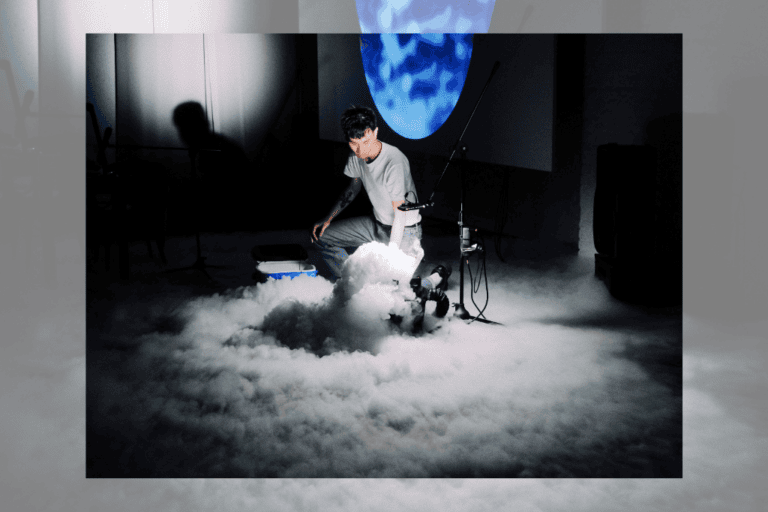 iPhoto caption: Ping-Hsiang Wang in 'Retina Maneuver.' Photo by Hang Su.
REVIEW: At this year’s SummerWorks Performance Festival, physical storytelling is central
From a dancer becoming a canine to a shy theatre director practicing his swordsmanship, the shows I’ve seen so far use performers’ bodies to dramatize defiance.
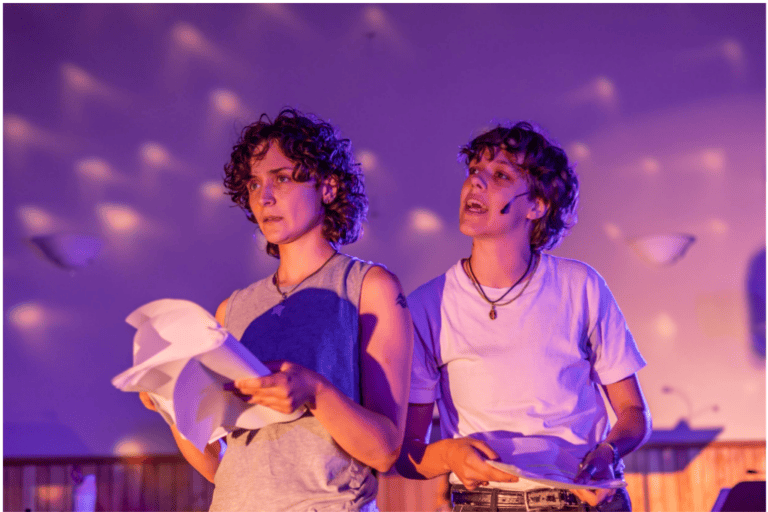 iPhoto caption: Anna Morreale and Luca McPhee perform in 'From Stardust' at the 2025 MADGEN Theatre Festival. Photo by Dave Klassen.
MADGEN Theatre Festival returns to the Danforth
Theatre of the Beat selected four producers under the age of 30 to receive paid mentorship from Toronto theatre-makers. From August 20 to 22, each member of the cohort mounts a new one-act Canadian play.
 iPhoto caption: Steven Sutcliffe and company in 'Twelfth Night.' Photo by Dahlia Katz.
REVIEW: High Park Twelfth Night pays tribute to the crazy things we do for love
As the play’s events ping-pong between seriousness and frivolity, Caroline Toal’s Viola appears constantly aware of the dangerous contradictions in the air, remaining guarded against the chaos' pull — and yet never entirely abandoning the possibility of enchantment.
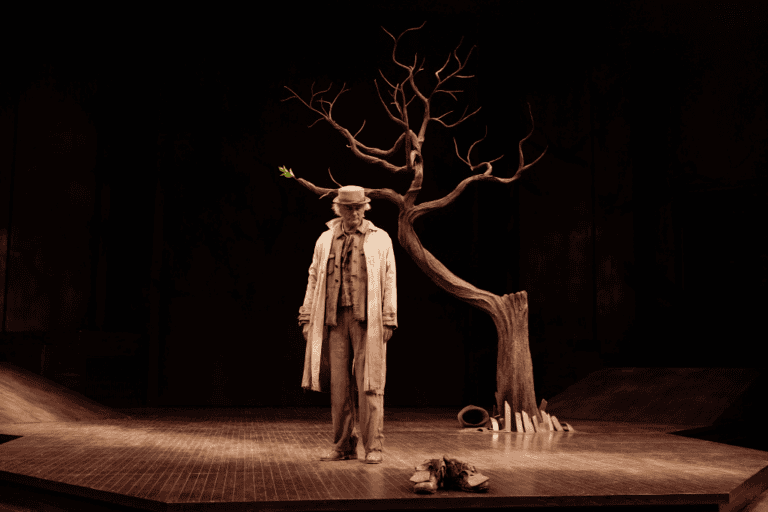 iPhoto caption: Paul Gross in 'Waiting for Godot.' Photo by David Hou.
Why Paul Gross thinks Waiting for Godot is ‘one of the great achievements of human creativity’
“The audience is with you. You bring them in. There isn't a big division between the stage and the audience,” says Gross, currently playing Vladimir in Waiting for Godot at the Stratford Festival. “They’re the final piece of the storytelling. We need them to complete the circle.”
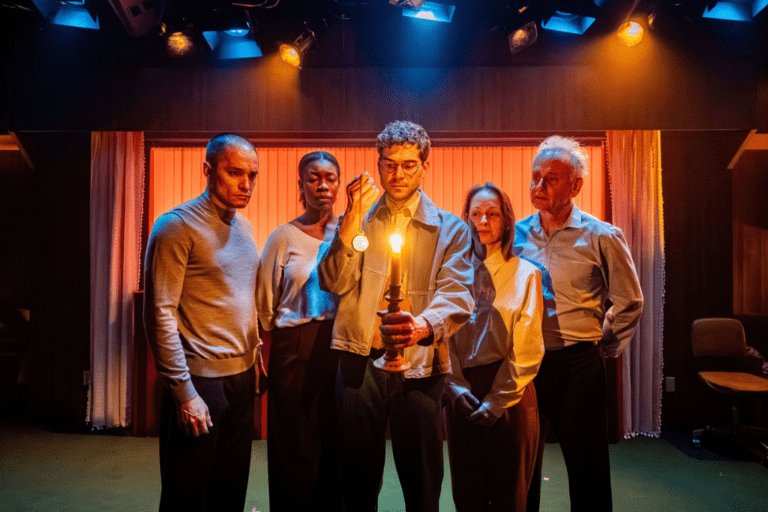 iPhoto caption: Karl Ang, Ivy Charles, Daniel Maslany, Mariya Khomutova, and Alon Nashman in 'The Division.' Photo by Dahlia Katz.
Productions at Crow’s and Theatre Passe Muraille win top honours at the 2026 Dora Awards
This evening at Meridian Hall, the Toronto Alliance for the Performing Arts (TAPA) announced the recipients of the 46th annual Dora Awards, celebrating local theatre, dance, and opera.
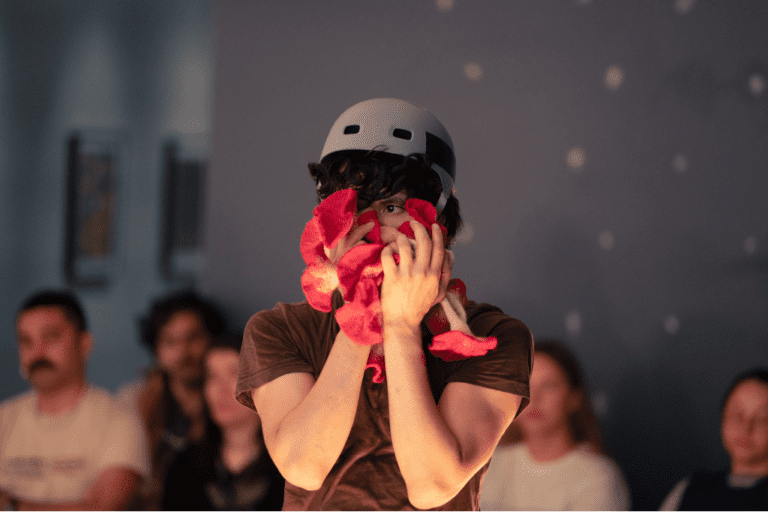 iPhoto caption: 'Golden Rez Dog.' Photo by Philippe Latour.
Creations from Denmark, Hong Kong, Iran, Mexico, and beyond feature in this year’s SummerWorks Performance Festival programming.
Comments