
REVIEW: High Park Twelfth Night pays tribute to the crazy things we do for love
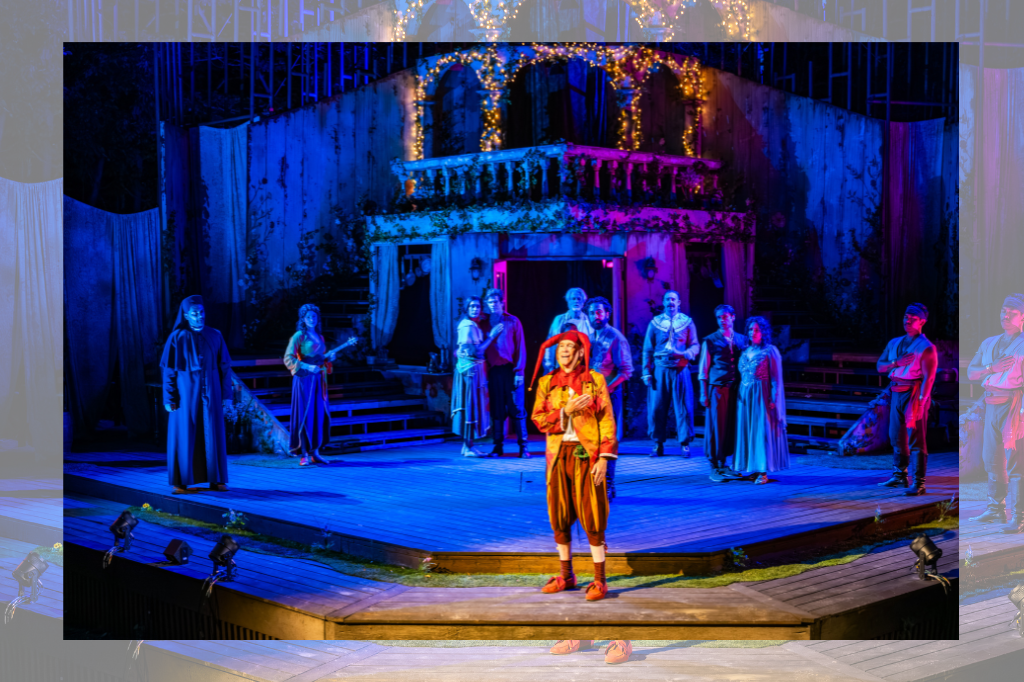 iPhoto caption: Steven Sutcliffe and company in 'Twelfth Night.' Photo by Dahlia Katz.
Last year’s High Park Romeo and Juliet, directed by Marie Farsi, overflowed with giddy infatuation, reminding me that many of Shakespeare’s tragedies could — if your dog ate the final pages — easily become comedies. Gregory Prest’s take on Twelfth Night picks up the torch with another variation on the crazy things people do for love.
The production even kicks off with a quote from Romeo: “Love is a smoke raised with a fume of sighs,” monologues the fool Feste (Steven Sutcliffe). Shakespeare gives him the comedy’s final lines of poetry, and here Prest upgrades the character to a veritable narrator, who emphasizes the production’s chosen motif with quotes from some of Shakespeare’s most amorous verses, from Rosalind (“Love is merely a madness”) to the more obscure Suffolk (“For where thou art, there is the world itself”).
It’s a framing that smooths out a few of the play’s jagged edges, which fits the mandate of Canadian Stage’s annual High Park shows: Cut the play to 90 fast-paced minutes, while ensuring the plot is clear to audiences including hundreds of Shakespeare virgins. Twelfth Night’s propulsive narrative lends itself to this task far better than something like Hamlet, and with Cupid’s bow in hand, Prest hits the target with precision.
An inventory of mad lovers can serve as our synopsis. At the early-17th-century court of Illyria, Duke Orsino (Farhang Ghajar) floridly details his obsessive love for the noble Olivia (Ghazal Azarbad). After a shipwreck, Viola (Caroline Toal) takes refuge on the same island and starts working for Orisno while disguised as Cesario, a male page. When she visits Olivia for the purpose of delivering Orisno’s latest compliments, Olivia falls for Cesario — but underneath her jerkin, Viola’s warming up to her boss. An ecosystem of vivid verdure physicalizes this fertile terrain of feelings; peonies, delphiniums, and ivy trace circles around Sim Suzer’s rustic set.
Composer and sound designer Olivia Wheeler seems to agree with Orsino that music is the food of love. She backs characters’ raptures with romantic staccato strings that wouldn’t be out of place in a classic Italian melodrama. Olivia’s meeting with Cesario sends the noble dashing to the lip of the stage: “Even so quickly may one catch the plague?” Her boundless joy is contagious — all the more so because it’s unfounded. A similar ecstasy overtakes Malvolio (Rick Roberts), Olivia’s steward, when pranksters spin the cruel fiction that Olivia requites his long-standing crush.
In this high-temperature solar system of lovers, Toal’s Viola is the host star. Caught between the neurotic, tunnel-visioned worldviews of Olivia and Orsino, she seems to carry around, in her body and breath, the storm that fell the ship of her and her missing brother Sebastian (Ori Black). As the play’s events ping-pong between seriousness and frivolity, Viola appears constantly aware of the dangerous contradictions in the air, remaining guarded against the chaos’ pull — and yet never entirely abandoning the possibility of enchantment. It’s transfixing to watch Toal work through these warring forces.
Less engaging are scenes between comic side characters Sir Toby Belch (Mike Shara) and Sir Andrew Aguecheek (Justin Otto), slothful occupants of Olivia’s estate. Because Prest underlines his interest in the principal characters’ earnest declarations of love, the cynical worldviews of Belch and Aguecheek feel more like distractions than they do in the original text. At times, their dialogues also suffer from overblown physical comedy: it’s true that the characters’ innuendo-laced prose text has aged less well than script’s rapturous verse speeches, but, when I attended, the muted audience reaction did not convince me that layering on literal, drawn-out belching is the solution. In a similar vein, Feste’s added encomiums to love prime spectators to take him seriously, and so his few sequences of actual fooling resonate discordantly.
As Twelfth Night bounds towards its conclusion, however, the distinctions between side and principal characters grow fuzzy, and Prest’s production becomes wholly delightful, zipping along with roller-coaster momentum. For a moment, we could be back in Verona — and then suddenly everyone (except Malvolio) is beaming. Recognitions pile up as tangled identities resolve; he loves she loves he loves she loves he; and the rain, it raineth every day.
Twelfth Night runs at the High Park Amphitheatre until September 6. More information is available here.
Intermission reviews are independent and unrelated to Intermission’s partnered content. Learn more about Intermission’s partnership model here.
Liam Donovan
Liam is Intermission’s senior editor. He lives in Toronto. His Substack newsletter is available at loamdonovan.substack.com.
LEARN MORE iPhoto caption: Two men hold an Equity banner in 1997. Photo courtesy of Equity.
“Live performance is so special because it challenges perspectives. It's inclusive. It's an economic engine. It knits us together as a society, and I think that we have to remember the value of it,” says Equity executive director Alex Levine.
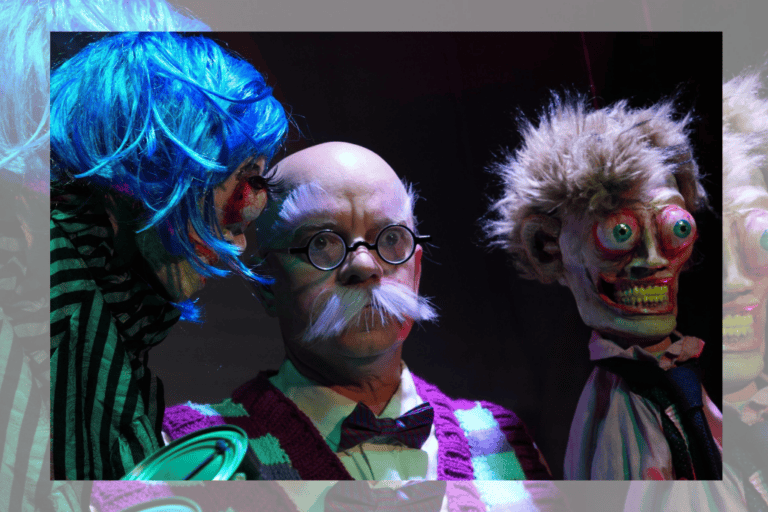 iPhoto caption: Eric Woolfe in 'The Call Centre of Cthulhu.' Photo by Jack Woolfe.
REVIEW: In Eldritch’s puppet-packed Call Centre of Cthulhu, coincidence signals apocalyptic doom
It's a campy-as-ever blend of puppets, character voices, and card tricks — a dose of classic Eldritch excess, timed to the Halloween season.
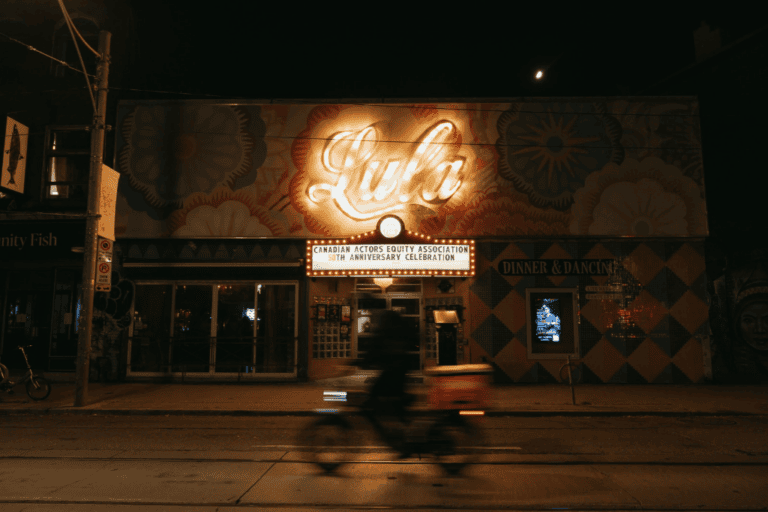 iPhoto caption: The Lula Lounge in Toronto. Photo by Sam Gaetz.
At events across the country, Canadian Actors’ Equity Association celebrates 50 years
Equity represents nearly 6,000 professional artists working in opera, English-language theatre, and dance nationwide, advocating for fair wages, safe working conditions, and more.
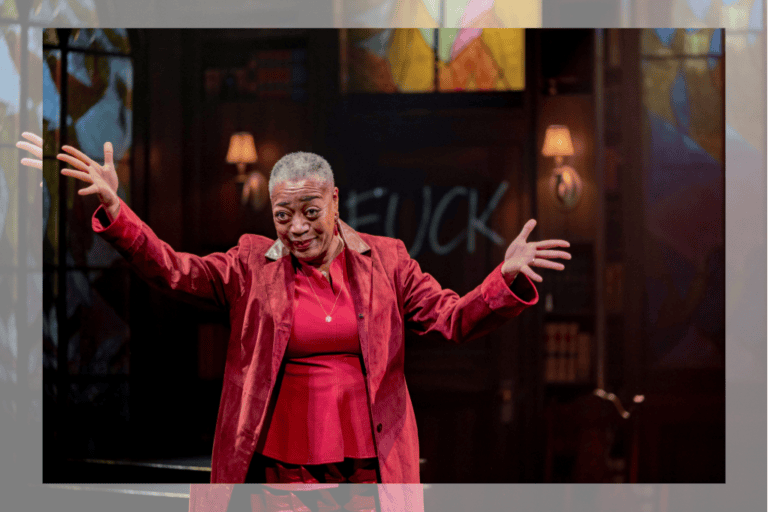 iPhoto caption: Karen Robinson in 'Prophetess.' Photo by Jae Yang.
REVIEW: In Tarragon’s outstanding Prophetess, language is both mighty and inadequate
Margaret’s facility with text helps her maneuver through an institution like York University, where words hold significant power. But the brilliant middle-aged scholar finds herself surprisingly unequipped to process the true sense of more elemental forces: love, grief, spiders.
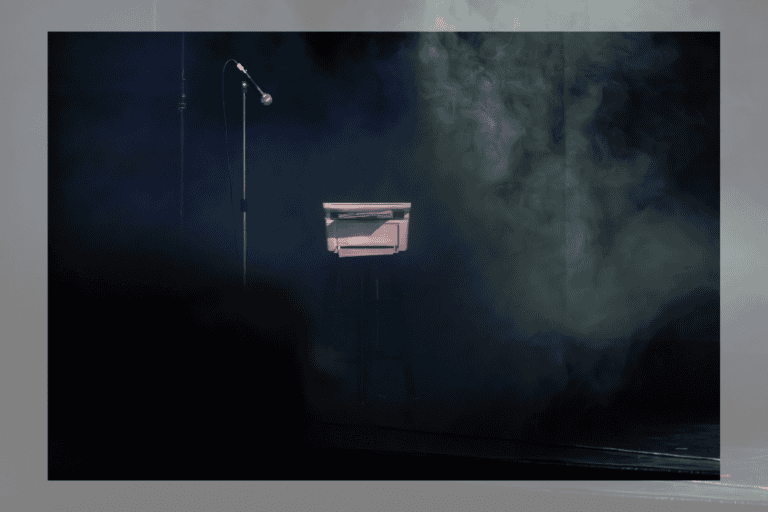 iPhoto caption: 'Documents Perform 3.' Photo by T Photo Factory.
Joining online from across the Americas, more than a dozen artists, artistic producers, cultural leaders, and policymakers add live suggestions to the document, together transforming stuffy bureaucratic language into a rowdy patchwork of compassionate imagining.
 iPhoto caption: Stratford's Tom Patterson Theatre. Photo by Ann Baggley.
2027 highlights include a new Canadian Jacob Two-Two musical and two of the Bard’s thornier plays: The Merchant of Venice and The Taming of the Shrew.
Comments