
REVIEW: In Eldritch’s puppet-packed Call Centre of Cthulhu, coincidence signals apocalyptic doom
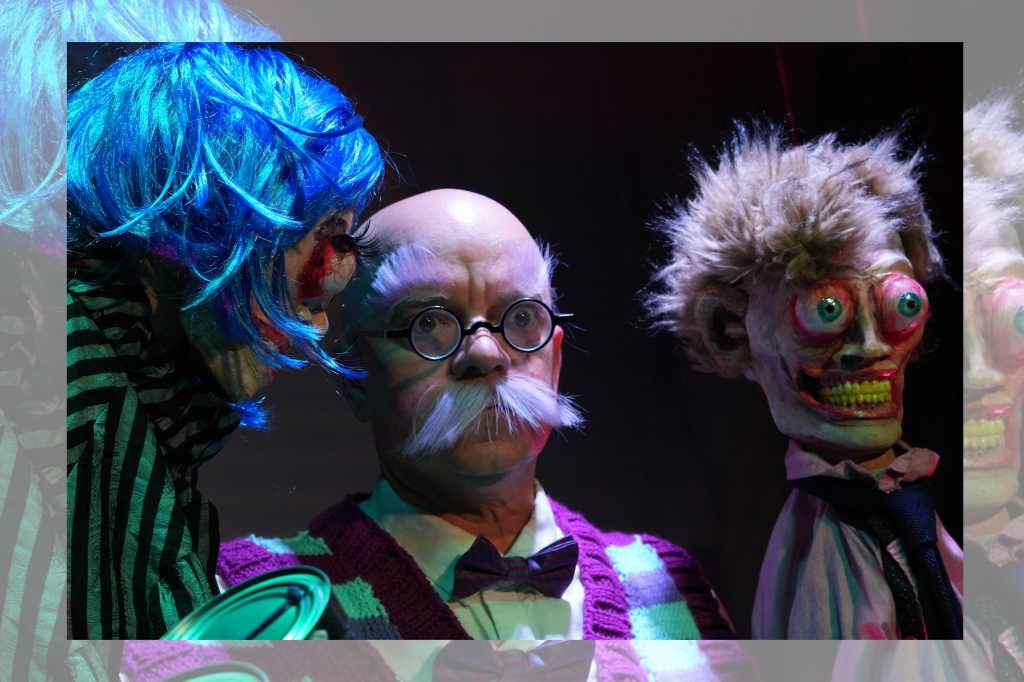 iPhoto caption: Eric Woolfe in 'The Call Centre of Cthulhu.' Photo by Jack Woolfe.
An Eldritch Theatre production is always a portal to another, more horrific dimension, and in the Lovecraft-inspired The Call Centre of Cthulhu, it’s a dimension where coincidence signals apocalyptic doom.
At a drab office desk on March 27, 2027, protagonist Irving Irving opens the show by dealing a seemingly shuffled deck of cards and gasps in terror at their sequentiality. In fevered narration, he takes us back four days, when a web of omens began pointing toward the awakening of Lovecraft’s titular cosmic monster. Solo creator-performer Eric Woolfe and designer Melanie McNeill use this pulpy downward spiral of a narrative as a vehicle for a campy-as-ever blend of puppets, character voices, and card tricks — a dose of classic Eldritch excess, timed to the Halloween season.
In the fictional New Bosford, a cost-cutting mayor has consolidated all local customer service lines into one call centre that promises to answer any query. Phone agent Irving receives an eclectic range of callers, from a child with questions about dinosaurs to a sailor lost at sea; all the while, he crushes on the young, soprano-voiced Moxie in the cubicle next door.
But he soon gets a tip about a mysterious briefcase holding a wooden bas-relief carving of Cthulhu, and everything changes.
While the show mostly serves as a lighthearted tribute to Lovecraft, I did find a smidge of larger contemporary resonance in the setting of an all-encompassing call centre. The very 2026 question being: how can having access to endless information sometimes make the universe feel more enigmatic?
The show’s primary draw isn’t thematic, though, or even narrative — it’s Woolfe and his motley band of puppets, designed by his longtime collaborator McNeill. Every supporting character looks as if Cthulhu has already melted off their skin. Moxie’s eyes burst, bloodshot, out of craggy pores hosting too much makeup; Irving describes her as elegant, but her shoulder-length blue locks hang like a teenager’s first mistake with hair dye. Call centre boss Lance shares her bulging eyes and over-wide smile, capping off the grotesque fashion with humongous ears and spiky mad-scientist frizz.
McNeill’s set riffs on the classic image of a tin-can-and-string phone, with cans dangling from the Red Sandcastle Theatre’s ceiling like stalactites. One is outfitted as a camera, to which Woolfe directs his puppeteering as upstage live projections magnify the action. The unflappable showman complements this visual buffet with cartoonish character voices — memorably ridiculous is an inspector with a New York accent right out of 1940s film noir; slang such as “bladders” for “newspapers” completes the caricature. On opening night, there were flickers of technical troubles, and Woolfe capably improvised through a major early prop malfunction that sent him backstage for a canister of zip-ties.
When Woolfe uses surreal stagecraft to conjure the narrative, The Call Centre of Cthulhu casts a spell. McNeill’s sound design is usefully busy and atmospheric, generating a sense of forward momentum that matches the plot’s slide toward monstrosity. But every few minutes, Woolfe halts the action to perform a card trick, and the dynamism fizzles. While each scene of the story is more intense than the last, the same isn’t true of the tricks, which all seemed similarly impressive to me — often revolving around Woolfe guessing an audience member’s card pull. The show’s rhythm is as a whole choppy: there’s the magic on the one hand, the story on the other, and only the aforementioned opening lines about coincidence as connective tissue.
Still, I never regret a trip to Eldritch’s castle of horrors — especially not this time of year, when the post-show wind volleys maple leaves through Jimmie Simpson Park and you can almost hear Cthulhu wailing in the distance.
The Call Centre of Cthulhu runs at the Red Sandcastle Theatre until November 8. More information is available here.
Intermission reviews are independent and unrelated to Intermission’s partnered content. Learn more about Intermission’s partnership model here.

Liam Donovan
Liam is Intermission’s senior editor. He lives in Toronto. His Substack newsletter is available at loamdonovan.substack.com.
LEARN MORE iPhoto caption: The Lula Lounge in Toronto. Photo by Sam Gaetz.
At events across the country, Canadian Actors’ Equity Association celebrates 50 years
Equity represents nearly 6,000 professional artists working in opera, English-language theatre, and dance nationwide, advocating for fair wages, safe working conditions, and more.
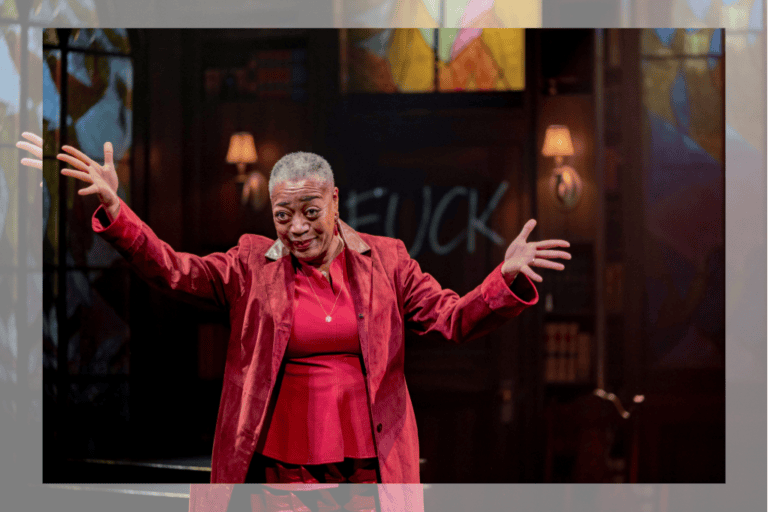 iPhoto caption: Karen Robinson in 'Prophetess.' Photo by Jae Yang.
REVIEW: In Tarragon’s outstanding Prophetess, language is both mighty and inadequate
Margaret’s facility with text helps her maneuver through an institution like York University, where words hold significant power. But the brilliant middle-aged scholar finds herself surprisingly unequipped to process the true sense of more elemental forces: love, grief, spiders.
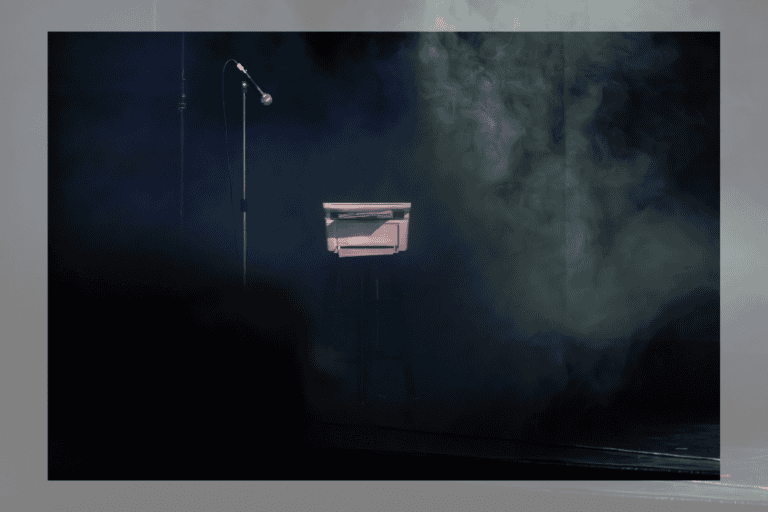 iPhoto caption: 'Documents Perform 3.' Photo by T Photo Factory.
Joining online from across the Americas, more than a dozen artists, artistic producers, cultural leaders, and policymakers add live suggestions to the document, together transforming stuffy bureaucratic language into a rowdy patchwork of compassionate imagining.
 iPhoto caption: Stratford's Tom Patterson Theatre. Photo by Ann Baggley.
2027 highlights include a new Canadian Jacob Two-Two musical and two of the Bard’s thornier plays: The Merchant of Venice and The Taming of the Shrew.
 iPhoto caption: Devon Michael Brown as Rusty Charlie with members of the 'Guys and Dolls' company.
“It's so exhausting, but it's really rewarding when you get to dance so full-out,” says Devon Michael Brown. “You get to use your technique and your training to the fullest extent.”
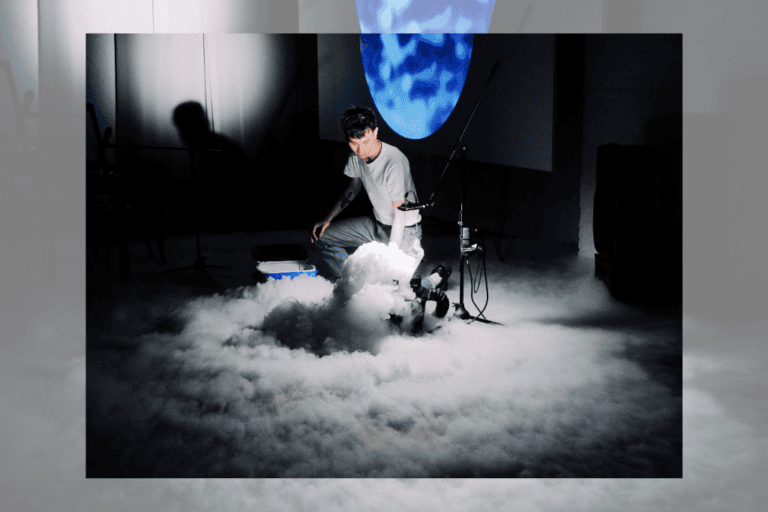 iPhoto caption: Ping-Hsiang Wang in 'Retina Maneuver.' Photo by Hang Su.
REVIEW: At this year’s SummerWorks Performance Festival, physical storytelling is central
From a dancer becoming a canine to a shy theatre director practicing his swordsmanship, the shows I’ve seen so far use performers’ bodies to dramatize defiance.
Comments