
REVIEW: In Tarragon’s outstanding Prophetess, language is both mighty and inadequate
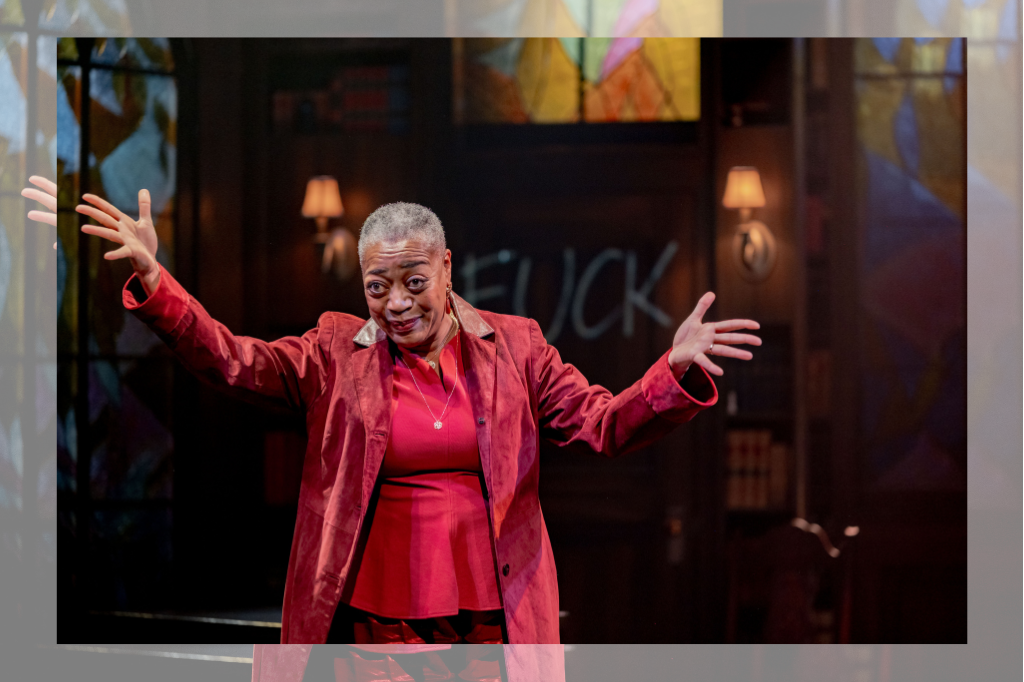 iPhoto caption: Karen Robinson in 'Prophetess.' Photo by Jae Yang.
During a volcanic monologue at the climax of Tarragon Theatre’s Prophetess, written by Ho Ka Kei (a.k.a. Jeff Ho), protagonist Margaret explains the linguistic root of her academic discipline. “The etymology of etymology is the study of true sense / Of true origins,” declares the York University professor, embodied by Karen Robinson.
Margaret’s facility with text helps her maneuver through an institution like York, where words hold significant power. But the brilliant middle-aged scholar finds herself surprisingly unequipped to process the true sense of more elemental forces: love, grief, spiders. In this outstanding new play (directed by Mike Payette), language is both mighty and inadequate.
As Ferron Delcy outlined in her Intermission partner feature on the production, Prophetess takes inspiration from Shakespeare’s eight history plays representing events related to the Wars of the Roses. Margaret is a version of Queen Margaret of Anjou, from Richard III and the Henry VI trilogy. But no prior knowledge is needed to understand this five-character contemporary drama, where professors’ tongues are the broadswords in an English department’s political battles.
It’s the first day of fall semester and Margaret bolts awake from a nightmare swarming with spiders. Cheerfully twiddling a moka pot, supportive husband Henry (Rick Roberts) calms her down with bacon and farm-fresh eggs. But the curse has begun to spin its web, and when Margaret encounters novice professor Anne (Natasha Mumba) at the butcher, she slaps an imaginary spider off the newcomer’s face. Over the rest of the play’s 90-minute runtime, HR maven Elizabeth (Christine Horne) tries to use Anne’s account of the assault to damage Margaret’s reputation and secure the position of department chair for her husband Dicky (also Roberts).
Much of Ho’s script consists of realistic contemporary dialogue — that butcher-shop conversation, for instance, roves from Wagyu beef to iron deficiencies to pollotarianism. As the play’s conflict intensifies, Horne and Mumba, in particular, become more and more grounded in the here-and-now of the dramatic situation, employing similarly head-high physicalities to evoke their characters’ opposing flavours of ambition.
Margaret attempts to keep up with the world, at one point referencing DMs to an auditorium of students. But we soon realize that she and reality aren’t really synchronized: though she can trace words back centuries — and will do so unasked, in the middle of a conversation — she’s never heard of HBO and fails to understand the innuendo of Henry being “good with wood.” Her imagination is more ancestral than these stuffy halls. When she monologues, glorious poetic language pours forth. Take an excerpt of her opening dream: “A hole deep / If I’d take one step more / I’d fall / I look down / See no bottom / Peeking red glinting eyes peek back / Hungry eyes if eyes have appetite / Glistening canines flashing / The green behind roaring louder still / As if trumpets heralding angel descent.” No wonder the HR department bores her.
Jawon Kang’s set may be the most lushly realized to appear in the Tarragon Mainspace since the pandemic. Like Margaret herself, it’s not quite contemporary, with an old-academia aesthetic that’s less 2026 York campus and more early-20th-century Oxbridge: amber wood panelling, shelves of gilded hardcovers, Gothic arched stained-glass windows.
Over the years, Ho has demonstrated an interest in etymology. In Cockroach — his previous Tarragon premiere, from 2022 — Shakespeare appeared as a character, his “magnifying glass hovering over his words in the hands of future writers,” as Aisling Murphy put it in this magazine. And most of Ho’s work etymologizes the art of theatre by reckoning with classic plays: there’s the tragedy-inspired Iphigenia and the Furies (On Taurian Land) and Antigone: 方, both from 2019, as well as Pastoral, a riff on As You Like It that premiered in August.
We could trace the myriad ways these adaptations complicate and rework their source materials, with Ho’s tendency to launch into verse trampolining off the Greeks’ and Shakespeare’s own poetic affinities.
Except the final beat of Prophetess is a physical gesture, and the most profound thing about Ho’s monologues might be what they unlock in Robinson. In the play’s aforementioned climax, Robinson’s magnificent instrument soars even higher than the text. If you want to enact something about the true origins of theatre, perhaps you start with an actor on stage, and liberate that actor to channel the deepest parts of herself — manifesting her character’s grief through limbs that quake with feeling and cries that pierce the clouds. So birth truths beyond words.
Prophetess runs at Tarragon Theatre until October 29. More information is available here.
Intermission reviews are independent and unrelated to Intermission’s partnered content. Learn more about Intermission’s partnership model here.
Liam Donovan
Liam is Intermission’s senior editor. He lives in Toronto. His Substack newsletter is available at loamdonovan.substack.com.
LEARN MORE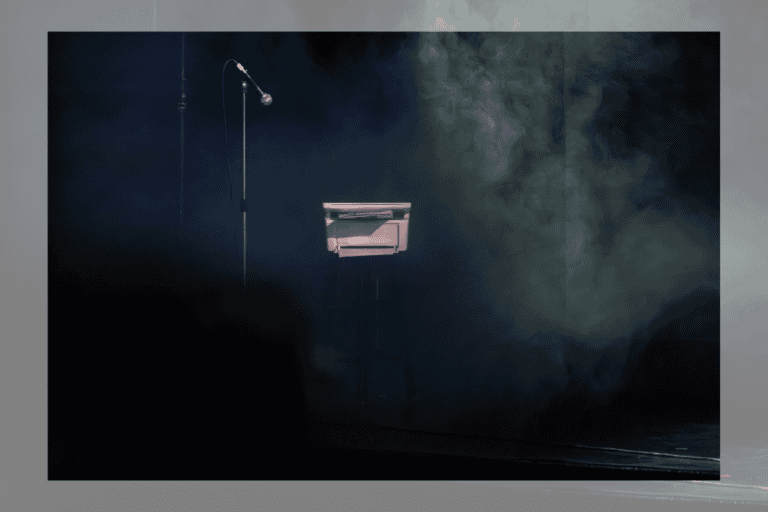 iPhoto caption: 'Documents Perform 3.' Photo by T Photo Factory.
Joining online from across the Americas, more than a dozen artists, artistic producers, cultural leaders, and policymakers add live suggestions to the document, together transforming stuffy bureaucratic language into a rowdy patchwork of compassionate imagining.
 iPhoto caption: Stratford's Tom Patterson Theatre. Photo by Ann Baggley.
2027 highlights include a new Canadian Jacob Two-Two musical and two of the Bard’s thornier plays: The Merchant of Venice and The Taming of the Shrew.
 iPhoto caption: Devon Michael Brown as Rusty Charlie with members of the 'Guys and Dolls' company.
“It's so exhausting, but it's really rewarding when you get to dance so full-out,” says Devon Michael Brown. “You get to use your technique and your training to the fullest extent.”
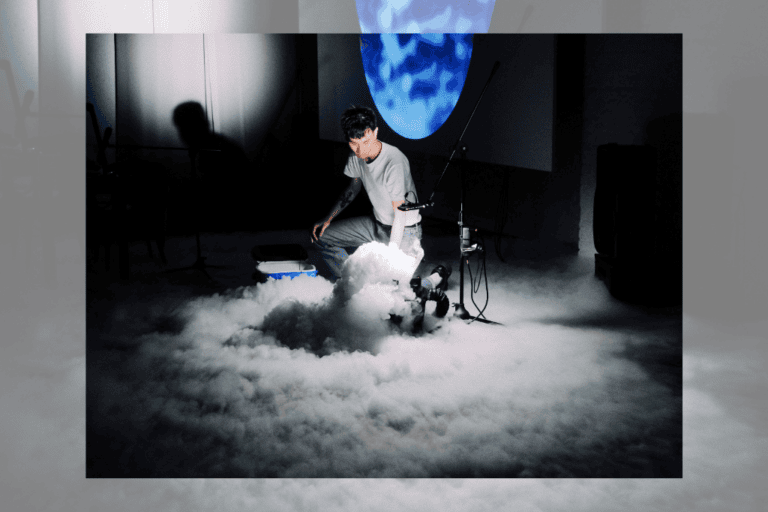 iPhoto caption: Ping-Hsiang Wang in 'Retina Maneuver.' Photo by Hang Su.
REVIEW: At this year’s SummerWorks Performance Festival, physical storytelling is central
From a dancer becoming a canine to a shy theatre director practicing his swordsmanship, the shows I’ve seen so far use performers’ bodies to dramatize defiance.
 iPhoto caption: Anna Morreale and Luca McPhee perform in 'From Stardust' at the 2025 MADGEN Theatre Festival. Photo by Dave Klassen.
MADGEN Theatre Festival returns to the Danforth
Theatre of the Beat selected four producers under the age of 30 to receive paid mentorship from Toronto theatre-makers. From August 20 to 22, each member of the cohort mounts a new one-act Canadian play.
 iPhoto caption: Steven Sutcliffe and company in 'Twelfth Night.' Photo by Dahlia Katz.
REVIEW: High Park Twelfth Night pays tribute to the crazy things we do for love
As the play’s events ping-pong between seriousness and frivolity, Caroline Toal’s Viola appears constantly aware of the dangerous contradictions in the air, remaining guarded against the chaos' pull — and yet never entirely abandoning the possibility of enchantment.
Comments