
Uneasy lies the head that… runs an English department? Tarragon’s Prophetess spins a web of power and poetics
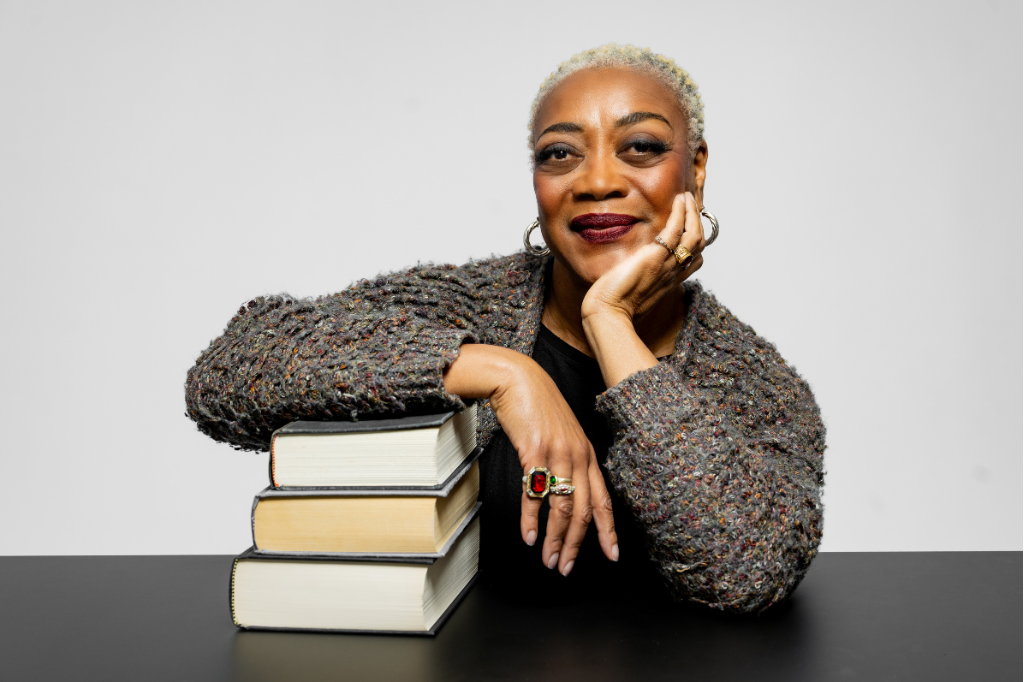 iPhoto caption: Karen Robinson in a promo photo for 'Prophetess.' Photo by Dahlia Katz.
For Prophetess lead actor Karen Robinson and playwright Ho Ka Kei (a.k.a. Jeff Ho), blessings abound in the relationships nurtured in the rehearsal room.
When I spoke to the pair over video call about the production’s upcoming world premiere, directed by Mike Payette at the Tarragon Theatre Mainspace, they described an artistic process grounded in care and collaboration. Ho had long wanted to write the part of Queen Margaret for Robinson, and he framed the “love letter aspect” of writing for people he holds dear as key to the play’s origin story.
This vision of what it means to learn and create is — thankfully — a far cry from the cunning, cut-throat politics of Prophetess’ academic setting, a fictionalized York University that takes inspiration from Shakespeare’s history plays. (I’ve read a draft of the script.) Throughout our conversation, I found myself thinking about the conditions necessary for smart, fulfilling, imaginative work to flourish.
Ho said he was intrigued by university politics and procedures while completing a master of fine arts at York University during the pandemic. He began thinking about the incongruity between academia’s often rigid, hierarchical structure and the creativity involved in learning.
The way power moves through traditional educational institutions can create dehumanizing events, Ho told me. The Renaissance history play, with its emphasis on power struggle, was an apt genre for reckoning with academia’s stifling bureaucracy and internal politics. Plus, the York University name was right there — a perfect allusion to the House of York and House of Lancaster, rival factions in Shakespeare’s eight history plays representing events related to the Wars of the Roses (Richard III; Henry IV, Part 1 and Part 2; and Henry V are the most popular). Ho couldn’t pass up the wordplay.
Fittingly, this history of Prophetess has a Shakespearean prologue: Prince Hamlet, adapted and directed by Ravi Jain for Why Not Theatre in 2017. Ho played Ophelia alongside Robinson as Gertrude, Christine Horne as Hamlet, and Rick Roberts as Claudius. Horne and Roberts are part of the Prophetess cast — and Ho plans to write for more of his Prince Hamlet castmates in the future.
That production was transformative for Ho’s writing practice, he told me, which “took a left turn” after he encountered a newly resonant way of engaging with classical drama.
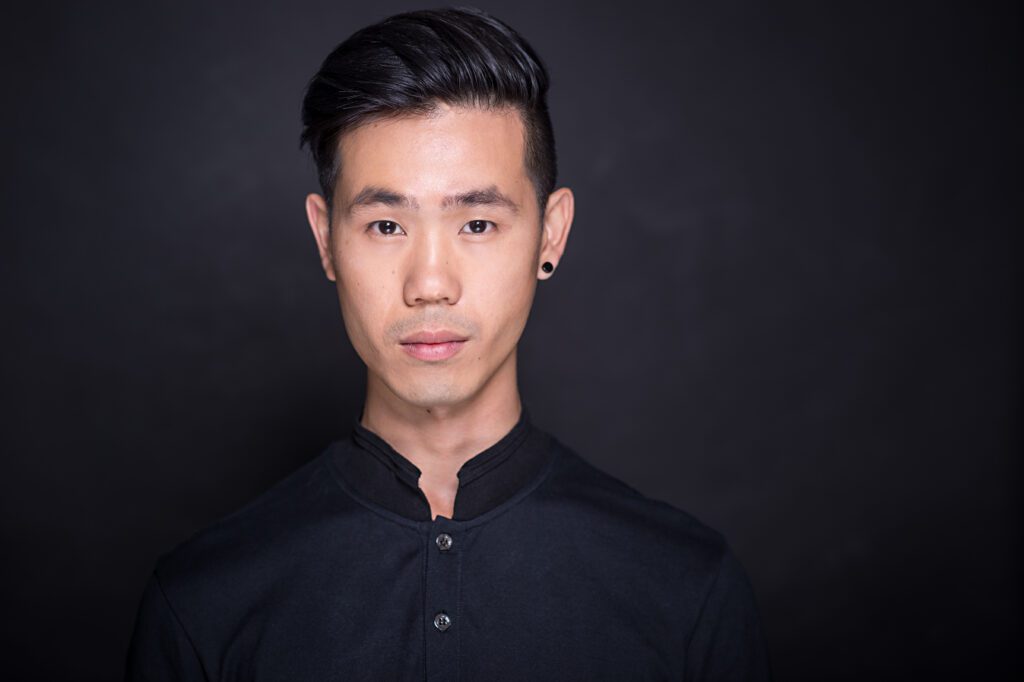
“A lot of my training was informed by learning how to do the Greeks, learning how to do Shakespeare properly, a lot of, I felt, having to find myself… my Hong Kong heritage, where I belong with my Cantonese mother tongue.” Ho wasn’t inclined to reject Shakespeare, he specified; it was more of a question of, “How do I fit, like a jigsaw piece, with this material?”
Prince Hamlet offered a refreshingly expansive vision of a canonical source text, with a production Ho described as “looking at accessibility, at gender-fuckery… and seriously going ‘Why not?’” Inspired to start asking this question himself, Ho has since written several plays that rework elements of classical drama. His 2022 play Cockroach, directed by Payette and produced by Tarragon — where Ho is now associate artistic director — featured Shakespeare (“the Bard”) as a character. Most recently, his eco-critical sequel to As You Like It, titled Pastoral, debuted at Shakespeare in the Ruff.
A “Why not?” sensibility informed the creation of Prophetess too. Ho described taking “the bones” of Shakespeare’s history plays and transforming the material into something entirely new. Audiences won’t need a syllabus to appreciate this contemporary reimagining, crafted around Queen Margaret of Richard III (as well as Henry VI, Part 1, Part 2, and Part 3) and her vengeful, curse-laden speeches, riddled with references to what Ho delightfully described to me as “monstrous zoology.”
Played by Robinson, the Queen Margaret of Prophetess is Margaret Anjou, fictional chair of the York University English department.
“I wouldn’t go as far as saying Margaret was born a queen… but at some point she assumed majesty, and she was happy to take it,” Robinson said of the character, laughing. “She earned it.”
Language is foundational to Margaret’s identity. Known in her field as the “Queen of Etymology,” she’s an expert in words; their origins, transformations, and subtleties. Ho embarked on his own etymological research journey, fascinated by the language of curses. He’s also relished the process of discovering Margaret’s voice, telling me, “The way that Margaret speaks has been a huge joy to chip at. Everything’s just a bit off-kilter from how a normal sentence [should] be.”
An experimental use of language characterizes the play’s style. Shakespeare’s poetics provided a rich source of inspiration for Ho, who often writes in verse. “There’s a heightened quality to how we communicate to each other on the stage, and how we communicate with the audience,” Robinson said of Prophetess’ lyricism.
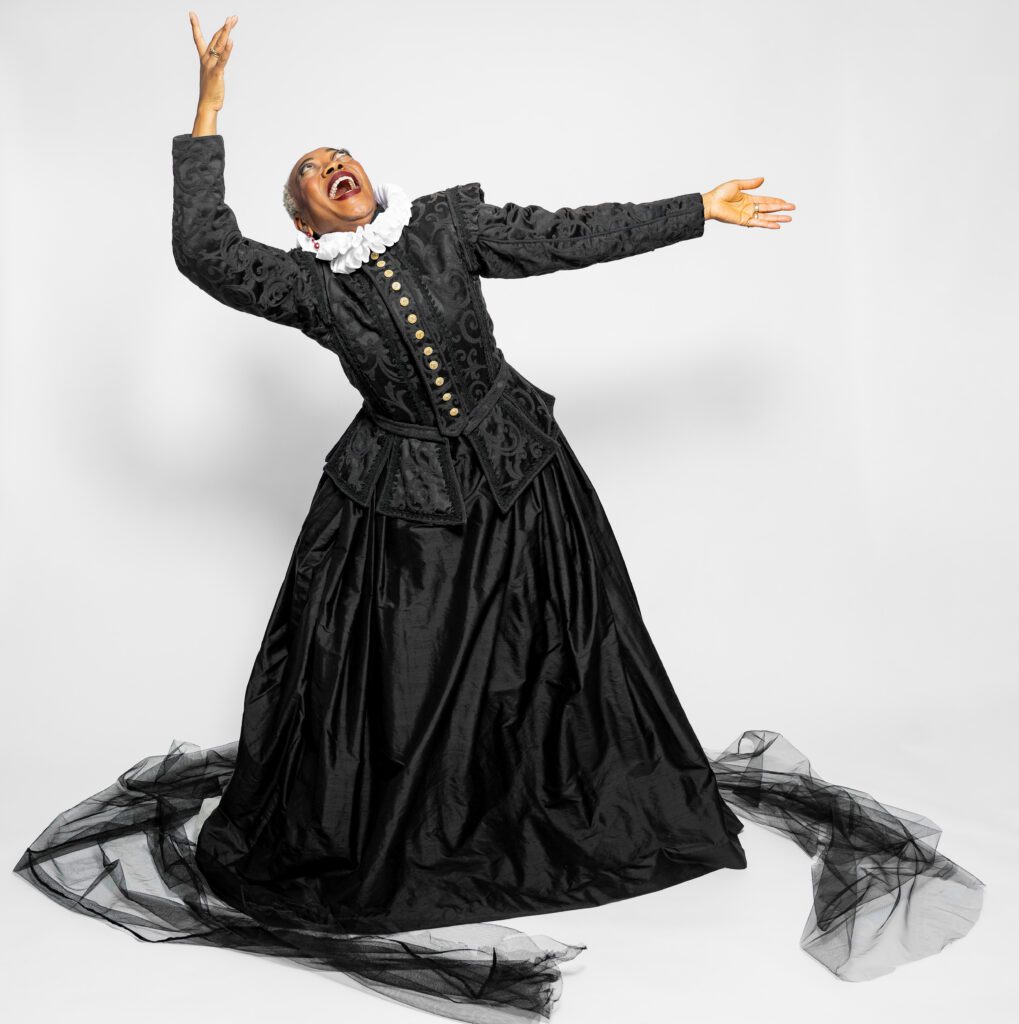
Robinson aims to ensure that the play’s elevated language and Shakespearean intertexts coexist with a grounded sense of her character’s humanity. “I approach Margaret how I approach just about any other character I play, whether it is classical or modern theatre, whether it’s TV, whether it’s film… It doesn’t matter. I want to know what the character wants. I want to find the human that is [woven] throughout the words.”
This also means leaving room for discoveries in the moment with her scene partners. “Things happen organically for me… There’s something one of my fellow actors gifts me, and I can use it.”
In the rehearsal room, an atmosphere of trust and forgiveness prevails, Robinson said. This includes acknowledging when a choice isn’t right, without hard feelings. Ho agreed that “for how safe and fun it is, it also hasn’t felt overly precious.” In fact, there’s a lot of silliness. “We’re making each other laugh constantly with what we’re finding,” Robinson told me. Ho expects “folks will be so tickled by how funny this cast is… It’s a play about curses so there’s a sense of, ‘Oh, is it ominous? There’s spiders!’ But it’s also so funny.”
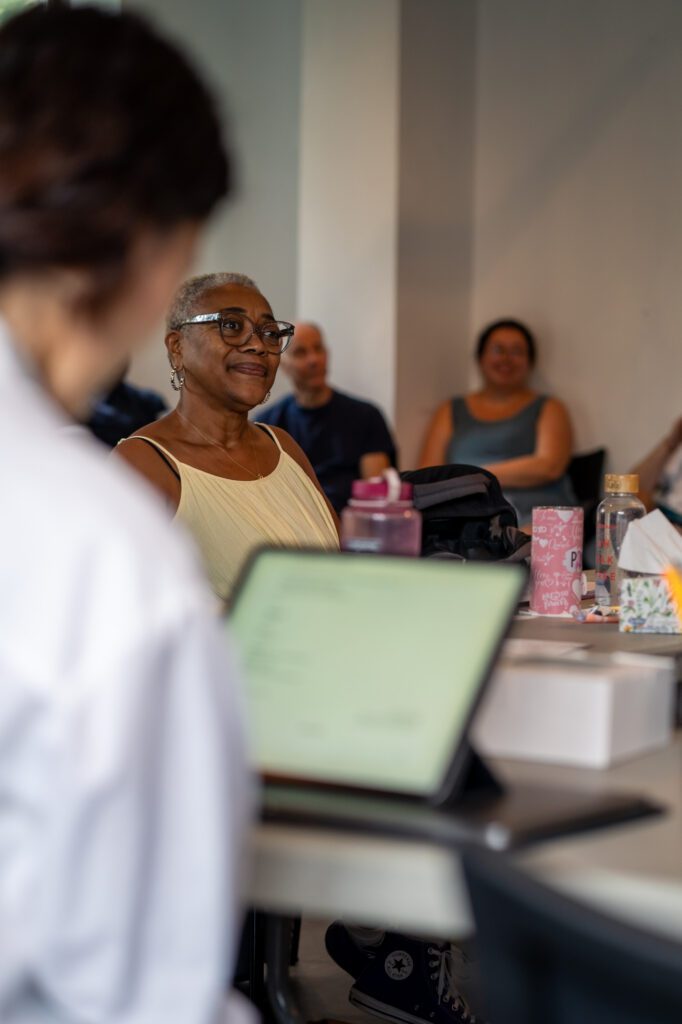
A truly collaborative spirit requires a loose hold on power. Strangely enough, the punctuation in Prophetess might best encapsulate Ho and Robinson’s ethos of generosity.
Here’s that story: While writing the play’s first draft, Ho was attending a translation residency in Quebec. He was surprised to hear French-speaking playwrights asking why Anglophones placed so many punctuation marks in their scripts. Ho said he started experimenting with foregoing punctuation: “I was inspired in this play to put the words out, and then the collaboration will shape the thought… will shape the motivation.” A small choice, signalling profound trust.
Prophetess runs from September 29 to October 25. More information is available here.
Tarragon Theatre is an Intermission partner. Learn more about Intermission’s partnership model here.

Ferron Delcy
Ferron Delcy is pursuing her PhD in early modern literature at the University of Toronto. In 2024, Ferron participated in the New Young Reviewers program facilitated by Toronto Fringe and Intermission. She is a big fan of ghost stories, fog machines, and weird metaphors.
LEARN MORE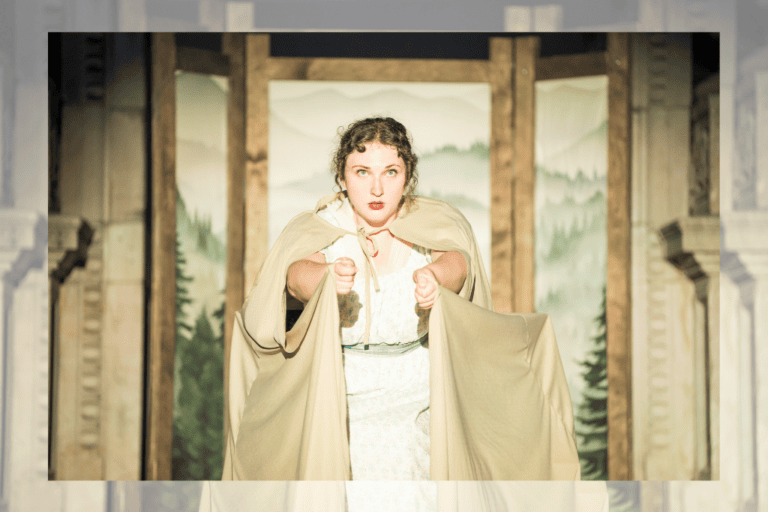 iPhoto caption: Georgia Findlay in 'Northanger Abbey.' Photo by Raph Nogal.
REVIEW: GFT’s Northanger Abbey embodies the delights and absurdities of Gothic fiction
Handwringing over popular fiction is hardly a thing of the past, as present panic about Romantasy attests. Unsurprisingly, both genres have a reputation for attracting women readers. Tyler J. Seguin’s Northanger Abbey displays how legitimate literary criticism can devolve into worrying that women are having too much fun.
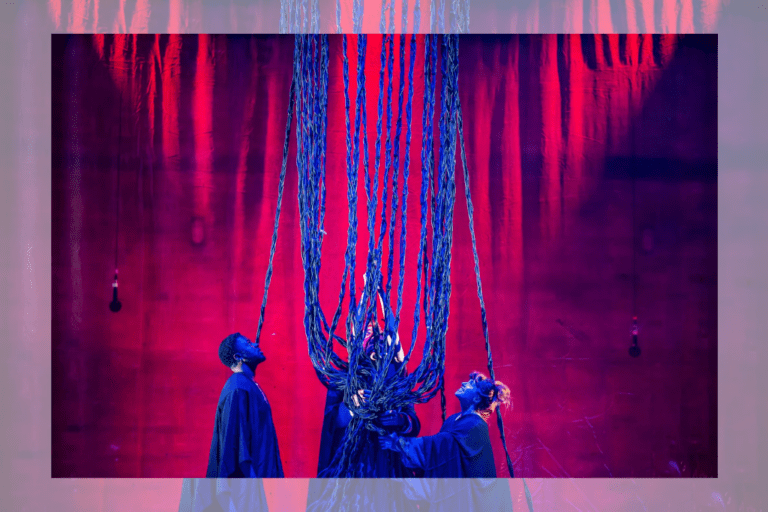 iPhoto caption: Members of the company of 'Medusa.' Photo by Dahlia Katz.
REVIEW: Soulpepper’s Medusa creates a mess it refuses to tidy
Speaking in sibilant murmurs via headsets wired into each seat of the Baillie Theatre, a chorus of intimate voices infiltrates the audience experience, drowning out dialogue and weaving an overstimulating soundscape.
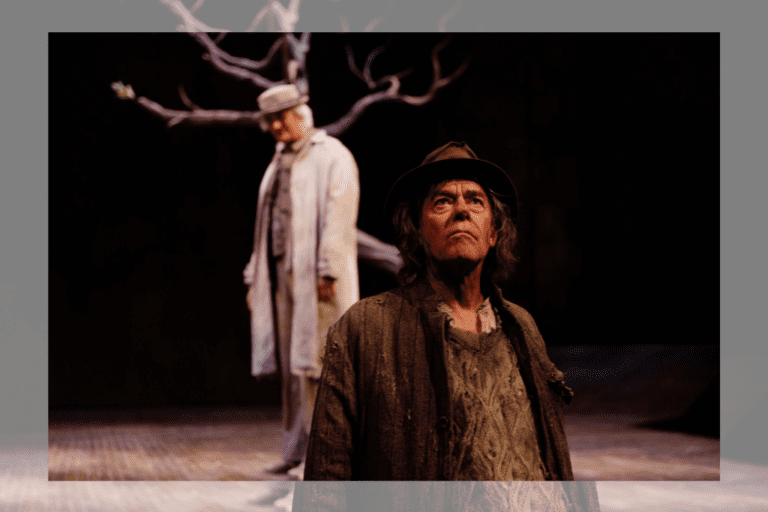 iPhoto caption: Paul Gross and Tom McCamus in 'Waiting for Godot.' Photo by David Hou.
REVIEW: Stratford Festival’s Waiting for Godot never feels fully its own
Tom McCamus' and Paul Gross' performances are clear and intentional. Nonetheless, I struggled to connect with this production.
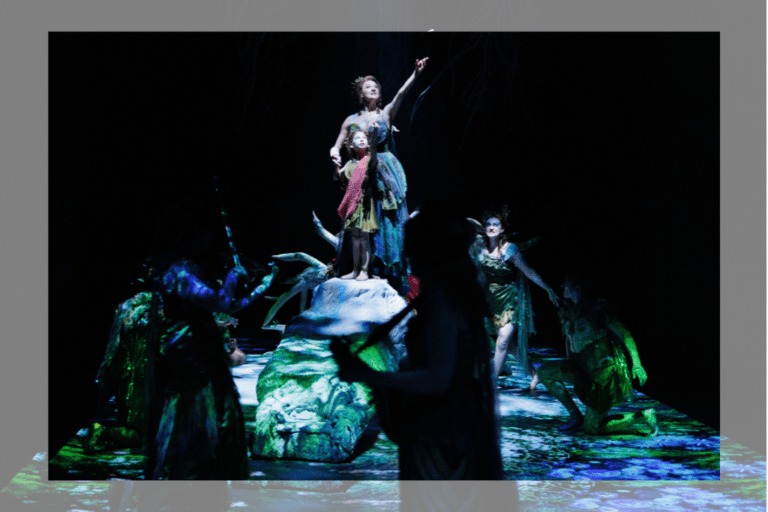 iPhoto caption: Members of the company of 'A Midsummer Night's Dream.' Photo by David Hou.
Developed in collaboration with Groundling Theatre, this A Midsummer Night’s Dream revels in the plights of its love-drugged protagonists through clever clowning, live music, and an animated landscape.
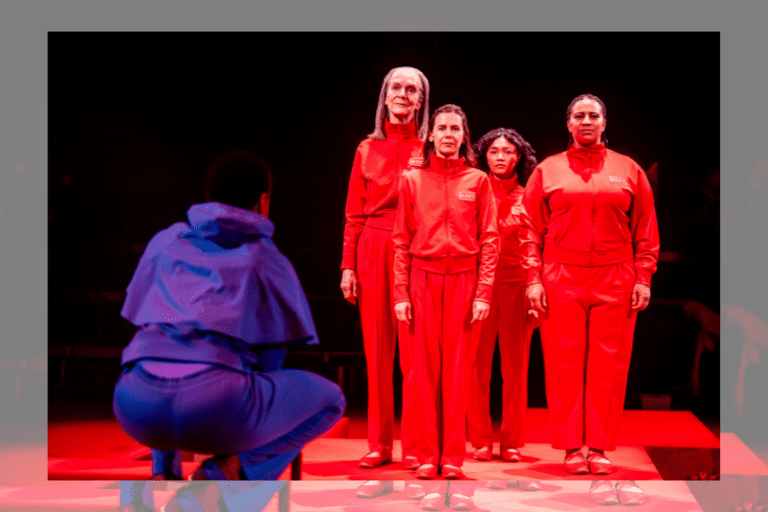 iPhoto caption: Amaka Umeh, Nancy Palk, Michelle Monteith, Belinda Corpuz, and Sabryn Rock in 'Mary, Mary, Mary, Mary.' Photo by Dahlia Katz.
REVIEW: Erin Shields’ Mary, Mary, Mary, Mary is brash, funny, and message-forward
At Crow’s Theatre, Mary, Mary, Mary, Mary is a sensory feast fit for any house of worship. But with so much material, and only 95 minutes, I’m left feeling that the Marys have more yet to say.
 iPhoto caption: William Ellis and members of the company of 'The Herald. Photo by Albert Hoang.
REVIEW: Jill Connell’s The Herald has a lot to say about potential
There’s so much to love about this smart, strange, and achingly lyrical exploration of labour and purpose. Dramaturgical intentionality falters, however, in the details.
Comments