
REVIEW: Shifting Ground Collective’s Amélie is vivid and endearingly earnest
 iPhoto caption: Graysen LaPointe and the company of 'Amélie.' Photo by Taylor Long.
Directed by Catie Thorne for Shifting Ground Collective, Amélie is an endearingly earnest journey into the mystery of how to make friends as an adult.
A 2017 Broadway musical with a book by Craig Lucas, adapted from the 2001 French film by Jean-Pierre Jeunet, Amélie follows a fanciful protagonist who inhabits a world of her own making. Amélie (Colette Richardson) grew up in a cold and lonely homeschool environment, distanced from her peers. As an adult, socially unpracticed and longing for connection, she invents methods of meddling with other people’s lives at a safe remove, until she encounters the eccentric Nino Quincampoix (Graysen LaPointe) and considers taking a chance on vulnerability.
The musical deftly distills the film’s themes into lyrical and dramaturgical motifs of time and distance. In this stage adaptation, the film’s omniscient narrator disperses across the ensemble, creating a chorus of voices invested in Amélie’s well-being. For audiences of the Shifting Ground production, such a device creates the added joy of watching an exceptional cast heavily featured in their ensemble roles. Shifting Ground has established themselves as a formidable indie company, with four Dora Award wins. This 2026 season opener can only reinforce their reputation for musical theatre excellence.
Amélie immediately drew me into its jewel-toned world. Julie Sanders’ set, prop, and puppet design, complemented by Gabriel Woo’s costumes, gives the impression of objects handled lovingly and often, neatly reflecting the cloistered lives of the musical’s main characters, who have built emotional bonds with their belongings and routines yet dream of escaping their isolation in search of connection. Daniel Messé’s musical score is just as inviting, with a folksy sound heavy on percussion and string instruments, performed by a live orchestra situated along both ends of the Aki Studio stage (musical direction by Sophie Jestadt).
Vivid visual storytelling supports the play’s portrayal of Amélie’s inner life. In one scene, Thorne cleverly stages the Renoir painting “Luncheon of the Boating Party,” part of an essential plot point, as a frozen tableau of actors. Another beautiful sequence has an ensemble actor manipulate a large, shimmering puppet goldfish on sticks. I especially loved that a passageway was hidden inside the photo booth, an iconic Amélie set piece, allowing actors to make surprise entrances and exits — such flourishes imbued the production with an air of enchantment suited to Amélie’s imagination.
From its first song, “Times Are Hard for Dreamers,” Amélie launches into constant motion; while scenes take place in the foreground, performers will often cross the stage in the background, completing tasks in character, moving set pieces, or stepping into the role of narrator. Impressively, the complex theatrical machinery that keeps everything on pace feels less like clockwork than a heartbeat. The cast carries themselves with warmth and ease, and Nicholas Rocque’s choreography makes use of nuanced gestural details that evoke the heartfelt yearning at the play’s core.
Indeed, there’s an overwhelming sincerity to this production that, at times, overwrites the offbeat sensibility of the original film — although, I suspect that Anglicization and a shift to musical theatre conventions have something to do with this tonal incongruity as well. Those coming to this musical from the film may be surprised to find the acting uniformly sweet, even for characters whom the narrators describe as awkward, closed off, or jaded. Shifting Ground executive director Richardson as the titular Amélie Poulain, for instance, is magnetic in her role: she’s a stunning vocalist who capably and charismatically holds audience attention throughout the show. Missing from her portrayal of Amélie, however, is the character’s striking awkwardness as she struggles to connect with others. This makes for a pleasant viewing experience, but deflates the story’s dramatic stakes.
I greatly appreciated sequences that went full weirdo: an Elton John cameo performed by Jeremy Foot, who ardently commits to the bit; Megan Kasiban’s musical number as a world-travelling garden gnome; and Lucas Romanelli as Lucien — a sweet, oddball grocer’s assistant — at one point entering a café and inexplicably dropping into the splits.
I don’t mean to say that Amélie the musical doesn’t reward sentimentality, however, and Thorne’s production nails the show’s emotionally poignant moments dealing with fear and stagnation, love, and hope. Undeniably talented, this passionate cast could tempt even the most cynical characters from the film (there are plenty) to burst into song.
Amélie runs at Native Earth’s Aki Studio Theatre until October 10. More information is available here.
Intermission reviews are independent and unrelated to Intermission’s partnered content. Learn more about Intermission’s partnership model here.

Ferron Delcy
Ferron Delcy is pursuing her PhD in early modern literature at the University of Toronto. In 2024, Ferron participated in the New Young Reviewers program facilitated by Toronto Fringe and Intermission. She is a big fan of ghost stories, fog machines, and weird metaphors.
LEARN MORE iPhoto caption: Karen Robinson in a promo photo for 'Prophetess.' Photo by Dahlia Katz.
When I spoke to actor Karen Robinson and playwright Ho Ka Kei about Prophetess' upcoming world premiere, they described an artistic process grounded in care and collaboration. Ho had long wanted to write the part of Queen Margaret for Robinson, and he framed the “love letter aspect” of writing for people he holds dear as key to the play’s origin story.
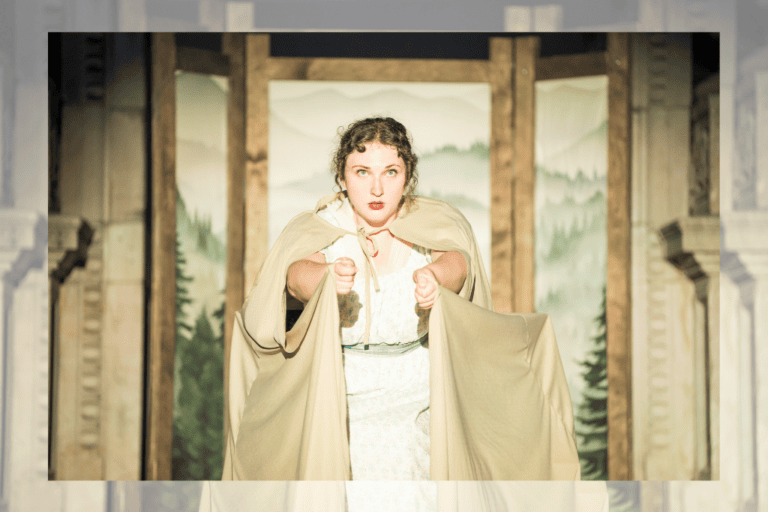 iPhoto caption: Georgia Findlay in 'Northanger Abbey.' Photo by Raph Nogal.
REVIEW: GFT’s Northanger Abbey embodies the delights and absurdities of Gothic fiction
Handwringing over popular fiction is hardly a thing of the past, as present panic about Romantasy attests. Unsurprisingly, both genres have a reputation for attracting women readers. Tyler J. Seguin’s Northanger Abbey displays how legitimate literary criticism can devolve into worrying that women are having too much fun.
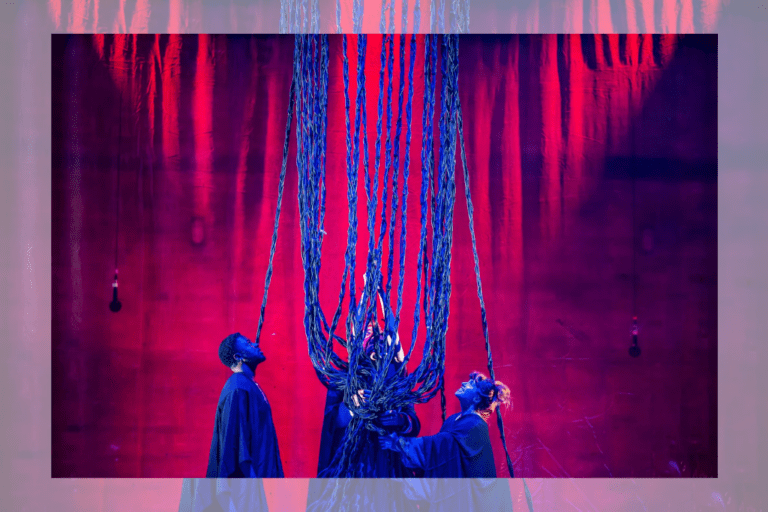 iPhoto caption: Members of the company of 'Medusa.' Photo by Dahlia Katz.
REVIEW: Soulpepper’s Medusa creates a mess it refuses to tidy
Speaking in sibilant murmurs via headsets wired into each seat of the Baillie Theatre, a chorus of intimate voices infiltrates the audience experience, drowning out dialogue and weaving an overstimulating soundscape.
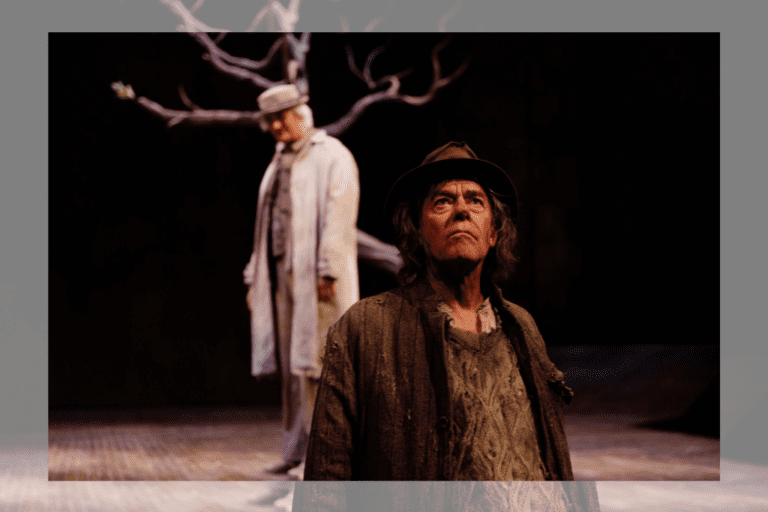 iPhoto caption: Paul Gross and Tom McCamus in 'Waiting for Godot.' Photo by David Hou.
REVIEW: Stratford Festival’s Waiting for Godot never feels fully its own
Tom McCamus' and Paul Gross' performances are clear and intentional. Nonetheless, I struggled to connect with this production.
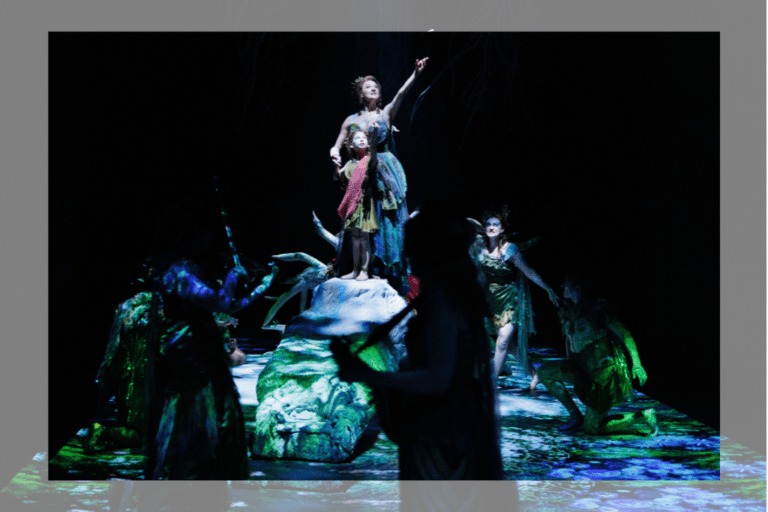 iPhoto caption: Members of the company of 'A Midsummer Night's Dream.' Photo by David Hou.
Developed in collaboration with Groundling Theatre, this A Midsummer Night’s Dream revels in the plights of its love-drugged protagonists through clever clowning, live music, and an animated landscape.
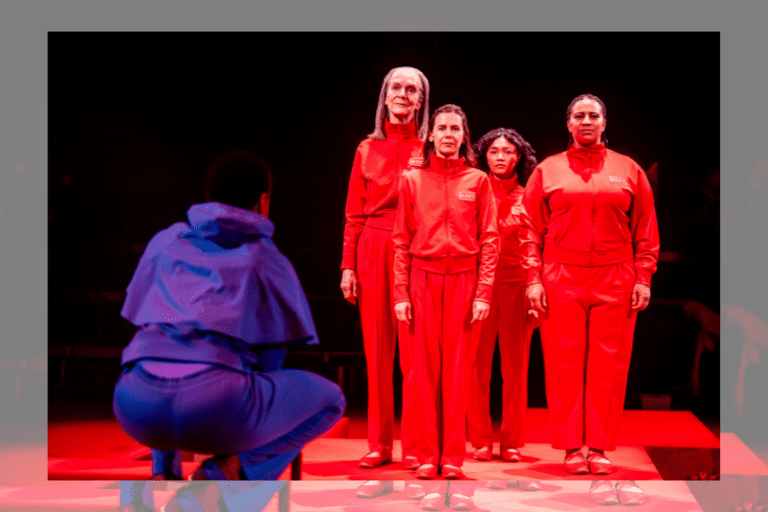 iPhoto caption: Amaka Umeh, Nancy Palk, Michelle Monteith, Belinda Corpuz, and Sabryn Rock in 'Mary, Mary, Mary, Mary.' Photo by Dahlia Katz.
REVIEW: Erin Shields’ Mary, Mary, Mary, Mary is brash, funny, and message-forward
At Crow’s Theatre, Mary, Mary, Mary, Mary is a sensory feast fit for any house of worship. But with so much material, and only 95 minutes, I’m left feeling that the Marys have more yet to say.
Comments