
REVIEW: Erin Shields’ Mary, Mary, Mary, Mary is brash, funny, and message-forward
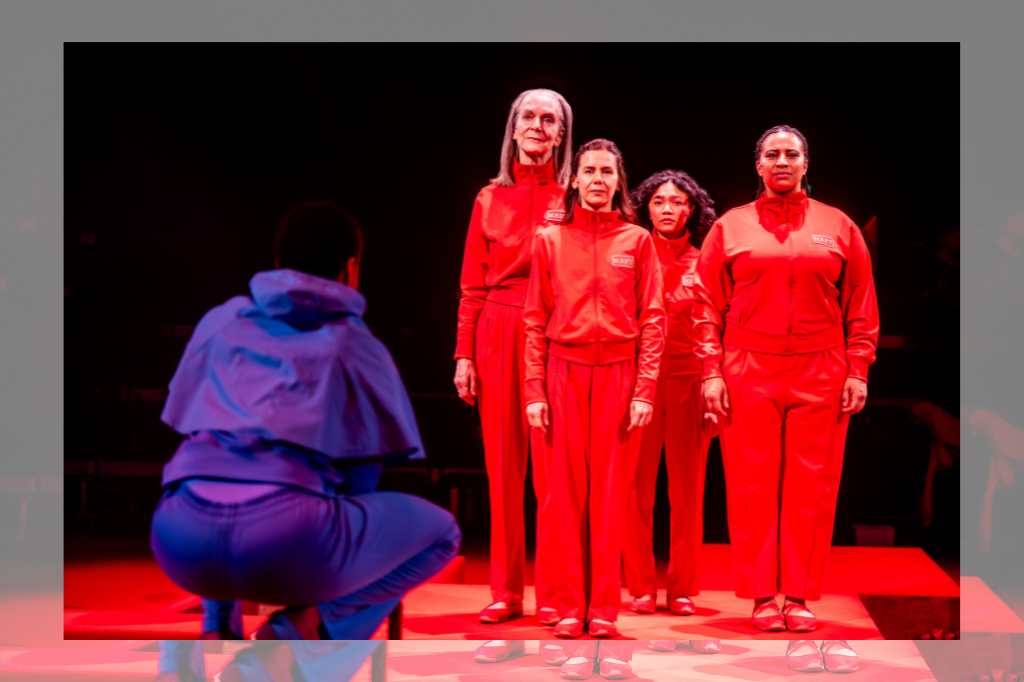 iPhoto caption: Amaka Umeh, Nancy Palk, Michelle Monteith, Belinda Corpuz, and Sabryn Rock in 'Mary, Mary, Mary, Mary.' Photo by Dahlia Katz.
Erin Shields’ latest feminist adaptation considers how a name might erase, rather than signify, identity. There are so many Marys in the Bible that they blur together. If lucky, some Marys achieve archetype status — but only when politically convenient.
Developed by Crow’s Theatre, where it’s now making its world premiere, Mary, Mary, Mary, Mary unveils the women behind the name, with a dash of tongue-in-cheek humour. Four of the five performers (Belinda Corpuz, Michelle Monteith, Nancy Palk, and Sabryn Rock) sport Mary nametags on their red tracksuits (costumes by Moi Tran). Amaka Umeh, the only actor in blue, wears a nametag that helpfully differentiates them as Not Mary. It seems we have entered the Maryverse, where the name Mary signals one’s superlative place of importance.
At first, the Marys lack boundaries. They narrate the story of Christ’s birth using the pronoun “we,” a poetic mode that bounces between speakers. As the play progresses, however, the Marys splinter into distinct characters: the Virgin Mary (Monteith), Mary Magdalene (Rock), Mary sister of Lazarus (Corpuz), and Mary mother of the disciples James and John (Palk). Each woman carries the weight of historical misconception and has the opportunity to share a fragment of the New Testament from her own perspective.
Their gospels follow the Shields playbook: brash, funny, and message-forward. Some beats are especially reminiscent of the playwright’s previous spins on classic texts; for instance, in Ransacking Troy, Shields reframes a plot point of the Iliad as the outcome of women’s subtle manipulation. She makes a similar move in Mary, Mary, Mary, Mary when the Marys reveal that Jesus did not perform a miracle when he fed the masses: instead, a network of women fried fish and baked bread and sent provisions up the mountain, slipping invisibly among the men (even Jesus seems to have been oblivious to these helping hands). It’s a solid gag, which underscores the unappreciated domestic labour that has always propped up the work of radical male luminaries.
But I found the play’s most impactful sequences to be those probing the very specific and complicated legacies attached to the Marys — how we use them as tools and symbols within Western mythology. For instance, in one scene a movie director films Mary watching Jesus being whipped by Roman soldiers. We want to see his pain through her pain, the director indicates. We want to see through her pain, in order to see his pain. Through such flashes of brilliance, Shields arrests our habitual modes of seeing, insisting on a new way that places each Mary in the foreground.
In its more didactic moments, however, Shields’ writing risks feminist platitude. The play’s longest scene, depicting the Last Supper as experienced from the kitchen, features an interloper, Salome, who tries to convince the Marys preparing Passover dinner that they are not living up to their liberatory potential. Salome infamously asked for the head of John the Baptist on a platter, an action she now reframes as a symbol of women’s empowerment in contrast to the Marys’ mundane domestic duties. “I wanted to show them I’m a woman who can’t be tamed,” Salome declares. This move toward iconicity over specificity seems to me precisely the kind of looking through that reduces women to symbols.
Even at its least revelatory, Mary, Mary, Mary, Mary inspires reverence for its creative team. The cast delivers moving and hilarious performances under Ellen McDougall’s direction, on a lush, velvety red landscape also designed by Tran. Umeh, especially, delivers a standout performance as every non-Mary in the play. Within its first five minutes, they’ve appeared as the angel Gabriel, the innkeeper, and three pelvic-thrusting wisemen, and they carry this energy all the way through with admirable athleticism. Lighting and sound design by Christian Horoszczak and Olivia Wheeler respectively complement Umeh’s momentum with a dread-inducing motif that builds toward the betrayal of Jesus, and then unravels our expectation of that moment.
Mary, Mary, Mary, Mary is a sensory feast fit for any house of worship. But with so much material, and only 95 minutes, I’m left feeling that the Marys have more yet to say.
Mary, Mary, Mary, Mary runs at Crow’s Theatre until May 3. More information is available here.
Intermission reviews are independent and unrelated to Intermission’s partnered content. Learn more about Intermission’s partnership model here.

Ferron Delcy
Ferron Delcy is pursuing her PhD in early modern literature at the University of Toronto. In 2024, Ferron participated in the New Young Reviewers program facilitated by Toronto Fringe and Intermission. She is a big fan of ghost stories, fog machines, and weird metaphors.
LEARN MORE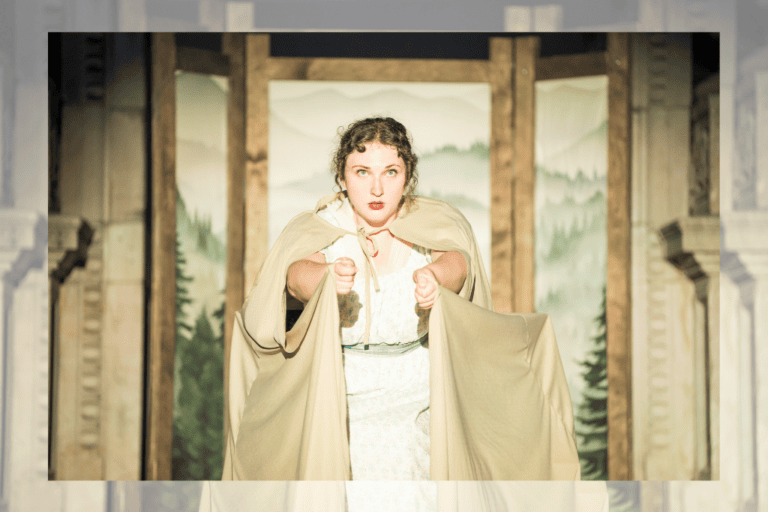 iPhoto caption: Georgia Findlay in 'Northanger Abbey.' Photo by Raph Nogal.
REVIEW: GFT’s Northanger Abbey embodies the delights and absurdities of Gothic fiction
Handwringing over popular fiction is hardly a thing of the past, as present panic about Romantasy attests. Unsurprisingly, both genres have a reputation for attracting women readers. Tyler J. Seguin’s Northanger Abbey displays how legitimate literary criticism can devolve into worrying that women are having too much fun.
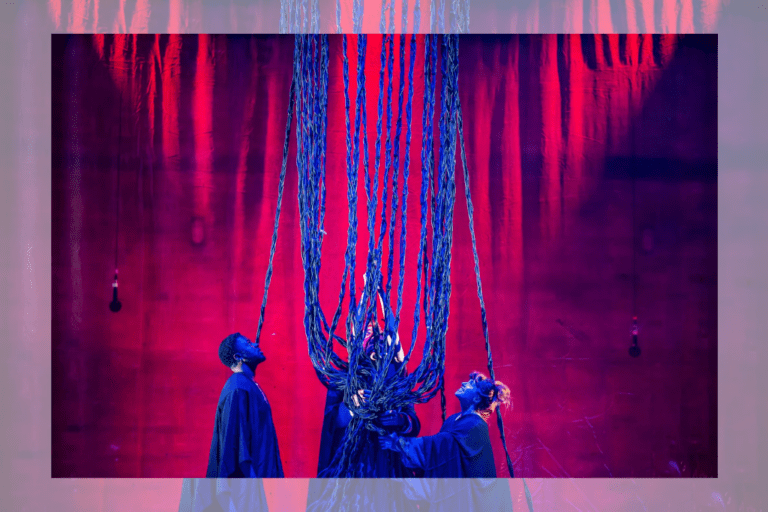 iPhoto caption: Members of the company of 'Medusa.' Photo by Dahlia Katz.
REVIEW: Soulpepper’s Medusa creates a mess it refuses to tidy
Speaking in sibilant murmurs via headsets wired into each seat of the Baillie Theatre, a chorus of intimate voices infiltrates the audience experience, drowning out dialogue and weaving an overstimulating soundscape.
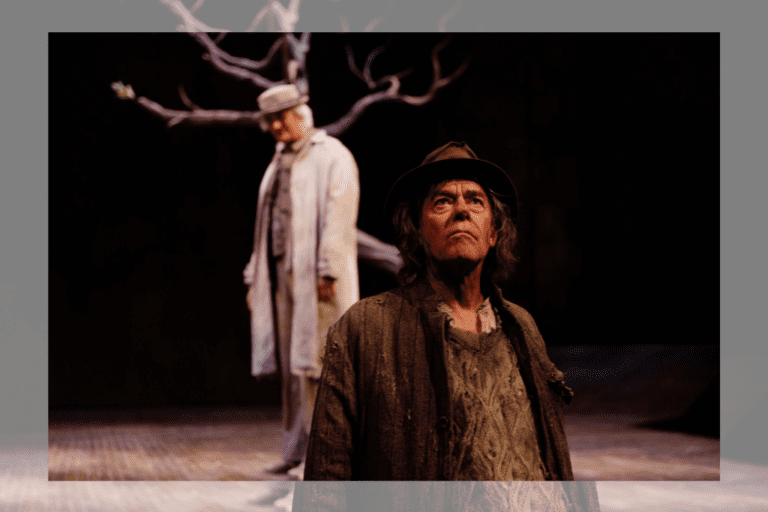 iPhoto caption: Paul Gross and Tom McCamus in 'Waiting for Godot.' Photo by David Hou.
REVIEW: Stratford Festival’s Waiting for Godot never feels fully its own
Tom McCamus' and Paul Gross' performances are clear and intentional. Nonetheless, I struggled to connect with this production.
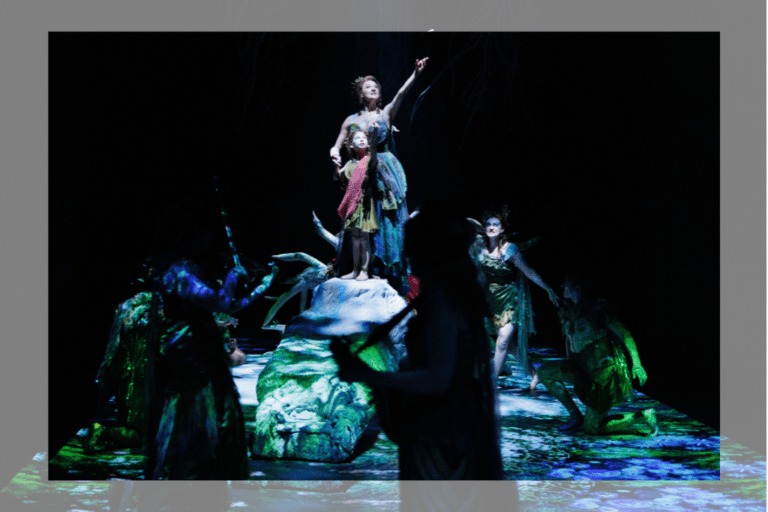 iPhoto caption: Members of the company of 'A Midsummer Night's Dream.' Photo by David Hou.
Developed in collaboration with Groundling Theatre, this A Midsummer Night’s Dream revels in the plights of its love-drugged protagonists through clever clowning, live music, and an animated landscape.
 iPhoto caption: William Ellis and members of the company of 'The Herald. Photo by Albert Hoang.
REVIEW: Jill Connell’s The Herald has a lot to say about potential
There’s so much to love about this smart, strange, and achingly lyrical exploration of labour and purpose. Dramaturgical intentionality falters, however, in the details.
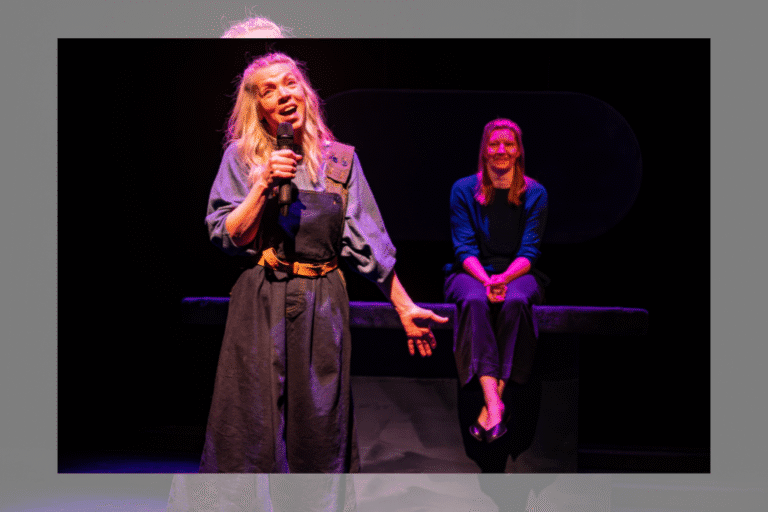 iPhoto caption: Liisa Repo-Martell and Maev Beaty in 'You, Always.' Photo by Dahlia Katz.
REVIEW: In You, Always at Canadian Stage, playfulness meets unabashed emotional vulnerability
This big-hearted play will steal your favourite going-out shirt, holler your crush’s name at full volume, and then accost you with a bear hug — all the while harboring a deep well of love and resentment.
Comments