
REVIEW: Jill Connell’s The Herald has a lot to say about potential
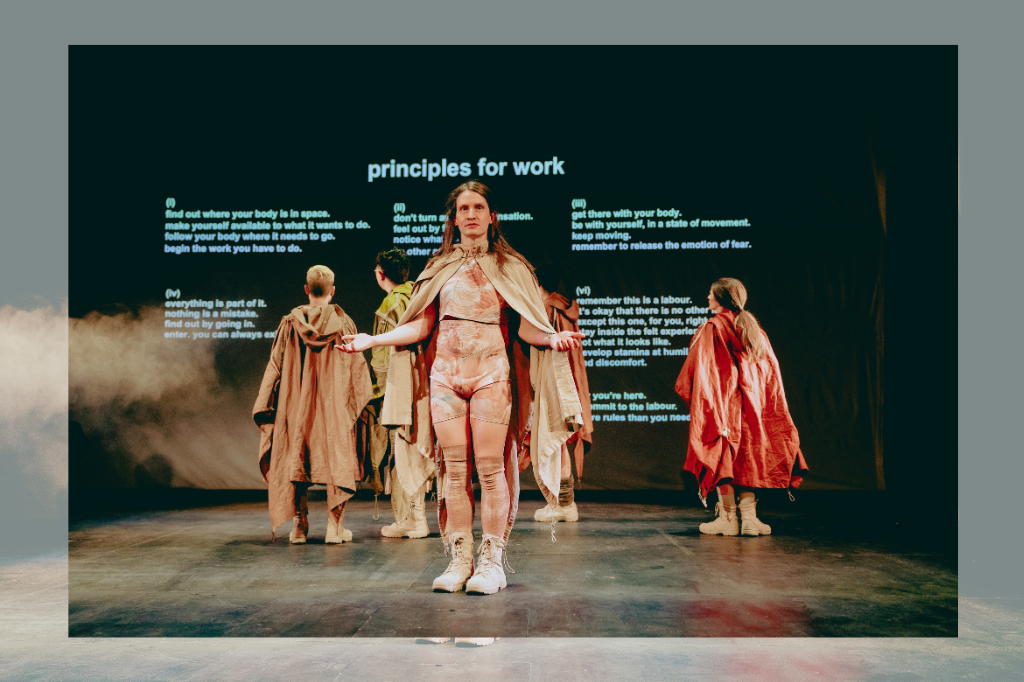 iPhoto caption: William Ellis and members of the company of 'The Herald. Photo by Albert Hoang.
A new work written and directed by Jill Connell, The Herald feels deftly hewn in its superstructure but shaky in performance. There’s so much to love about this smart, strange, and achingly lyrical exploration of labour and purpose. Dramaturgical intentionality falters, however, in the details: vague blocking and inconsistent scene work delay fulfilment of the play’s potential.
The Herald, an It Could Still Happen production in partnership with Buddies in Bad Times Theatre, has a lot to say about potential — the future version of a thing, once the doing of that thing is done. Unfulfilled potential might look like existing. There is an imperative under capitalism to fulfill potential by creating capital. Wires can become crossed between labours of love and labours of capital. Artists (for instance, Antonio Banderas, the play suggests) have a fraught, loving relationship to the labour of fulfilling creative potential. And what happens when existing is the art, is the labour, is the fulfillment?
The title character, played by an ephemeral William Ellis, is always working. They live life outside city walls in Ancient Greece, waiting for a message that will reveal to others what will happen next. Having a body is the only requirement for this job, they explain in an evocative monologue. Their world is a gauzy tent hung from the ceiling of the Buddies Chamber: a clever design by Ishan Davé that feels precisely within the purview of It Could Still Happen, which specializes in staging theatre in liminal spaces. The Herald is suspended in an eternal present, uninterrupted by the rhythms of breaks, labours, vacations.
A mashup between Anne Carson and the manosphere, the next three scenes depict the Herald’s situationship with f-boy Herakles, played first by Jackie Rowland, then rose tuong, and finally Stephen Jackman-Torkoff. This labouring lover can’t commit to a life of simply being, together — a clever exploration of the work’s themes. Still, I wanted more from the exchanges between Herakles and the Herald. This was where I felt the play was at its most unrealized: imprecise movement and stilted moments created an affect of uncertainty. Clearer blocking and physicality could reroute rawness between actors into safe and supported choices.
The Herald’s storyline is one of several distinct segments that structure the play, which runs about 85 minutes without intermission. Connell works across a range of formats, creating a dimensional pastiche of scenes delivered through lecture, video, projection, and movement. Despite this variety of forms and content, The Herald avoids disjointedness between parts. This is largely an effect of Connell’s strong sense of craft — they skilfully draw on repetition and motif to create continuity.
Capes, for instance, function as a symbol of artistry and creation throughout the production, an idea Connell introduces herself during a lecture at the start of the show. They present a good-natured caricature of the 20- or 30-something creative, delivering a moving reflection on star signs and life’s work in a voice marked by self-aware upspeak. This opening scene, a highlight for me, perfectly established the play’s offbeat humour and intellectual aims.
Jason (of the Argonauts) operates as another motif/running gag, the offstage romantic rival who promises to fulfill Herakles’ work addiction with ever-more distractions from existing. Pained wailing of Jason’s name punctuates each scene between the Herald and Herakles. These references pay off in a brilliantly funny Argonauts recruitment video, starring Davé as nepo-baby Jason.
A minimalist treatment of the black-box stage at Buddies foregrounds the performers’ bodies and labour in creating the play’s sceneography: assembling the Herald’s tent, and then dismantling it; strutting across an invisible terrain on a long journey to the underworld; settling a trapdoor’s nondescript covering softly into place. Music by Philip Nozuka and lighting by Sebastian Marziali infuse the largely empty space with otherworldly energy.
If The Herald seemed unstable during scenes of scripted dialogue, its ensemble cast shone during softer, more experimental vignettes. In my favourite, Fan Wu sets the scene with gentle, deadpan humour: we’re in Shopper’s Drug Mart, the place where we’re aware of our bodies in now-time. The ensemble speaks aloud the sensations of their bodies. “Rising shoulders, fringe on forehead, laptop on knee” they would say, if they were me, writing this now. The intimacy of their reflections, which are all spoken at once, creates a meditative experience of the present. Potential thrown away, we relish the business of being.
The Herald runs at Buddies in Bad Times Theatre until March 14. More information is available here.
Intermission reviews are independent and unrelated to Intermission’s partnered content. Learn more about Intermission’s partnership model here.

Ferron Delcy
Ferron Delcy is pursuing her PhD in early modern literature at the University of Toronto. In 2024, Ferron participated in the New Young Reviewers program facilitated by Toronto Fringe and Intermission. She is a big fan of ghost stories, fog machines, and weird metaphors.
LEARN MORE iPhoto caption: Karen Robinson in a promo photo for 'Prophetess.' Photo by Dahlia Katz.
When I spoke to actor Karen Robinson and playwright Ho Ka Kei about Prophetess' upcoming world premiere, they described an artistic process grounded in care and collaboration. Ho had long wanted to write the part of Queen Margaret for Robinson, and he framed the “love letter aspect” of writing for people he holds dear as key to the play’s origin story.
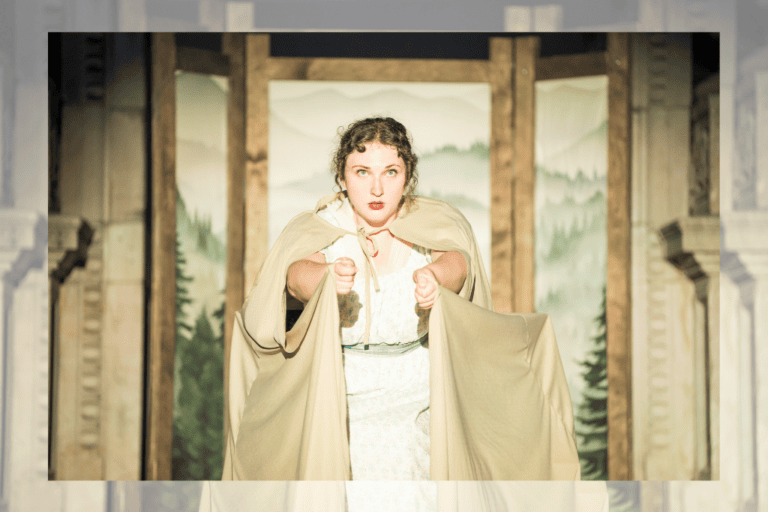 iPhoto caption: Georgia Findlay in 'Northanger Abbey.' Photo by Raph Nogal.
REVIEW: GFT’s Northanger Abbey embodies the delights and absurdities of Gothic fiction
Handwringing over popular fiction is hardly a thing of the past, as present panic about Romantasy attests. Unsurprisingly, both genres have a reputation for attracting women readers. Tyler J. Seguin’s Northanger Abbey displays how legitimate literary criticism can devolve into worrying that women are having too much fun.
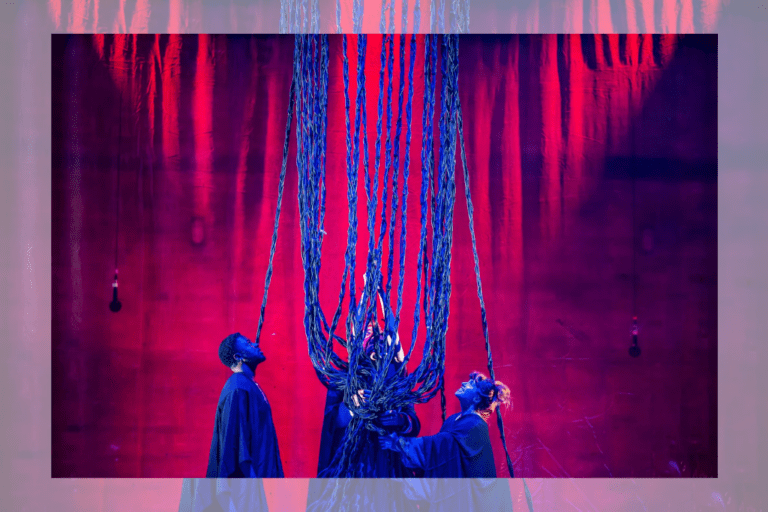 iPhoto caption: Members of the company of 'Medusa.' Photo by Dahlia Katz.
REVIEW: Soulpepper’s Medusa creates a mess it refuses to tidy
Speaking in sibilant murmurs via headsets wired into each seat of the Baillie Theatre, a chorus of intimate voices infiltrates the audience experience, drowning out dialogue and weaving an overstimulating soundscape.
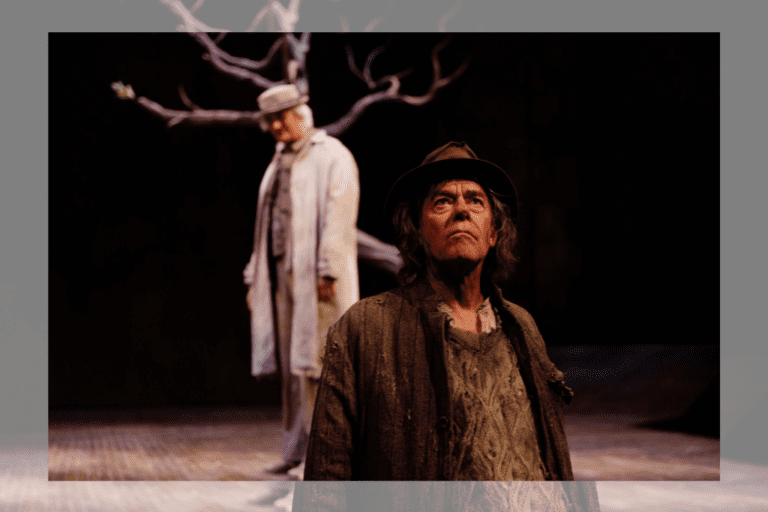 iPhoto caption: Paul Gross and Tom McCamus in 'Waiting for Godot.' Photo by David Hou.
REVIEW: Stratford Festival’s Waiting for Godot never feels fully its own
Tom McCamus' and Paul Gross' performances are clear and intentional. Nonetheless, I struggled to connect with this production.
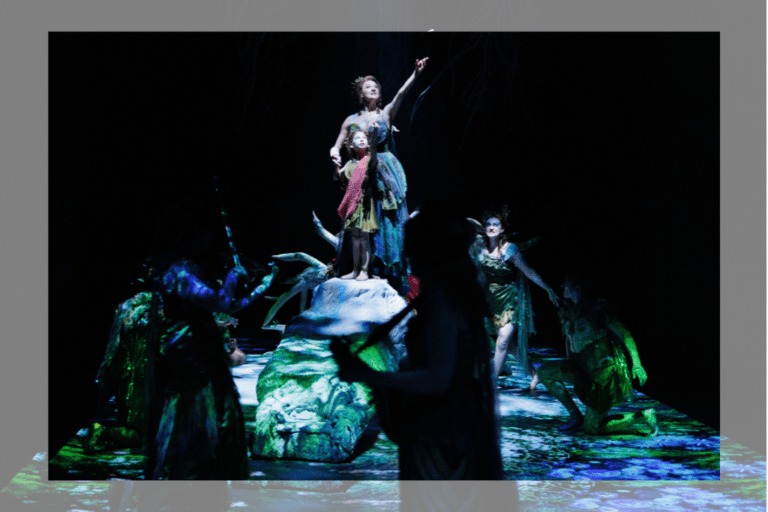 iPhoto caption: Members of the company of 'A Midsummer Night's Dream.' Photo by David Hou.
Developed in collaboration with Groundling Theatre, this A Midsummer Night’s Dream revels in the plights of its love-drugged protagonists through clever clowning, live music, and an animated landscape.
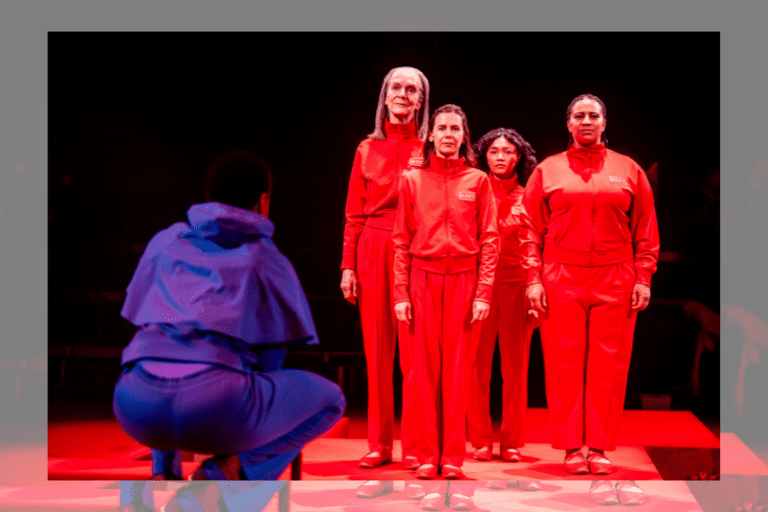 iPhoto caption: Amaka Umeh, Nancy Palk, Michelle Monteith, Belinda Corpuz, and Sabryn Rock in 'Mary, Mary, Mary, Mary.' Photo by Dahlia Katz.
REVIEW: Erin Shields’ Mary, Mary, Mary, Mary is brash, funny, and message-forward
At Crow’s Theatre, Mary, Mary, Mary, Mary is a sensory feast fit for any house of worship. But with so much material, and only 95 minutes, I’m left feeling that the Marys have more yet to say.
Comments