
REVIEW: Obsidian and Tarragon co-production reflects on the inadequacy of language
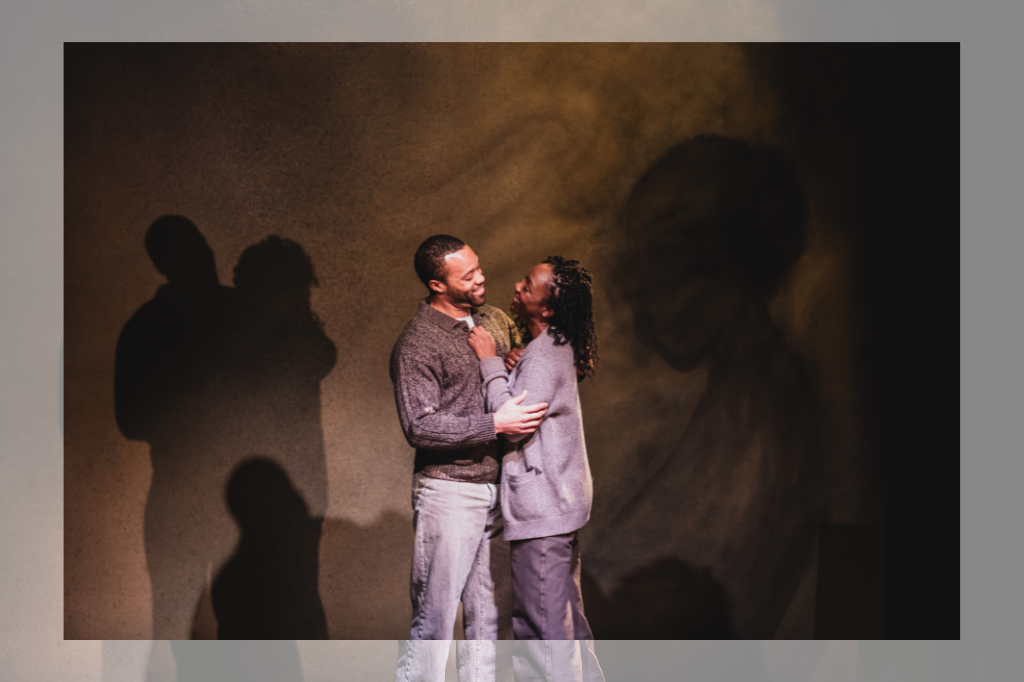 iPhoto caption: Dwain Murphy and Virgilia Griffith in 'a profoundly affectionate, passionate devotion to someone
(-noun).' Photo by Jae Yang.
iPhoto caption: Dwain Murphy and Virgilia Griffith in 'a profoundly affectionate, passionate devotion to someone
(-noun).' Photo by Jae Yang.
a profoundly affectionate, passionate devotion to someone (-noun): the title says it all, offering a definition for an absent word. The thing is the thing unsaid.
Written by debbie tucker green and directed by Mumbi Tindyebwa Otu, in a co-production between Obsidian Theatre and Tarragon Theatre, profoundly runs on an engine of insufficient expression. “I wanted you beyond sentence in between syllables above vowels under consonants and after punctuation” the character B confesses. For the play’s three couples, language falls short: beautifully, tragically, sublimely.
You can do a lot of different things with words. For 90 minutes, A (Virgilia Griffith), B (Dwain Murphy), Woman (Warona Setshwaelo), Man (Andrew Moodie), and Young Woman (Jasmine Case) try many of them: begging and demanding and boasting and flirting and loving and demeaning. They don’t get what they want. They get what they want and regret it. They want to know how to be known by their partner and how to know them in return. They lament the silences accruing.
Silence sits at the heart of this story, which is told in three parts, each dedicated to a different couple. Beginning with a witty relationship postmortem, the plot takes a turn into grief, illness, and withdrawal. Wives lose their capacity to speak and husbands grow frustrated by the demand they fill the gap. As each scene navigates the chasm between acts and declarations of love, a gendered pattern emerges. While profoundly’s themes of love and language are partly universal, their nuances are weighted by the historically gendered dynamics of domesticity and desirability.
It’s important to note, as well, the political significance of green’s approach to language as a Black British playwright writing for Black actors. Her stylistic use of South London vernacular undercuts systems of literary adjudication that demand a narrow adherence to Standard English. green’s characteristically rhythmic dialogue rolls between speakers, a fast-paced repartee with the occasional pointed break. Thoughts may be unfinished, advances rejected, husbands checked out — but speech in this play is emotionally affective and musically striking. I was immediately hooked on her poetics.
In this North American premiere, all five actors deliver lucid performances that are also a credit to Otu’s direction. The production catches subtle gradations in green’s language, bringing to life exchanges that appear unwieldy and disorienting on the page. Even without the use of British accents, the script’s humor and wordplay sing. Griffith and Murphy, whose characters A and B occupy the plot’s centre, are particularly transcendent in their complicated portrayals of love lost.
These nameless characters exist nowhere in particular. Set design by Jawon Kang and lighting by Raha Javanfar craft a dynamic environment in the Tarragon Mainspace that responds to continuous shifts in intimacy. Underlit platforms assembled into abstract shapes offer a playing space that begins with a homey golden glow and somehow transforms into the shards of a disjointed home — and then back again. A mural featuring smudged, silhouetted figures looms in the background like a spectre of memory. At one point while watching Part One, I became aware of how small A and B suddenly looked against what felt like monumental ruins. In Part Two, the same set evokes an average kitchen flooded in sunlight.
Like the contours of its set, the structure of this three-part show is charmingly uneven. The first part has 15 scenes. Parts Two and Three are one scene each. And why not? Although told in atemporal flashes, transitions from scene to scene are always fluid, aided by evocative blue lighting. The brevity of the last two parts felt like shockwaves from the earthquake that ends Part One, a dramaturgical experiment reimagining the shape of plot structure.
Granted, that plot is fragmentary at best, although pieces come together surprisingly in the end. There’s no conclusion, in a traditional sense, although the third part wraps up with a pithy “Thass all.” The narrative simply trails off, like a tired voice.
a profoundly affectionate, passionate devotion to someone (-noun) runs at Tarragon until December 7. More information is available here.
Intermission reviews are independent and unrelated to Intermission’s partnered content. Learn more about Intermission’s partnership model here.

Ferron Delcy
Ferron Delcy is pursuing her PhD in early modern literature at the University of Toronto. In 2024, Ferron participated in the New Young Reviewers program facilitated by Toronto Fringe and Intermission. She is a big fan of ghost stories, fog machines, and weird metaphors.
LEARN MOREComments
Leave a Comment
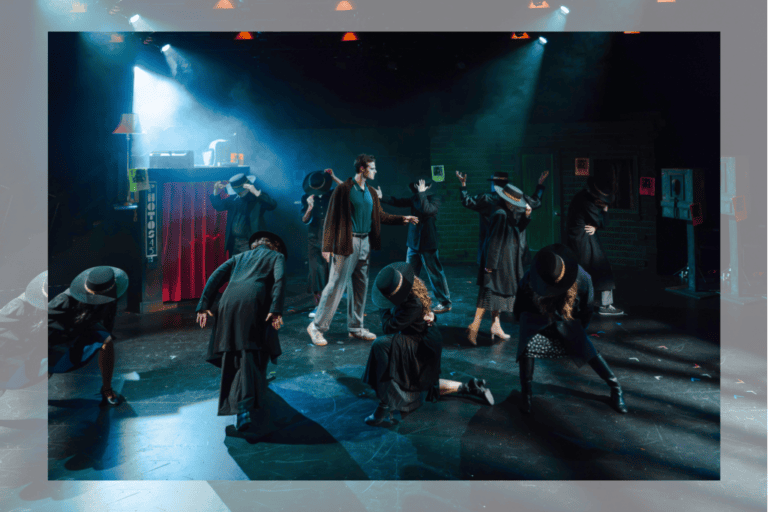 iPhoto caption: Graysen LaPointe and the company of 'Amélie.' Photo by Taylor Long.
REVIEW: Shifting Ground Collective’s Amélie is vivid and endearingly earnest
There’s an overwhelming sincerity to this production that, at times, overwrites the offbeat sensibility of the original film — although, I suspect that Anglicization and a shift to musical theatre conventions have something to do with this tonal incongruity as well.
 iPhoto caption: Karen Robinson in a promo photo for 'Prophetess.' Photo by Dahlia Katz.
When I spoke to actor Karen Robinson and playwright Ho Ka Kei about Prophetess' upcoming world premiere, they described an artistic process grounded in care and collaboration. Ho had long wanted to write the part of Queen Margaret for Robinson, and he framed the “love letter aspect” of writing for people he holds dear as key to the play’s origin story.
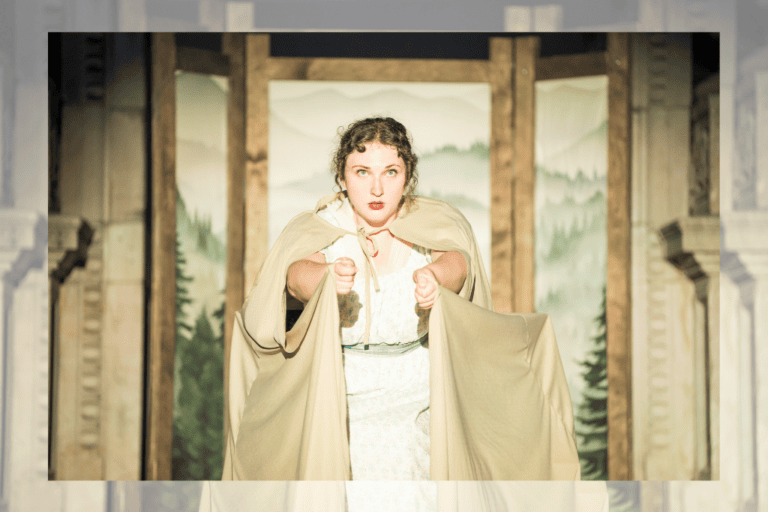 iPhoto caption: Georgia Findlay in 'Northanger Abbey.' Photo by Raph Nogal.
REVIEW: GFT’s Northanger Abbey embodies the delights and absurdities of Gothic fiction
Handwringing over popular fiction is hardly a thing of the past, as present panic about Romantasy attests. Unsurprisingly, both genres have a reputation for attracting women readers. Tyler J. Seguin’s Northanger Abbey displays how legitimate literary criticism can devolve into worrying that women are having too much fun.
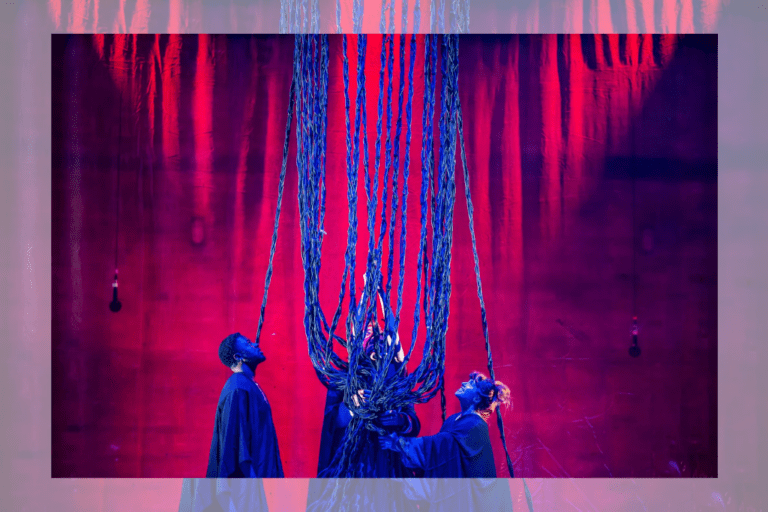 iPhoto caption: Members of the company of 'Medusa.' Photo by Dahlia Katz.
REVIEW: Soulpepper’s Medusa creates a mess it refuses to tidy
Speaking in sibilant murmurs via headsets wired into each seat of the Baillie Theatre, a chorus of intimate voices infiltrates the audience experience, drowning out dialogue and weaving an overstimulating soundscape.
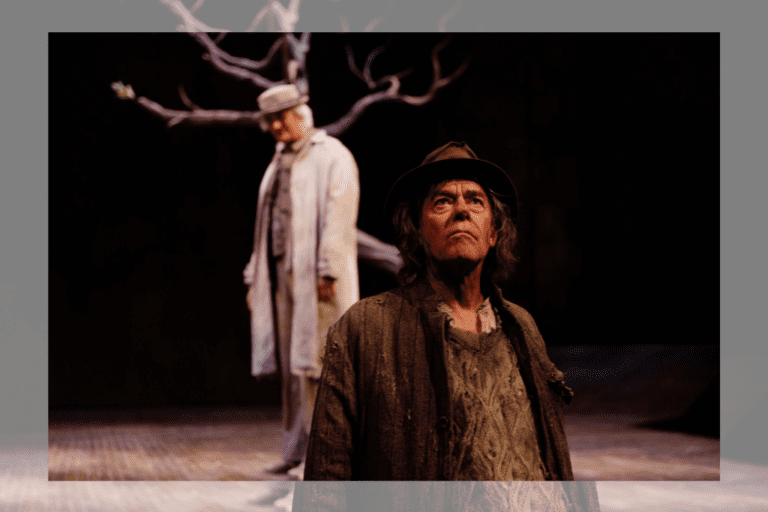 iPhoto caption: Paul Gross and Tom McCamus in 'Waiting for Godot.' Photo by David Hou.
REVIEW: Stratford Festival’s Waiting for Godot never feels fully its own
Tom McCamus' and Paul Gross' performances are clear and intentional. Nonetheless, I struggled to connect with this production.
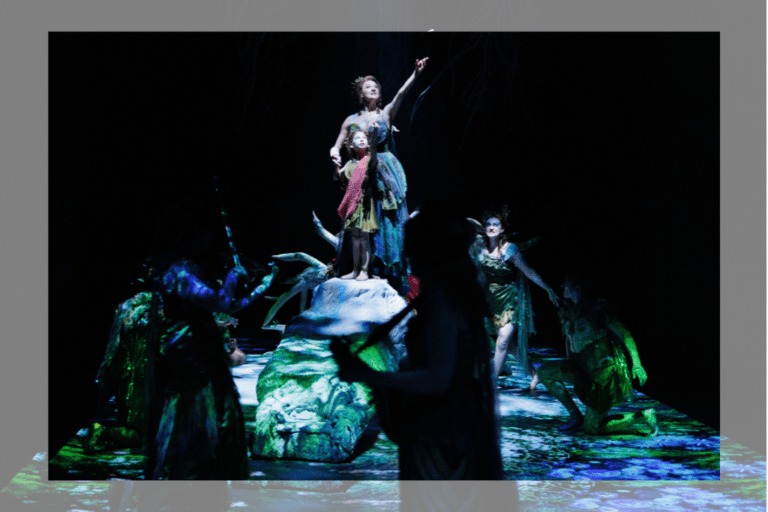 iPhoto caption: Members of the company of 'A Midsummer Night's Dream.' Photo by David Hou.
Developed in collaboration with Groundling Theatre, this A Midsummer Night’s Dream revels in the plights of its love-drugged protagonists through clever clowning, live music, and an animated landscape.
Well written review to a well written and performed play. Nice.