
‘There’s no theatre without actors and stage managers’: Canadian Actors’ Equity Association marks 50 years
 iPhoto caption: Two men hold an Equity banner in 1997. Photo courtesy of Equity.
As Canadian Actors’ Equity Association celebrates its 50th anniversary with parties across the country, executive director Alex Levine has been thinking about the creative, social, and economic value of artists’ labour.
“Live performance is so special because it challenges perspectives. It’s inclusive. It’s an economic engine. It knits us together as a society, and I think that we have to remember the value of it,” Levine shared on a video call alongside Equity president Scott Bellis. “If we, as an association, keep that top of mind, we will continue to build on the success that we’ve seen through the last 50 years into the next.”
Equity is remarkably wide-ranging, representing artists working in theatre, dance, and opera across anglophone Canada. Its approximately 5,700 members include performers, directors, choreographers, fight directors, intimacy directors, and stage managers. Around half of those artists live in the Greater Toronto Area, and a national council of 23 Equity members from across the country forms the association’s leadership.
“We negotiate collective bargaining agreements with a number of different entities,” said Bellis of Equity’s objectives. “[We] provide, hopefully, safe and respectful working conditions, fair compensation for our members, and also adjunct services: our RRSP plan, our medical insurance plan, and our advocacy work that we do towards mostly the federal government, but occasionally regional governments as well.”
The association’s beginnings can be traced to 1955, when the American Actors’ Equity Association officially convened a Canadian branch — in part to support actors at the Stratford Festival, which had opened two years earlier. For two decades, the country’s actors operated under American jurisdiction, until in 1975 members voted for the creation of a separate organization, established on April 1, 1976.
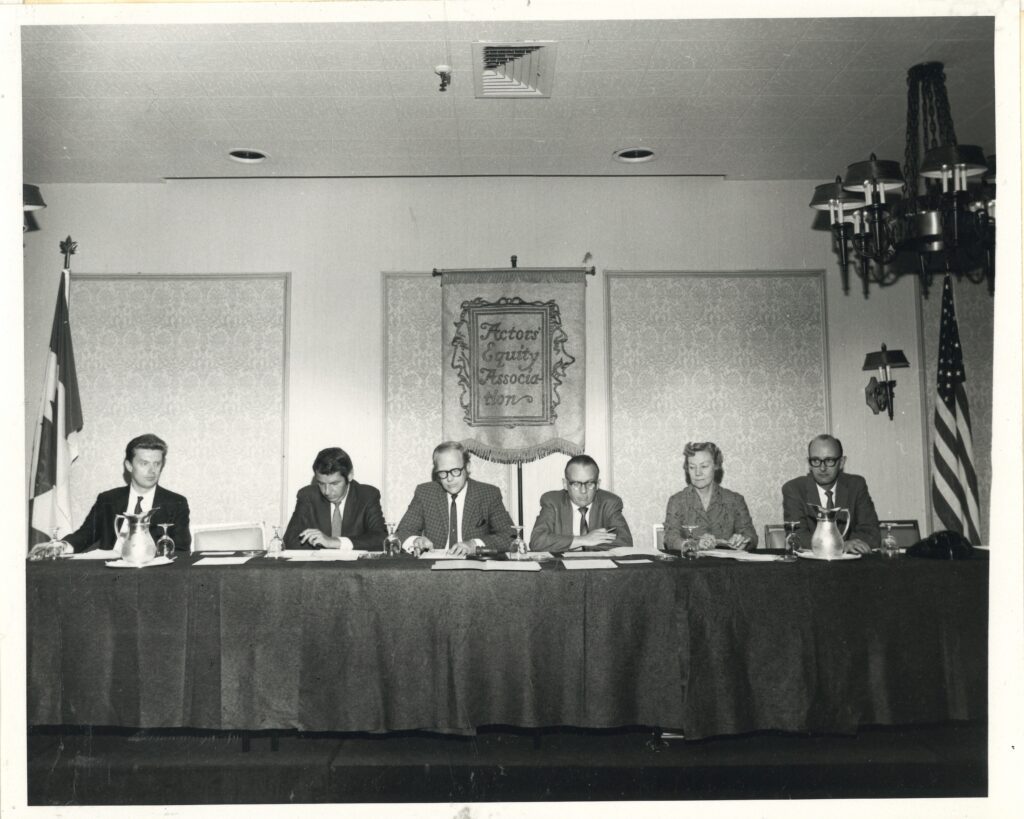
Today, Equity’s influence is usually evident soon after walking into professional rehearsal rooms, where the association helps define working rhythms. “The reason we have a coffee break or a lunch hour is because we have Equity. The reason we have minimum pay rates at every theatre is because of Equity,” said Bellis, who joined the call from Kamloops while performing as storeowner Mushnik in a run of the musical Little Shop of Horrors at Western Canada Theatre.
“There’s a limit to how long we can rehearse,” he continued. “It’s an eight-hour day, and you’re only allowed a certain number of extended days during tech. We have all of that in our collective bargaining agreements.”
When asked about Equity’s current challenges, Bellis emphasized that the association’s fortunes are largely reflective of the sector’s. “We’re still in what I would call a post-COVID era, where audiences have not come back to the same levels,” he said. “We’ve seen a contraction in the number of productions that theatres are producing. We see it in our employment reports that we get every year from the staff: we see that the number of contracts are down.”
In response to these headwinds, Bellis thinks the association must find a balance between accommodating producers’ evolving realities and still advocating for artists. “We’re always working with engagers to find flexibility where we can and allow them to engage our members and make the changes needed to ensure that the whole sector can be healthy,” he said. “While we’re doing that, we always want to ensure that we’re maintaining the standards that are appropriate for our members when they’re in the workplace.”
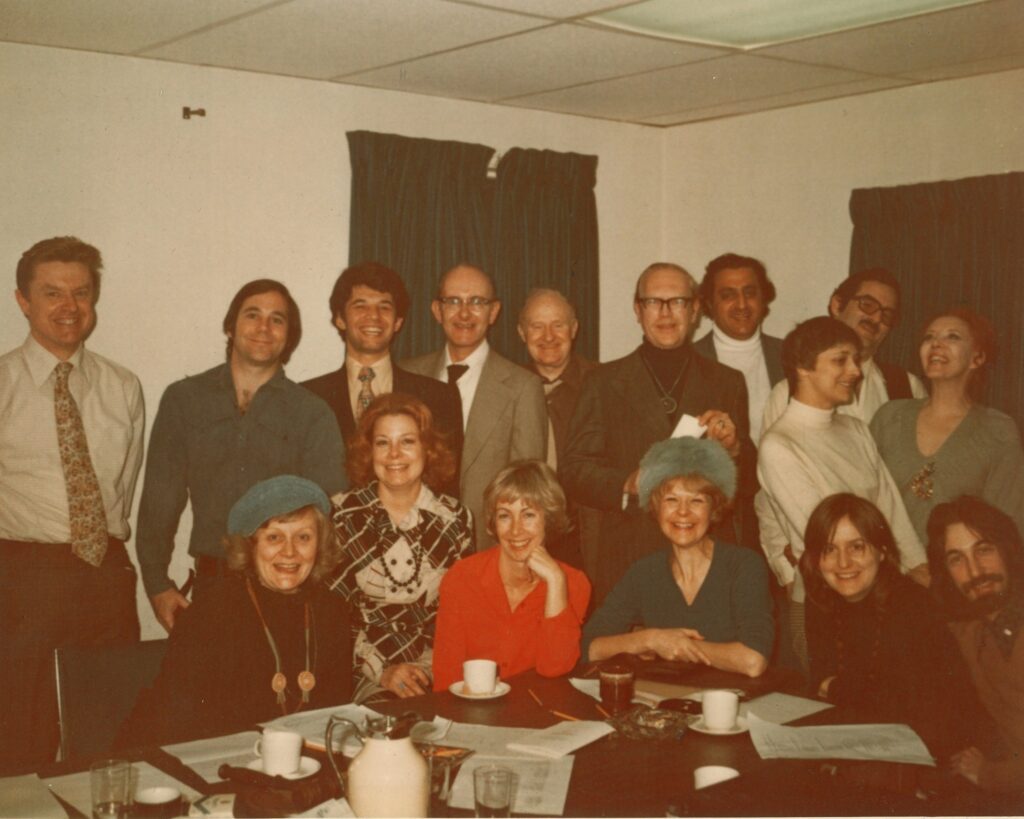
One of Equity’s larger ongoing advocacy projects involves encouraging the Canadian government to offer a live performance tax credit linked to labour costs. “Theatre companies, producers, and engagers would get a tax credit for every professional artist that they hire,” Bellis said. “This is to encourage them to put more of their resources into making art… and less into their operating expenses.”
“We are looking to try and get our government at all three levels to invest more in live performance,” agreed Levine. “With that investment will come more opportunities, and we’ll draw more talent and build out our sector, and then hopefully provide more opportunities to bring in more audiences as tourists into our country to see our amazing artists.”
Further government support could also help Canadian companies participate in the international touring circuit. “I think what we’d love to see is the growth of the Canadian theatre industry go more international. And right now, there’s some economic challenges to that,” Levine said. “I’d love to see us become a [bigger] exporter of live performance.”
For Equity, such dreams are inevitably built on the artist level: actor by actor, contract by contract.
“There’s no theatre without actors and stage managers,” said Levine. “There’s no ballet without choreographers and dancers. And there’s no opera without singers and directors. That’s just the way it is. I think that the artists sometimes love what they do so much that they just want to do it under any costs, and at any price. And we have to remember the value of it.”
Canadian Actors’ Equity Association is an Intermission partner. Learn more about Intermission’s partnership model here.

Liam Donovan
Liam is Intermission’s senior editor. He lives in Toronto. His Substack newsletter is available at loamdonovan.substack.com.
LEARN MORE iPhoto caption: Eric Woolfe in 'The Call Centre of Cthulhu.' Photo by Jack Woolfe.
REVIEW: In Eldritch’s puppet-packed Call Centre of Cthulhu, coincidence signals apocalyptic doom
It's a campy-as-ever blend of puppets, character voices, and card tricks — a dose of classic Eldritch excess, timed to the Halloween season.
 iPhoto caption: The Lula Lounge in Toronto. Photo by Sam Gaetz.
At events across the country, Canadian Actors’ Equity Association celebrates 50 years
Equity represents nearly 6,000 professional artists working in opera, English-language theatre, and dance nationwide, advocating for fair wages, safe working conditions, and more.
 iPhoto caption: Karen Robinson in 'Prophetess.' Photo by Jae Yang.
REVIEW: In Tarragon’s outstanding Prophetess, language is both mighty and inadequate
Margaret’s facility with text helps her maneuver through an institution like York University, where words hold significant power. But the brilliant middle-aged scholar finds herself surprisingly unequipped to process the true sense of more elemental forces: love, grief, spiders.
 iPhoto caption: 'Documents Perform 3.' Photo by T Photo Factory.
Joining online from across the Americas, more than a dozen artists, artistic producers, cultural leaders, and policymakers add live suggestions to the document, together transforming stuffy bureaucratic language into a rowdy patchwork of compassionate imagining.
 iPhoto caption: Stratford's Tom Patterson Theatre. Photo by Ann Baggley.
2027 highlights include a new Canadian Jacob Two-Two musical and two of the Bard’s thornier plays: The Merchant of Venice and The Taming of the Shrew.
 iPhoto caption: Devon Michael Brown as Rusty Charlie with members of the 'Guys and Dolls' company.
“It's so exhausting, but it's really rewarding when you get to dance so full-out,” says Devon Michael Brown. “You get to use your technique and your training to the fullest extent.”
Comments