
Why Paul Gross thinks Waiting for Godot is ‘one of the great achievements of human creativity’
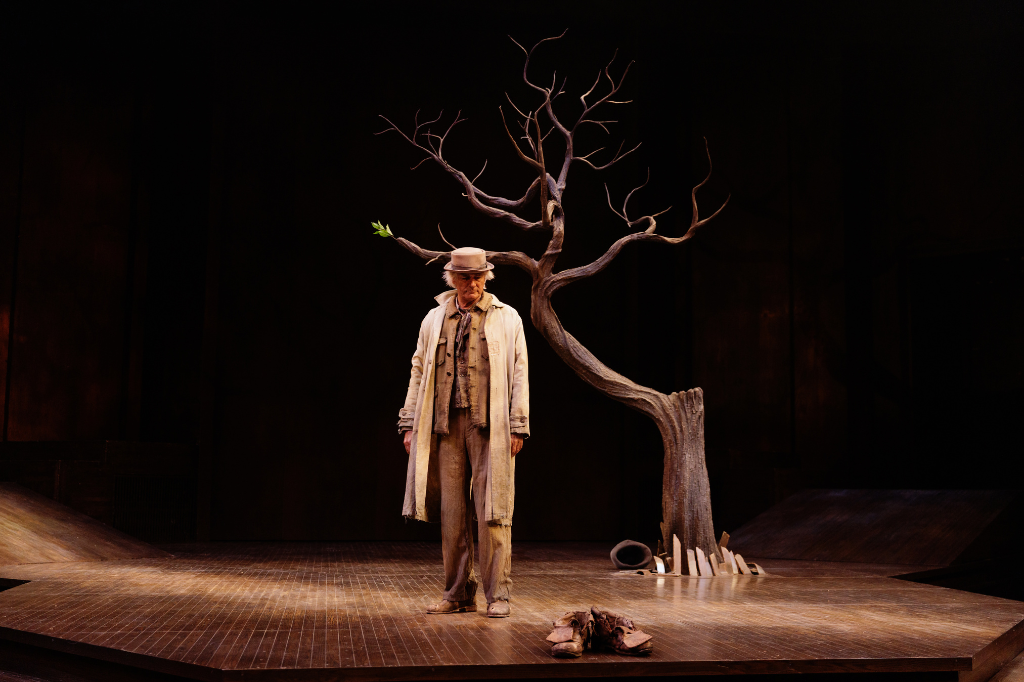 iPhoto caption: Paul Gross in 'Waiting for Godot.' Photo by David Hou.
When Paul Gross began preparing to play Vladimir in Waiting for Godot at the Stratford Festival, he couldn’t immediately define the central force powering Samuel Beckett’s classic.
“In a play, 99.9 per cent of the time, you have a character who has a history,” said Gross in a phone call. “There’s a plot line to follow, there’s subtext, there’s all these other things that you latch onto — and there’s none of that here. What I was struggling with for a while was, ‘What is the engine of this thing? What is the audience watching? Why is it still so influential a piece of work, 70 years or so after it was first produced?’”
Now that director Molly Atkinson’s production is running at the Festival Theatre, for a limited run closing on July 31, Gross has an answer. “The emotional quality of these characters’ relationships is what substitutes for a narrative,” reflects the 67-year-old star of Canadian stage and screen. “It’s all of those things in a relationship: the ups, the downs, the fun, the no fun. And running underneath it is this dark river, always threatening to drag us down.”
The relationship in question is the one between Vladimir and Estragon, embodied by Tom McCamus — who himself played Vladimir at Stratford in 1996 and 1998. If you’ve never seen Waiting for Godot, the title doubles as a synopsis: evening after evening, on a barren country road populated by a gaunt tree, two middle-aged men wait for a man named Godot, but a young boy comes in his place and tells them to wait another day. If you have seen the show before, well, they’re still waiting. Always will be.
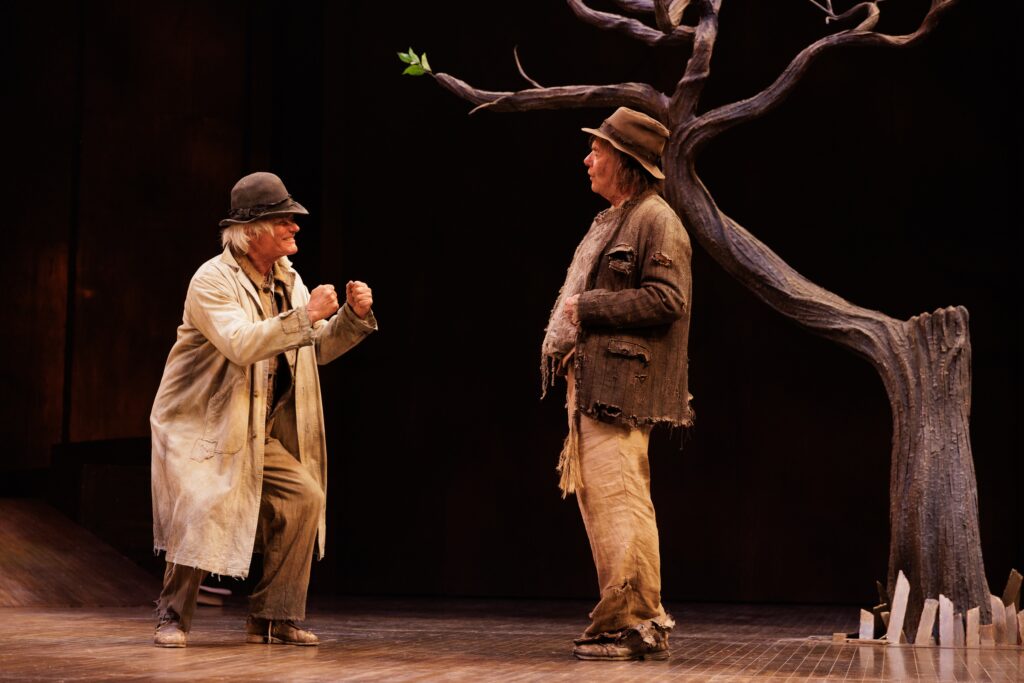
Gross hears a domestic echo in the pair’s time-worn habits. “They’re essentially a very old married couple,” he said. “The few little facts that you can glean [are that] they harvested grapes at one time, [and] they’ve been together in a sort of shape for about 50 years… So it’s a partnership, a lifelong partnership, with all of the little quibbles and irritations, and the deep, deep, deep love too.”
The characters’ opposed worldviews may be part of what keeps them stuck in their eternal loop. “One of them is essentially an optimist, the other is essentially a pessimist,” said Gross. “Estragon never thinks anything’s going to turn out, and Vladimir is always buoyed up by what little pieces of hope he can see: that there’s some leaves on the tree, and that the Boy says Godot will be coming tomorrow. Even though we can assume that the Boy has said that over and over and over again, and Godot has never shown up, Vladimir would choose to think it’s a possibility, whereas Estragon would just say, ‘Well, that’s never gonna happen.’”
Gross and McCamus’ weathered costumes, designed by Cory Sincennes, fall in line with the play’s historical staging conventions: jackets, bowler hats, boots. The designer’s set, too, delivers that expected tree. What Gross finds unique about the production — both as a take on Godot and as a piece of Stratford programming — is how it uses the 1,800-seat Festival Theatre.
“Part of the point of doing it is to use that stage in a way that it’s not normally used; it’s very rare that there would be a production so slim and skinnied down. It’s usually filled up with people and sets and things,” said Gross. “I think it holds Beckett and holds this play beautifully.”
When I saw the production, there was a moment where Gross looked out at the audience for a monologue, and suddenly — owing to the space’s Shakespearean history — I felt like the heightened text could be a soliloquy of Hamlet’s or Lear’s, the only other two roles Gross has played at Stratford (parodies aside): “Was I sleeping, while the others suffered?” Vladimir asks. “Am I sleeping now? Tomorrow, when I wake, or think I do, what shall I say of today? That with Estragon my friend, at this place, until the fall of night, I waited for Godot?”
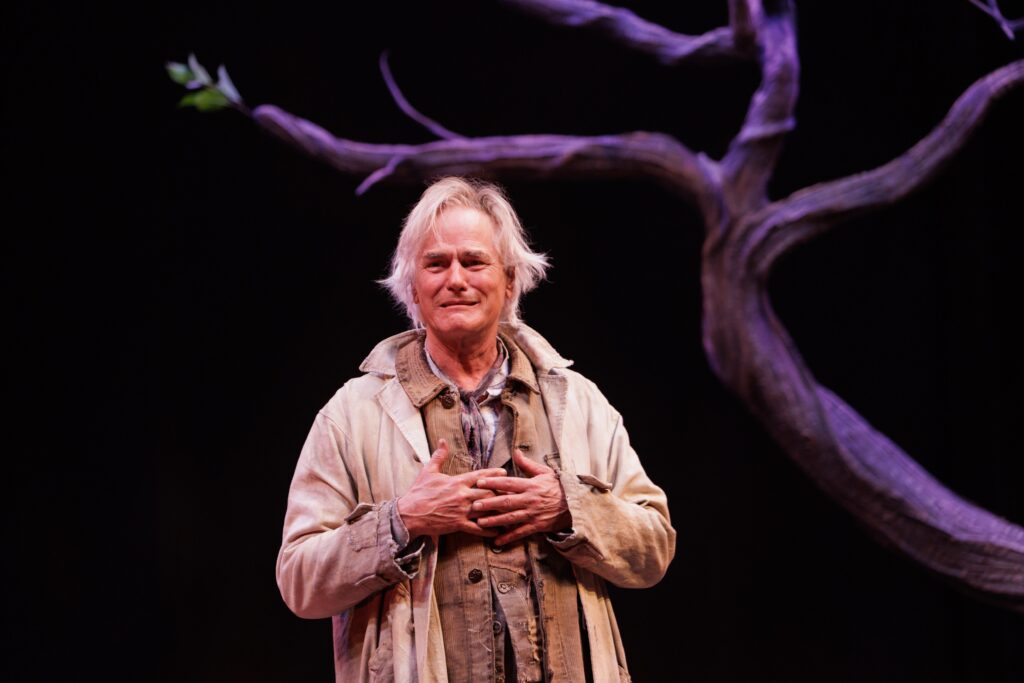
I felt close to Vladimir during that speech — just as, throughout the show, Gross feels close to the spectators. “The audience is with you. You bring them in. There isn’t a big division between the stage and the audience,” he said. “They’re the final piece of the storytelling. We need them to complete the circle. And that’s what I love about that theatre. It’s so intimate when you’re on that stage. I know it feels a bit more epic if you’re sitting in the house, but for us, it’s like they might as well be in our living room.”
Having now shared the play with thousands and thousands of those houseguests, Gross fully sympathizes with its reputation as a masterpiece. “It is one of the great achievements of human creativity,” he reflected. “At first blush, it seems like one thing, but the more you dig into it, it just pulls you deeper and deeper and deeper, until you really are astonished by Beckett.”
Waiting for Godot runs at the Stratford Festival unti July 31. More information is available here.
The Stratford Festival is an Intermission partner. Learn more about Intermission’s partnership model here.
Liam Donovan
Liam is Intermission’s senior editor. He lives in Toronto. His Substack newsletter is available at loamdonovan.substack.com.
LEARN MORE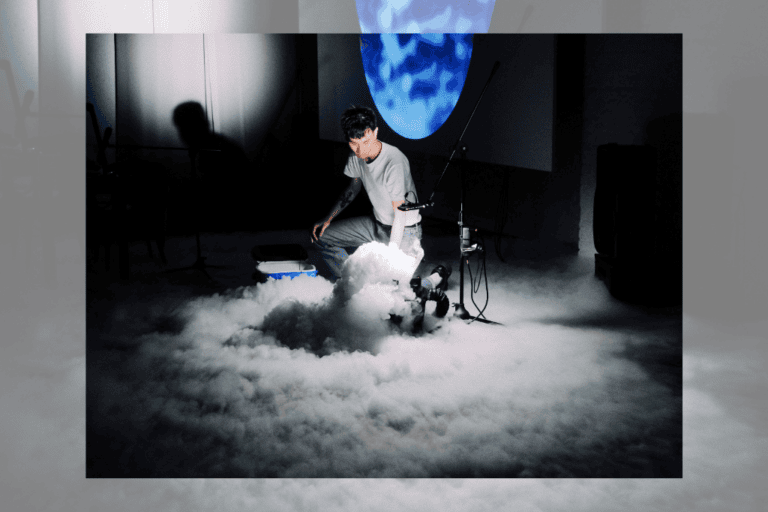 iPhoto caption: Ping-Hsiang Wang in 'Retina Maneuver.' Photo by Hang Su.
REVIEW: At this year’s SummerWorks Performance Festival, physical storytelling is central
From a dancer becoming a canine to a shy theatre director practicing his swordsmanship, the shows I’ve seen so far use performers’ bodies to dramatize defiance.
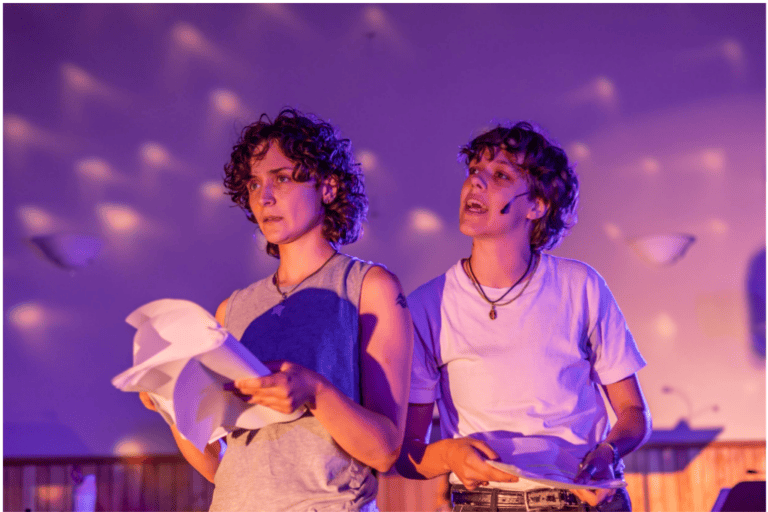 iPhoto caption: Anna Morreale and Luca McPhee perform in 'From Stardust' at the 2025 MADGEN Theatre Festival. Photo by Dave Klassen.
MADGEN Theatre Festival returns to the Danforth
Theatre of the Beat selected four producers under the age of 30 to receive paid mentorship from Toronto theatre-makers. From August 20 to 22, each member of the cohort mounts a new one-act Canadian play.
 iPhoto caption: Steven Sutcliffe and company in 'Twelfth Night.' Photo by Dahlia Katz.
REVIEW: High Park Twelfth Night pays tribute to the crazy things we do for love
As the play’s events ping-pong between seriousness and frivolity, Caroline Toal’s Viola appears constantly aware of the dangerous contradictions in the air, remaining guarded against the chaos' pull — and yet never entirely abandoning the possibility of enchantment.
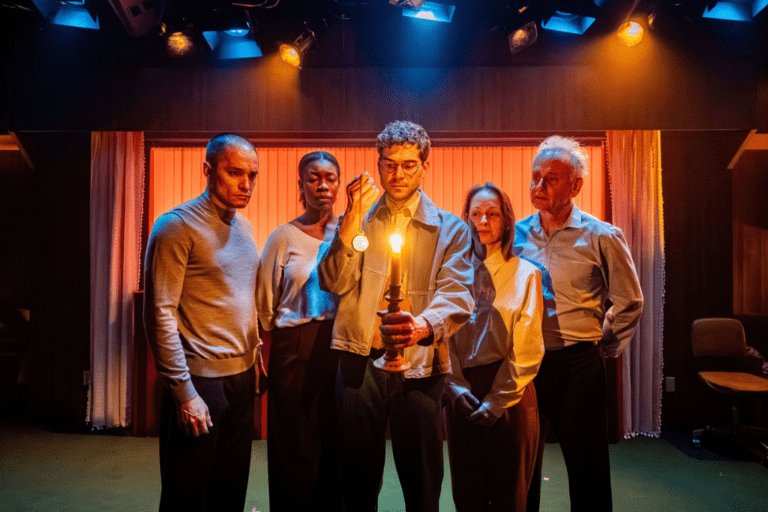 iPhoto caption: Karl Ang, Ivy Charles, Daniel Maslany, Mariya Khomutova, and Alon Nashman in 'The Division.' Photo by Dahlia Katz.
Productions at Crow’s and Theatre Passe Muraille win top honours at the 2026 Dora Awards
This evening at Meridian Hall, the Toronto Alliance for the Performing Arts (TAPA) announced the recipients of the 46th annual Dora Awards, celebrating local theatre, dance, and opera.
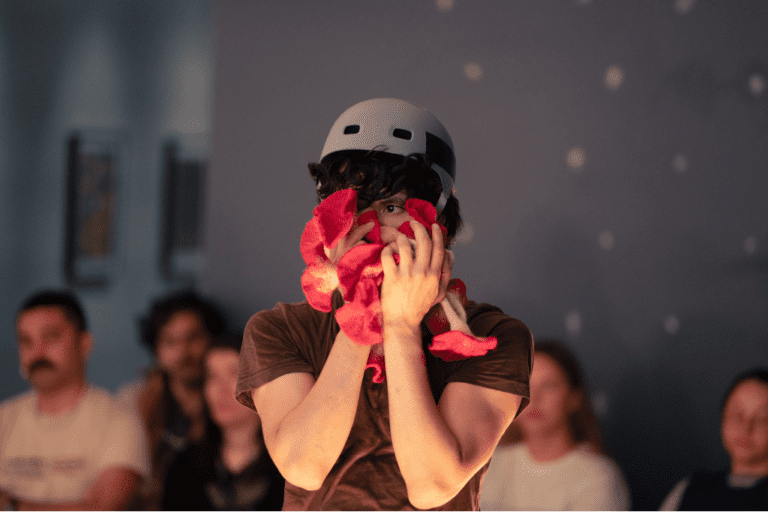 iPhoto caption: 'Golden Rez Dog.' Photo by Philippe Latour.
Creations from Denmark, Hong Kong, Iran, Mexico, and beyond feature in this year’s SummerWorks Performance Festival programming.
 iPhoto caption: Photo by Drew Berry.
REVIEW: An homage to Richard Foreman commands us to change our lives — and our theatre
Richard Foreman's plays usually drew on his personal journals and clocked in around 70 minutes; when he passed away last year at the age of 87, he left behind an invitation for directors to create royalty-free work from those journals. With the recently closed You Must Change Your Life at Toronto’s Alumnae Theatre, creator-director Ilana Khanin took up that offer to ludic, collage-like effect.
Comments