
Review: The Curious Incident of the Dog in the Night-Time
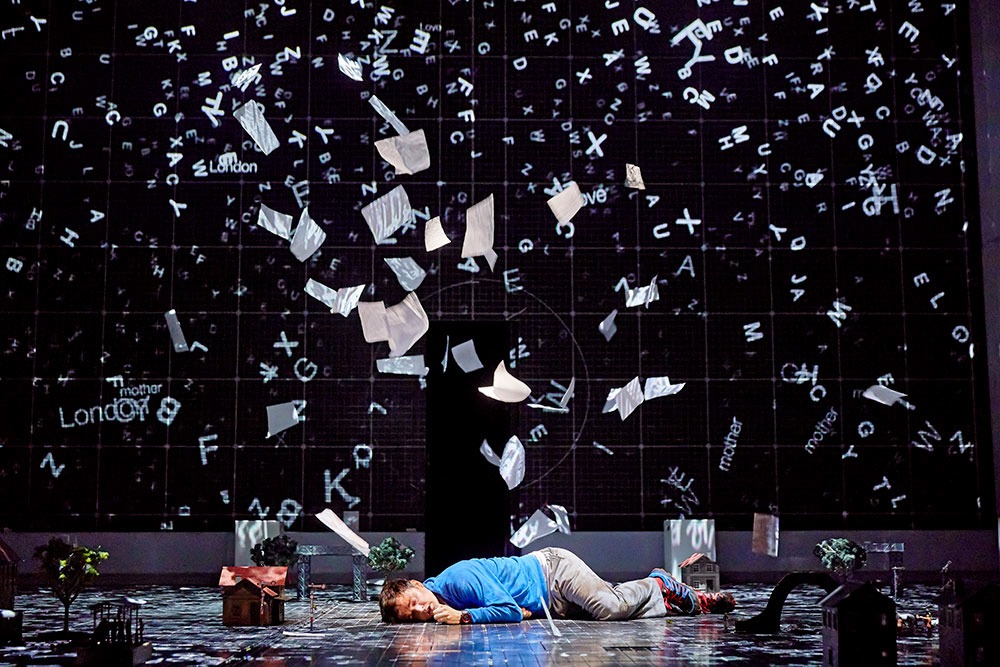 iPhoto caption: Joshua Jenkins (Christopher Boone) - Curious Incident International Tour. Photo: Brinkhoff/Mögenburg
The Curious Incident of the Dog in the Night-Time
National Theatre/Mirvish
Based on the novel by Mark Haddon, adapted by Simon Stephens, directed by Marianne Elliott. At the Princess of Wales Theatre. Runs until November 19, 2017.
Marianne Elliott is considered one of the best directors in England today. With her strong vision, particular style, and incredible attention to the smallest details, she creates illuminating productions that always serve the play. The Curious Incident of the Dog in the Night-Time is no exception.
As the play opens, Elliott instantly brings us into the chaotic, noisy, flashing-lights-filled world of Christopher Boone, a fifteen-year-old mathematical genius with autism. Adrian Sutton’s percussive music blares, Paule Constable’s lighting pulses and throbs, and Bunny Christie’s black set of precisely drawn squares on the walls almost seem to move in all this distraction.
This bombardment lasts about fifteen seconds and gives us a visceral sense of the world Christopher lives in. But, to those around him, Christopher, played by Joshua Jenkins, is calm, articulate, and generally inexpressive. Only when the noise gets to him or someone tries to touch him does he go ballistic.
Jenkins beautifully conveys Christopher’s aloofness and isolation from those around him. He always seems preoccupied in his own world when someone is talking to him, and instead of listening does things like put Lego-like pieces together on the floor. He never laughs or smiles. His speech is clipped (no dropped endings to words for this kid), he gets impatient with turns of phrases that seem impossible (“in a pig’s eye” really frustrates him), and the figurative world with all its subtleties confuses him.
The rest of the cast—his mother, father, teacher, neighbours—sit on ledges around the set. They are always present, always quietly observing Christopher as he makes his way through life.
Christopher believes his mother, Judy, died eighteen months earlier, because that’s what his father told him. His father, Ed, played by David Michaels, is still picking up the pieces. As a single parent, Ed tries valiantly to have patience with Christopher, but he’s struggling. Christopher was just accused of killing his neighbour’s dog with a garden fork, which has set him off on a mission to find the real killer. But this is not a murder mystery. This is a play about an autistic kid taking control of his life.
Christopher is shown compassion and understanding by his teacher Siobhan, played with tenderness by Julie Hale, who is trying to teach Christopher how to be more independent. Judy appears throughout the play in a moving performance by Emma Beattie. She aches to touch or hug her son, but when she asks him if she can hold his hand, he says no. The cast is strong overall except for the one-note angry performance of Oliver Boot as Roger Shears, the estranged husband of Christopher’s neighbour. He is furious in every scene. These are jarring moments in an otherwise fine production.
Playwright Simon Stephens has taken Mark Haddon’s quirky book and adapted it to the stage in his own inimitable way. Stephens is interested in the characters who don’t quite fit in, who are oddballs on the edge of society, but who still function. By illuminating Christopher’s alienation and isolation, the audience naturally embraces him. Stephens has beautifully captured Christopher’s matter-of-factness, his watchfulness, and his perceptions of the world—perceptions the audience comes to share and understand. Just as Judy wants to hug her son or even hold his hand, by the end the audience does too.
For tickets or more information, click here.

Lynn Slotkin
Lynn is the former theatre critic for Intermission, and currently writes reviews on her blog The Slotkin Letter. She also does theatre reviews, interviews, and commentary for CIUT Friday Morning (89.5 FM). She was a theatre reviewer for CBC's Here and Now for ten years. On average, she sees 280 shows a year.
LEARN MORE iPhoto caption: Jane Spidell in 'Twelve Dinners.' Photo by Dahlia Katz.
REVIEW: Family tensions run high in TIFT’s intimate Twelve Dinners
In the now-closed Twelve Dinners, an autobiographical play written and directed by Steve Ross, audiences received intimate access to an unvarnished version of a younger Ross through 12 evening meals with his parents.
 iPhoto caption: Members of the company of 'Narnia.' Photo by Dahlia Katz.
REVIEW: Bad Hats’ Narnia is a joyful, heartwarming escape
The spirit of openness and the joy of discovery rule over this Narnia. Open the wardrobe and see.
 iPhoto caption: Members of the company of 'Robin Hood.' Photo by Dahlia Katz.
REVIEW: Canadian Stage’s Robin Hood panto is anti-capitalist fun for the whole family
Following Ross Petty’s legacy of scene-stealing, Damien Atkins as the evil Prince John is easily the greatest delight of the show.
 iPhoto caption: Lauren Gillis and Alaine Hutton in 'Public Consumption.' Photo by Eden Graham.
REVIEW: Lester Trips’ stylish Public Consumption captures the internet’s profound emptiness
Rather than directly representing online life, Public Consumption speculates — with virtuosity — about how the digital world affects our bodies. And the show's findings are by no means comfortable.
 iPhoto caption: Tony Ofori and Daren A. Herbert in 'Moonlight Schooner.' Photo by Dahlia Katz.
Kanika Ambrose’s Moonlight Schooner is animated and visually stunning, but its individual pieces don’t come together as neatly as I would've expected.
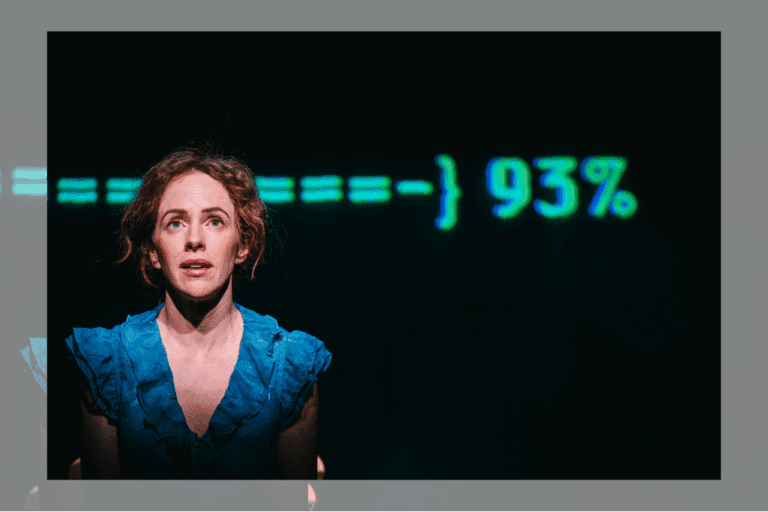 iPhoto caption: Fiona Mongillo in 'Reproduktion.' Photo by Ann Baggley.
REVIEW: Here For Now’s well-acted Reproduktion attempts to tackle too much
Amy Rutherford’s world premiere script is ambitious and the material it covers is complex — but the narrative feels disjointed.
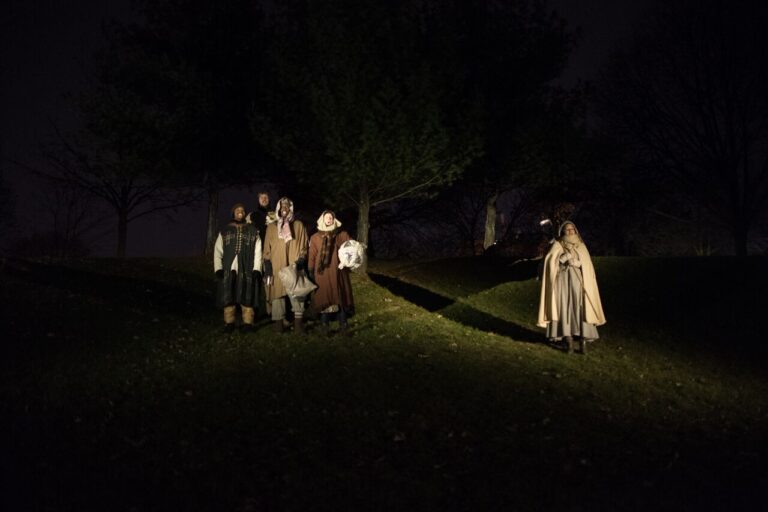 iPhoto caption: Marcel Stewart, Dan Mousseau, Christef Desir, Alex Bulmer, Shakura Dickson in The Story. Photo by Neil Silcox
It was frigid the night I saw the production, and when you are freezing and can’t feel your fingers or toes, time-wasting shenanigans wear thin.
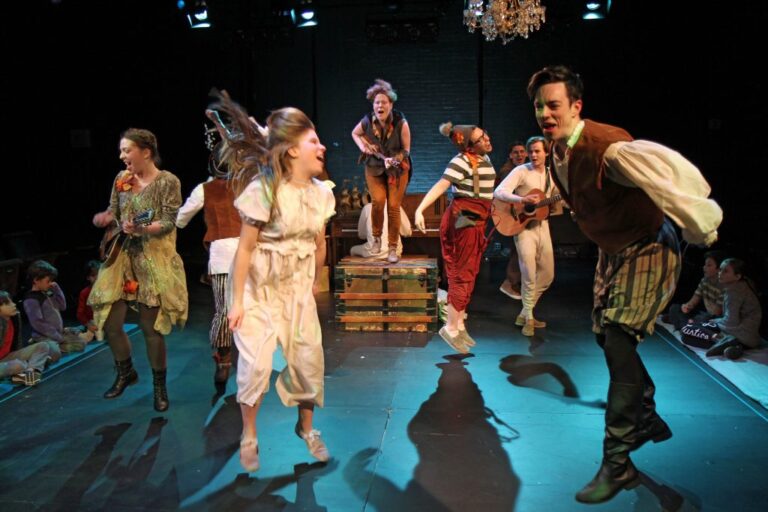 iPhoto caption: Lena Maripuu, Graham Conway, and Peter Pan ensemble. Photo by Nicholas Porteous
Joy to the world—the most inventive, lively, whimsical production of Peter Pan has arrived for the holidays!
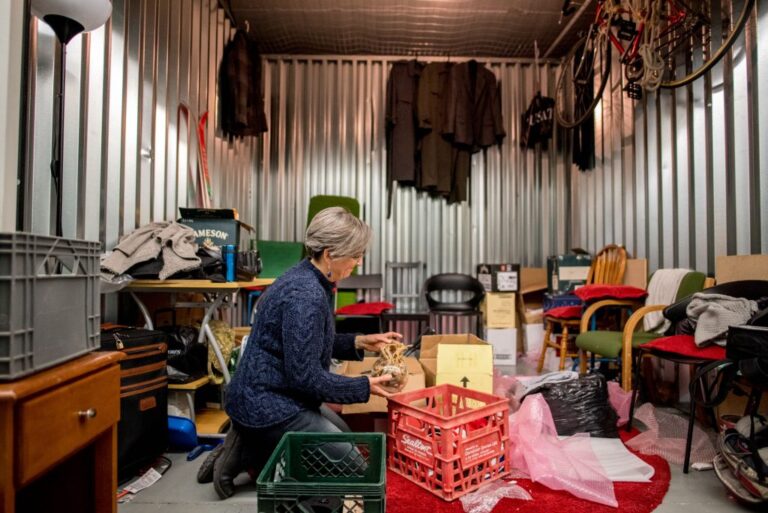 iPhoto caption: Robyn Stevan in The Mess. Photo by Dahlia Katz
Co-creators Mikaela Davies and Polly Phokeev have devised a short, complex, layered story of how the mess a person creates can affect those around them.
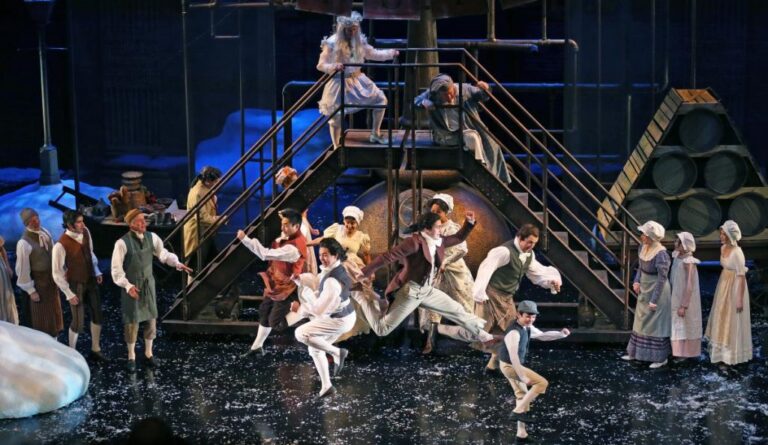 iPhoto caption: Company in the Grand Theatre's production of A Christmas Carol. Photo by Claus Andersen
Reviews: A Christmas Carol (x2)
Reviews of two productions of A Christmas Carol—Ross Petty Productions and the Grand Theatre, in London, Ont.—that couldn’t be more different.
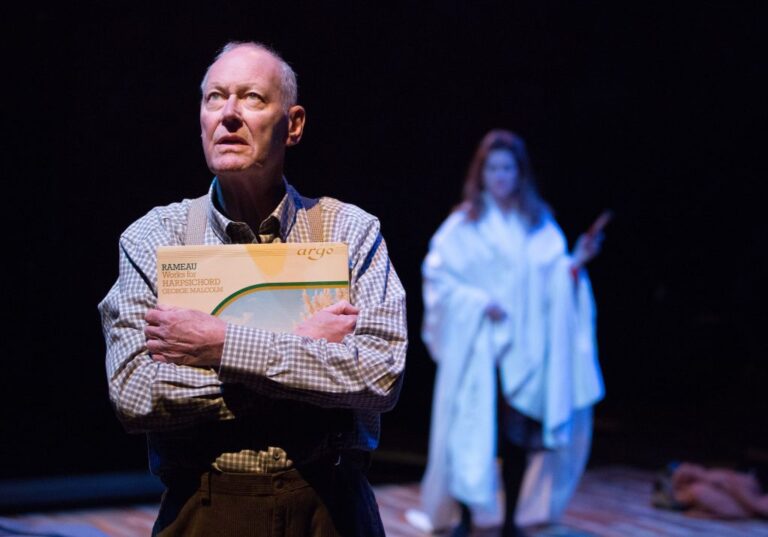 iPhoto caption: David Schurmann and Carly Street in Heisenberg. Photo by Cylla von Tiedemann
Of the three productions I’ve seen of Heisenberg—on Broadway in New York, the West End in London, and here in Toronto—this one is the best.
Comments