
In Conversation: Jordan Tannahill
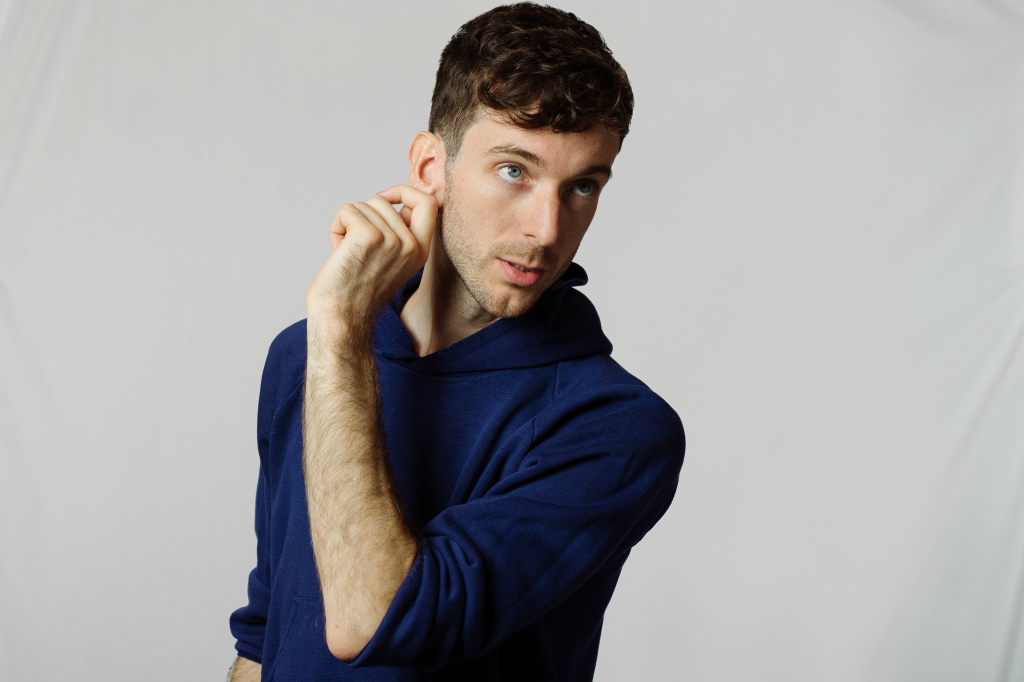
Jordan Tannahill’s new show Declarations, which he wrote and directed, opens at Canadian Stage this week. The show uses gesture and choreography to explore mortality and how hard it is for us to think about it. He told us why dance helped him understand death, and what traditions he made sure to avoid.
On art and death
I think there’s maybe only two muses in the world: love and death. Everything is pretty much a permutation of that. Death has been portrayed pretty much in every possible way that we can think of in music and painting and visual art and dance, and certainly theatre.
Declarations is a kind of ritual. An ecstatic ritual, I guess, about what it is to be alive, and to have a body, and to face down death fearlessly. And how it is we can continue to live with pleasure, and joy, and to notice the nuance in the sublime details that make up our everyday lives. How we can continue to take pleasure and derive meaning from that, in the wake of our inevitable death.
A thousand declarations
I wrote a thousand declarations that began with the words “this is.” The piece begins with “This is the thing. This is not the thing. This is my mother. This is her body in the shower. This is the morning light.” And it goes through these various declarative statements, some of which are very mundane. Some of them are quite humourous, some of them are more lyrical. And through the thousand declarations, these various narrative threads emerge, and this portrait of a son’s relationship with his mother emerges.
For me, these declarations are about creating a kind of archive, a living archive of sensation and sense memory, and images of a life lived. Of what a body accumulates while spending time on earth. And we get a sense that this body, or perhaps someone very close to it, is at a kind of moment of reckoning, or is passing from life into death, and is sort of making this record as a way of coming to terms with that.
On the limits of language
There’s so much you can do before an audience, in a space, live. And for me, I wasn’t interested in telling a story as such, or having characters as such. For me it was about tapping into this kind of primal howl.
When talking about life, death, and the sublime, at times words fail us. At times storytelling and characters fail to reach those heights, to articulate the immensity of what these ideas contain. And so I felt a need for what lies beyond that. What lies beyond the breakdown of language, or storytelling. For me that begins to exist in a world of ritual. And that’s in a sense what we go to the temple to articulate or to explore: that which we cannot give language to.
I think in a lot of the stories that I’ve told, words only get us so far. When directing Concord Floral for the first time, I was building that show with an image world in mind, with the sets and with music and with lighting. Those were texts that were just as important to me as the dramatic text. I really do think, in live performance, that lighting, sound—these are texts. Movement is text. The actors’ voices are texts. The piece that we end up experiencing is so much beyond the written word.
Why joy is part of the conversation about death
I guess this all seems very abstract. But for me it’s based in this desire to confront death in a way that is joyful. It’s actually a joyful celebration of what it is to have lived. I’m thinking about this a lot at the moment because my mother is confronting a terminal illness, and I’m confronting her terminal illness.
I wanted to eschew the kind of conventional tropes of work about these issues. [Declarations] could not be sentimental. I didn’t want it to be literal, or art for therapy’s sake. I didn’t want it to be saccharine or sappy, or even narrative, or a kitchen sink drama, or I guess any of the ways in which we [usually] see a mother’s illness depicted on stage. For me it had to reach beyond that.
Though the subject matter perhaps is sombre-seeming—how we reckon with, how we face down death fearlessly, I think it’s actually a very joyous piece, filled with a lot of humour and a lot of play. We have this time on Earth to play and to pursue our curiosities and to experience pleasure and to connect with one another.
The power of ritual
I’m atheist, and I don’t believe in a kind of higher supreme being who is sort of constructing or architecting everything. I really believe in change and chaos that’s in the void. But I also do believe in the power of ritual, and of a group of people coming together, and having a kind of collecting reckoning of something. And for me, theatre is a place for those kind of spiritual questions.
Maija Kappler
Maija is the co-founder and former co-editor of Intermission. She’d like you to know that her name is pronounced just like “Maya.”
LEARN MORE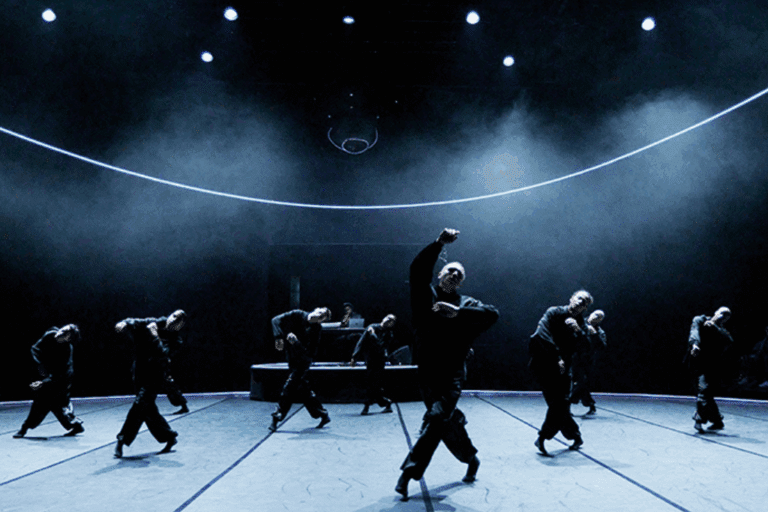 iPhoto caption: Photo by Fabian Hammerl.
In A a | a B : B E N D, choreographer Aszure Barton aims to rebuild dance from the inside out
“It’s so easy to over-intellectualize dance in general, but B E N D is about hearing and moving to cool-ass music together,” says Barton ahead of the show's run at the Bluma Appel Theatre.
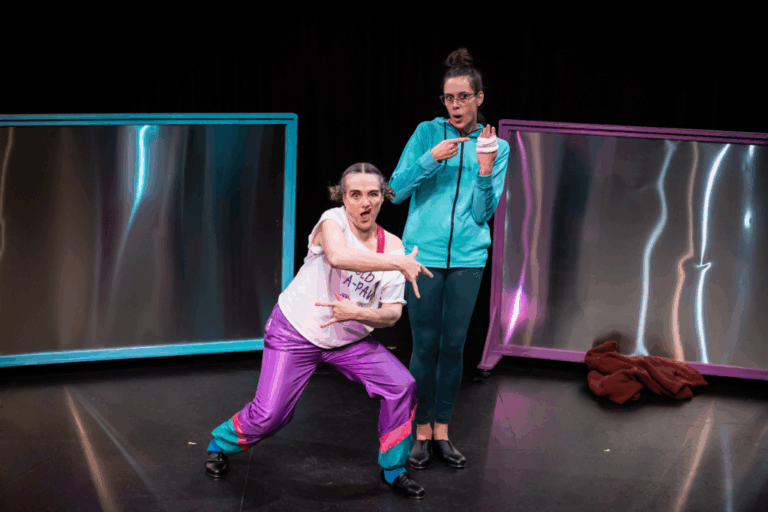 iPhoto caption: Elinor Holt and Ellen Close in 'How Patty and Joanne Won High Gold at the Grand Christmas Cup Winter Dance Competition.' Photo by Benjamin Laird.
“We’re living in a world right now where failure is not an option,” says actor Elinor Holt. “And a lot of times people would rather not try anything at all, rather than try something and risk failing at it.”
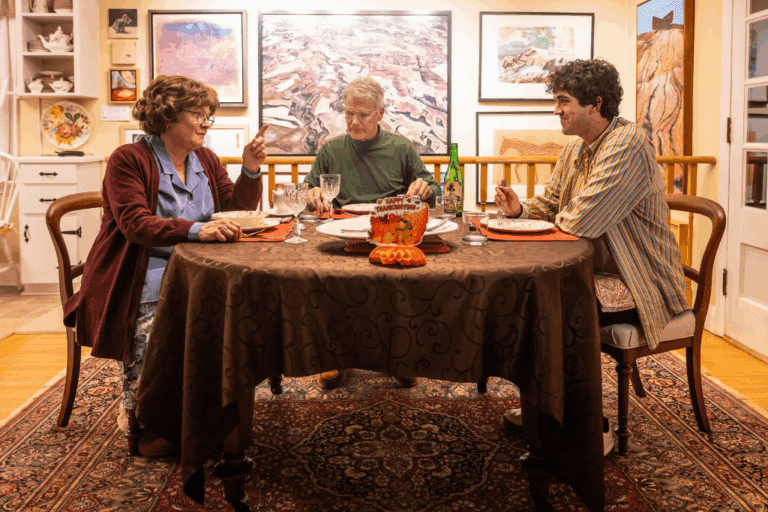 iPhoto caption: Jane Spidell as Bettye, Kevin Bundy as Jim, and Noah Beemer as Steve in 'Twelve Dinners.' Photo by Dahlia Katz.
With TIFT’s Twelve Dinners, actor Steve Ross makes the leap to playwright-director
"I love sitting with the actors before rehearsals and discussing, especially when they ask questions,” says Ross. “I love the blocking and staging. I love directing my own work, but find it challenging."
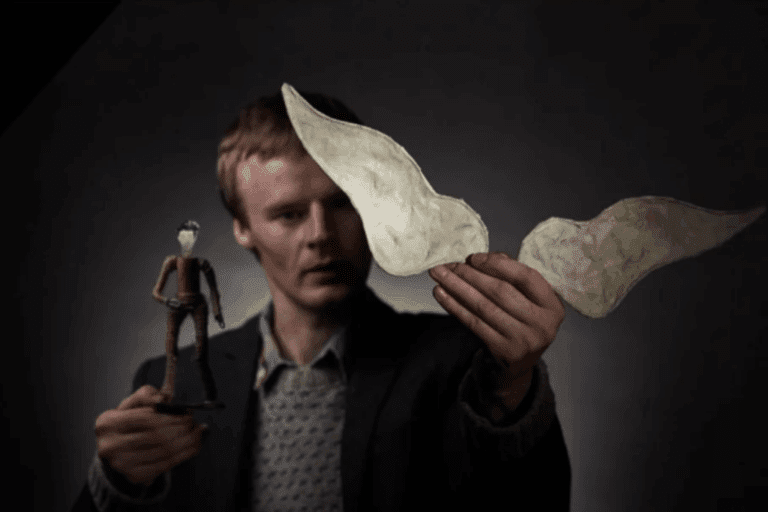 iPhoto caption: Manus Halligan in Dan Colley's adaptation of 'A Very Old Man with Enormous Wings'. Photo by Ste Murray.
A contemporary Gabriel García Márquez adaptation touches down in Toronto
A Very Old Man with Enormous Wings has toured internationally since 2022, with a shifting cast of performers. Halligan and Beaman, the original actors and co-adaptors, will reprise their roles for the Toronto premiere.
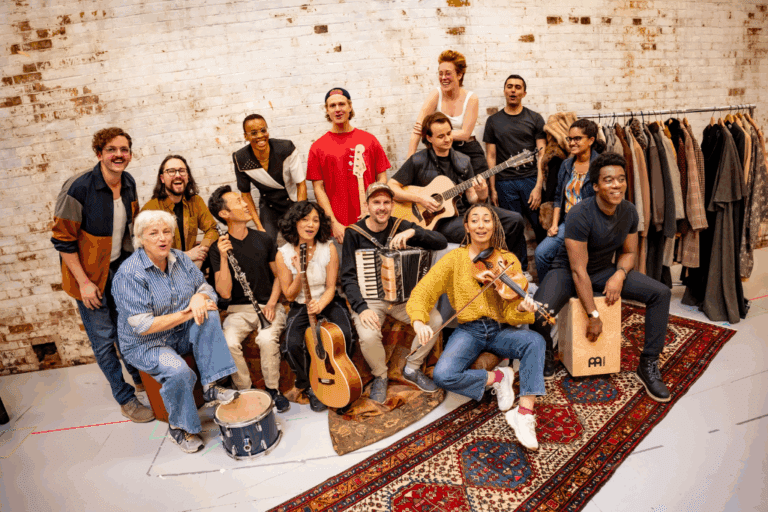 iPhoto caption: 'Narnia' in rehearsal. Photo by Dahlia Katz.
"What emerged for us was this idea of life cycles,” reflects Narnia adaptor-director Fiona Sauder. “‘What happens when you get stuck in one season [of life], and what happens when that season comes to an end? [What things] have to die and fall away in order for new things to grow?’”
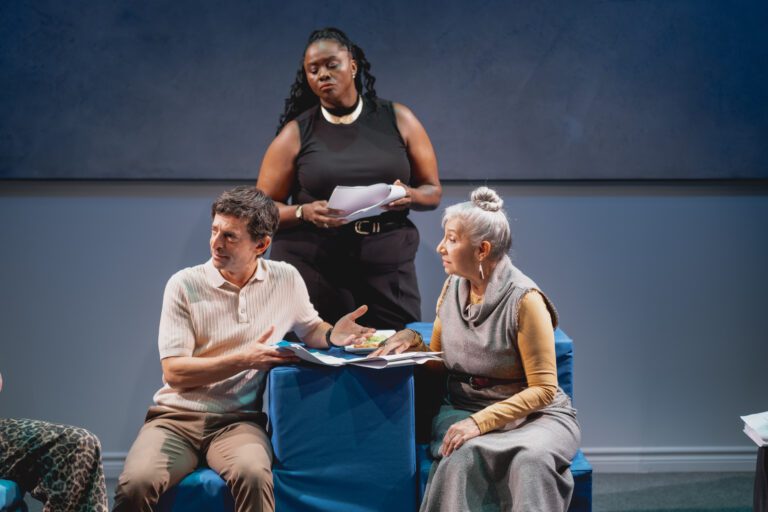 iPhoto caption: Jordan Pettle, Janelle Cooper, and Monique Mojica in CHILD-ish. Photo by Jae Yang.
Tarragon’s upcoming show gives audiences a verbatim taste of children’s wisdom, wit, and weirdness
The first inklings of CHILD-ish came to Drake in 2017. “I got to an age where I started having a lot more kids in my life,” he said. That “got me curious about what adults can learn from kids: playing with and flipping that power dynamic of who’s the learner and who’s the teacher.”
A Message from Intermission’s Editors
May Antaki and Maija Kappler, co-founders and co-editors-in-chief of Intermission, are stepping down.

Casting Announcement: what I call her
Here's the cast for Ellie Moon's play "what I call her," directed by Sarah Kitz, opening at Crow's Theatre this November.
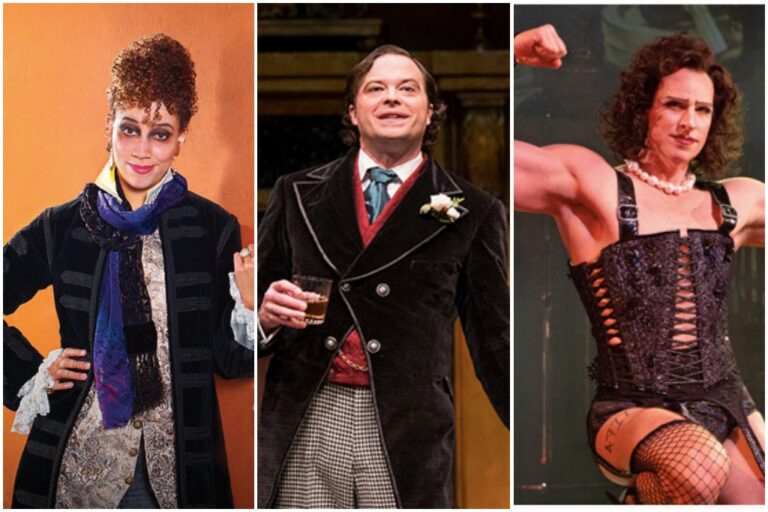
Theatre this Week: Stratford Edition
Here are the Stratford Festival plays to see for the week of June 4 - 10, 2018.
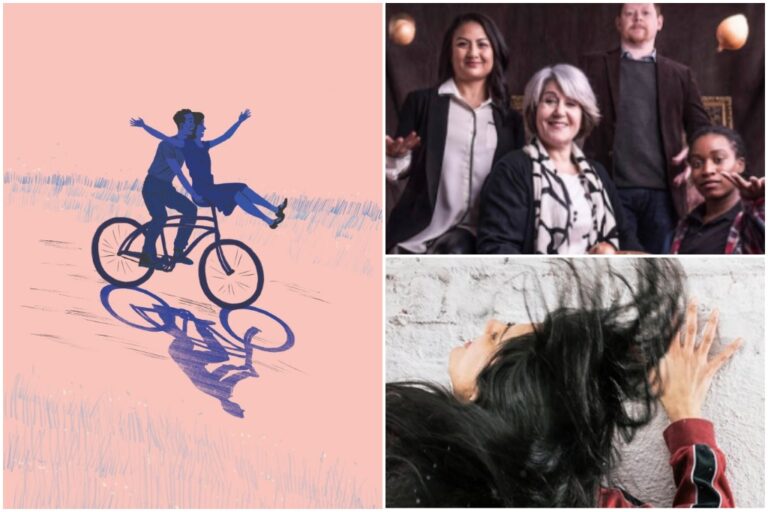
Theatre this Week: May 28 – June 3
These are the plays to see in Toronto for the week of May 28 - June 3, 2018.
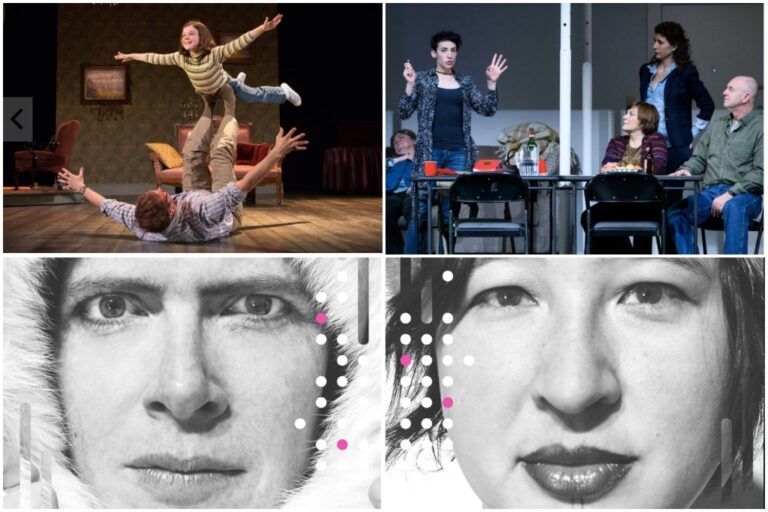
Here Are the 2018 Toronto Theatre Critics Award Winners
Toronto's theatre critics just announced their favourite shows of the year for 2018.
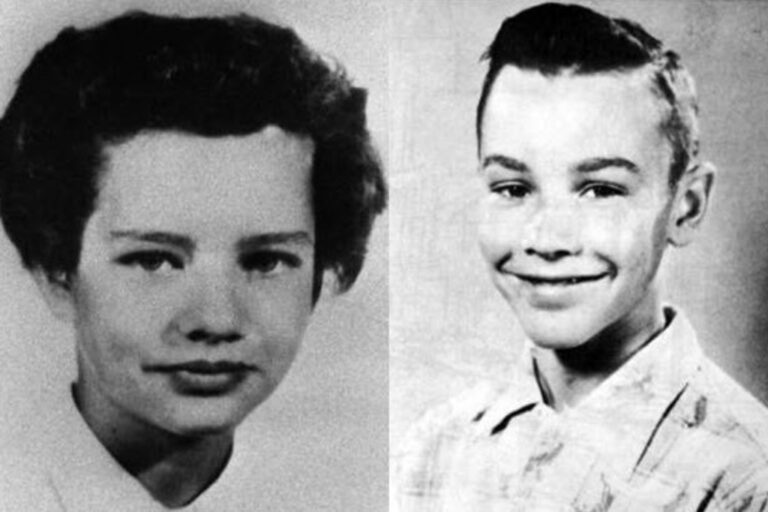 iPhoto caption: Lynne Harper, left, and Steven Truscott, right
Telling the Story of the Murder Trial that Changed the Country
Fiction about a real-world tragedy risks sensationalizing the events that remain painful for a lot of people. But they also provide the opportunity to explore human behaviour, to directly address the impacts of violence and trauma.
Comments