
I’m Happy Just to Freelance with You
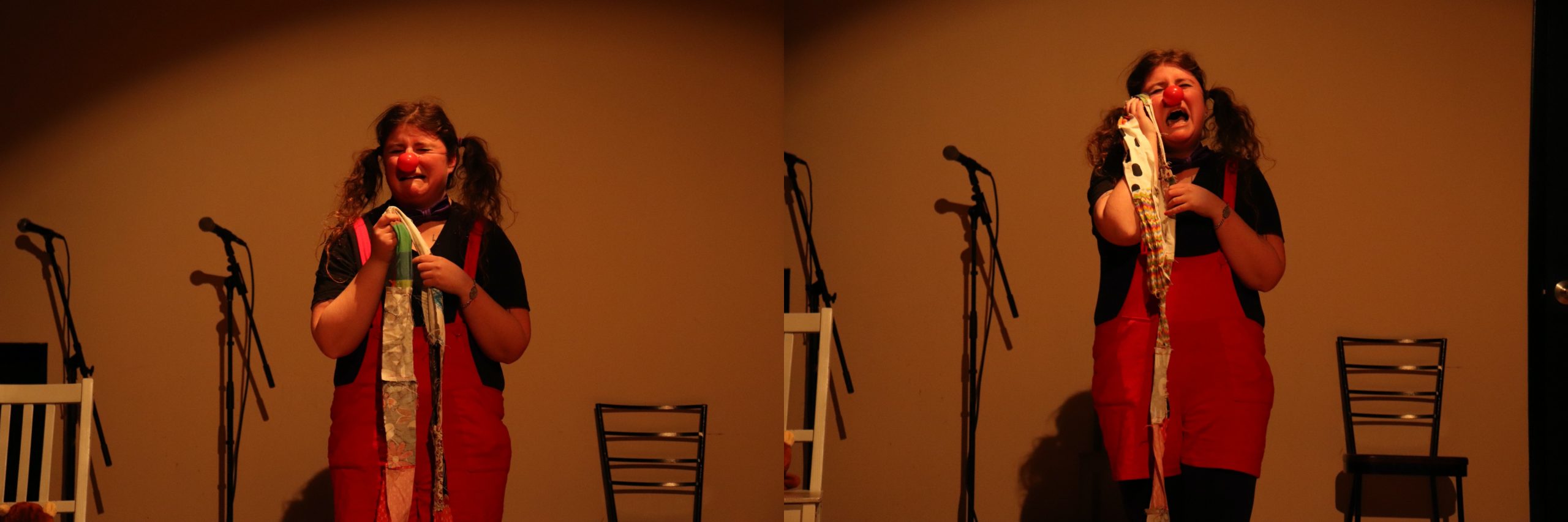
I’ll start off with this: I know the title of this article is stupid. It’s a Beatles reference for maybe three people, but I spent a good half hour alone just thinking of a play on words for dance and freelance and I had to move on. So, we’re here, and that’s that, and now we can move on together.
This is an article about being a freelancer during the current pandemic. I will say this upfront because the Internet likes to get angry about things: I do not claim to be speaking on behalf of every freelancer. I speak on my personal experience. Please don’t get angry with me.
Who am I? I am an emerging artist (I hate the term, but will use it until someone comes up with a better one). I am a Toronto theatre artist. I am a playwright, a stage manager, and everything in between. And I am a freelancer. I am also gay, Jewish, 5’0”, a lover of dogs, and an eater of cheese. Those last details sound like they’re lifted from a dating profile, but I wanted to sound more like a person and less like a resume.
As most people reading this article know, working in the arts is hard. It can be so redeeming, so magical—but it’s hard. Even in a city like Toronto, where the arts make up a big part of the cultural landscape. Even though Toronto is filled with many, many incredible theatre companies. It is something I am reminded of every time I sit down to write a play and get writer’s block. It is something I am reminded of every time I apply for an E-Drive job knowing I probably won’t get it. It is something I am reminded of because I graduated theatre school four years ago (shout-out, Concordia University) with a Major in Playwriting, and have only had one real production in Toronto of a show I have written.
But, as I said before, working in theatre has its redeeming qualities. It is, for lack of a better word, awesome to see a production that just works. And that happens a lot in Toronto. It’s amazing when you do get that job with that company you respect. It’s magical to be in a rehearsal room and see a show come together.
As someone who is not part of Equity, I float around. I freelance. I find what I can, often not for much money. But I like it because I love theatre. So, when this current health disaster struck Canada, and then Ontario, and then Toronto, I willfully ignored the fact that it may pull my life out from under me. Because I had two theatre contracts, I did not want to believe everything would be cancelled. I wanted to believe in the “show must go on” mentality.
But slowly, one by one, Toronto theatres made the announcement—completely fair, smart, and justified decisions—that they were canceling or postponing their seasons. This of course included my own contracts—one of which I had felt would lead to bigger things. I selfishly made it about me for a day, as I am sure a lot of people did; I did not want to believe that the world, or the arts, could just shut down.
As I woke up to reality, I realized my privilege may be showing. I know everyone is affected. The students, the teachers, the gig workers everywhere. Restaurants, transit workers, and healthcare workers now putting everything on the line. All the things that make Toronto great have just stopped—for the greater good.
I have seen these gig workers unite together in this time of crisis, even though we are now living in a virtual world. Over the past few weeks I have seen multiple Facebook groups pop up for people who have lost their service jobs or their arts jobs—and there’s a lot of crossover there—and who are just looking for support, whether that’s financial, emotional, or mental. Every day there are artists trying to decipher if our Prime Minister’s plans are going to assist us financially, or if we’re going to be kicked to the curb. (C’mon JT, you’re a former drama teacher!)
So yeah, it sucks to be a freelancer right now. The money has stopped. The jobs have been put on ice. There is nothing to apply to. The government has released an economic plan that may or may not help freelancers; the legal jargon gives me a headache about three sentences in. But eventually, everything will get back to normal—or at least close to normal. And before it gets back to normal, as artists, let’s do what we’re good at: let’s create.
It’s been happening online already, but let’s keep going. Let’s make music, write plays, film things, sing songs, recite poetry, paint, sculpt. The list goes on and on. Restrictions can make art more interesting. Challenges make art more interesting. And right now, we need interesting. To keep us sane, healthy, and safe.
But just like normal: don’t feel bad to charge for your art. Don’t let people talk you into donating your craft or making free things for them just because they’re having a hard time. We’re all having a hard time. People are struggling, and so are artists. We can all struggle together and still try to make a living. Not only do we as artists deserve to make a living—just like everyone else—but if we aren’t paid our community will stop making art. The theatre well will dry up, because artists will have had to move on to higher paying jobs (or just paying jobs period). You’re not selfish for asking to be paid. As one of my friends pointed out in a now viral post: everyone is sitting at home watching movies, TV, reading plays, doing virtual tours of gallery…artists are always there for people. Let’s be there for others; let’s not do it for free; let’s just do it. Now. After I write this, maybe I will sit down and start that play I’ve been meaning to write. And who knows, maybe something will come of it.
As I write this, I have in the background the YouTube live stream of “Places, Please: A virtual telethon to benefit The AFC.” This specific telethon was started by Michael Rubinoff, one of the producers of Come From Away and Producing Artistic Director of the Canadian Music Theatre Project at Sheridan College. This is one of the many fundraisers for artists started by artists in the country right now. Artists are looking out for artists, and our audiences will start to as well. We are planting our feet in and standing our ground as we have done before, demanding the pay, the equity, and the exposure. We’re still freelancing. We’re still in it together.
But we are also still doing what we always do: we are looking up. We are hoping, dreaming, and imagining. Because as pessimistic as I can be, I am still going to be an eternal optimist. I work in make-believe and imagination for a living. Everyone is going to have a mopey moment during this—that’s what happens when you’re inside all day. But then, after you have that moment, try to look up. Freelancers are strong. Try to keep going. Pick up that pencil, that paintbrush, that guitar, that camera, and let’s make art—together.
Julie Foster
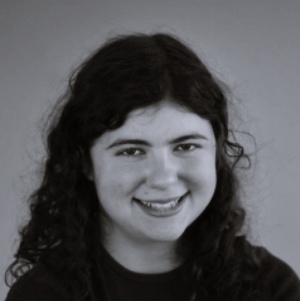
Originally from Toronto, Julie Foster is a graduate of Concordia University, having studied as a Major in Playwriting. She has had her plays and clown pieces performed at the Gala for Student Drama at the Mainline Theatre in Montreal, the SIPA Short Works Festival at Concordia University, the Montreal Fringe Festival, the SOLOS Festival, and OPIA Theatre’s Dark Crop Festival. Her play The Tenth Muse was performed as part of Filament Incubator’s second season and was nominated for a My Entertainment World Award for Outstanding New Work. As well as working as a playwright, Julie is a stage manager, having participated in shows at Concordia University, the Mainline Theatre, Marianopolis College, the Alumnae Theatre, Shakespeare in Action, and with Spur of the Moment Shakespeare Collective. Julie has also been a member of the Young Innovators Unit at Nightwood Theatre.
LEARN MORE
Comments