
REVIEW: Three Ordinary Men at Cahoots Theatre
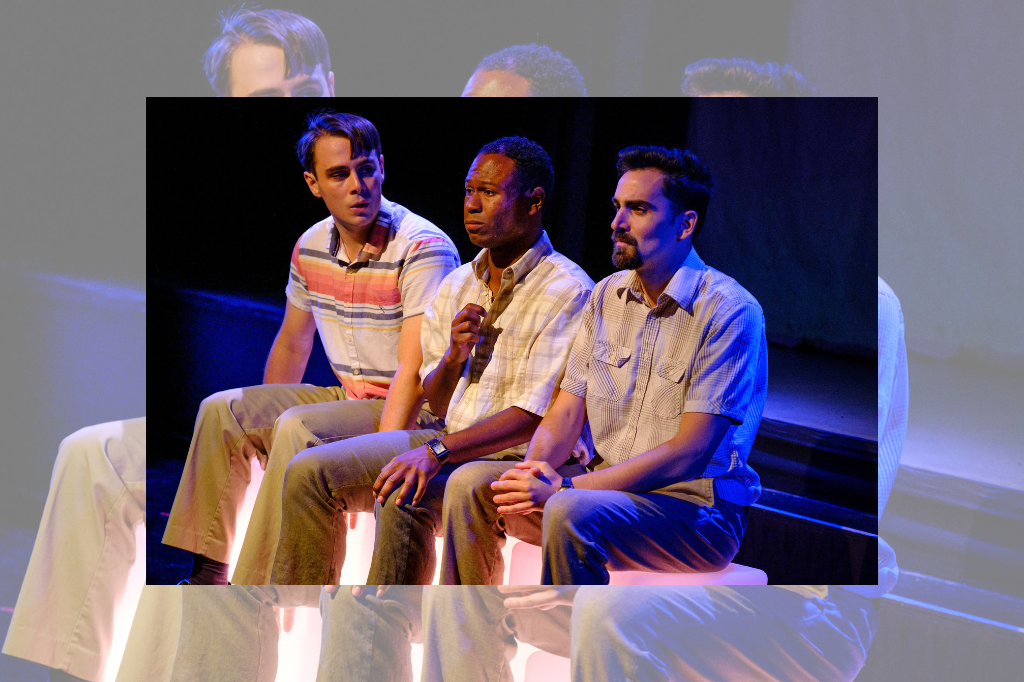
They were ordinary, but also extraordinary.
Steven Elliott Jackson’s play is based on the true story of American civil rights organizers Michael Schwerner, Andrew Goodman, and James Chaney, who were murdered in 1964 by law enforcement officers and members of the KKK – and in some cases, people who were both. The 1988 film Mississippi Burning was also based on this incident but focused on the FBI investigation following the three men’s disappearance.
Jackson’s play returns to the story and places Mickey, Andy, and James at the heart of it, representing them as sensitive and imperfect people who had similar convictions but one crucial difference: Schwerner and Goodman were white, and Chaney was Black. Throughout the play James (Jamar Adams-Thompson) reminds the other two that the fact of their working together is likely to draw hostile attention from police: “They couldn’t give a shit about me, but you guys are another story. That’s just betrayal,” he says. Mickey (Tristan Claxton) is an experienced organizer and knows the risks he’s undertaking, while Andy (Jack Copland) is greener, and doesn’t fully grasp the concern at first.
In a program note, director Tanisha Taitt makes important connections between this story and contemporary allyship: “How many of us would go to the mat — risk our very selves — to stand up for the rights of others?”, she asks. This provides the production with a clear, urgent framework, but Taitt does not push the point by interjecting contemporary references into her staging. Rather, the production, particularly through Shawn Henry’s projections, places the action in the larger context of ‘60s-era activism by, for example, showing images of Black and white people protesting together.
Taitt’s staging seems simple on the surface but is full of such smart, subtle choices which complement Jackson’s playwriting and allow her cast to shine. The BMO Incubator stage at Theatre Centre is essentially bare, save for four cubes which can illuminate from within: an ordinary rehearsal tool given extraordinary powers (Taitt is the set designer, with Claudia Tam designing costumes and props). A lot of the action takes place in moving cars, but this is not represented literally: the actors sit on the blocks facing outwards, while Henry’s projections do the work of simulating travel. When the men arrive at their destination — a church being used as a school and voter-registration site by anti-racism activists, and which has just been burned down — they simulate physical work by pushing the blocks with evident effort. The focus throughout is on clear communication and deep characterization, not on fussy blocking.
The actors are very well cast and offer emotionally grounded, thoughtful, and empathetic performances. When they speak, the words seem to come from their mouths for the first time; when they listen, they really are listening. There is welcome and fresh humour in early exchanges in which they navigate the integration of their existing relationships – Mickey knows both James and Andy, but James and Andy don’t know each other. None of the defining points of their characters are overplayed, and this is a testament to the writing, direction, and performances: Andy’s naïve but at the same time self-aware, and knows how to hold his ground; Mickey’s nervy and slightly brittle, but driven by deep conviction; and James is wise beyond his years but able to give and receive respect and love, as in his repeated statement to Mickey about the harassment that James’s family is receiving because he’s working with the activists: “It’s not your fault.”
Adams-Thompson, Claxton, and Copland play the final scene in which the men comfort and say goodbye to one another with complete emotional commitment, weeping freely, clutching each other’s hands, bent over with fear. On the night I attended, the production had so successfully invited investment that it felt like the whole theatre was united in pain and anger. In hopes that this excellent production will come back for a return run I’ll not explicitly describe a final coup de theatre in which attention is drawn back to the real-life figures behind Jackson’s play, but I will say that it’s perfectly conceived and devastating. A final wise choice was to run film-style credits before the curtain call, allowing the gravity of what’s just happened to land, and actors and audience alike to gather themselves before acknowledging the cast’s great work.
Taitt and Jackson previously worked together on his award-winning 2017 Toronto Fringe play The Seat Next to the King, and this production feels like a well-timed gateway into Fringe season — a reminder that great theatre doesn’t necessarily require big budgets, lavish sets, and long playing times. 80 minutes, a fine script, and a perfectly pitched production can lead to something extraordinary.
Three Ordinary Men plays at Theatre Centre through June 26. Information is available here. While the production is sold out, you may join a waitlist by calling (416) 538-0988 or signing up at the Theatre Centre box office at 1115 Queen St. W., Toronto.
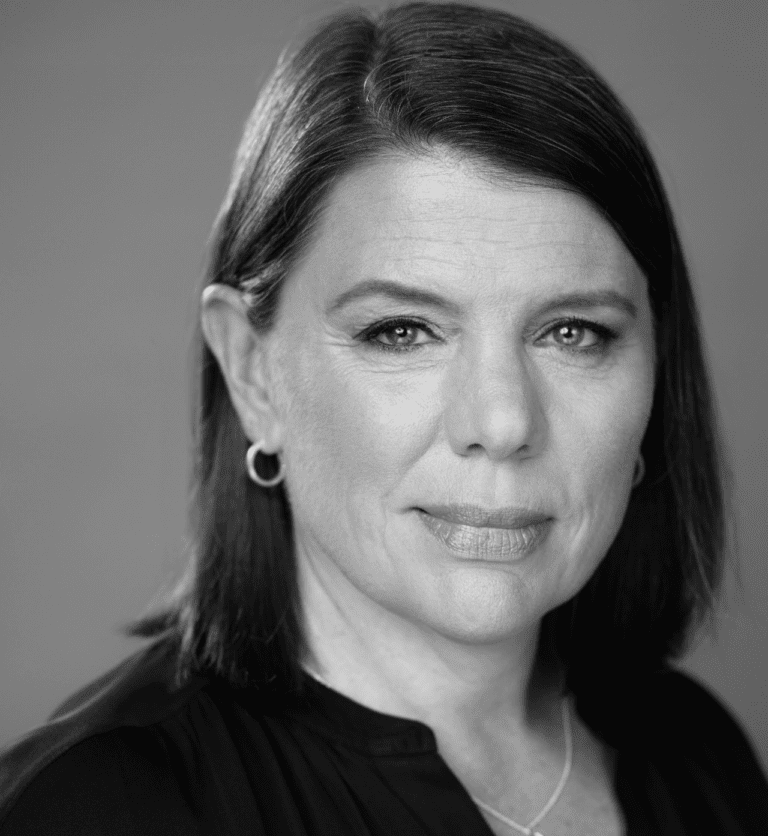
Karen Fricker
Karen Fricker is Intermission’s editorial director and adjunct professor of Dramatic Arts at Brock University. She has worked as a critic in Toronto, London (UK), Dublin, and New York City, and has a PhD in theatre studies from Trinity College, Dublin. Sustaining the field of theatre criticism in our digital age is a big focus of her work, through academic research projects and training/mentorship ventures including Page Turn and Youareacritic.com. She is co-director of the international research network Circus and its Others, and has researched the Eurovision Song Contest for two glorious decades and counting.
LEARN MORE iPhoto caption: Pearle Harbour in 'Pearle Harbour Walks into a Bar.' Photo by Eden Graham.
REVIEW: Luminato Festival’s Pearle Harbour Walks into a Bar is a sold-out jewel
You’ll get sung to, you may get walked over, and you’ll be peppered with gags that range from corny to salty to dad.
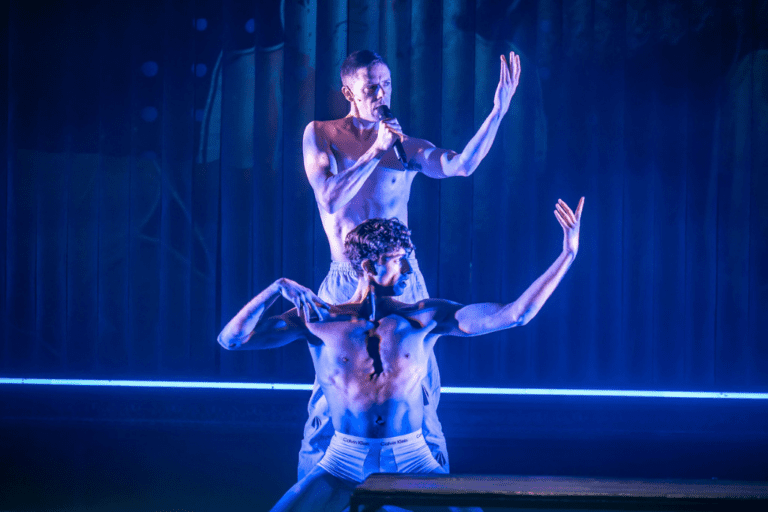 iPhoto caption: Damien Atkins as Oscar Wilde and Colton Curtis as Bosie in 'De Profundis.' Photo by Dahlia Katz.
Next season, Soulpepper Theatre wants to prove it’s ‘more than just a place that plays happen’
“The lobby is maybe even a more important meeting place than the seats in the audience, because that’s actually where the connection happens,” says artistic director Paolo Santalucia of Soulpepper’s 2026-27 season, which will feature a suite of public programming as well as 12 productions.
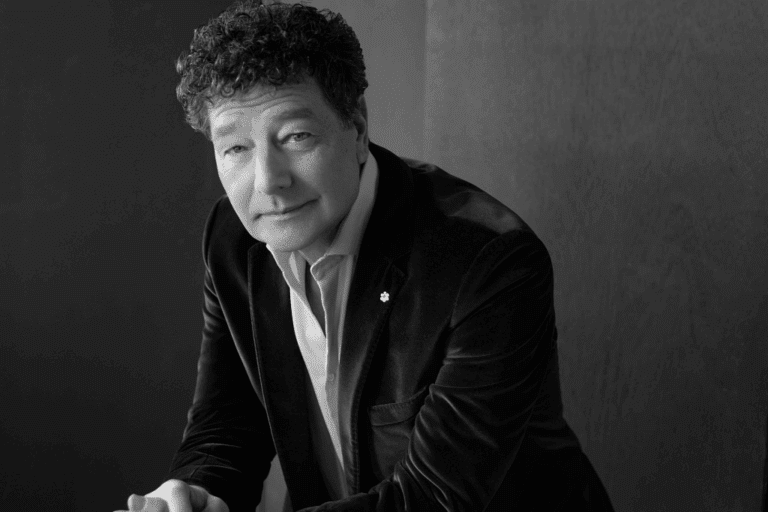 iPhoto caption: Headshot of Antoni Cimolino. Photo by Ted Belton.
“You want to choose things that feel important to the moment,” he says about building a Stratford Festival season. “If you choose plays and they don’t resonate, it’s very hurtful. You believe in them and the power of them.”
 iPhoto caption: Members of the company in 'Ransacking Troy.' Photo by David Hou.
REVIEW: At the Stratford Festival, two adventurous new plays reflect on war
Erin Shields’ brilliant Ransacking Troy reimagines one of Western culture’s foundational narratives — the Trojan War — from the perspective of the women implicated in it. And in The Art of War, Yvette Nolan thoughtfully imagines the life of a Canadian soldier-artist in the Second World War, who’s wracked both by what he witnesses and the responsibility of recording it.
 iPhoto caption: Philip Myers as Mamillius (left) and Lucy Peacock as Time in 'The Winter's Tale.' Photo by David Hou.
Stratford Festival reviews: The Winter’s Tale and Anne of Green Gables
A winter story told by a melancholy child and a fanatical Lucy Maud Montgomery book club help frame the final two productions in the Stratford Festival’s 2025 opening week.
 iPhoto caption: Graphic by Krystal Abrigo.
York University’s Facing Backlash symposium builds solidarities in tough times
The symposium’s two packed days felt to me like the collective pursuit of an elusive, shape-shifting prey. But as participants shared experiences, and common-interest groups opened up their internal dialogue to the rest of the symposium, the contours of what we’re all up against started to come into focus for me, and I felt a collective sense of purpose growing.
Comments