
York University’s Facing Backlash symposium builds solidarities in tough times
 iPhoto caption: Graphic by Krystal Abrigo.
As part of Intermission’s coverage of York University’s Facing Backlash symposium, members of the 2023 IBPOC Critics Lab took over our Instagram story to document the two-day event. Their broader reflections, along with those of Intermission’s publishing and editorial assistant Krystal Abrigo, accompany this story.
As we face backlash, we should also probably define it. And that, it turns out, is a slippery task.
The two packed days of the Facing Backlash: Performance in the Age of Reactionary Politics symposium at York University felt to me like the collective pursuit of an elusive, shape-shifting prey. Nearly 40 artists, arts leaders, and academics gathered to talk about the current implications of theatre work driven by DEDI (decolonization, diversity, equity, and inclusion), with the goal of sharing experiences, solidarities, and strategies.
While event planning has been underway since late last summer, the aggressive actions of Donald Trump’s government to eliminate DEDI initiatives, curtail free speech, limit and control research in higher education, and cut funds to arts and culture organizations in the U.S. raised the stakes on Backlash, as did the symposium’s timing smack-dab at the end of the Canadian federal election cycle.
But what exactly were we talking about? The first Oxford definition of “backlash” — “a strong and adverse reaction by a large number of people, especially to a social or political development” — does not, to me, accurately or fully describe what was discussed at the symposium. Certainly the present forces being brought to bear against DEDI initiatives are strong and adverse, but the symposium brought home the ways in which backlash is experienced on the individual level as isolating and demoralizing, and how that’s part of its insidious power.
As participants shared experiences, and common-interest groups opened up their internal dialogue to the rest of the symposium, the contours of what we’re all up against started to come into focus for me, and I felt a collective sense of purpose growing.
The symposium consisted of nine panels over the two days, with speakers sitting in unusually comfortable cushioned chairs, giving a TV talk show vibe. Three panels focused specifically on artistic leadership, and featured an impressive array of artistic directors from Toronto, the GTA, and beyond. The other panels involved academics — including artist-researchers with faculty positions in universities, and IBPOC graduate students starting to navigate the academic world — speaking alongside artists and artist-activists. Topics included “Perseverance and Performance in Gender-Based Activism,” “Disability Justice — Lessons and Warnings,” and “New Approaches to Theatre Criticism,” on which I spoke along with Intermission senior editor Liam Donovan, members of the IBPOC Critics Lab, and others.

Speaking to the isolating and alienating effects of doing politically committed artistic and scholarly work, Palestinian artist and PhD student Rimah Jabr described the experience of “feeling censored, controlled — that your existence causes troubles, that your story is a problem.”
Black theatre leaders too shared the ways in which their work draws on and taxes their personal as well as professional capacities. For Mike Payette, backlash is the response of people who think “you [are] the cause of something being taken away from them.” Artistic director (AD) of Tarragon Theatre since 2021, Payette has heard from audience members that they dislike his programming, that they miss the previous AD, that “the stories you are offering don’t reflect me.” This is hard to receive, said Payette, and brings up feelings of hurt and shame.
The Shaw Festival’s associate AD Kimberley Rampersad recounted similar experiences in trying to evolve the festival’s practices to reflect the diversity of its acting company. “I believe in where we work,” said Rampersad, “but it’s built on the aesthetics of exclusion, a tradition that is so narrow that if you include others… it breaks it.”
Mumbi Tindyebwa Otu said she feels privileged to be AD of Obsidian Theatre when she considers the experiences of Black colleagues who lead historically white institutions as do Payette and Rampersad. “I get a different kind of backlash: ‘be Blacker!’”
Offering another perspective on the debilitating effects of backlash, artist and PhD student Shawn DeSouza-Coehlo talked about it as something that becomes internalized as “feed-forward.” The worst backlash to Kicked in the End, a magic show about race he performed at several Canadian fringe festivals last year, was his internal battle leading up to the tour, as he anticipated negative reaction to the show’s outspoken critique of racist systems. Backlash is a “tax,” said DeSouza-Coehlo, that he as a racialized artist “has to pay. Sometimes I can work through it… other days it just crushes me.”
Several theatre leaders discussed the challenges of navigating overlapping and contradictory responses to the current moment. Sarah Kitz, AD of Ottawa’s Great Canadian Theatre Company (GCTC), noted that in her experience backlash is far from unilateral. While being careful not to reduce audiences to demographics, Kitz said that in community conversations last fall, GCTC heard from older viewers that they didn’t like feeling lectured to, and from younger audiences who say that they’re not interested in work unless it tackles a political or social issue. Those younger audience members also told GCTC that they experience affordability and access struggles just to get to the theatre in the first place.
For her part, Debbie Patterson, AD of Sick + Twisted Theatre in Winnipeg, said she doesn’t experience backlash because there is “so little forward movement” in the broader culture around disability rights. Sick + Twisted was founded in 2016 to address the lack of representation of Deaf and disabled people in live professional theatre, and Patterson said that she looks forward to the company becoming obsolete when representation is achieved.
Speakers on a panel about academic projects centring DEDI outlined the ways in which they see backlash as part of historic and systemic patterns. Jennifer Roberts-Smith of Brock University characterized the current era of backlash as a response to “tiny small gains” made by people who are minoritized in or exist outside of hegemonic systems. “This is not new, this backlash,” said Roberts-Smith. “We could point to millennia of patterns.”
Roberts-Smith and University of Waterloo professor Nicole Nolette offered co-authored remarks about Staging Better Futures/Mettre en scène de meilleurs avenirs (SBF/MSMA), a nationwide project to address systemic inequities in theatre higher education in Canada which they co-lead (full disclosure: I am a member of the SBF/MSMA partnership, and Roberts-Smith is a Brock colleague). Within university environments in Canada and the U.S., said Roberts-Smith and Nolette, “the rhetoric of academic freedom is being used to resist the so-called woke ideology,” and systemic underfunding of higher education is layering onto backlash culture with a disproportionately negative effect on fine/performing arts and justice-oriented education.
University-based speakers offered interestingly varied strategies about how to relate to academic systems. University of Waterloo professor and artist Naila Keleta-Mae spoke of the complex, ongoing work of conducting justice-oriented research-creation work within academic bureaucracy, such as her own Black and Free project. “Pick your side and fight,” said Keleta-Mae when asked how to face resistance. “When you pick your side, you find your people.”
For Roberts-Smith and Nolette, the goal is systemic change rather than hacking the system, whereas University of Waterloo professor Shana MacDonald, who researches online gender-based violence, said she doesn’t believe institutions can change. “Rage is my superpower,” said MacDonald. “Those of us who get funds can redistribute the funds.”

Perhaps the plainest talk of the symposium came from venerable director-actor Philip Akin and Canadian Stage associate AD Jordan Laffrenier on a panel called “Lessons from Yesterday, Tactics for Today” chaired by symposium co-organizer Jamie Robinson.
Asked whether he worries that theatres are currently fuelled by white guilt, Akin noted that he’s been fully booked as a freelance director since he retired as AD of Obsidian Theatre in 2020. “If that’s white guilt, I’ll take it,” said Akin, but warning that “it’s a fine line. Whatever gets you into the room gets you into the room. What keeps you there is you.” If you get a job that ticks a DEDI box it’s “an opportunity, but it also feels cruddy. It feels like shit on a stick. But you have to deal with it.”
Akin and Laffrenier expressed reservations about the current surge of Canadian pride in response to Trump’s tariffs. “The nationalism of the moment is scary to me,” said Laffrenier. “If I’m driving in the States and I see a lot of American flags, I know I’ve gone the wrong way. I’m seeing a lot of Canadian flags these days.”
Addressing critiques of Canadian theatres programming American material, Akin noted that of the three Black plays in the upcoming Canadian Stage season, two are American. “When folks are saying ‘Canadian plays only,’ that would get rid of most of the Black work,” he said. (Akin and Laffrenier are the directors of those American plays at Canadian Stage.)
Akin expressed further concern about “Canadian plays only” discussions on Facebook devolving into celebratory talk of our storied theatrical past. “When you’re talking about the glory days, you’re talking about white theatre.”

While much of the weekend’s discussions focused on personal experiences of backlash, a panel featuring performance artists Jess Dobkin and Karen Finley and symposium co-organizer Laura Levin began to crystallize themes of solidarity, community, and finding joy. Dobkin shared a tube of hand lotion with Finley and then with the audience, and a shea butter haze wafted over the room as we listened to Finley and Dobkin talk about how they use their practices as artists and activists to resist capitalism and reactionary conservatism.
We can tell that resistance is successful, said Dobkin, when the powers-that-be start to express discomfort with certain ideas and practices. “It’s a lot more than them being uncomfortable. It means a lot of things we’re doing are working.”

There were many more smart and provocative ideas that came out of Backlash than I have space to dig into here: Further on the subject of discomfort, disability dramaturg and academic Jess Watkin’s observation that relaxed performances are about getting audiences relaxed enough to receive the material, but that doesn’t mean that the material itself has to be easy to take.
Performer and writer Heath V. Salazar’s assertion that advocacy is inherently part of their work because “spaces are not ready for trans people.”
A connection made by academic Michelle MacArthur about the relationship of backlash to backslide: “We have to be vigilant,” she said, to make sure that negative response to DEDI initiatives doesn’t set us back.
Rampersad’s gritty declaration that “backlash is fuel,” something she said she learned from her mom.
Akin’s proclamation that responses to backlash against Black Out performances were just too Canadian nice: “Why didn’t someone stand up and say ‘yo muthafucka you’re not invited?’”
In reflecting on the symposium, I’m holding onto the experiences that took considerable strength for participants to share, and thinking about the negative effects of gaslighting and isolation that are part of backlash’s toolkit. The creation of solidarities and the affirmation of community that happened in those 48 hours are important steps towards the articulation of collective actions. There’s much more work to do, but Backlash generated momentum with which to begin.

York University is an Intermission partner. Learn more about Intermission’s partnership model here.
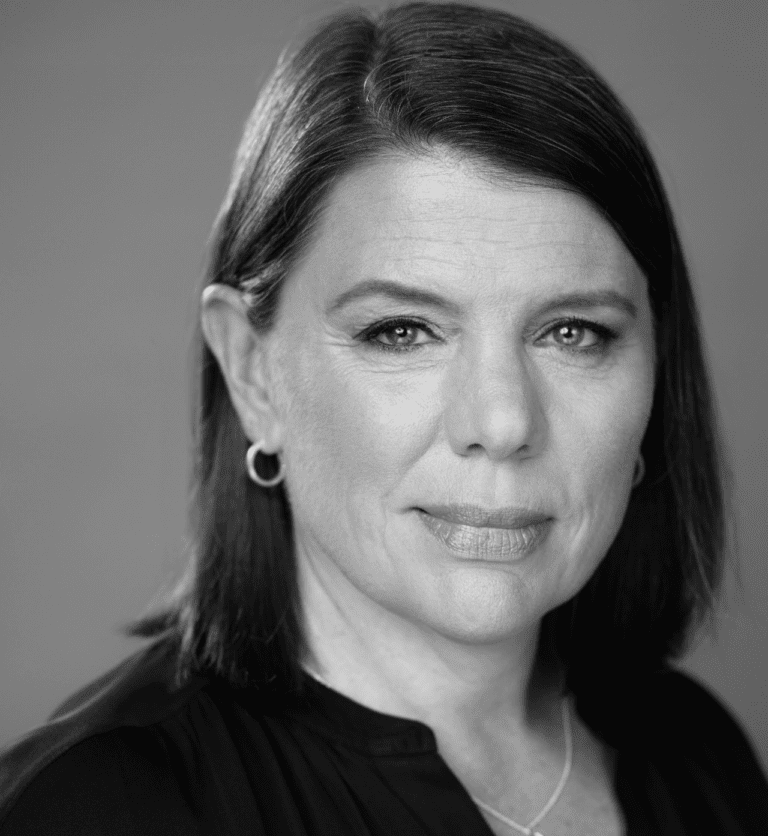
Karen Fricker
Karen Fricker is Intermission’s editorial director and adjunct professor of Dramatic Arts at Brock University. She has worked as a critic in Toronto, London (UK), Dublin, and New York City, and has a PhD in theatre studies from Trinity College, Dublin. Sustaining the field of theatre criticism in our digital age is a big focus of her work, through academic research projects and training/mentorship ventures including Page Turn and Youareacritic.com. She is co-director of the international research network Circus and its Others, and has researched the Eurovision Song Contest for two glorious decades and counting.
LEARN MORE iPhoto caption: Pearle Harbour in 'Pearle Harbour Walks into a Bar.' Photo by Eden Graham.
REVIEW: Luminato Festival’s Pearle Harbour Walks into a Bar is a sold-out jewel
You’ll get sung to, you may get walked over, and you’ll be peppered with gags that range from corny to salty to dad.
 iPhoto caption: Damien Atkins as Oscar Wilde and Colton Curtis as Bosie in 'De Profundis.' Photo by Dahlia Katz.
Next season, Soulpepper Theatre wants to prove it’s ‘more than just a place that plays happen’
“The lobby is maybe even a more important meeting place than the seats in the audience, because that’s actually where the connection happens,” says artistic director Paolo Santalucia of Soulpepper’s 2026-27 season, which will feature a suite of public programming as well as 12 productions.
 iPhoto caption: Headshot of Antoni Cimolino. Photo by Ted Belton.
“You want to choose things that feel important to the moment,” he says about building a Stratford Festival season. “If you choose plays and they don’t resonate, it’s very hurtful. You believe in them and the power of them.”
 iPhoto caption: Members of the company in 'Ransacking Troy.' Photo by David Hou.
REVIEW: At the Stratford Festival, two adventurous new plays reflect on war
Erin Shields’ brilliant Ransacking Troy reimagines one of Western culture’s foundational narratives — the Trojan War — from the perspective of the women implicated in it. And in The Art of War, Yvette Nolan thoughtfully imagines the life of a Canadian soldier-artist in the Second World War, who’s wracked both by what he witnesses and the responsibility of recording it.
 iPhoto caption: Philip Myers as Mamillius (left) and Lucy Peacock as Time in 'The Winter's Tale.' Photo by David Hou.
Stratford Festival reviews: The Winter’s Tale and Anne of Green Gables
A winter story told by a melancholy child and a fanatical Lucy Maud Montgomery book club help frame the final two productions in the Stratford Festival’s 2025 opening week.
 iPhoto caption: Photo by Jae Yang.
REVIEW: Guillermo Verdecchia’s Feast is a fascinating text, but Tarragon’s new production feels hazy
I found the play really resonant and rich and layered. It’s about globalization, privilege, travel, displacement, and inequity, and it brought up many associations and past experiences for me. But I don’t feel that Soheil Parsa’s production fully comes together.
Comments