
REVIEW: The Marriage of Figaro at Canadian Opera Company

When the uninitiated think of opera, they might think of romantic tragedies such as Puccini’s La Boheme or Verdi’s La Traviata, or mythic stories such as Richard Wagner’s Ring cycle.
Director Claus Guth’s production of Mozart’s The Marriage of Figaro, currently presented at the Four Seasons Centre by the Canadian Opera Company, counters those assumptions by dramatizing the human complexity that opera has a unique power to explore. The world premiere of this staging was at the world-renowned Salzburg Festival for Mozart’s 250th birthday in 2006, and the production visited Toronto once before in 2016.
Figaro tells the story of four intertwined couples. A Count attempts to seduce Susanna, his wife’s chambermaid, on the day of her wedding to Figaro. Susanna and Figaro join forces with the spurned Countess to teach a lesson in love to the Count. The trio’s plans are complicated by the machinations of Marcellina, who wants to marry Figaro herself, and Dr. Bartolo, who wants revenge on Figaro for securing the coveted Susana for himself. In addition to these complications, a young man with unbridled desire, Cherubino, causes further chaos over the course of the day.
A character invented for this production, Cherubim, who appears in identical costume to Cherubino, silently represents the irrational character of love and desire, as he invisibly manipulates the characters during moments in which their desire is in direct conflict with morality and reason. With a gesture of his arm, the physically expressive and multi-talented Uli Kirsch prompts the characters in the story to perform choreography or tasks, seemingly against their will.
The many schemes, counter-schemes, disguises, mistaken identities, and instances of hiding and spying that occur over the course of Figaro are effectively the stuff of farce. But in Guth’s staging, the production also highlights the profound dimensions of human relationships in his exploration of individuals torn between morality, desire, and impulse.
Gluth stages conventional elements of farce seamlessly on Christian Schmidt’s beautiful, minimal set. In all but the second act, a wide staircase winds itself along the white walls of a late-nineteenth-century chateau with many doors available for the countless exits and entrances that occur. A beautiful large window along the side of the stage, complete with long glass window panes, provides yet another opportunity for escape for the scheming characters.
The second act, including elements of farce again, includes a simple wall with two doors, allowing for the comings and goings that always make such stories laughable.
The set of the last act, which is spectacularly upside-down in the literal sense of the word, represents the topsy-turvy circumstances in which the characters have found themselves.
The stellar cast expertly brings the human depth of the production to life on stage. Luca Pisaroni as Figaro displays a capacity for physical comedy, but also the darker side of love as Figaro becomes consumed by jealousy. Andrea Carroll as Susanna navigates a fine line throughout. She subtly appreciates the amorous attention from the many men who adore her while ultimately staying faithful to her betrothed. Carroll’s beautiful soprano voice, with expert control and pure tone, is alone worth the price of admission.
Gordon Bintner’s Count finds moments for the audience to laugh at and pity him as he tries his best to navigate the schemes plotted against him. Bintner’s round and warm baritone does not have much of an opportunity to shine, but it is consistently strong throughout.
The Countess, played by Lauren Fagan, experiences the ache of love most of all the characters. She expresses the pain her husband’s constant philandering causes her through stunningly sung, beautiful arias. Cherubino, the youth whose chaotic desire is directed to almost any woman he encounters, is played by Emily Fons (this conceit, having a soprano play a young man or boy, is a common practice in opera, appropriately titled a “trouser role”). Fons showcases both her comic talents and her exquisite voice throughout.
The cast is rounded out by Robert Paomakov, playing Dr. Bartolo, and Megan Latham, playing Marchellina. Their characters are pompous but bumbling schemers who also try to prevent the lovers from taking their vows. Though small roles, both these performers demonstrate keen comic characterization that makes a lot out of very little.
There are moments of circus, clever magic, ingenious set design, and highly physical staging that are absolutely awe-inspiring in their ingenuity, beauty, and capacity to capture the essence of the ideas explored in this production. These elements are too good to try to reduce to explanation in this forum, but suffice it to say, their magic is worth heading to the opera to witness for yourself. Also of note is Ramses Sigl’s choreography, which punctuates moments throughout with simplicity but impact.
Mozart’s music, though of course well-known, is worth mentioning as well. The orchestra, conducted by Harry Bickett, brings the energy of comedy when the story leans into the absurd elements, contrasted by a gentle, sensitive temperament when the more profound dimensions of human relationships are explored.
It is no surprise that the Salzburg Festival, where the most accomplished opera singers, designers, and directors flock each summer to present some of the best opera productions to be found in the world, should produce such a masterpiece.
If there is any opera that will disabuse you of the assumption that all operas are tragic romances, this is the production that will do it. This Figaro capitalizes on the comic potential of the situations included in the plot while delving into the pain of the story as well. Not only will it make you laugh out loud in one moment, but you might even shed a tear in the next.
The Marriage of Figaro runs at the Canadian Opera Company through February 18. Tickets are available here.

Stephen Low
Stephen Low received his PhD from Cornell University in April 2016, where he also received his Masters in Theatre Studies in 2014. He received his first Masters from the University of Texas at Austin in the Performance as Public Practice Program. His scholarly interests include twentieth-century theatre and performance, dance, musicals, queer theory, sex and sexuality, gender, critical race studies, and gay culture. His current book project, Hail Mary: The Theatrical Constitution of Gay Culture, identifies theatricality as the constitutive feature of contemporary gay culture. His essays have been published in Modern Drama, Theatre Research in Canada, Canadian Theatre Review, Queer Theatre in Canada. Critical Perspectives in Canadian Theatre in English Series, Opera Canada, and Intermission.
LEARN MORE iPhoto caption: Production stills from Faust and Nabucco courtesy of the Canadian Opera Company.
REVIEW: Excellent singing elevates lacklustre productions in Faust and Nabucco
Both operas in the Canadian Opera Company’s current fall repertoire, Faust and Nabucco, include stellar performances from world-class singers in productions featuring directorial and design choices that abandon historical accuracy and realistic mise-en-scène to varying degrees of success.
 iPhoto caption: Photo by Michael Cooper
REVIEW: Chiara Isotton burns like a supernova in COC’s Medea
Isotton is riveting, offering a masterful vocal and physical performance that swings wildly from one emotional episode to the next.
 iPhoto caption: Photo courtesy of Canadian Opera Company.
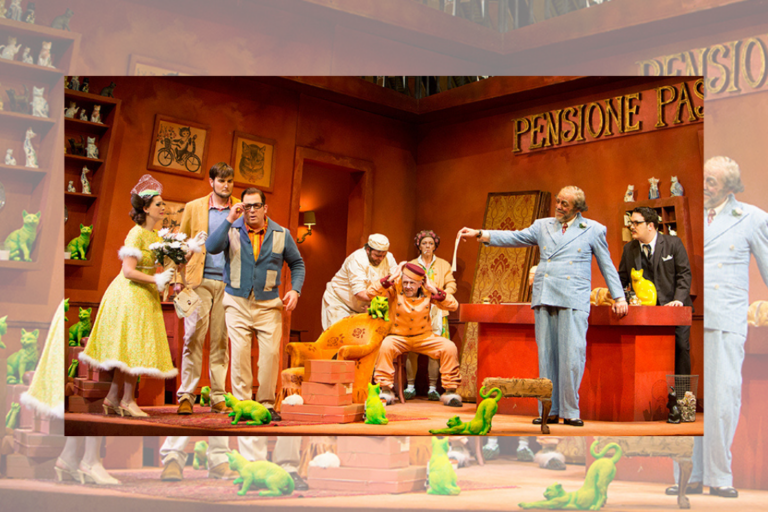
REVIEW: A new take on Don Pasquale re-imagines its lead as a cat-loving crank
If you love cats, you’ll like Barbe & Doucet’s production of Don Pasquale.
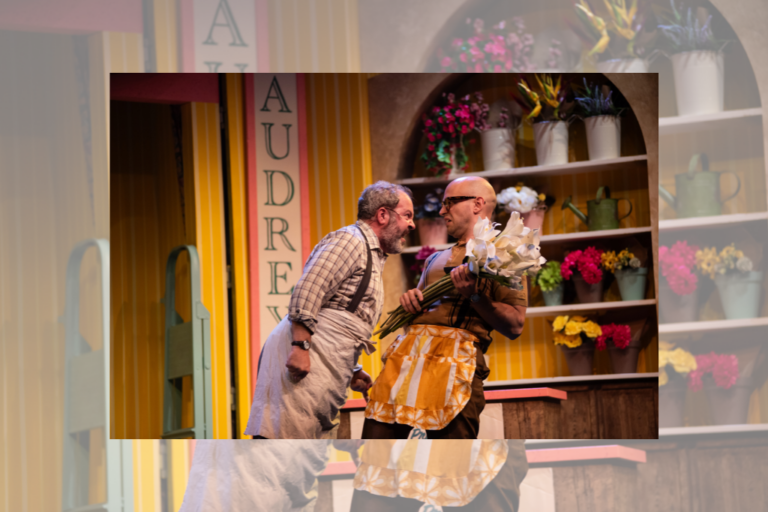
REVIEW: Little Shop of Horrors at Capitol Theatre Port Hope
The performances in Little Shop of Horrors at the Cameco Capitol Theatre in Port Hope are proof that there is formidable talent in theatres out of town that aren’t part of the Stratford and Shaw festivals.
 iPhoto caption: Photo by Michael Cooper
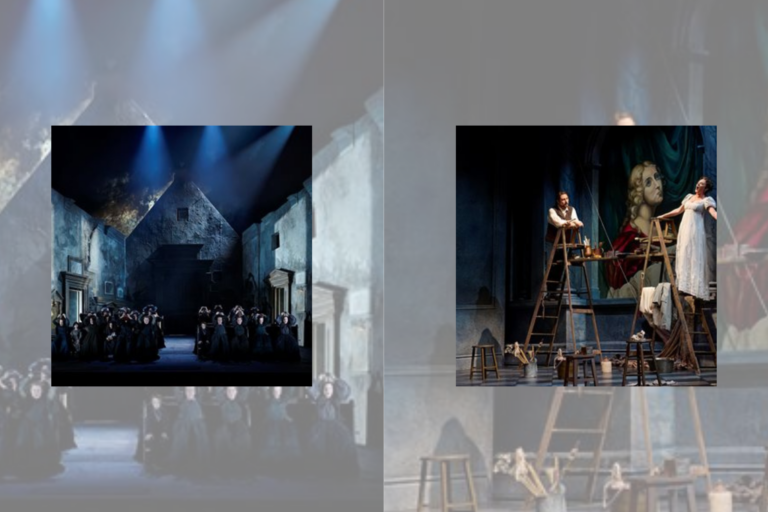
REVIEW: Tosca and Macbeth at Canadian Opera Company
Be it the lush and extravagant production of Tosca or the brooding and eerie production of Macbeth, both operas capture the spirit of romantic opera to delight audiences.
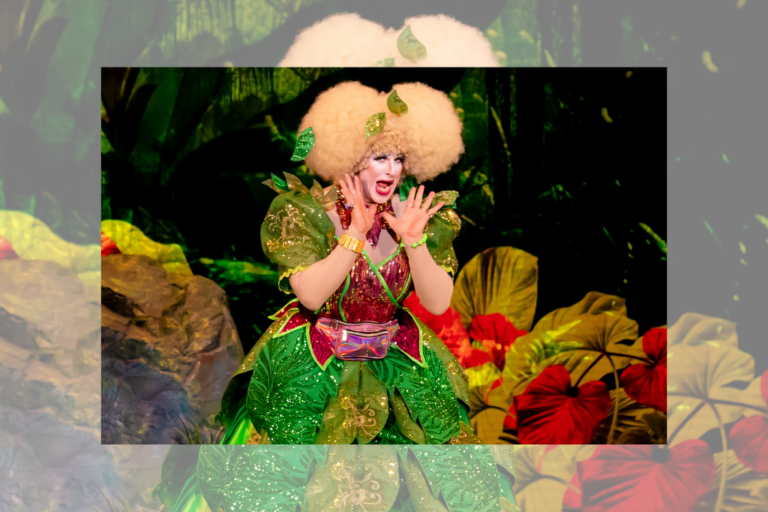
REVIEW: Peter’s Final Flight at Ross Petty Productions
It’s clear that Petty’s aim over the past quarter-century to instil the love of live theatre in young audiences has been a success.
Comments