
REVIEW: Richard II at the Stratford Festival
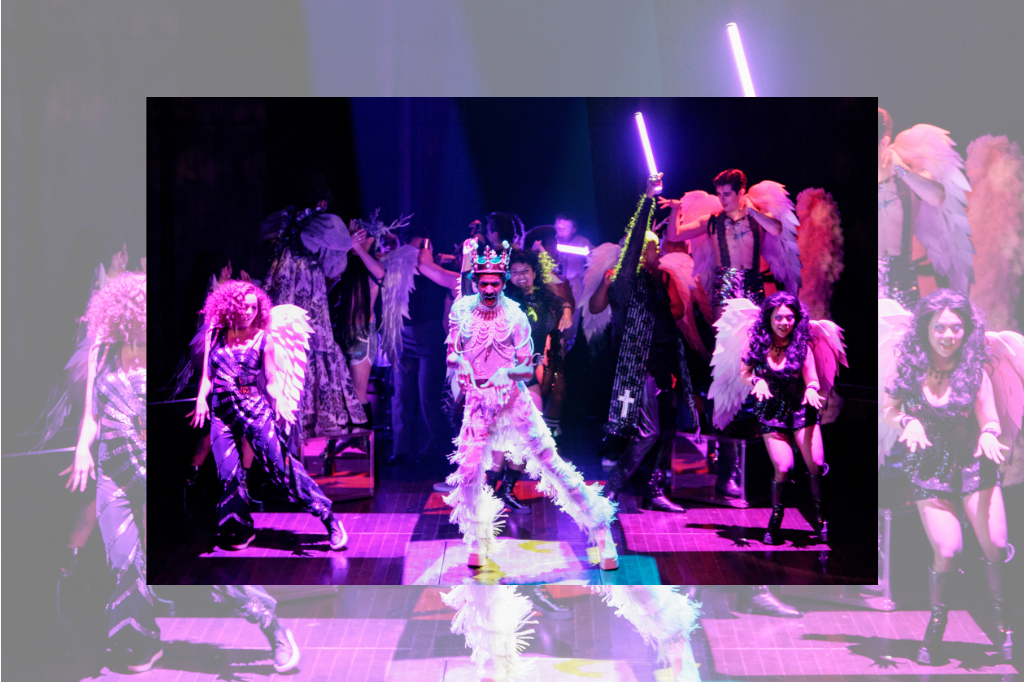 iPhoto caption: Photo by David Hou.
As long as there’ve been Shakespeare’s plays, there’ve been those who wish to subvert Shakespeare’s plays. In times like the English Civil War, this amounted to an outright ban on performing his work. But today, Shakespeare can be an immersive dance-theatre Macbeth, or an As You Like It which amounts to an evening-length land acknowledgment.
The Stratford Festival’s Richard II is one such subversion. Playing at the Tom Patterson Theatre for the remainder of the 2023 season, director Jillian Keiley partners with iconoclastic Canadian playwright Brad Fraser to adapt this 1595 history play to a late 70s world of smoke, fringe, and bawdy excess. Re-framing Shakespeare with intersectional, queer intent, this 2 hour and 40 minute performance may not be for proclaimed Shakespeare purists.
But they’ll miss out on a one-of-a-kind spectacle. A fantastically curated production advanced by a stellar cast, Richard II is best when it dives headfirst into the Studio 54-esque world that Keiley and Fraser have proposed. By queering an already complex main character, this production greatly expands upon Shakespeare’s themes, while still staying true to the minutiae of the original text.
The heart of this production is Stephen Jackman-Torkoff’s brilliant, Black, queer Richard. Their portrayal is emotionally complex: their Richard has a propensity for vanity, pleasure, and rash decisions, and yet is endearing in his clear love for those who surround him.
There’s an electricity in every step Jackman-Torkoff takes, including when we’re introduced to Richard in the riveting opening sequence. A promiscuous party surrounds the king in an ensemble of Angels, representing the central place of dance and music in Keiley’s direction. Here, as in many scene transitions, 70s music by sound designer Don Ellis blares alongside tight disco steps by choreographer Cameron Carver. Not to mention the costumes: Bretta Gerecke’s cohesive employment of fringe, lace, and all things shiny helps this production feel sleek, fashionable, and delightfully indulgent.
Richard II is ultimately a story of the usurpation of a weak monarch. This is carried out by Richard’s cousin Henry Bolingbroke (played by a very stern Jordin Hall), who is exiled and stripped of his inheritance by Richard at the beginning of the play.
This production draws out the subtext of that perceived weakness. Bolingbroke believes the king’s inner circle has morally corrupted him to the point that he is “drawn away from his marital bed.” This assumption informs the queer re-imagining of many characters; Green and Bushy frequent a forest that doubles as a cruising ground, while Richard’s other cousin, Lord Aumerle (played by a fantastic Emilio Vieira), is as much his lover as he is his greatest support.
These liberal interpretations of Shakespeare’s text end up being some of Keilley and Fraser’s most riveting moments. A scene that establishes Richard and Aumerle’s connection is transformed into a hot tub hook-up of cloth pulled across bodies by Angels, a bottle of poppers, and anything homoerotic imaginable. And Bolingbroke’s eventual ally Harry Percy (Thomas Duplessie) is a sequin-suited party boy with a penchant for smashing things and a consistent need to wipe his nose. There’s something undeniably exciting about watching Shakespeare being this scandalous.
These are all part of a larger character study, though. And no matter how he is performed, Richard as a character is frustrating because his rationale is so often unclear. When given the chance to explain himself, he instead chooses to make winding soliloquies that only concern his adversaries more. And this production doesn’t take liberties in clarifying a moral or logical justification for his invasion of Ireland or his liquidation of Bolingbrokes’ assets, decisions that ultimately lead to Richard’s downfall.
This is fine; there’s clear emotion behind Jackman-Torkoff’s actions, and his obscurity is another layer of queerness itself. Yet upon Richard’s climactic death at the hands of Aumerle, the stakes I felt for this character didn’t match the circumstances. Intentional or otherwise, Richard’s ambiguity made me feel more disconnected to his tragedy than I would’ve liked.
And perhaps this is why Keilley and Fraser have created this 70s world of excess around this very Elizabethan narrative: behind his smoke and mirrors, Richard may not be the hero we want him to be. What’s more relatable than that? This leaves us with a production that’s as gorgeously complex and nuanced as the main man himself. A true Shakespearean subversion, for sure.
Richard II runs at the Stratford Festival until September 28. Tickets are available here.
Intermission reviews are independent and unrelated to Intermission’s partnered content. Learn more about Intermission’s partnership model here.

Martin Austin
Martin Austin is a PhD student at the University of Toronto’s Centre for Drama, Theatre & Performance Studies. Martin’s research explores the past and current state of ethics in Euro-American dance practice. He is research assistant for Category Is, a study of house ballroom communities in Toronto and Montréal, and lead administrative coordinator of the Institute for Dance Studies.
LEARN MORE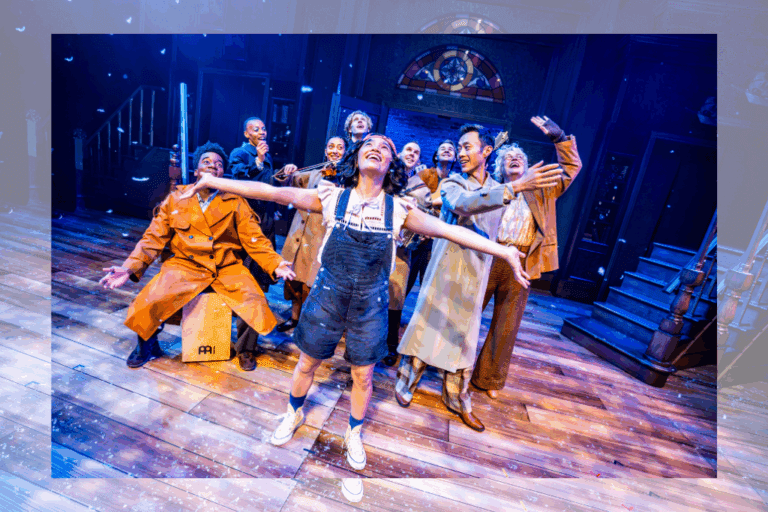 iPhoto caption: Members of the company of 'Narnia.' Photo by Dahlia Katz.
REVIEW: Bad Hats’ Narnia is a joyful, heartwarming escape
The spirit of openness and the joy of discovery rule over this Narnia. Open the wardrobe and see.
 iPhoto caption: Members of the company of 'Robin Hood.' Photo by Dahlia Katz.
REVIEW: Canadian Stage’s Robin Hood panto is anti-capitalist fun for the whole family
Following Ross Petty’s legacy of scene-stealing, Damien Atkins as the evil Prince John is easily the greatest delight of the show.
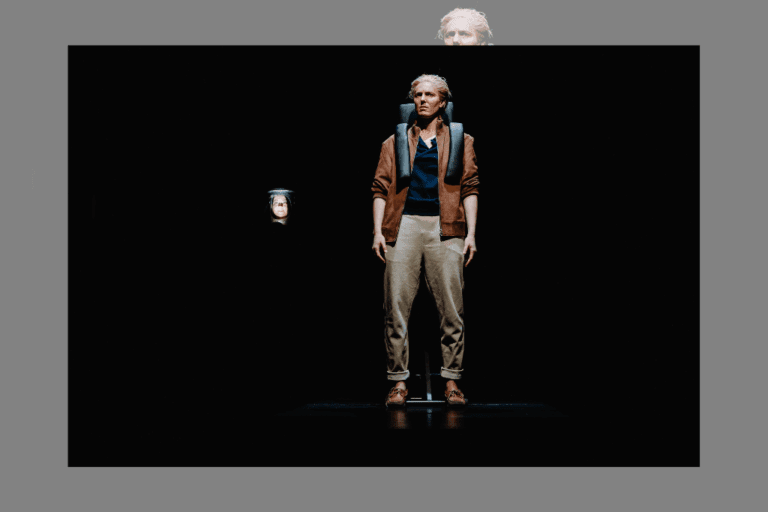 iPhoto caption: Lauren Gillis and Alaine Hutton in 'Public Consumption.' Photo by Eden Graham.
REVIEW: Lester Trips’ stylish Public Consumption captures the internet’s profound emptiness
Rather than directly representing online life, Public Consumption speculates — with virtuosity — about how the digital world affects our bodies. And the show's findings are by no means comfortable.
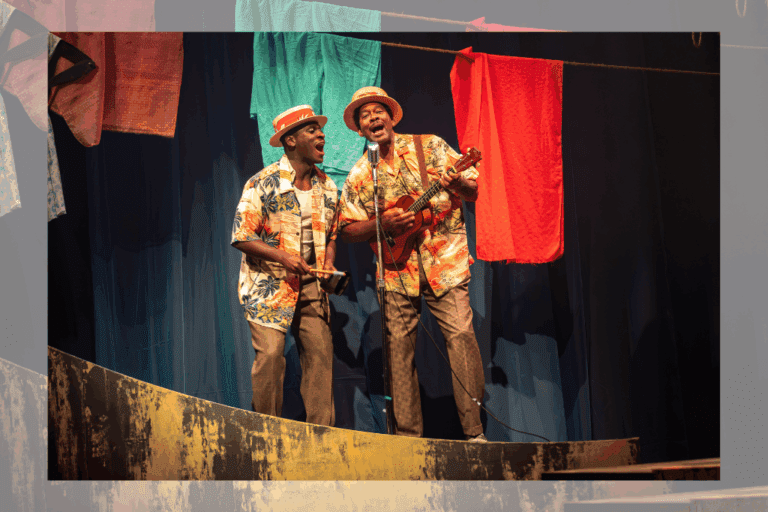 iPhoto caption: Tony Ofori and Daren A. Herbert in 'Moonlight Schooner.' Photo by Dahlia Katz.
Kanika Ambrose’s Moonlight Schooner is animated and visually stunning, but its individual pieces don’t come together as neatly as I would've expected.
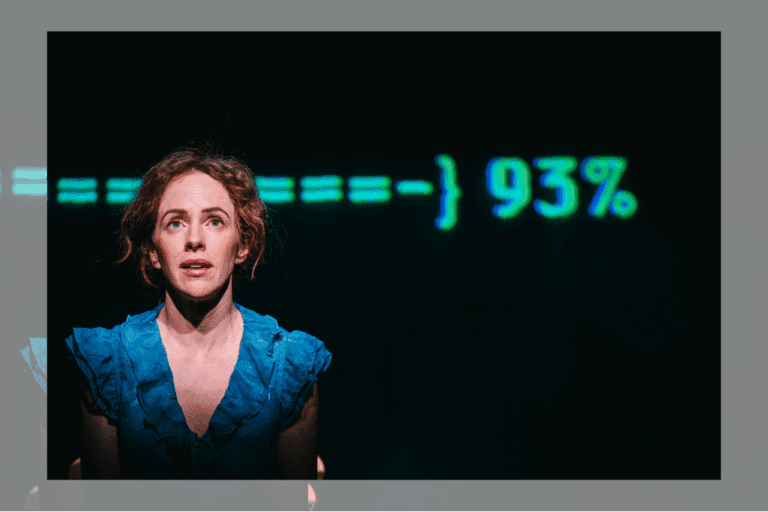 iPhoto caption: Fiona Mongillo in 'Reproduktion.' Photo by Ann Baggley.
REVIEW: Here For Now’s well-acted Reproduktion attempts to tackle too much
Amy Rutherford’s world premiere script is ambitious and the material it covers is complex — but the narrative feels disjointed.
 iPhoto caption: Kristen Thomson in 'Fulfillment Centre.' Photo by Elana Emer.
REVIEW: Coal Mine’s Fulfillment Centre asks how we end up alone, together
The production understands the play’s themes, yet feels limited by a script that delivers a package it never fully opens.
 iPhoto caption: Production still from The Nutcracker courtesy of the National Ballet of Canada.
Why should you go to the ballet?
My childhood memories of learning to dance were front and centre for me when I attended opening night of The Nutcracker, performed by the National Ballet of Canada at the Four Seasons Centre for the Performing Arts.
 iPhoto caption: ROSA promotional image courtesy of RUTAS.
RUTAS redefines ‘American’ theatre and performance
“I think [Latinx artists] have always been a strong voice, but now we need to be even louder to the rest of Canada,” says multidisciplinary performance artist Carlos Rivera. “The things that we can bring to the table and bring to the stages can show the beauty, and the strain, and the capacities that Latino Americans carry with us in our bodies, in our minds, in our souls.”
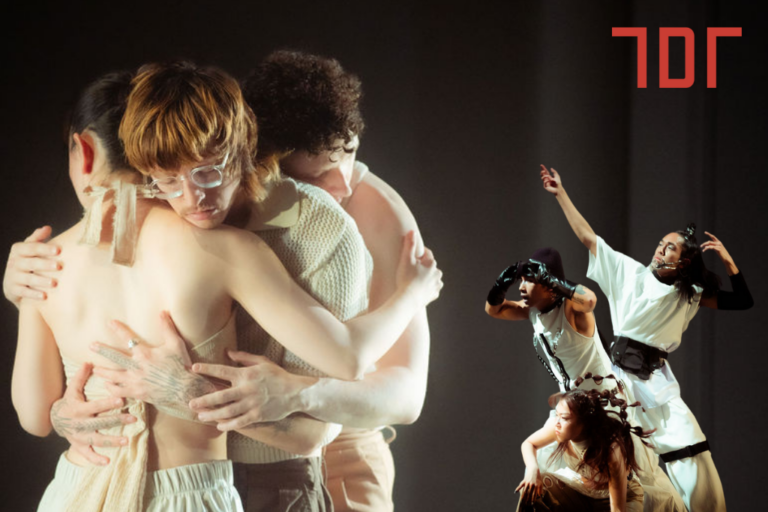 iPhoto caption: Original photos by Kendra Epik.
With its Spring Double Bill, Toronto Dance Theatre centres community and new voices
For the Spring Double Bill, artistic director Andrew Tay is considering how programming can be a means of supporting emerging artists.
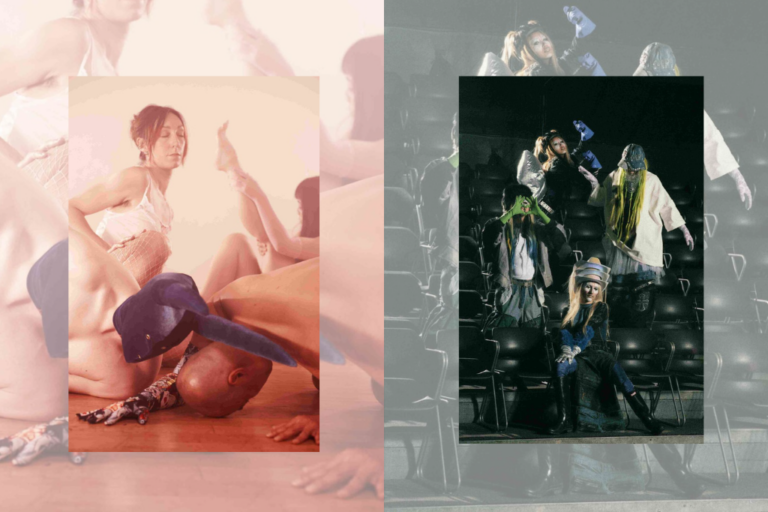 iPhoto caption: Photos by Roya DelSol
REVIEW: Boundary-pushing TDT double bill features face-riding and odd sensuality
Both pieces in the winter double bill are par for the course with TDT’s recent artistic output: unabashedly queer and consistently experimental.
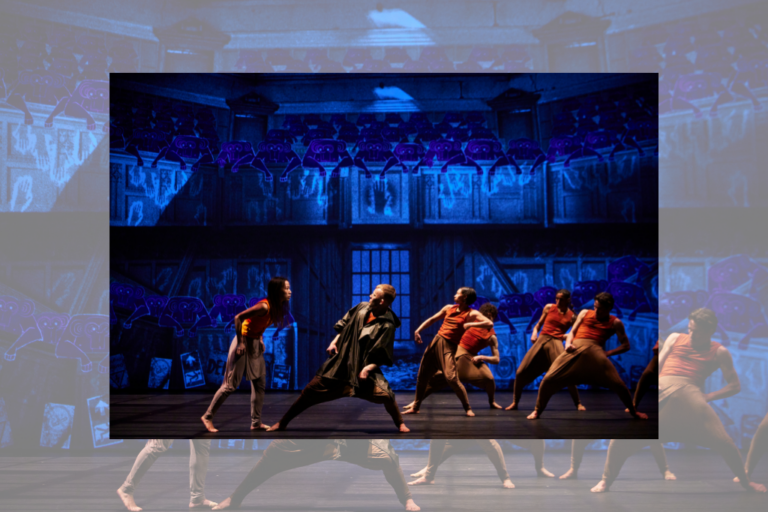 iPhoto caption: Photo by Ambra Vernuccio.
REVIEW: Jungle Book reimagined needs a little reimagining
Indeed, Akram Khan “reimagines” a historically complex story into a two-hour exposé on the environmental catastrophe. Jungle Book’s captivating visual effects and dynamic physicality brought the opening night audience to their feet. But as the choreographer’s first billing as director, Jungle Book’s storytelling doesn’t always live up to Khan’s skill as a dancemaker.

When it comes to dance made in Canada, there’s an overabundance of great work happening.
Comments