
REVIEW: Stratford Festival’s Frankenstein Revived glows with abstract lunar imagery
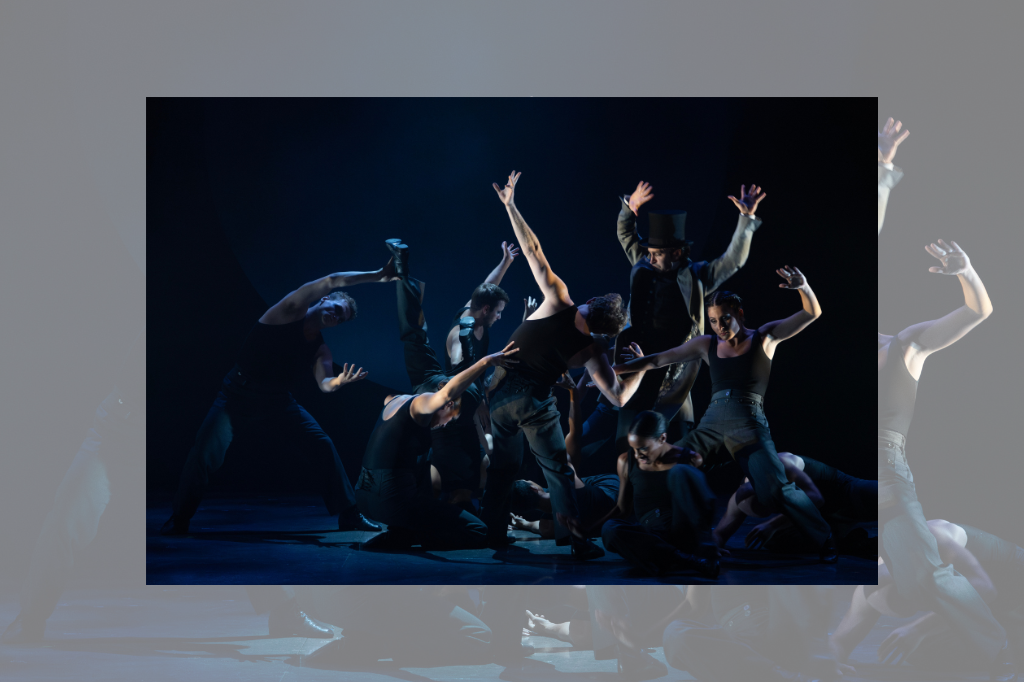
In Mary Shelley’s Frankenstein, the titular scientist’s monstrous creation escapes to a forest immediately after being born. Senses barely functional, he shelters by the side of a brook, sustaining himself on berries and roots. The sole object that pierces his hazy vision is the moon; its cycle measures the weeks he spends roaming the wood.
Frankenstein Revived, the Stratford Festival’s new movement adaptation of the nineteenth-century horror novel, expands on this lunar imagery. Ken MacDonald’s flexible set features a backdrop with a large circular hole at its centre, through which light bursts forth to conjure the show’s striking opening image: a full moon. As the narrative progresses, cutouts rotate in and block the circle’s glow, creating impressionistic silhouettes that imply different locations.
Though the piece, written and directed by Morris Panych at the Avon Theatre, is a fairly literal re-enactment of Shelley’s influential fiction — its one twist is the presence of the Frankenstein author herself — this astral backdrop adds an abstract touch. Its surreal glimmer works against the grain of the adaptation’s otherwise frustrating faithfulness, leading me to believe that Mary (Laura Condlln) and her novel might be less separate than Panych initially suggests.
Frankenstein is a page-turner and Frankenstein Revived matches its pulp. Composer David Coulter’s cinematic score, which contrasts synthesizers with choral chants, booms throughout, spurring us along with gothic efficiency. The lights rise on scruffy young Victor Frankenstein (Charlie Gallant) travelling by train to university in Ingolstadt, Germany. He begins to study the physical sciences, and gets good — so good, he’s able to turn a wagon of decomposing body parts into the story’s infamous green monster (“not dead yet,” echoes another show playing the Avon).
After gaining consciousness, the Creature (understudy Devon Michael Brown at the performance I attended) rolls off the medical table and writhes on the ground, his inhumanness signaled by the rows of staples holding his body together (Stratford veteran Dana Osborne did costumes). He then escapes, kills a few people, and learns to speak.
And yet he doesn’t: there’s no dialogue in Frankenstein Revived, so the Creature’s foray into language-learning peaks at him reading a book (staging by movement choreographer Wendy Gorling and dance choreographer Stephen Cota, along with Panych). Gorling — who worked with Panych and MacDonald on their hit 1997 movement piece The Overcoat, which toured for a decade to great acclaim — presumably took charge of the cast’s principal actors, who mime out the story in period-appropriate costumes, while Cota’s work is less literal: at key moments, he surrounds the actors with a contemporary dance ensemble wearing neutral blacks. But while MacDonald’s haunting backdrop calls to mind the ethereal abstractions of Robert Wilson, who Coulter has worked with, the show’s choreography isn’t Wilsonian: unlike that sculptor of time, Frankenstein Revived doesn’t explore tempo deeply.
And then there’s the question of Mary. Though the last time Condlln played an author wading through her own work — adult Alison, in Musical Stage Company’s 2018 Fun Home — her character had a clear stake in the narrative (the show is about the writer’s life), Mary’s presence in Frankenstein Revived is at first inscrutable. Shelley wrote the novel as a teenager, but this Mary is older and more reflective: rather than struggling for ideas, she conjures her fiction confidently, arms raised to the heavens like Prospero.
At the end of the first act, however, Victor kneels before Mary, and a parallel emerges: she, too, has brought a creature to life. Her novel and its characters have changed the world. They are everywhere. There is no controlling them and no getting them back. (And Shelley tried: though the book was published in 1818, she kept revising it until 1831.) This connection between science and art riffs on language in the novel: after the Creature kills two people, Victor laments that they were “victims to my unhallowed arts.”
But perhaps I’m being generous. This thematic exploration lurks within Frankenstein Revived, but it’s tough to access. And though Condlln is surely one of Canada’s best actors, even she seems to struggle to translate the role into action — Panych doesn’t give her much to do except twiddle a quill and observe. Simply put, the concept is not yet fully realized.
Still, if we look past its at times impenetrable exterior, the show seems to suggest that even once our revels are ended, our art — whether it’s writing, science, sorcery, or theatre — is destined to forever be revived. Look up: the full moon rises.
Frankenstein Revived runs through October 28 at the Stratford Festival. Tickets are available here.
Intermission reviews are independent and unrelated to Intermission’s partnered content. Learn more about Intermission’s partnership model here.
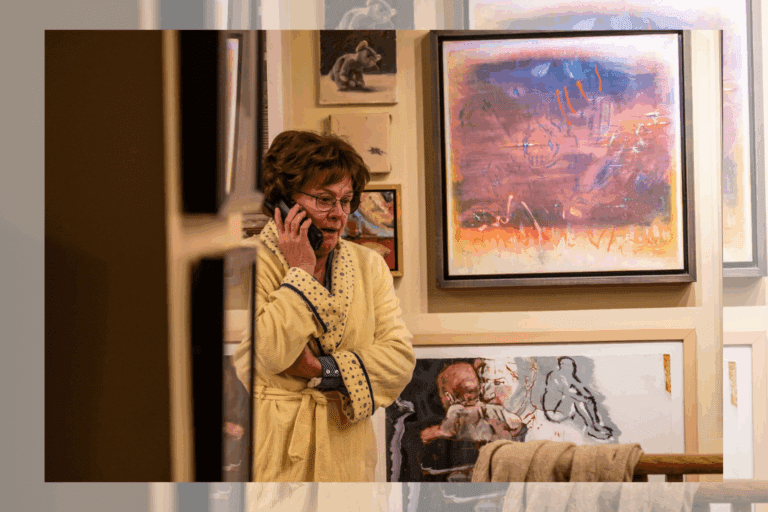 iPhoto caption: Jane Spidell in 'Twelve Dinners.' Photo by Dahlia Katz.
REVIEW: Family tensions run high in TIFT’s intimate Twelve Dinners
In the now-closed Twelve Dinners, an autobiographical play written and directed by Steve Ross, audiences received intimate access to an unvarnished version of a younger Ross through 12 evening meals with his parents.
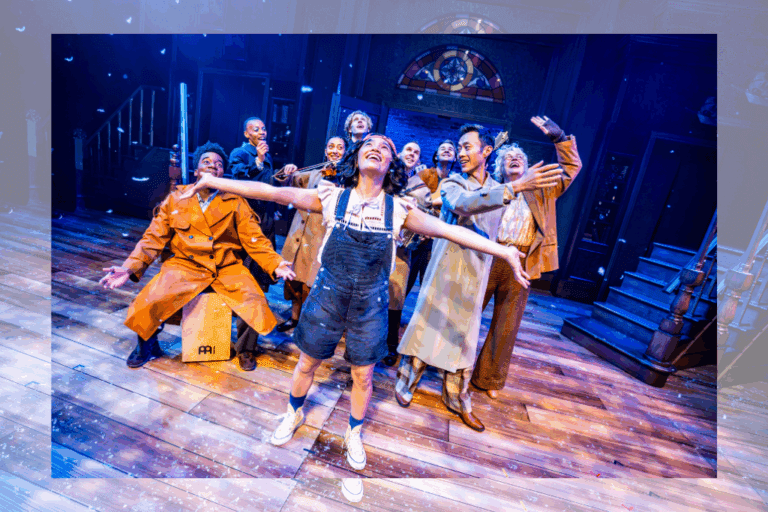 iPhoto caption: Members of the company of 'Narnia.' Photo by Dahlia Katz.
REVIEW: Bad Hats’ Narnia is a joyful, heartwarming escape
The spirit of openness and the joy of discovery rule over this Narnia. Open the wardrobe and see.
 iPhoto caption: Members of the company of 'Robin Hood.' Photo by Dahlia Katz.
REVIEW: Canadian Stage’s Robin Hood panto is anti-capitalist fun for the whole family
Following Ross Petty’s legacy of scene-stealing, Damien Atkins as the evil Prince John is easily the greatest delight of the show.
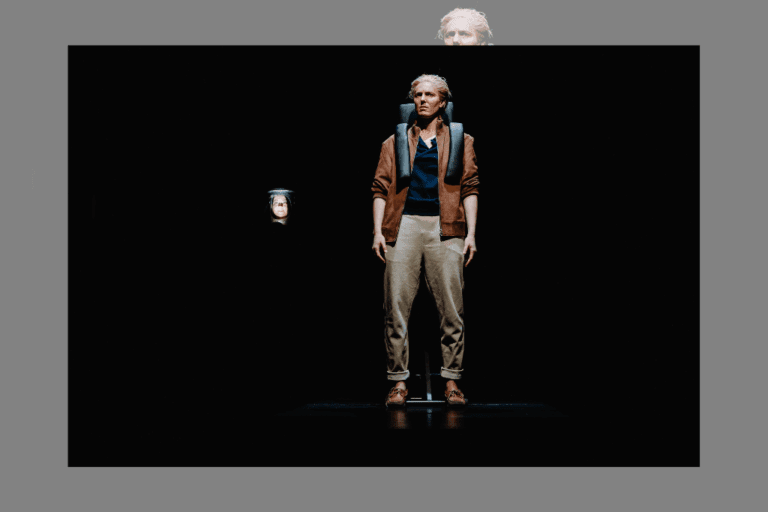 iPhoto caption: Lauren Gillis and Alaine Hutton in 'Public Consumption.' Photo by Eden Graham.
REVIEW: Lester Trips’ stylish Public Consumption captures the internet’s profound emptiness
Rather than directly representing online life, Public Consumption speculates — with virtuosity — about how the digital world affects our bodies. And the show's findings are by no means comfortable.
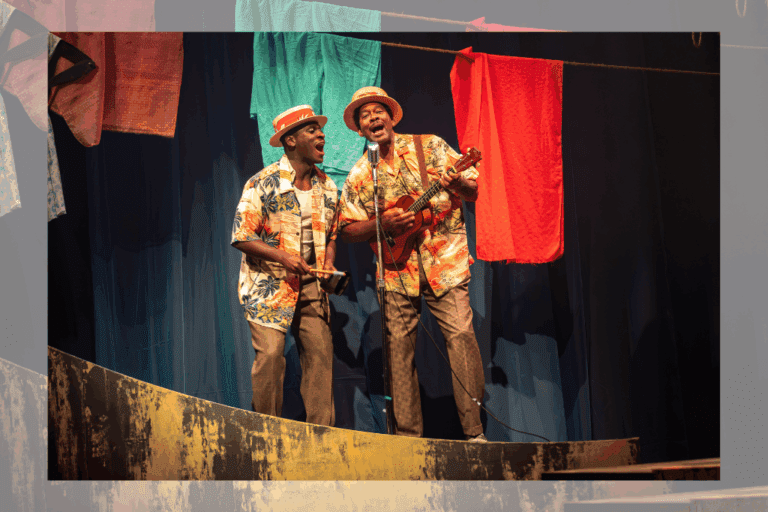 iPhoto caption: Tony Ofori and Daren A. Herbert in 'Moonlight Schooner.' Photo by Dahlia Katz.
Kanika Ambrose’s Moonlight Schooner is animated and visually stunning, but its individual pieces don’t come together as neatly as I would've expected.
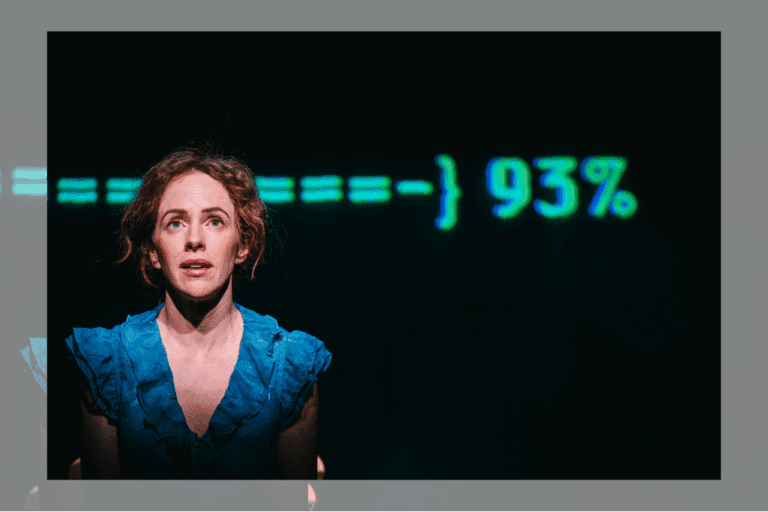 iPhoto caption: Fiona Mongillo in 'Reproduktion.' Photo by Ann Baggley.
REVIEW: Here For Now’s well-acted Reproduktion attempts to tackle too much
Amy Rutherford’s world premiere script is ambitious and the material it covers is complex — but the narrative feels disjointed.
iPhoto caption: Lauren Gillis and Alaine Hutton in 'Public Consumption.' Photo by Eden Graham.
REVIEW: Lester Trips’ stylish Public Consumption captures the internet’s profound emptiness
Rather than directly representing online life, Public Consumption speculates — with virtuosity — about how the digital world affects our bodies. And the show's findings are by no means comfortable.
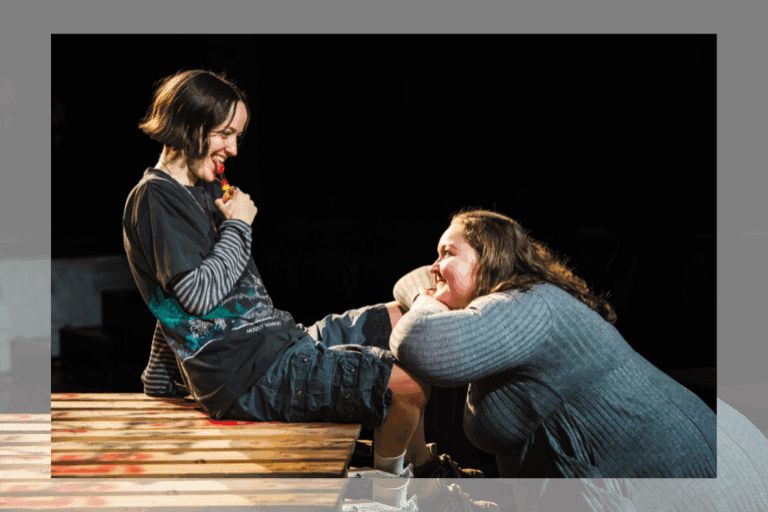 iPhoto caption: Photo by Elana Emer.
REVIEW: Icarus Theatre’s DNA paints a disturbing mural of teenage rebellion
While director Erik Richards’ tendency toward snappy, thriller-esque pacing doesn’t suit all of DNA’s more intimate moments, it adds electricity to the drama’s group scenes, bringing playwright Dennis Kelly’s reflections on groupthink and collective grief into clear view.
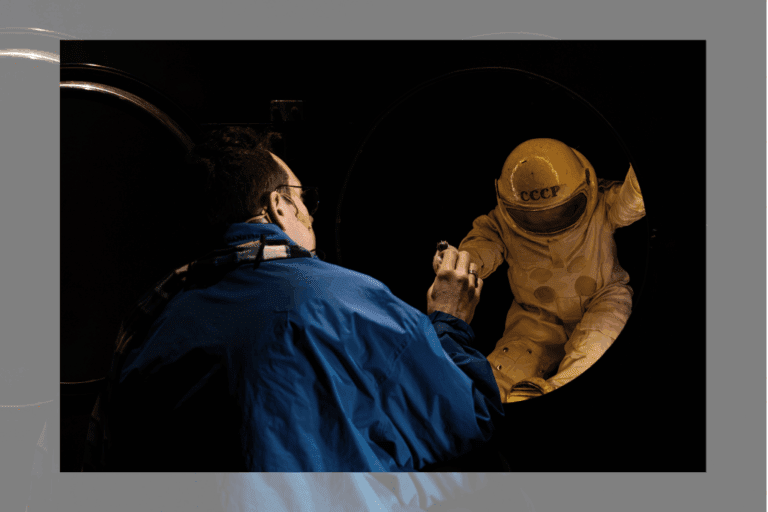 iPhoto caption: Olivier Normand in 'The Far Side of the Moon.' Photo by Li Wang.
REVIEW: Lepage’s ethereal The Far Side of the Moon is insomniac theatre
The Far Side of the Moon begins and ends with a large mirror on stage, and the show extracts enigmatic power from the tantalizing question of whether its protagonist is losing himself in his reflection, or moving toward self-discovery.
 iPhoto caption: 'Kokuho' still courtesy of TIFF.
REVIEW: During this year’s TIFF, two films depicted theatre as a vessel for transcendence
Of the several performing arts-adjacent selections I took in, most affecting were two dramas: Lee Sang-il’s Kokuho and Chloé Zhao’s Hamnet. In both period pieces, theatre creation serves as an emotional outlet for an artist navigating devastating loss.
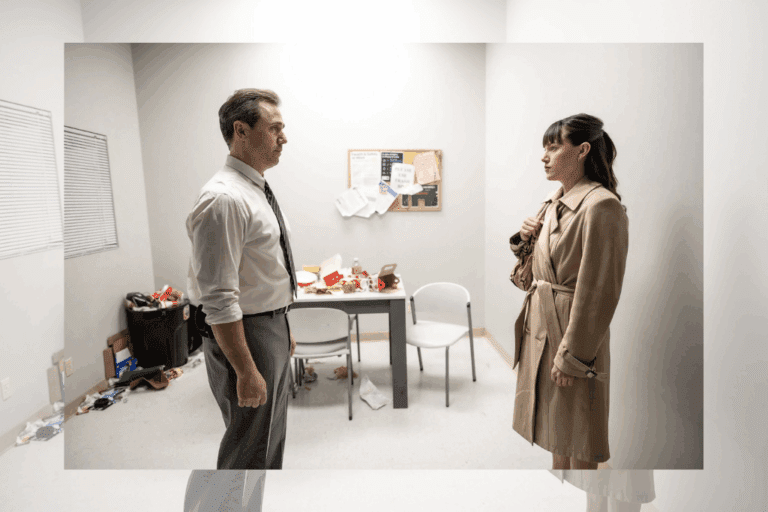 iPhoto caption: Cyrus Lane and Kirstyn Russelle in Barrie run of 'Blackbird.' Photo by Dahlia Katz.
REVIEW: Talk is Free Theatre’s Blackbird offers a close-up look at two detailed performances
Emerging director Dean Deffett has concocted a tight, straightforward production, primarily of interest as an intimate character study.
 iPhoto caption: Sleman Aldib and an audience member in 'The Opposite.' Still from a trailer by Spectrum Associates.
REVIEW: Kitchener’s biennial IMPACT Festival crackled with urgency
Most of the six works I viewed tackled urgent topics, from the convoluted Canadian immigration system to the Palestinian experience of displacement: explorations that line up with artistic director Pam Patel’s curatorial statement, which discusses how IMPACT ‘25 “unpacks what it means to survive, to resist, and to seek refuge” through a global, Indigenous-focused lens.
Comments