
REVIEW: On the Other Side of the Sea toys with human desires and fears
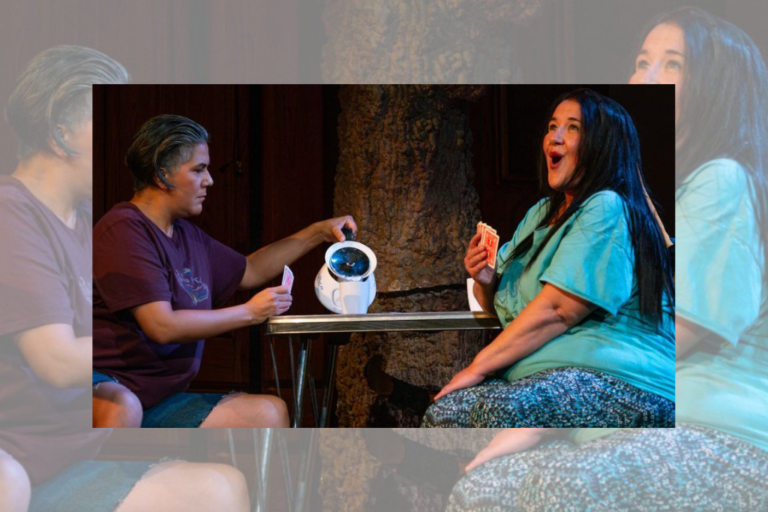
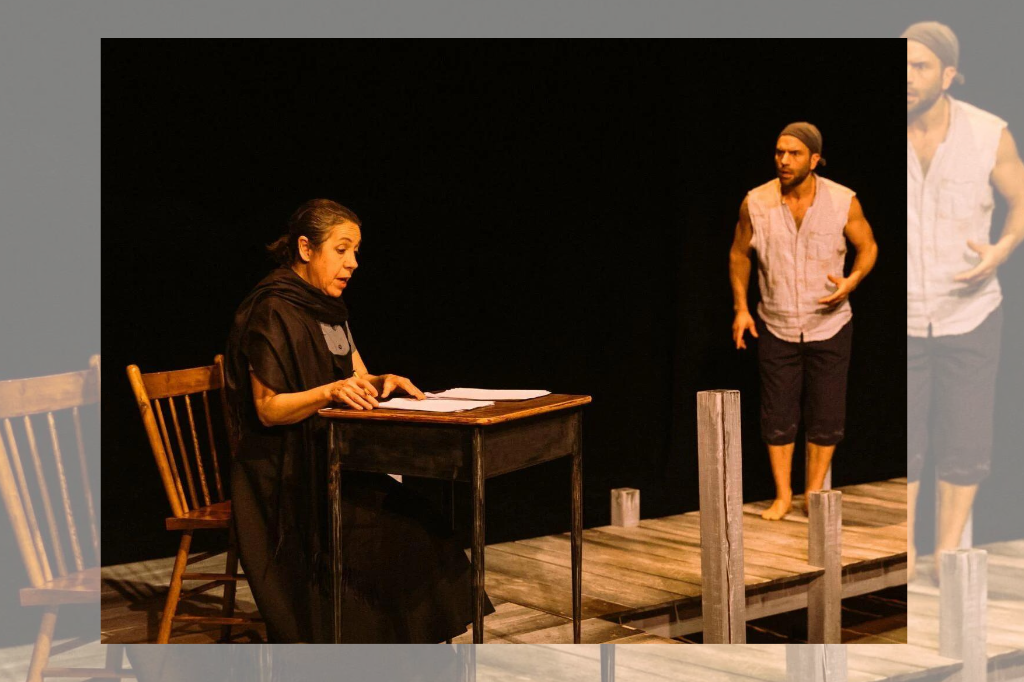 iPhoto caption: Photo by Jeremy Mimnagh.
At first, you’re confused, and then you’re laughing, then suddenly, you’re having your very own existential crisis.
This February, Aluna Theatre presents the Canadian premiere of On the Other Side of the Sea by Salvadoran playwright Jorgelina Cerritos, winner of the prestigious Casa de las Américas Prize for drama. The play is surreal yet grounded, making the at times eccentric characters feel deeply relatable.
On the Other Side of the Sea centres on two characters with completely opposing lifestyles and aspirations, whose brief encounter changes their lives forever. Dorotea (Beatriz Pizano, also the artistic director of Aluna Theatre) is a rules-oriented civil servant. In her office, located right on the beach, she meets a man called Fisherman of the Sea (Carlos Gonzalez-Vio), who’s in search of identification papers so that he can marry, work, get an education, and adopt a dog. He’s aspirational, yet disorganized and unstructured.
Conversely, all Dorotea has is structure, in the form of a federal job, her own house, and a government-issued ID. Unlike the Fisherman, she has a “first name, last name, address, age,” and the power to give the Fisherman his dream life by legally granting him those four simple things. She also holds deep-seated regrets about not having anyone to share this life with, and perhaps some resentment towards the Fisherman’s potential to get everything he wants.
The play begins repetitively and under strange circumstances. Dorotea’s office is literally on the beach, just a desk right on the boardwalk. The Fisherman has gone his whole life without any legal identification, but suddenly it’s the one thing stopping him from pursuing an education, work, and personal life. When the Fisherman asks for legal help, Dorotea ignores him, waiting for clients who don’t show up, until ultimately, she’s back to the Fisherman. These scenes intercut with monologues about each character’s lives before arriving on this beach.
Despite being in constant opposition, the more these characters reveal about themselves, the more they relate to each other. The Fisherman is restricted by his inability to conform to the same societal norms that have bolstered Dorotea all her life. By showing the extremes of dreamer and realist tendencies, On the Other Side of the Sea holds a mirror to the audience’s own potential struggles with self-doubt.
The play’s initial repetitiveness led me to believe it would deal with existentialism from a strictly absurdist, sisyphean lens. However, the more I got to know the characters, the more I considered the real-life connotations of their situations. First, the arbitrariness of legal systems, with Dorotea refusing to help the Fisherman get his ID, simply because she might get in trouble. Then, the gendered implications, specifically through its portrayal of an older woman struggling with not having a family. The absurdity of the plot exposes the ridiculousness of these real-life systems and norms, and it made me question where my own aspirations might come from.
Although I am often wary of a translation’s ability to capture the rhythm and humour of its original text, this English-language version (translated by Margaret Stanton and Anna Donko) is funny, emotional, and packed with beautiful language. Even when no longer in Spanish, the text’s “Latinidad” is still engrained through the production’s portrayal of magical realism. There are many elements of On the Other Side of the Sea that are fantastical. However, when the characters accept that aesthetic as normal, the audience does, too.
Director Soheil Parsa’s minimalist staging helps further ground this magical realist story. The set consists of a chunk of boardwalk that spans the width of the stage, a janky desk and chair for Dorothea’s office, a large carpet beneath the boardwalk that resembles sand, and a wave painted on a backdrop. The costumes are of an ambiguous location and time period, but believably contemporary. The production design presents an elevated, dreamier reality that is as simple and strange as the story itself.
This quality carries over to all parts of the production. Thomas Ryder Payne’s sound design is consistently breathtaking and immersive, packed with intricate soundscapes that bring you into the magical world of this beach. It is most effective when combined with the lighting design to show time passing — the sound is overwhelming, and the lighting shows the time of day moving exceedingly fast, but it fits right in with the rest of the production. Slightly weird, but rooted in naturalism.
However, with the earlier lighting packed with these dynamic colours reminiscent of the sun setting and rising, I was disappointed in the occasionally excessive use of blackouts later on. Perhaps the intention was a gradual darkness into the night, but unfortunately its frequency caused a major dip in energy on the night I attended.
On the other hand, something I enjoyed more as the show went on were Pizano and Gonzalez-Vio’s performances. Their chemistry is great, their comedic timing is sharp, and the two actors keep you consistently engaged in their relationship. Both characters begin quite stubborn and narrow-sighted, but their greatest opposition turns out to be their unwillingness to express their desires. Gonzalez-Vio does not hold back when expressing the Fisherman’s love for his girlfriend, his friend, and his dog, making it increasingly easy to root for him. Pizano is stoic and unrelenting throughout, which makes Dorotea’s eventual outpour of regret incredibly heartbreaking.
The plot is simple, but the characters experience the extremes of human desires, fears, and regrets, in a journey sure to resonate with anyone.
On the Other Side of the Sea runs at The Theatre Centre until February 25. Tickets are available here.
Intermission reviews are independent and unrelated to Intermission’s partnered content. Learn more about Intermission’s partnership model here.

Zoe Marin
Zoe Marin (she/her) is an Argentine-American theatre artist (director, writer, performer) and comedian (sketch, stand-up, musical comedy). She holds a BFA in Theatre from York University, and recently participated in the Toronto Fringe New Young Reviewers Program. Zoe loves: horror, comedy, music, politics, and pop culture, and hopes you see that in her work.
LEARN MORE iPhoto caption: Members of the company of 'Narnia.' Photo by Dahlia Katz.
REVIEW: Bad Hats’ Narnia is a joyful, heartwarming escape
The spirit of openness and the joy of discovery rule over this Narnia. Open the wardrobe and see.
 iPhoto caption: Members of the company of 'Robin Hood.' Photo by Dahlia Katz.
REVIEW: Canadian Stage’s Robin Hood panto is anti-capitalist fun for the whole family
Following Ross Petty’s legacy of scene-stealing, Damien Atkins as the evil Prince John is easily the greatest delight of the show.
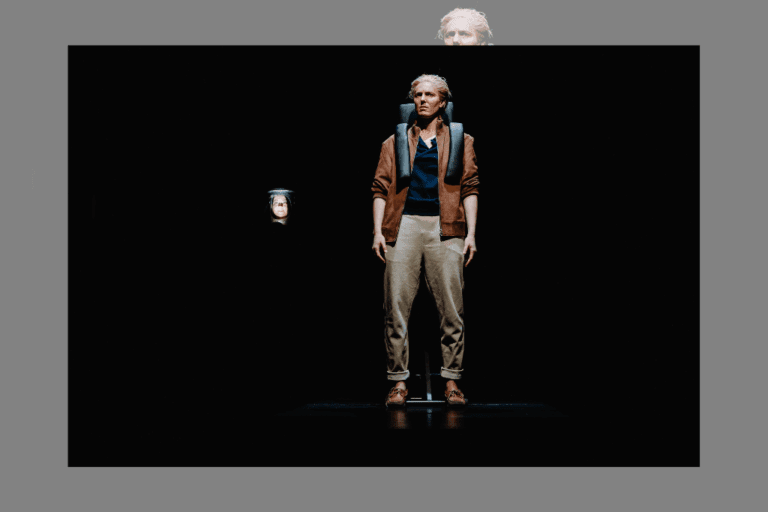 iPhoto caption: Lauren Gillis and Alaine Hutton in 'Public Consumption.' Photo by Eden Graham.
REVIEW: Lester Trips’ stylish Public Consumption captures the internet’s profound emptiness
Rather than directly representing online life, Public Consumption speculates — with virtuosity — about how the digital world affects our bodies. And the show's findings are by no means comfortable.
 iPhoto caption: Tony Ofori and Daren A. Herbert in 'Moonlight Schooner.' Photo by Dahlia Katz.
Kanika Ambrose’s Moonlight Schooner is animated and visually stunning, but its individual pieces don’t come together as neatly as I would've expected.
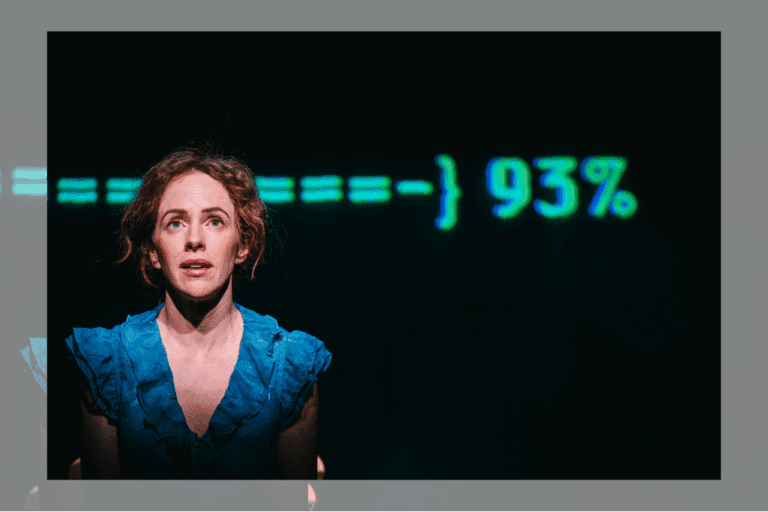 iPhoto caption: Fiona Mongillo in 'Reproduktion.' Photo by Ann Baggley.
REVIEW: Here For Now’s well-acted Reproduktion attempts to tackle too much
Amy Rutherford’s world premiere script is ambitious and the material it covers is complex — but the narrative feels disjointed.
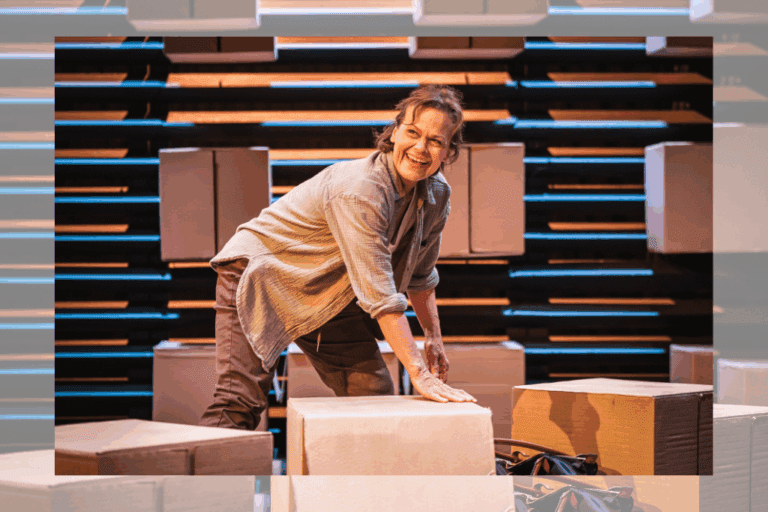 iPhoto caption: Kristen Thomson in 'Fulfillment Centre.' Photo by Elana Emer.
REVIEW: Coal Mine’s Fulfillment Centre asks how we end up alone, together
The production understands the play’s themes, yet feels limited by a script that delivers a package it never fully opens.
 iPhoto caption: Guildwood photo by Sean Stone, Dead Parents Society photo by Dahlia Katz.
REVIEW: Guildwood and Dead Parents Society traverse time and genre to examine community
Whether of laughter, sadness, or sympathy — there will be tears. And is that not what Aristotle said theatre was for?

REVIEW: Music, Then Comedy epitomizes the best of Canadian improv
While it may not be Canada Council-approved theatre, Music, then Comedy is definitely art.
REVIEW: CANOE brings mystical, operatic flair to Canada’s dark history
Through a minimalist aesthetic and a score that blends classical music with non-conventional elements, CANOE presents a deeply personal portrayal of two sisters grappling with the past.
Comments