
Armchairs, tattoos, and an online theatre magazine

As I sit down to say farewell to Intermission Magazine, a fresh tattoo flaking on my right arm, it’s an IKEA wingback armchair that won’t leave my mind.
I was 22 when I received the DM that changed my life; I was also furiously dabbing at spilled kombucha, swearing as if in a George F. Walker play. I still love the stuff, the pink foam of fermented hibiscus and rose hips. To this day, the memory of being scouted by Intermission co-founder Philip Riccio smells like tea, vinegar, and cheap upholstery.
“I don’t want you to think I’m stalking you, but I sent you an email through your website and just wanted to make sure you got it,” he wrote. “Would be interested in chatting with you if you were interested.”
A Zoom call later, I was named an associate editor of Intermission Magazine. For the privilege of editing Artist Perspectives and waiting out the pandemic that might have killed Canadian theatre, I’d be paid enough to justify the kombucha habit, just.
I joked with my new coworkers on Slack about the futility of our work — the Sisyphean ache of asking Canadian theatres to spend advertising money they didn’t have due to the pandemic. We hoped against hope for the return of live theatre. From my Ottawa bedroom I studied Toronto artistic directors and marketing managers, trying to make sense of a theatre landscape I’d only witnessed from afar.
Months passed. The kombucha stain faded.
A few years ago, I promised I’d never leave Intermission, and at the time, I meant it.
At the outset of my career as a theatre writer, my world was limited to the perimeter of an apartment with a dandelion-coloured living room and two “dens” without heat. When I started working for Intermission, I barely had working Internet — my apartment had thick, vintage walls that made Zoom meetings jagged and slow. In 2020, I didn’t know where I’d end up for grad school, but I hoped it would be Toronto, that mythical city with more than three professional theatre companies, as well as a working subway system.
Four-and-a-half years after that Zoom call with Philip, I’m pleased to report that my Toronto apartment’s walls are a decidedly normal eggshell white. My Internet works pretty well, save for the occasional Rogers outage. I think I became a true Torontonian when I began to hate the TTC.
A few years ago, I promised I’d never leave Intermission, and at the time, I meant it.
But in the early years of my career, the idea of the Globe and Mail’s theatre reporter job becoming available seemed completely foreign, a dream I couldn’t think about too hard without folding in on myself like an origami panic attack. When friends and incredulous in-laws asked how I’d survive in the absence of a full-time job in my field — such a job barely existed beyond the walls of the Globe at the time — I shrugged. I’d find a way.
And for a few years, I did, cobbling together bylines and entry-level breaking news jobs into a body of work. Even in the meagre months, I paid my rent on time.
I start as the theatre reporter of the Globe and Mail tomorrow.
The last few years have been colourful and sharp, punctuated by moments of sublime joy and acrid heartbreak. Since 2020, I’ve worked in newsrooms ranging from starry to hellish. I’ve written about theatre across Canada. I got married; I recovered from the eating disorder that stole so much of my early 20s; I bought couches on credit and beat Super Mario Sunshine after years of trying.
Intermission was an oasis of tenderness and creativity when I needed it most, the one tab I’d never close on a browser cluttered with chaos.
But throughout all that growing up — all those implosions into the work of Sarah Kane, those part-time marketing gigs that didn’t work out, that regrettable phase of Starburst-pink hair — Intermission has been there, the soft bed I’ve crawled into each night, grateful and tired. For my two years in breaking news at the Toronto Star and CP24, I spent my working hours covering car crashes, stabbings, and assisted suicides, all while editing Intermission reviews and features off the side of my desk. Intermission was an oasis of tenderness and creativity when I needed it most, the one tab I’d never close on a browser cluttered with chaos.
The publication is close to unrecognizable from those afternoons in a vinegary armchair in Ottawa. It’s undergone two rebrands, and in the last few years we’ve welcomed some fabulous faces to the team — in 2022, Karen Fricker stepped on to help the publication navigate its relationship with criticism, and since then, we’ve developed a robust crew of freelance critics who frequently have some of the smartest ideas about theatre in the country. Suzanne Cheriton joined as publisher and introduced the Friday Folio; Janice Peters Gibson, here since the beginning, kept things running smoothly even when day-to-day operations felt hurried and scratchy. Nathaniel Hanula-James became the publication’s first-ever staff writer, and I’m certain that Liam Donovan, first hired as an editorial and publishing assistant in 2023, will in many ways be better as Intermission’s senior editor than I ever was.
As I write this from a hotel in Whitehorse, my time at Intermission feels like an impressionistic painting, each smudge a moment, a Slack message, an opening night. There’s the time I met Intermission resident photographer (and kick-ass director) Dahlia Katz at the opening for Other People, and after a blustery introduction we were instant friends with serendipitously matching tattoos. There’s my first Toronto Fringe in 2022, a tangle of late nights and hot patios. There’s my first-ever Intermission interview with an artistic director, who, yes, laughed at my stupid questions, but who kindly hasn’t held them against me in the half-dozen or so times our paths have re-crossed. There’s me and Karen in her Mazda, laughing, scheming, wishing.
When I started at Intermission, my world was limited to the confines of an armchair. Arts journalism was a high it felt dangerously fruitless to chase. The life stretched ahead of me was amorphous and frightening, a chasm filled with hand sanitizer and immigration concerns. It was worth crying over a spilled kombucha and scrubbing at the stain.
When I started at Intermission, my world was limited to the confines of an armchair. Arts journalism was a high it felt dangerously fruitless to chase. The life stretched ahead of me was amorphous and frightening, a chasm filled with hand sanitizer and immigration concerns. It was worth crying over a spilled kombucha and scrubbing at the stain.
My existence is bigger now, with less prescriptive borders (and less anxiety around misplaced probiotic drinks). Thanks to Intermission, I’ve been able to do things I never dreamed possible, write stories that at the outset of the pandemic might have felt like science fiction. I’ve been able to meet my best friends; my closest collaborators; artists whose work has been a personal salve. I’ve been able to thank them all.
Intermission continues to be crucial as arts coverage diminishes across Canada — I’m painfully aware that my new job at the Globe and Mail is one of the last of its kind. I’ve worked in a lot of newsrooms, and to this day I’m shocked at what Intermission has been able to achieve with so few people. Intermission will only continue to grow in the next few years — just look at what it’s done since 2020, and, indeed, since its founding in 2015.
The “i” I got tattooed on my right arm last week is a more portable symbol of growth than an armchair — more stylish, too. It’s a more direct love letter to the publication I owe so much. A more personal adieu to the place where many, many great theatre discussions happen.
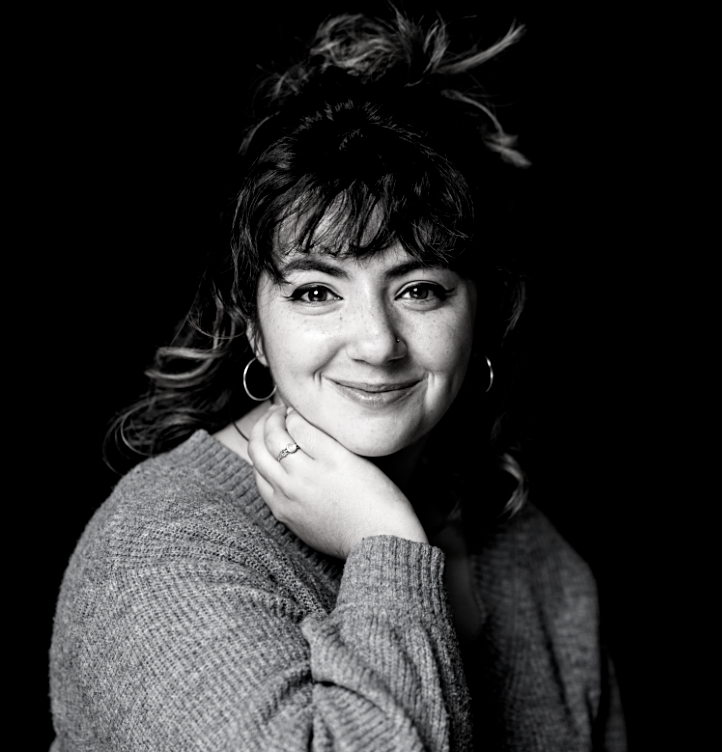
Aisling Murphy
Aisling is Intermission's former senior editor and the theatre reporter for the Globe and Mail. She likes British playwright Sarah Kane, most songs by Taylor Swift, and her cats, Fig and June. She was a 2024 fellow at the National Critics Institute in Waterford, CT.
LEARN MOREComments
Leave a Comment
 iPhoto caption: Photo by Aisling Murphy.
In the darkest months of Yukon winter, it’s all about the Sun Room
I’m here for a week in January as a guest of Nakai Theatre, a hub for theatrical experimentation and outside-the-box programming in Canada’s westernmost territory.
 iPhoto caption: Liz Appel headshot courtesy of Liz Appel.
Five questions with Wights playwright Liz Appel
Intermission spoke with Appel over email for a brief Q&A about Wights, now playing at Crow’s Theatre until February 9.

Call for applications: Publishing and editorial assistant
Intermission Magazine is seeking a dynamic and collaborative individual to join our team.
 iPhoto caption: What Writing Can Do: The 2025 Musical Theatre Critics Lab
Announcing What Writing Can Do: The 2025 Musical Theatre Critics Lab
What Writing Can Do is timed to coincide with the Grand and Theatre Aquarius’ co-production of Waitress, which will serve as a jumping-off point for discussions throughout the Lab.
 iPhoto caption: A Christmas Story production still by Dahlia Katz.
REVIEW: A Christmas Story feels fresh at Theatre Aquarius
If you want to catch A Christmas Story before it closes, good luck — the show is close to sold out, and with the talent on that stage, it’s not hard to see why.
 iPhoto caption: Madame Minister production still by Dahlia Katz.
REVIEW: Madame Minister is a star vehicle for actor Laura Condlln
Laura Condlln and Cyrus Lane offer performances that are worth the drive to Barrie — the two have terrific chemistry and timing.
Great picture! So proud of all you have accomplished and the joy you enjoy! I remember an even younger you who at times caused both of us frustration! So delighted that you are enjoying success! Keep up the good work!