
C’est la vida! uses mime, dance, and electro beats to remix classic rom-com tropes
 iPhoto caption: 'C'est la vida!' production photo by Julie Cherki.
What can you say in a show about love that hasn’t been said before? E.Y. Harburg and Ira Gershwin asked that question — albeit about love songs, not theatre — back in 1934. In the 92 years since, one could argue that it’s only become more challenging to put a new spin on well-worn romantic tropes.
C’est la vida!, a whimsical production by French dance and physical theatre group Compagnie De Fakto, takes an unconventional approach. Presented on November 6 at the Spadina Theatre by Alliance Française Toronto, the show takes on the cheesiest stereotypes of romantic love — by diving face-first into the brie.
“The show is quite a caricature of love,” said Liesbeth Kiebooms in a conversation over email. She and fellow dancer David Walther play the couple at the heart of C’est la vida!, in a series of vignettes ranging from a romantic walk in the rain, to lovers’ quarrels, to childbirth.
Aurélien Kairo, founder of Compagnie De Fakto, conceived and choreographed C’est la vida! in collaboration with Kiebooms, Walther, and director Patrice Thibaud. The production first premiered in Lyon, France in 2023.
“The ideas presented in the show reflect an old-fashioned vision of relationships,” concurred Walther in the same correspondence. “Aurélien is a little nostalgic for the gallantry of the past. Liesbeth and I brought in our more contemporary perspectives, so that we could create a show that speaks both to Aurélien’s generation and to ours.”
C’est la vida! tempers that nostalgia by blending more traditional choreography with mime work, puppetry, and goofy physical comedy.

“This project was born during [the COVID-19 pandemic], when we needed to refocus on things that felt essential, light, and alive,” said Walther. “The urgency to laugh and have fun really drove our artistic exchanges.”
In one vignette, Kiebooms puppeteers an umbrella into a character called Madame Parapluie, who shares a silly-yet-sensual dance with Walther. In another, Walther and Kiebooms emerge dressed in sparkly matador outfits, pushing a baby carriage bedazzled to match. Their costumes turn an everyday parenting task into an act of whimsy and bravado.
That isn’t to suggest that C’est la vida! lets its lovers off easy. Toward the end of the show, Walther’s character desperately tries to calm his crying (unseen) child. Without spoiling the scene, it ends up featuring more than one kind of waterworks.
“I’m a father of two, and as parents, we’ve all experienced and gone through what I’m going through in that scene,” Walther said. “We pushed it a little to the extreme in our interpretation, which makes it a very funny moment.”
Kiebooms credited Kairo and Thibaud with establishing C’est la vida!’s playful tone.
“Aurélien and Patrice are two big children,” she said. “I remember Aurélien arriving in the morning, not quite awake, with crazy ideas he wanted to try. [Some were] so crazy that I thought he was joking, [like] ‘the cannon woman.’ Aurélien wanted to pretend, using a mannequin and a cannon, that I was flying all over the stage.”
The show’s soundscape mixes nostalgia with a contemporary wink. Composer Stéphane Lavallée has remixed classic French love songs by artists like Édith Piaf and Charles Trenet into hip-hop and electro-infused tracks. (In some ways, the writers of those French chansons arguably had it easier than anglophone lyricists like Harburg and Gershwin — the word “love” barely rhymes with anything. Amour, though? Now we’re talking.)

C’est la vida!’s simplicity — one hour, two performers, and minimal staging — has made it ideal for touring. Since its premiere, the production has had over 150 performances in countries including France, Laos, and Indonesia.
“The good side of being as perfectionist as I am is that I never get bored,” joked Kiebooms. “We keep modifying and polishing tiny details here and there.”
So, what can you say in a show about love that hasn’t been said before? Kiebooms reflected on how existing in C’est la vida!’s rose-coloured world has spurred her to find her own definition for an age-old experience.
“Having endless talks with David about love, and our respective relationships, while creating and touring this show has definitely helped me grow,” Kiebooms said. “It’s given me a more subtle understanding of love.”
Alliance Française Toronto presents C’est la vida! on November 6 at the Spadina Theatre. More information is available here.
Alliance Française Toronto is an Intermission partner. Learn more about Intermission’s partnership model here.

Nathaniel Hanula-James
Nathaniel Hanula-James is a multidisciplinary theatre artist who has worked across Canada as a dramaturg, playwright, performer, and administrator.
LEARN MORE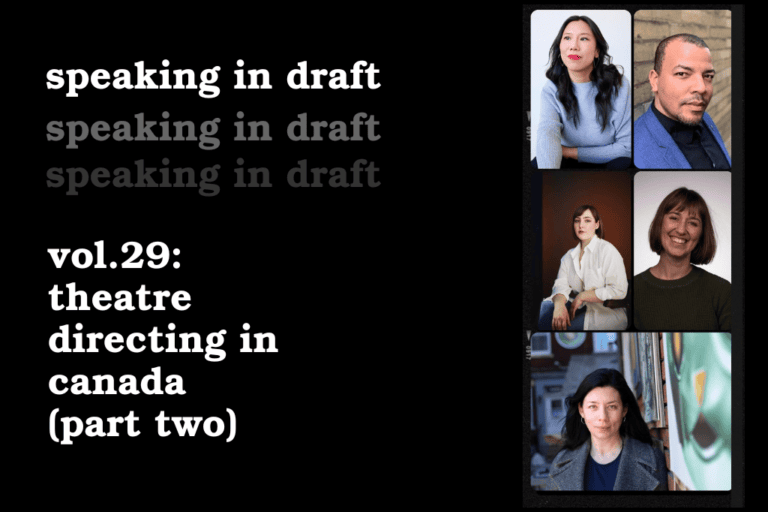 iPhoto caption: Headshots of Sophie Gee, Ray Hogg, Margot Greve, Leora Morris, and Jessica Carmichael.
Five theatre directors offer advice to the next generation — and the programs training it
The artists on this call were candid and vulnerable. They spoke openly about their professional frustrations and challenges — and they weren’t shy about pinpointing the ways that mainstream anglophone Canadian theatre practices fail directors and artists more broadly. That said, I didn’t leave our chat feeling hopeless or cynical.
 iPhoto caption: Ann-Marie MacDonald in 'Goodnight Desdemona (Good Morning Juliet).' Photo by Elana Emer.
“Sexism kept me out of hockey as a kid,” says Ann-Marie MacDonald. “But sexism also shut me out of Shakespeare."
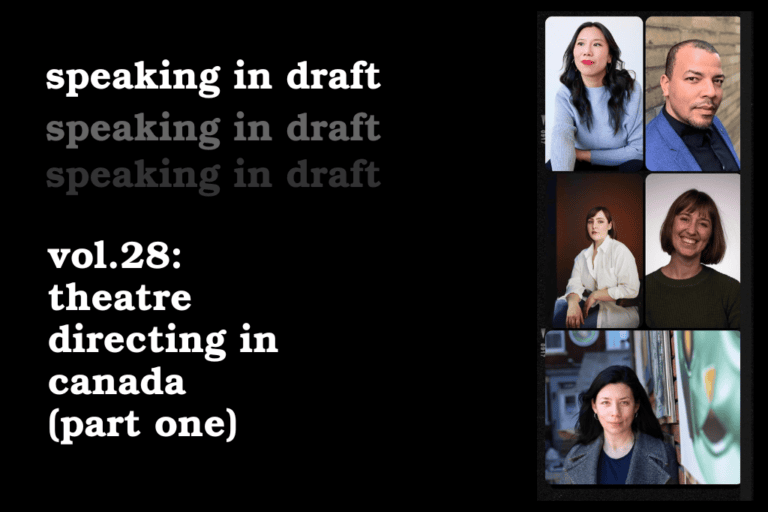 iPhoto caption: Headshots of Sophie Gee, Ray Hogg, Margot Greve, Leora Morris, and Jessica Carmichael.
How can theatre directors forge a sustainable career in Canada?
It’s increasingly unlikely that directors will hone their craft through formal training. Relatively few post-secondary programs devoted to directing exist, and it seems to me that directing-specific mentorship programs are less common than similar initiatives for actors or playwrights. To convene a roundtable about director training, I reached out to five very different artists on a continuum of early- to mid-career.
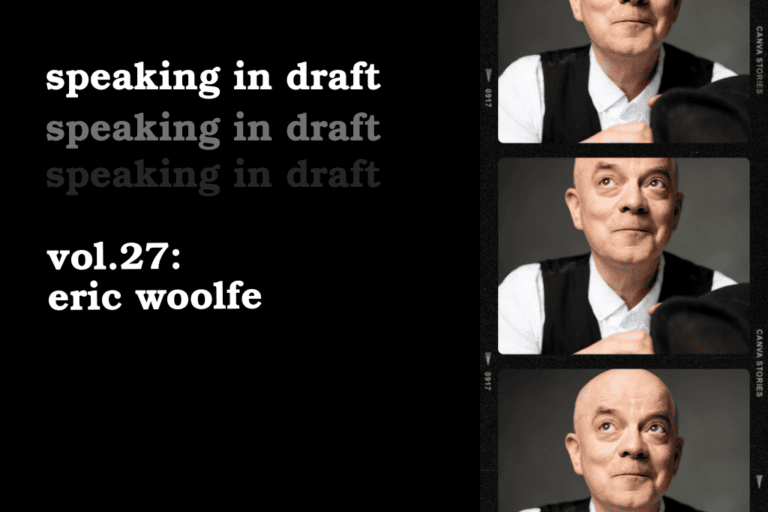 iPhoto caption: Portrait of Eric Woolfe. Photo by Dahlia Katz.
Eric Woolfe’s inventive horror theatre is a monster mash of artistic influences
For the past 26 years, Eldritch Theatre’s director of the uncanny has given ghoulies, ghosties, and long-legged beasties of all kinds a spot in the limelight, in productions that serve up puppets, magic, and a crumbling castle’s-worth of uncanny influences, including schlock-horror B-movies, Shakespeare at his bloodiest, and the fiction of H.P. Lovecraft.
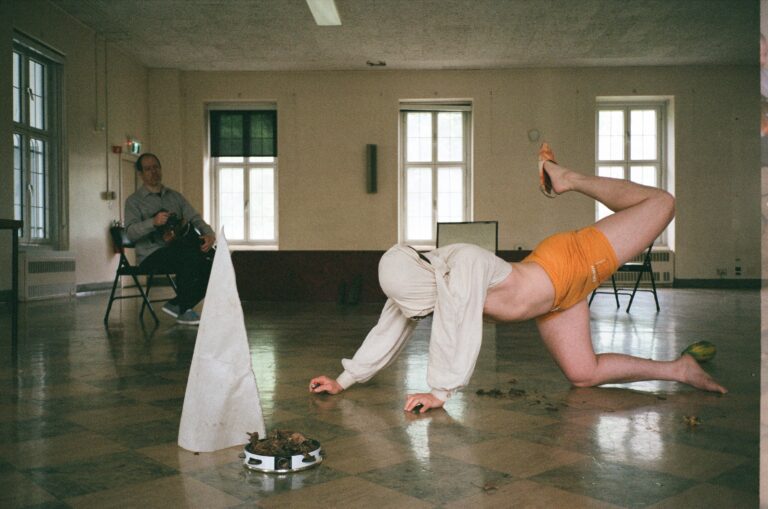 iPhoto caption: Nate Yaffe in 'Rot Hat.' Photo by Kinga Michalska.
This year’s SummerWorks Performance Festival strives to make accessibility intrinsic
The curated festival’s 36th edition features a range of works by Disabled and neurodivergent artists where the medium is very much the message.
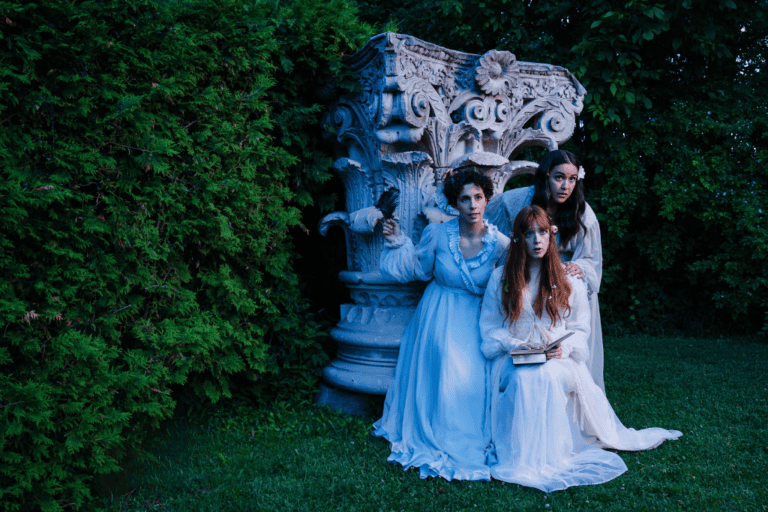 iPhoto caption: Laura Del Papa, Hilary Scott, and Lara Lucia in 'Brontë: The World Without.' Photo by Raph Nogal.
GFT’s Brontë: The World Without is a window into the ordinary lives of literary icons
Directed by Helen Juvonen in Guild Park and Gardens’ Greek Amphitheatre, The World Without follows sisters Emily, Charlotte, and Anne Brontë — the authors of Wuthering Heights, Jane Eyre, and The Tenant of Wildfell Hall, respectively.
Comments