
In CoyWolf, playwright Colin Wolf ponders the meaning of resistance
 iPhoto caption: Photo courtesy of Playwrights Canada Press.
In a time rife with uncertainty and pain, how do we live, and write, toward a better world?
That question is at the heart of CoyWolf, by Métis playwright Colin Wolf, coming this month from Playwrights Canada Press. The release of the playtext accompanies CoyWolf’s remounting at Gordon Tootoosis Nīkānīwin Theatre in Saskatoon. The play was originally produced in 2023 in Whitehorse, as part of a co-production between Thumbs Up Good Work Theatre — which Wolf founded with his sister Caleigh Crow — and the Guild Hall Theatre.
CoyWolf is set in a parallel world where wolves and coyotes, collectively called Sharp-Tooths, struggle against humans who seek to exterminate them and their ways of life in a campaign of ruthless expansion. In production, a cast of three play different Sharp-Tooths, while the human threat remains unseen. Facing danger and displacement, the protagonist — a half-wolf, half-coyote coywolf named Isidor — struggles with how to take meaningful action in support of his people.
It’s a sharp allegory for the ways in which the Métis, as well as other Indigenous peoples across Turtle Island, have stood up to colonialism’s onslaughts for centuries. Characters’ family names echo real lineages from the Métis Nation of Alberta, to which Wolf belongs. The Sharp-Tooths’ records of land agreements with humans recall real-life scrip, which the Métis received from the Canadian government in the 19th century, and which Canada has still failed to honour.
Wolf began this project by researching naturally occurring hybrid animals, in parallel with Métis history. “I was researching all these animals, and… wolves [were] just the coolest ones,” he said in a Zoom interview, laughing. That his last name is also Wolf wasn’t a consideration — though there were other similarities that piqued his interest.
“There’s a venn diagram [in which] wolf displacement across Canada matches Indigenous displacement,” he explained. “If you look at a map over the years of wolf territory, it’s very similar to Indigenous territory in the way that it’s been pushed over and up.”
Playwrights Canada Press describes CoyWolf as hopepunk, a type of speculative fiction that emphasizes characters’ enduring — if fragile — capacity for goodness in cataclysmic circumstances. It’s the opposite of grimdark, a genre known for its shattered moral compasses and nonexistent happy endings.
“I actually read a lot of grimdark… Even when the good guys win, in the long term there’s no hope,” said Wolf. He decided to steer away from the genre’s tropes in CoyWolf, but also from a fairytale ending in which a single character saves the day.
“ I struggle with those [hero] narratives, too,” said Wolf. “One person can’t solve [everything].”
In the play, Isidor encounters other Sharp-Tooths, each with their own approach to resisting humans: from bloody conflict at the front lines, to smuggling food and medicine, to preserving traditional items and practices, to caring for their community’s children. In his own life, Wolf has been asking questions about resistance “since I was young.
“Do you grab the controls of the machine and try to wrench [it] in the direction that’s better for the people?” he asked. “Do you throw yourself on the gears of the machine? Do you walk away?” These days, as the executive and artistic director of Gwaandak Theatre in Whitehorse, he’s especially mindful about “which of those activities can be done with privilege [and] which of those activities help other people.”
Over the years, his answer has changed considerably. “Since I fell in love with my wife, and since I’ve learned about how much family means to me, I’ve grown more and more weary of this idea of dying in glorious battle in the revolution,” he shared. With that said, “I fully understand and back people, including my own ancestors, who took up arms against the government. And I can’t guarantee that I wouldn’t, given the right circumstances.”
For now, “I’ve been engaged in grabbing controls and trying to heave in [better] directions — and then in walking away. I live in a wood-heated cabin. I cut down my own trees. I’m learning to hunt my own food. I’m… trying to build the skills of being more connected to the land, and to my family’s journey on the land as a whole.”
CoyWolf balances sweeping allegory with a tender tribute to family. As research, Wolf interviewed Métis relatives, including his maternal aunts and uncle. He intended to speak with his mother, Karen Doreen Dingwall, last. He was in the middle of organizing their interview when she passed away unexpectedly in January 2023. CoyWolf is dedicated to her memory.
“It shifted everything,” Wolf said.
With the premiere production already scheduled for later that year, the grieving playwright began to rewrite CoyWolf. In the play’s final version, Isidor is also grieving his mother; the play ends a year after her passing. When Wolf wrote the scene, a year hadn’t yet elapsed since his own loss.
“I needed to write something that made it seem like the one-year point would be alright,” he shared.
Now that CoyWolf is about to be published, Wolf wishes he “could hand [his mother] a copy.”
He’s also conscious that “somebody’s going to pick up this play who is not my auntie or my cousin, [who might have] minimal context on the Métis.” For that person, the play will be “about whatever grief they put into” it.
He hopes the play can help that hypothetical reader “process their grief” — and to reckon with how “fucking crazy” it is to grieve against an ongoing “backdrop of nation-building and genocide.
“[You’re] getting through the first year after your mom passes away, and there’s a genocide going on… in Palestine, in Gaza,” he reflected. “My people are the survivors of a genocide here [on this land]… How do you keep going?”
Wolf’s answer, at least for himself, is clear: “You grab onto little bits.” He remembered someone saying of his late mother, “‘She was such a great person, and in order to have her still be in the world, we have to emulate her values.’ You hold on to that, and it goes in the play — and when you’re feeling really down, it fuels you.”
CoyWolf is available for pre-order from Playwrights Canada Press. On October 16, there will be a book launch event at Gordon Tootoosis Nīkānīwin Theatre in Saskatoon.
Playwrights Canada Press is an Intermission partner. Learn more about Intermission’s partnership model here.
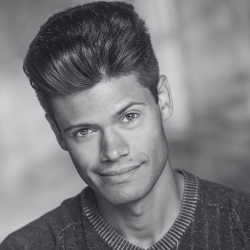
Nathaniel Hanula-James
Nathaniel Hanula-James is a multidisciplinary theatre artist who has worked across Canada as a dramaturg, playwright, performer, and administrator.
LEARN MORE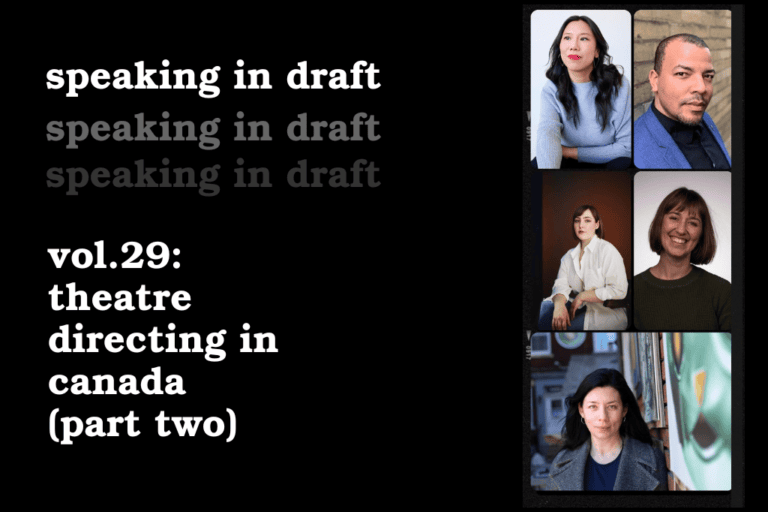 iPhoto caption: Headshots of Sophie Gee, Ray Hogg, Margot Greve, Leora Morris, and Jessica Carmichael.
Five theatre directors offer advice to the next generation — and the programs training it
The artists on this call were candid and vulnerable. They spoke openly about their professional frustrations and challenges — and they weren’t shy about pinpointing the ways that mainstream anglophone Canadian theatre practices fail directors and artists more broadly. That said, I didn’t leave our chat feeling hopeless or cynical.
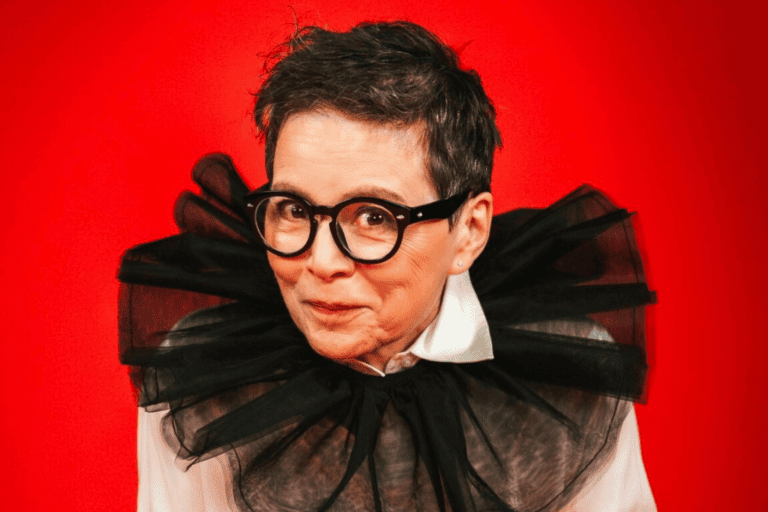 iPhoto caption: Ann-Marie MacDonald in 'Goodnight Desdemona (Good Morning Juliet).' Photo by Elana Emer.
“Sexism kept me out of hockey as a kid,” says Ann-Marie MacDonald. “But sexism also shut me out of Shakespeare."
 iPhoto caption: Headshots of Sophie Gee, Ray Hogg, Margot Greve, Leora Morris, and Jessica Carmichael.
How can theatre directors forge a sustainable career in Canada?
It’s increasingly unlikely that directors will hone their craft through formal training. Relatively few post-secondary programs devoted to directing exist, and it seems to me that directing-specific mentorship programs are less common than similar initiatives for actors or playwrights. To convene a roundtable about director training, I reached out to five very different artists on a continuum of early- to mid-career.
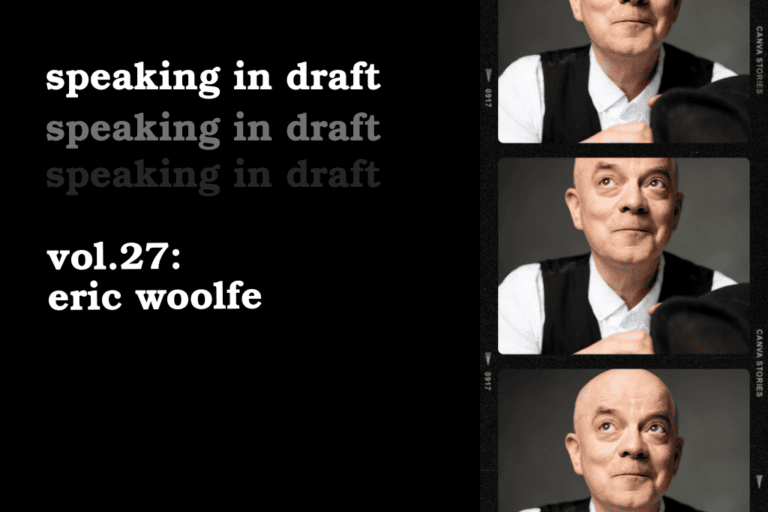 iPhoto caption: Portrait of Eric Woolfe. Photo by Dahlia Katz.
Eric Woolfe’s inventive horror theatre is a monster mash of artistic influences
For the past 26 years, Eldritch Theatre’s director of the uncanny has given ghoulies, ghosties, and long-legged beasties of all kinds a spot in the limelight, in productions that serve up puppets, magic, and a crumbling castle’s-worth of uncanny influences, including schlock-horror B-movies, Shakespeare at his bloodiest, and the fiction of H.P. Lovecraft.
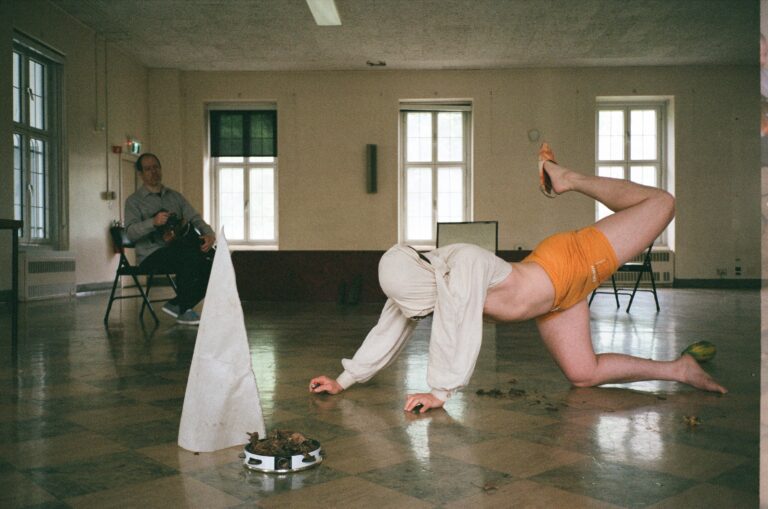 iPhoto caption: Nate Yaffe in 'Rot Hat.' Photo by Kinga Michalska.
This year’s SummerWorks Performance Festival strives to make accessibility intrinsic
The curated festival’s 36th edition features a range of works by Disabled and neurodivergent artists where the medium is very much the message.
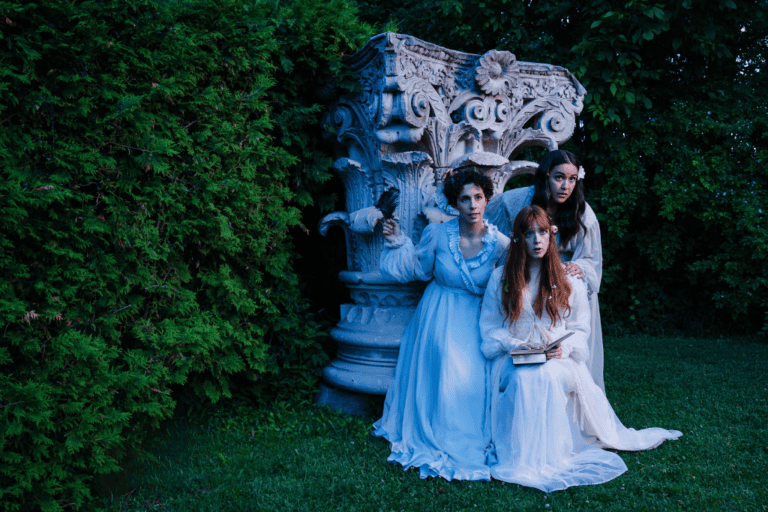 iPhoto caption: Laura Del Papa, Hilary Scott, and Lara Lucia in 'Brontë: The World Without.' Photo by Raph Nogal.
GFT’s Brontë: The World Without is a window into the ordinary lives of literary icons
Directed by Helen Juvonen in Guild Park and Gardens’ Greek Amphitheatre, The World Without follows sisters Emily, Charlotte, and Anne Brontë — the authors of Wuthering Heights, Jane Eyre, and The Tenant of Wildfell Hall, respectively.
Comments